Snowshoe Hare and Its Ten Year Cycle
Have you ever noticed how some years the snowshoe hare population seems to explode, with bunnies darting across every trail and field edge, only to seemingly vanish a few years later? It's a common experience for anyone spending time in Manitoba's bush, and it can be incredibly frustrating for hunters who rely on these little critters for small game opportunities or even just as a bellwether for predator populations. This guide dives deep into the fascinating world of the snowshoe hare's famous ten-year cycle, explaining what drives these dramatic population swings and what it means for the ecosystem, and for us as hunters here in Manitoba.
The Enigmatic Cycle of the Snowshoe Hare in Manitoba
The snowshoe hare (Lepus americanus) is more than just a cute woodland creature; it's a foundational species in many North American ecosystems, particularly here in Manitoba. Its population dynamics are a classic example of ecological cycles, driving the feast-or-famine existence for many other animals. Understanding these cycles is key to truly appreciating the interconnectedness of our northern forests.
What is the Ten-Year Cycle?
The "ten-year cycle" refers to the relatively predictable, dramatic fluctuations in snowshoe hare numbers, typically peaking every 8-11 years, followed by a sharp decline. Imagine walking through the bush during a peak year: hares are everywhere. They seem to be under every spruce bough, hopping along every game trail, and you can practically trip over them. Fast forward just a few years, and those same woods feel eerily empty. That's the cycle in action. It's not a hard-and-fast rule, and local populations can vary, but the general pattern is well-documented across their range, including our own Manitoba boreal and aspen parkland. This boom-and-bust rhythm is one of the most studied and iconic population cycles in ecology, deeply ingrained in the natural history of our northern landscapes. It influences everything from hunting opportunities for small game to the very survival rates of larger predators.
During the peak phase, hares breed prolifically, often having multiple litters with numerous young throughout the spring and summer. They seem to be everywhere, often looking plump and healthy, with abundant food sources. As their numbers swell, they become a primary food source for almost every predator that can catch them. But the peak can't last forever. Eventually, a combination of increased predation pressure, habitat degradation due to over-browsing, and potentially disease, starts to take its toll. The decline can be rapid, sometimes seeming to happen almost overnight, leaving hunters and naturalists wondering where all the hares went.
Factors Influencing the Cycle
Several interwoven factors contribute to this dramatic population dance. It's rarely just one thing, but a complex interplay that creates the observed oscillations. Predators are often cited as the primary driver, but food availability, weather patterns, and even disease play significant roles.
The most famous interaction is undoubtedly the one between the snowshoe hare and the Canada lynx. When hare numbers soar, so too do lynx populations, as they have an abundant food source. More lynx mean more predation, which then contributes to the decline in hare numbers. As the hares dwindle, the lynx population eventually crashes due to a lack of food, which then allows the hare population to recover and the cycle begins anew. It's a classic predator-prey relationship, a true ecological ballet. You can really see this dynamic when you consider Lynx and the Snowshoe Hare Cycle. Beyond lynx, other predators such as coyotes, foxes, wolves, great horned owls, and various raptors also capitalize on abundant hares, intensifying the pressure during the downswing. A healthy hare population feeds almost every other carnivore in the ecosystem.
Beyond predation, the availability of food and quality habitat also matters a great deal. Hares rely on dense coniferous and deciduous undergrowth for both food and cover. During peak populations, intense browsing can actually degrade their habitat, making it harder for younger hares to find sustenance and hiding spots. Severe winters, early thaws followed by late freezes, or prolonged droughts can also impact hare survival, especially for the vulnerable young. Diseases and parasites can also become more prevalent when animals are concentrated, further accelerating the decline phase. It's a delicate balance, and each factor contributes to the overall rhythm of the cycle.
Understanding Hare Habitat and Behavior in Manitoba
To truly appreciate the snowshoe hare, and perhaps even to hunt them successfully, you need to understand where they live and how they behave throughout the year. These are incredibly resilient creatures, perfectly adapted to Manitoba's sometimes harsh environment.
Where to Find Snowshoe Hares
Snowshoe hares are creatures of dense cover. They thrive in thick coniferous forests, mixed wood forests, and the shrubby undergrowth of the aspen parkland regions of Manitoba. Think young stands of spruce, jack pine, or balsam fir, areas with dense willow thickets, and even brushy creek bottoms. These tangled environments provide them with crucial protection from predators and a consistent source of browse for food. If you're out hunting Manitoba's bush country or exploring the fringes of our boreal forest, you're likely in prime hare territory. They love areas where there's a good mix of mature trees providing canopy cover and a dense understory of younger growth.
During the day, especially when predator pressure is high or temperatures are extreme, hares will often "form" or sit tight in a shallow depression in the snow or under a brush pile, relying on their camouflage to avoid detection. They are much more active at dawn, dusk, and throughout the night, moving along well-used runs and feeding trails. These trails often crisscross thickets, leading to feeding areas where they clip off twigs and buds. When you are Reading Sign After a Fresh Snow, you'll often see their distinctive tracks—large hind feet leaving a clear impression, especially noticeable during winter. Their preference for thick cover makes still-hunting challenging but rewarding, as you often have to push through dense sections to find them.
Seasonal Adaptations and Diet
The snowshoe hare is a master of adaptation, particularly when it comes to the changing seasons in Manitoba. Their most famous adaptation, of course, gives them their name: their large, well-furred hind feet. These act like natural snowshoes, allowing them to distribute their weight and travel easily over deep snow, a distinct advantage over many predators. In winter, these feet are heavily furred, increasing their surface area even further.
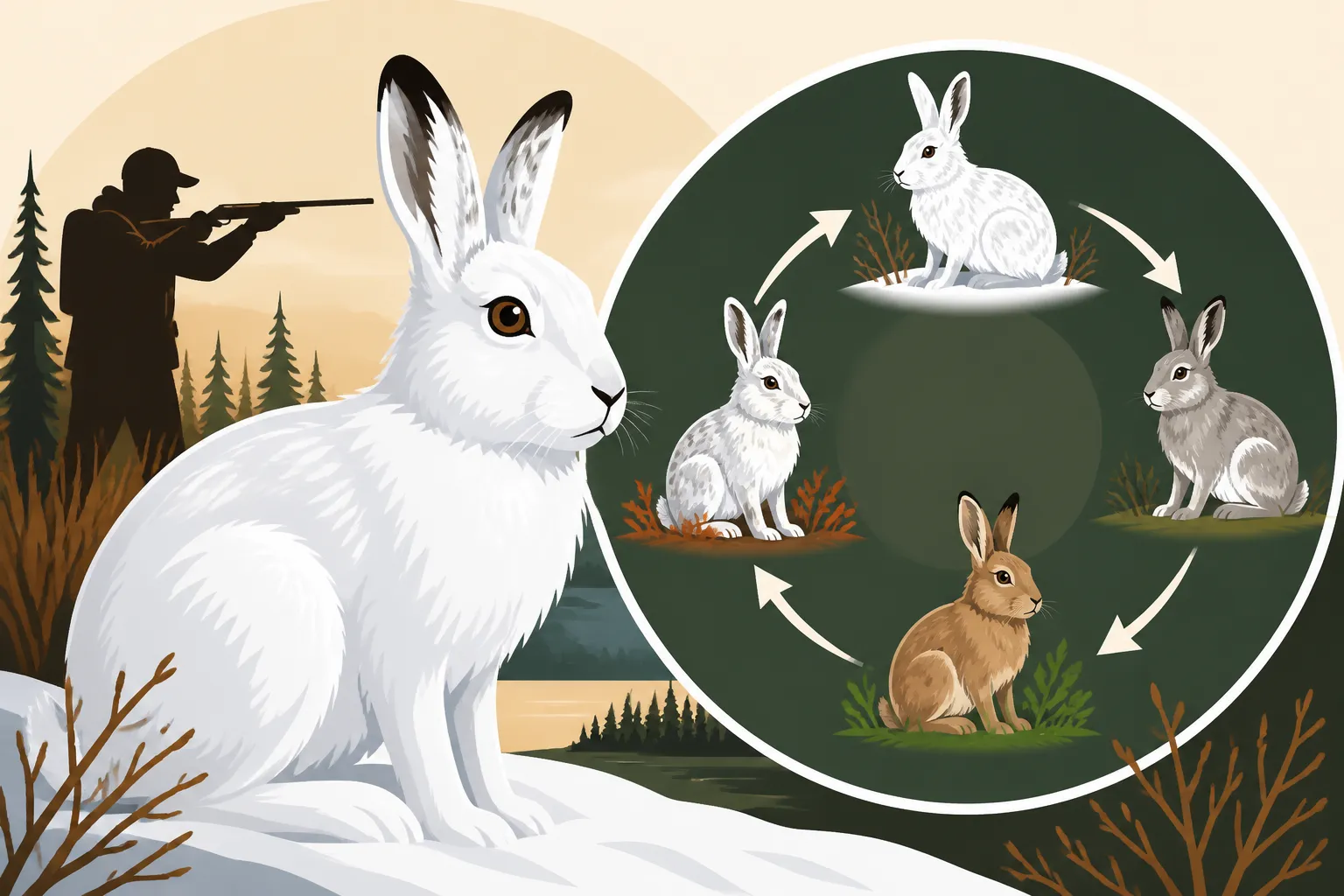
Their coat also undergoes a remarkable transformation. In summer, they sport a mottled brown coat that blends perfectly with the forest floor and underbrush. As autumn progresses, their fur gradually changes to a pristine white, providing excellent camouflage against Manitoba's snowy backdrop. This colour change is triggered by photoperiod (day length) rather than temperature, so sometimes an early snowfall can leave them temporarily vulnerable, or a late melt can make a white hare stand out against a brown background.
Their diet changes with the seasons as well. In spring and summer, they feast on a variety of green vegetation, including grasses, clover, forbs, and berries. They'll also eat twigs and leaves from deciduous shrubs. Once winter sets in, their menu shifts dramatically to woody browse. They'll strip bark from young saplings, chew on twigs and buds of willows, aspen, birches, and conifers. This reliance on woody browse in winter can sometimes lead to noticeable browse lines in areas with high hare populations, where every accessible twig up to a certain height has been clipped clean. Knowing what they eat and where they forage is essential, whether you're trying to spot them or simply observe their impact on the forest.
Hunting Snowshoe Hares in Manitoba
Hunting snowshoe hares can be a fantastic way to enjoy the outdoors, hone your small game skills, and put some delicious meat on the table. It's often an overlooked opportunity, especially during the colder months when other seasons might be closed or less accessible.
Seasons and Regulations
While snowshoe hare seasons in Manitoba are generally quite generous, often open for much of the year, it's absolutely crucial to consult the most current Manitoba hunting guide for specific dates, bag limits, and any Game Hunting Area (GHA) specific regulations. These can change, and being informed is your responsibility as a hunter. Typically, the seasons for snowshoe hare run for many months, making them a great option for extending your time afield, particularly in late fall and winter. This extended season allows hunters to target them during different phases of their camouflage change, offering varied challenges.
You'll usually find hares listed under the small game or furbearer sections of the regulations. Remember, even for small game, you need the appropriate licence. A resident small game licence usually covers snowshoe hares. Always verify these details. Using a resource like GoHunt can be invaluable for quickly checking local regulations and season dates for your chosen GHA, ensuring you're compliant before heading out. It’s also wise to be aware of any specific rules about hunting near residential areas or within certain parks or protected zones; not all Crown Land is open to hunting, and some Wildlife Management Areas have specific restrictions.
Hunting Techniques
There are several effective ways to hunt snowshoe hares, each offering a different experience. The most common methods involve still-hunting, tracking, or using dogs.
Still-hunting: This involves moving slowly and quietly through dense cover, pausing frequently to scan for hares. Their camouflage, especially in winter, is exceptional, so you need to train your eyes to spot the subtle outline, the black eye, or a twitching ear against the snow or brush. Look under downed logs, in thick spruce boughs, and around the bases of dense willow clumps. You'll often spot them frozen in place, hoping you don't see them. This method requires patience and a keen eye, but it's incredibly rewarding when you finally pick one out. It’s a great way to improve your general bushcraft skills and observation.
Tracking: After a fresh snowfall, tracking hares can be an exciting way to hunt. Follow their distinctive trails in the snow, paying attention to where they pause, feed, or enter thick cover. This can lead you directly to where a hare is holed up. You might be interested in Reading Sign After a Fresh Snow to further develop these skills. Tracking also provides valuable insights into their daily movements and preferred habitats. Be prepared for them to make sudden dashes once flushed, offering a quick, challenging shot.
Hunting with Dogs: For those who enjoy hunting with hounds, snowshoe hares offer fast-paced action. Beagles or other small game hounds are excellent for flushing hares from thick cover and chasing them in circles back towards the hunter. The dogs' keen sense of smell can locate hares that would be impossible for a human to find, and the chase itself is exhilarating. Always ensure your dogs are under control and familiar with local regulations regarding hunting with dogs. This method is particularly popular in areas with vast, dense cover where still-hunting can be difficult.
Equipment and Gear
Hunting snowshoe hares doesn't require a huge investment in specialized gear, but a few key items will enhance your success and comfort.
Firearms: For snowshoe hares, smaller calibers are ideal to preserve meat. A .22 LR rifle or pistol is a popular choice, offering accuracy and minimal meat damage. Shotguns with small shot (e.g., #4, #6, or #7.5 birdshot) are also effective, especially for flushing hares or if you prefer a wider pattern. Always use ammunition appropriate for small game and be mindful of your backdrop. Check the current regulations for Legal Firearms and Bows for Big Game as well as small game, to ensure you’re using appropriate equipment.
Clothing: Layers are key, especially if you're hunting in late fall or winter. Snowshoe hare habitat is often cold and damp. Insulated, waterproof, and breathable outer layers are essential. Don't forget warm gloves, a hat, and sturdy, insulated boots. If you're tracking in deep snow, a good pair of snowshoes will be invaluable; after all, you don't want the hares to have an advantage over you on their namesake! When Hunting Safely in Deep Winter Cold, proper clothing can literally be a lifesaver, especially if you plan on sitting still or moving slowly for extended periods.
Other Gear: A small backpack for essentials, a knife for field dressing, and a game bag to carry your harvest are good ideas. Consider a pair of binoculars for spotting hares in dense brush. A headlamp is always useful for early morning starts or late evening finishes. If you're using GoHunt for scouting, make sure your phone is charged and protected from the cold.
| Hunting Method | Best Conditions | Required Skills | Recommended Gear |
|---|---|---|---|
| Still-hunting | Dense cover, fresh snow, calm weather | Patience, keen observation, stealth | .22LR rifle, warm layers, binoculars |
| Tracking | Fresh snowfall | Following sign, patience, quick target acquisition | .22LR rifle, snowshoes, warm layers |
| Hunting with Dogs | Dense, extensive cover | Dog handling, understanding hare runs | Shotgun (small shot), radio collar for dog |
The Ecological Impact of Hare Cycles
The snowshoe hare's ten-year cycle is more than just a curiosity; it's a fundamental rhythm that pulses through the entire northern ecosystem. Its dramatic population swings send ripples through the food web, directly affecting the survival and reproductive success of numerous other species.
Predator-Prey Dynamics
The most immediate and obvious impact of the hare cycle is on its predators. As mentioned, the Canada lynx is famously tied to the hare, with its population cycles lagging slightly behind the hares'. When hares are abundant, lynx thrive, producing larger litters and having higher survival rates. Conversely, when hare numbers plummet, lynx face starvation, leading to a sharp decline in their own populations. This intimate connection highlights a classic ecological principle: the availability of a primary food source dictates the success of its predators.
But it's not just lynx. Coyotes, foxes, wolves, bobcats, fishers, and various raptors like great horned owls and goshawks all rely on snowshoe hares to varying degrees. During peak hare years, these predators experience a buffet, which can lead to healthier, more numerous litters and higher overwinter survival. When the hares disappear, these predators must either switch to alternative prey, which might be less abundant or harder to catch, or face significant population declines themselves. You can see this impact on animals like coyotes; when hares are scarce, coyotes might turn to other food sources, influencing local deer fawn survival or even livestock depredation. Understanding Coyote Hunting Rules Year-Round can become more relevant during these low hare periods. The hare cycle therefore acts as a critical pulse, controlling the ebb and flow of many other species in Manitoba's wild spaces.
Impact on Vegetation
While often overlooked, the sheer numbers of hares during a population peak can have a profound effect on the vegetation they browse. Snowshoe hares are primarily herbivores, and when millions of them are stripping bark, clipping twigs, and browsing on young saplings, it leaves a mark. This intensive browsing can significantly stunt the growth of young trees, particularly species like aspen, willow, spruce, and pine, which are critical components of their habitat and food supply. In areas with extremely high hare densities, you might even observe a distinct "browse line" on shrubs and young trees, marking the maximum height a hare can reach to feed.
This heavy browsing can alter forest regeneration patterns. Certain palatable tree species might struggle to establish themselves, giving an advantage to less desirable or more browse-tolerant plants. In a way, hares act as miniature forest managers, albeit unintentionally. The long-term effects of this browsing can influence the composition and structure of the forest stand for years to come, impacting future habitat for deer, moose, and other wildlife. It's a reminder that even the smallest herbivores can have a significant ecological footprint when their populations boom.
Why Manitoba's Environment Supports the Cycle
Manitoba isn't just a place where snowshoe hares exist; it's an ideal environment that fosters their cyclical nature. Our diverse landscapes and distinct seasons provide the perfect backdrop for this fascinating ecological phenomenon.
Boreal Forest and Aspen Parkland
Manitoba's vast and interconnected landscapes, particularly the boreal forest and the aspen parkland regions, are absolutely perfect for snowshoe hares. These areas offer the dense cover and abundant food sources that hares require throughout their life cycle. The boreal forest, with its extensive stands of spruce, pine, and fir, provides year-round protection from predators and the harsh winter elements. The thick understory offers endless nooks and crannies for hares to hide, and the dense branches collect snow, creating insulated pockets.
The aspen parkland, which is a transitional zone between the prairies and the boreal forest, also provides excellent habitat. Here, you find a mosaic of aspen bluffs, willow thickets, and mixed coniferous stands, all interwoven with open fields. This creates "edge habitat" which is highly productive for many species, including hares. The denser bush patches offer sanctuary, while the edges of fields can provide seasonal foraging opportunities. The sheer amount of diverse, yet dense, cover found across these regions means that when hare numbers are on the rise, there's ample room for them to expand and reproduce, fueling the population boom. Whether you're hunting in Manitoba's Northern Boreal or exploring the fringes of the Manitoba's Parkland Region, you're likely in snowshoe hare country.
Climate and Snowfall
Manitoba's climate, characterized by distinct seasons and often significant snowfall, is another critical component in the snowshoe hare's success and the perpetuation of its cycle. The long, cold winters provide the necessary conditions for their famous white winter coat and large snowshoe-like feet to be truly advantageous. Without deep snow, their adaptations would be less effective, and their survival rates would likely change. The reliable snowfall helps them evade predators by making travel difficult for animals without similar adaptations, and it provides a layer of insulation when they bed down.
However, the climate also presents challenges. While adapted to cold, extreme cold snaps, especially without adequate food or cover, can impact survival. Conversely, fluctuating winter temperatures leading to ice crusts on snow can make foraging difficult and even injure their feet. The timing of spring thaw and green-up also plays a role in breeding success. A long, cold spring can delay the first litters, while an early, mild spring can mean multiple successful litters. The interplay of these climatic factors contributes to the fluctuations within the ten-year cycle, adding another layer of complexity to these fascinating animals. It's a testament to the resilience of these creatures that they thrive in a region known for its dramatic weather swings, which also have impacts on What Climate Shift Means for Manitoba Game.
Disclaimer
This article is for general informational purposes only and does not constitute professional advice. Laws, prices and regulations vary by location and change over time. Consult a qualified professional for guidance on your specific situation.