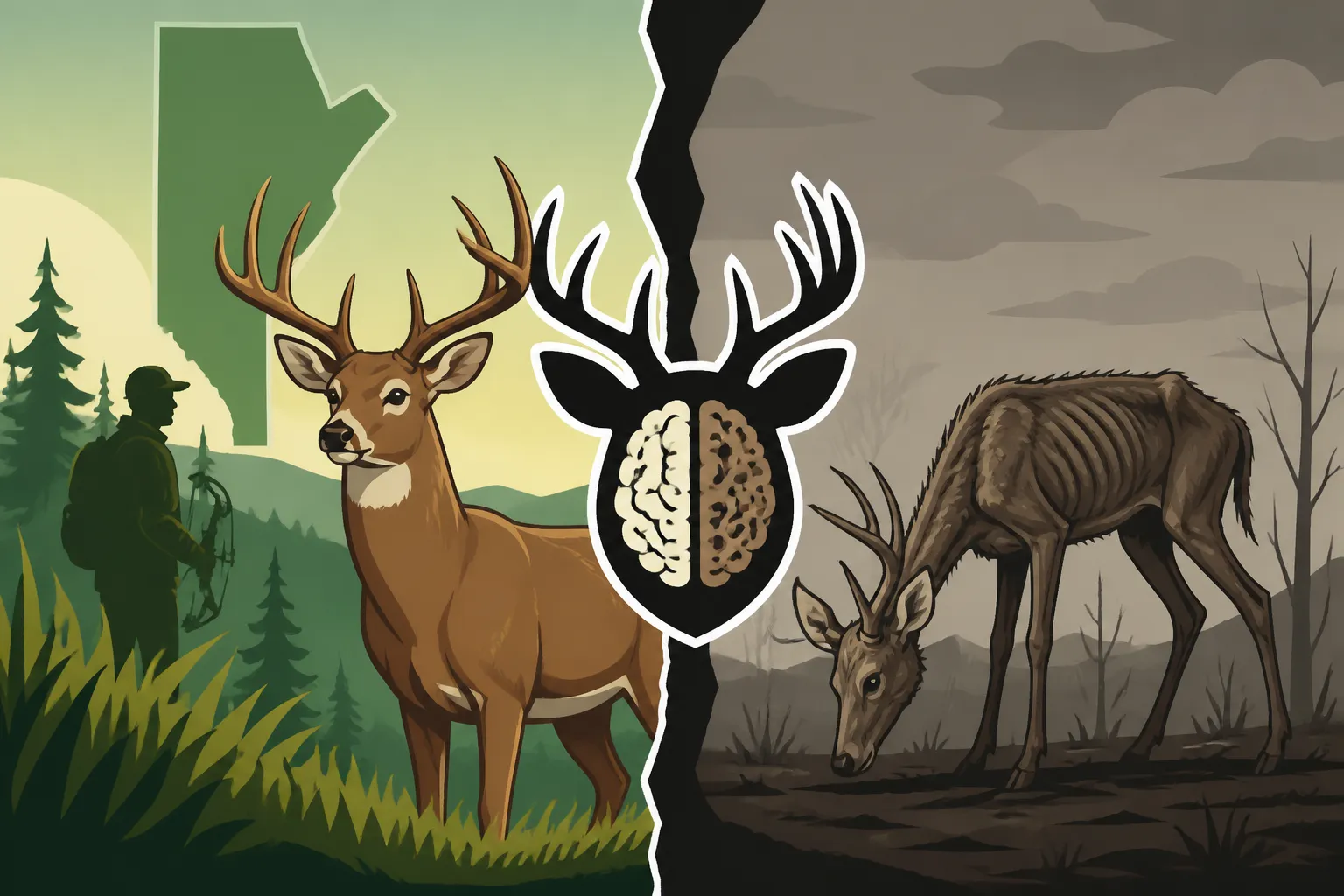
What CWD Has Done to Manitoba Deer
It’s a chilling reality for any deer hunter: the words “Chronic Wasting Disease” often bring a knot to the stomach. This silent, insidious threat has cast a long shadow over our beloved whitetail herds, and here in Manitoba, we've had to face its grim arrival head-on. This guide aims to pull back the curtain on CWD, detailing what it is, how it's impacting our deer, and what we, as hunters and stewards of the land, can do about it.
Understanding Chronic Wasting Disease: The Silent Threat to Our Herds
CWD isn't just another disease; it's a game-changer for wildlife management and hunting. For years, we watched it creep closer from neighbouring jurisdictions, hoping it wouldn't arrive. But arrive it did, and now understanding it is the first step in addressing it.
What Exactly is CWD? A Prion Disease Explained
Imagine a disease that doesn't come from bacteria or a virus, but from something even more baffling: a misfolded protein. That’s CWD in a nutshell. It's caused by an abnormal prion, a type of protein that can induce normal proteins in the brain and spinal cord to also misfold. This cascade of misfolded proteins leads to progressive damage, creating spongy holes in the brain, much like Bovine Spongiform Encephalopathy (Mad Cow Disease) in cattle or scrapie in sheep.
The scariest part? These prions are incredibly hardy. They can persist in the environment – in soil, on plants, even in animal carcasses – for years, resisting extreme temperatures and disinfectants. This environmental persistence makes CWD uniquely challenging to contain and eradicate, setting it apart from more conventional diseases. It's a slow, progressive neurological disease that is always fatal to the infected animal, and there is currently no vaccine or cure.
How CWD Spreads Through Deer Populations and the Environment
CWD spreads primarily through direct animal-to-animal contact, often via saliva, urine, and feces. When deer gather, especially at bait sites, mineral licks, or feeding stations, the risk of transmission skyrockets. A sick animal shedding prions can contaminate the environment, making it a source of infection for other deer for a very long time.
Indirect transmission is also a huge concern. Imagine a deer with CWD feeding in a field, dropping infected saliva or urine. Another deer comes along, grazes in the same spot, and picks up those prions. It can even spread through infected carcasses left in the field. When an infected animal dies, its decomposing body releases prions into the soil, creating a long-lasting reservoir of the disease. This is why careful carcass disposal is so critical, a point we'll delve into later. The disease isn't limited to just whitetails; it affects all cervids, including moose and elk, though it has primarily been detected in deer here.
Recognising the Signs: What to Look For in a Diseased Animal
Spotting CWD in a live animal can be incredibly difficult, especially in the early stages, because the signs develop slowly over many months or even years. This "incubation period" is part of what makes it so stealthy. As the disease progresses, however, infected deer will typically show a range of neurological symptoms.
Common signs include:
- Drastic weight loss (wasting): This is where the name comes from. The animal becomes emaciated despite eating.
- Listlessness and lethargy: A deer that appears unusually docile, unafraid of humans, or generally sluggish.
- Stumbling and poor coordination: Difficulty walking, head drooping, or holding its head at an unnatural angle.
- Excessive salivation: Drooling or foaming at the mouth.
- Increased thirst and urination: Frequently drinking water and urinating.
- Behavioral changes: A change in normal habits, like isolating from the herd or showing repetitive movements.
It’s important to remember that these symptoms can also be indicative of other diseases or injuries, so seeing them doesn't automatically mean CWD. However, if you observe a deer exhibiting several of these signs, especially in an area known to have CWD, it's crucial to report it to wildlife officials immediately. Trust your gut. If a deer looks "off," it probably is.
CWD's Arrival and Spread in Manitoba Deer
The news that CWD had finally reached Manitoba was a punch to the gut for many of us. We'd been watching it spread across North America, always with a nagging fear that it was only a matter of time.
The First Cases: When Manitoba Found Its First CWD Case
Manitoba stood as one of the last remaining CWD-free provinces for a long time, a point of pride for our wildlife managers and hunters. However, that changed in 2021 when the first confirmed case of CWD was detected in a wild deer in the western part of the province, specifically in Game Hunting Area (GHA) 22. This was a stark reminder of how interconnected our wildlife populations are and how easily diseases can travel.
The detection wasn't a random occurrence; it was the result of proactive surveillance efforts. Wildlife agencies had been monitoring for years, collecting samples and preparing for the inevitable. The confirmation immediately triggered heightened vigilance and a shift in management strategies, as authorities braced for potential further detections and began implementing measures to understand the scope of the problem. This initial discovery really changed the conversation around deer hunting in the province overnight.
Geographical Spread: Understanding CWD Zones and Monitoring Efforts
Since that initial detection, CWD has unfortunately been found in additional areas, primarily concentrated in southwestern Manitoba. These confirmed cases have led to the establishment of "CWD positive" or "CWD surveillance" zones, which are specific Game Hunting Areas where the disease has been detected or where the risk of spread is deemed high. You can find detailed maps outlining these zones on the Manitoba government website. Checking which GHAs require CWD sampling is a critical part of planning your hunt these days.
Wildlife officials, often in partnership with local landowners and hunters, are intensifying monitoring in these regions. This means continued mandatory sampling, carcass transport restrictions, and targeted surveillance. The goal is to track the disease's progression, identify new hot spots, and try to contain its spread as much as possible. For hunters, this translates into being extra diligent about knowing the boundaries of these zones and adhering to all regulations. Many hunters use tools like GoHunt or similar mapping applications to double-check GHA boundaries before heading out, ensuring they are fully aware of any CWD-related requirements in their chosen hunting grounds.
Factors Contributing to CWD Movement
The movement of CWD isn't always linear or predictable, but several factors contribute to its spread. Deer themselves are highly mobile, especially during the rut or when seeking new forage, naturally carrying prions with them. However, human activities can also play a significant, if often unintentional, role.
One of the biggest concerns is the movement of infected carcasses. If a hunter harvests a CWD-positive deer in a high-risk area and transports the entire carcass across provincial lines or into a CWD-free zone, they risk depositing infected material – especially brain and spinal cord tissue – into a new environment. This is why strict rules on moving a carcass out of a sampling area are in place. Another factor is the congregation of deer at artificial feeding or baiting sites. These locations concentrate animals, increasing the chances of direct contact and environmental contamination with infectious prions. While baiting is a common practice for hunting black bears in Manitoba, it's generally discouraged or restricted for deer in CWD zones precisely because it can facilitate disease transmission.
The Tangible Impacts of CWD on Manitoba's Deer
The presence of CWD isn't just a concern for biologists; it has real, tangible consequences for our deer populations and, by extension, for us, the hunters who cherish them. It's a long-term problem that demands a long-term perspective.
Population Dynamics: How CWD Affects Deer Numbers Over Time
The most direct impact of CWD on deer populations is, quite simply, a decline in numbers. Because the disease is always fatal, and infected animals gradually waste away, it acts as a persistent drain on the herd. While a single CWD-positive deer might not seem like much, over time, as more animals become infected, the mortality rate can increase significantly. This is especially true in areas where the disease has been present for a decade or more. Studies in other jurisdictions have shown that CWD can lead to localized population declines of 20-50% in deer populations within relatively short periods.
Beyond outright mortality, CWD can also affect reproductive rates and fawn survival. Sick does may be less capable of successfully raising fawns, and bucks infected with CWD may exhibit reduced breeding success. These subtle impacts, combined with direct fatalities, can severely compromise the long-term health and stability of a deer population. We're certainly hoping Manitoba doesn't see those kinds of declines, but it's a very real threat.
Implications for Hunting Success and Hunter Opportunity
For hunters, CWD can manifest in several ways that affect our time afield. Firstly, fewer deer on the landscape naturally mean lower hunting success rates. You might spend more time scouting and hunting only to see fewer animals, or simply fewer healthy-looking animals. Secondly, CWD management strategies often involve increased regulations, such as mandatory CWD sampling requirements, carcass movement restrictions, and sometimes even specific GHA closures or altered season dates. These changes, while necessary for disease management, can add complexity to our hunting plans.
The idea of Hunting an Extended Deer Season GHA or a Second Deer Licence in Manitoba might become more complicated if those GHAs fall within high-risk CWD zones, requiring extra steps from hunters. The core experience of hunting itself isn't necessarily ruined, but it certainly changes. Hunters need to be more informed, more patient, and more adaptable than ever before. This also means understanding your chosen hunting ground, perhaps more thoroughly than you once did, to make sure you're aware of specific restrictions.
Public Perception and the Hunter's Confidence
Perhaps one of the most insidious impacts of CWD is on public perception and hunter confidence. The thought of harvesting a deer that might be infected can be unsettling. While there's no confirmed case of CWD jumping to humans, health agencies generally advise against consuming meat from a CWD-positive animal. This uncertainty can lead hunters to question the safety of the meat they harvest, potentially reducing participation or discouraging new hunters from taking up the sport.
When hunters hear about Whether CWD Meat Is Safe to Eat, it naturally creates apprehension. This erosion of confidence can have a ripple effect, impacting conservation funding (as licence sales often support wildlife management) and reducing the number of boots on the ground that serve as crucial eyes and ears for wildlife agencies. Maintaining a strong, informed hunting community is vital in the fight against CWD, as hunters are often the first line of defence in detecting and reporting sick animals. We need to trust the science and the testing.
Manitoba's Response: Management and Mitigation
Manitoba has been quick to react to the presence of CWD, implementing a multi-pronged approach aimed at surveillance, containment, and public education. It's a massive undertaking, and it relies heavily on hunter cooperation.
Mandatory Sampling and Testing Protocols
At the heart of Manitoba's CWD response is mandatory sampling. In designated CWD surveillance zones, hunters are required to submit samples from any deer, moose, or elk harvested. This is how we get a clear picture of the disease's prevalence and spread. You need to know Manitoba's Mandatory CWD Sampling GHAs if you plan to hunt in western Manitoba. The process for extracting your own CWD sample usually involves removing the retropharyngeal lymph nodes from the animal’s jaw, or submitting the entire head.
Once a sample is collected, hunters need to know How Long You Have to Submit a Sample and Where to Drop a CWD Sample in Manitoba. Collection depots are typically set up during hunting seasons in affected areas. This isn't just busywork; it's absolutely crucial data. It helps wildlife biologists understand the geographic distribution of the disease and how quickly it's spreading. Without this robust surveillance, we'd be flying blind. After submission, hunters can typically get their Manitoba CWD result within a few weeks, which gives peace of mind if negative, or allows for proper disposal if positive.
Carcass Movement Restrictions and Their Importance
To prevent the spread of CWD to new areas, strict carcass movement restrictions are in place. These rules dictate which parts of a harvested animal can be transported out of a CWD-positive or surveillance zone. Generally, only boned-out meat, cleaned skull plates (for antlers), finished taxidermy mounts, and hides are allowed to leave these areas. The brain and spinal cord, which contain the highest concentration of prions, must remain within the designated zone or be disposed of properly.
These regulations are designed to minimize the risk of hunters inadvertently introducing prions into new environments. For instance, if you harvest a deer in a CWD-affected GHA, you can't just throw the whole carcass in the back of your truck and drive it home to process in a CWD-free area. You need to perform initial processing in the field or at a designated facility within the zone. Understanding Moving a Carcass Out of a Sampling Area is critical for compliance and for being a responsible hunter. This is where having a good field processing kit and a plan for disposal becomes invaluable.
Research and Monitoring: The Ongoing Battle
Beyond immediate management, extensive research and long-term monitoring are fundamental to the ongoing battle against CWD. Scientists are constantly working to understand more about the disease – its transmission dynamics, environmental persistence, and potential mitigation strategies. This includes studying Which Manitoba Species Test Positive Most to better target surveillance efforts.
Manitoba’s wildlife agency collaborates with researchers, universities, and other jurisdictions to share data and develop best practices. This scientific foundation helps refine management actions, assess their effectiveness, and guide future decisions. It's a dynamic situation, and what we know about CWD, and how best to fight it, is always evolving. Hunters are a key part of this monitoring, providing the samples that fuel this research and acting as eyes and ears on the ground for any unusual observations.
Your Role as a Hunter: Preventing Further Spread
As hunters, we are often the first line of defence and have a profound responsibility to protect our wildlife. When it comes to CWD, our actions can make a huge difference in slowing its spread.
Best Practices for Field Dressing and Carcass Disposal
Proper field dressing and carcass disposal are paramount in CWD management. When field dressing an animal in a CWD-affected zone, try to minimize the spread of fluids and tissues. Wear gloves and consider leaving the gut pile at the kill site, ensuring it's not near water sources or areas where other deer frequently congregate.
For the rest of the carcass, especially the head and spinal column, follow the specific regulations for the GHA you're in. If you're required to leave these parts within the CWD zone, options might include burying them deeply, taking them to a designated collection site, or leaving them in approved landfills. Never discard parts of a harvested deer along a road or in areas where scavengers might pick them up and further spread prions. Be mindful of your tools too; ensure proper cleaning and disinfection of knives and equipment after processing to avoid cross-contamination. This fastidious approach might feel like extra work, but it's vital.
Why CWD Sampling Requirements Matter
It’s easy to feel like mandatory CWD sampling is an inconvenience, an extra step in an already demanding process. But I promise you, Manitoba's CWD sampling requirements matter because they are literally the most powerful tool we have for tracking and understanding this disease. Without hunters submitting samples, wildlife managers cannot accurately map the spread, identify emerging hotspots, or assess the effectiveness of their mitigation strategies. Every sample you submit is a piece of the puzzle, contributing to a broader understanding that benefits the entire deer population and the future of hunting.
Imagine trying to fight a wildfire without knowing where the flames are. That's what fighting CWD without sufficient sampling would be like. It’s a collective effort, and your participation directly contributes to the health of our herds. So, when you get that tag, and you're planning your Whitetail Hunting in Manitoba adventure, make CWD sampling a non-negotiable part of your post-harvest routine. Using an app like GoHunt can help remind you of specific GHA regulations for CWD sampling, making sure you're prepared.
Supporting Conservation Efforts and Reporting Sick Animals
Beyond direct sampling, there are many ways hunters can support the broader conservation efforts against CWD. Staying informed about the latest regulations and research is key. Joining local conservation groups or participating in public consultations about CWD management helps ensure that hunter voices are heard and that strategies are practical and effective.
Most importantly, be vigilant in the field. If you observe a deer (or moose or elk) displaying any of the signs of CWD we discussed earlier – extreme weight loss, lethargy, drooling, or stumbling – do not attempt to approach or handle the animal. Instead, immediately report your observations to Manitoba's provincial wildlife authorities. Provide as much detail as possible, including the exact location, time, and specific symptoms. Your report could be crucial in detecting new cases and preventing further spread. We are the eyes of the forest, and our vigilance is more important than ever.
Looking Ahead: The Future of Deer Hunting with CWD
The presence of CWD in Manitoba isn't going away anytime soon, but that doesn't mean the end of our rich hunting tradition. It means adaptation, continued vigilance, and a renewed commitment to responsible stewardship.
Adapting Hunting Strategies in CWD Zones
Hunting in a CWD-affected area might require some adjustments to your usual strategies. While the goal is not to eradicate deer, controlled herd reduction in certain CWD hotspots might be part of management plans. This could mean a focus on antlerless deer harvests to help control population density, which can reduce disease transmission. Hunters might also choose to hunt in areas outside of known CWD zones, relying on tools like GoHunt or other mapping resources to identify suitable hunting grounds.
When you're Scouting a Manitoba Game Hunting Area, pay extra attention to signs of healthy deer versus those exhibiting CWD symptoms. You might also want to rethink practices that concentrate deer, such as traditional baiting, and instead focus on natural food sources or travel corridors. The core skills of a hunter – tracking, understanding deer behaviour, and patience – remain the same, but the context around them shifts.
The Long-Term Outlook for Manitoba's Whitetail Hunting
It's natural to feel a sense of pessimism when faced with a threat like CWD, but it's important to maintain a realistic, yet hopeful, outlook. CWD will likely be a persistent challenge, but it doesn't necessarily mean the end of thriving whitetail populations or successful hunting seasons in Manitoba. Our deer herds have proven resilient in the past, bouncing back from harsh winters and other challenges.
The long-term outlook will depend heavily on sustained management efforts, ongoing research, and continued cooperation from hunters and landowners. If we can keep prevalence rates low in key areas and prevent its widespread establishment, our whitetail hunting heritage can endure. This means actively participating in management, staying informed, and being advocates for sound wildlife practices. We need to focus on what we can control and contribute to.
Collaboration and Community: Our Collective Responsibility
Ultimately, the future of Manitoba's deer herds in the face of CWD rests on a foundation of collaboration and community. This isn't just a government problem, or a hunter problem, or a biologist problem – it's everyone's problem who cares about wildlife. Hunters, landowners, conservation groups, government agencies, and even non-hunting outdoor enthusiasts all have a role to play.
Sharing information, reporting observations, adhering to regulations, and engaging in respectful dialogue about CWD management are all acts of collective responsibility. By working together, by understanding the science and supporting the efforts, we give our Manitoba deer the best possible chance to thrive, and ensure that future generations can enjoy the same rich hunting experiences we cherish today. This commitment to shared management is how we protect our wild spaces and the animals within them.
Disclaimer
This article is for general informational purposes only and does not constitute professional advice. Laws, prices and regulations vary by location and change over time. Consult a qualified professional for guidance on your specific situation.