Manitoba Road and Winter Access
Ask any seasoned hunter in Manitoba, and they'll tell you that getting to your prime hunting spot is often half the battle. Our vast, wild landscapes are incredible, but they also present some real head-scratchers when it comes to road access, especially when the seasons change and winter sets in. This guide is here to walk you through the nuances of road and winter access across Manitoba, helping you understand the different types of roads, how weather impacts them, and what you need to do to ensure you actually make it to your hunting grounds safely and legally, whether it's the middle of a muddy spring or a deep, cold December.
The Lay of the Land: Manitoba's Road Networks for Hunters
Manitoba's hunting opportunities span incredible distances, from the southern farmlands right up into the remote boreal forest and even further north. But with such diverse landscapes comes an equally diverse, and sometimes challenging, network of roads. Understanding the hierarchy and typical conditions of these roads is crucial for any hunter planning an outing, especially when you're dreaming of accessing that distant, less-pressured spot.
Paved Highways and Major Arteries: Getting to the General Area
These are your primary routes, the main arteries that crisscross the province. Think Trans-Canada Highway or the major provincial highways like 6, 10, or 5. They're generally well-maintained, plowed in winter, and are your reliable ticket to getting into the general region you want to hunt. They form the backbone of travel, allowing you to cover significant distances efficiently.
However, don't mistake their reliability for a guarantee of smooth sailing. Even major highways can be impacted by Manitoba's notorious blizzards, leading to whiteouts and closures. While they get you close to your destination, they rarely take you directly to your hunting stand or the trailhead for that moose hunt. They serve as the necessary starting point, bringing you from city life to the edge of the wilderness, but the real adventure often begins when you leave their familiar pavement.
Gravel Roads and Provincial Roads: The Main Veins into Hunting Country
Once you leave the main highways, you'll typically transition to provincial gravel roads or municipal gravel roads. These are the main veins that branch off, leading you deeper into Manitoba's smaller communities, agricultural lands, and accessible forest blocks. They're often well-travelled, maintained by graders, and usually offer decent access for standard two-wheel-drive or four-wheel-drive vehicles under normal conditions.
These roads are where hunters often begin to feel that shift from everyday driving to more serious backcountry travel. They can be dusty in dry conditions, heavily corrugated, and prone to washouts after heavy rains. In winter, while some are plowed regularly, others might see less frequent attention, becoming packed with snow or developing treacherous ice patches. Always keep an eye out for signs indicating reduced speed limits or weight restrictions, especially during spring thaw. They are the gateway to many excellent hunting opportunities, but they demand a bit more attention and preparedness than the paved routes.
Resource Roads and Trails: The Backcountry Lifelines
Now we're talking about the true backcountry access. Resource roads are typically unmaintained or minimally maintained tracks used primarily by forestry operations, mining companies, or other resource industries. They might be little more than two ruts through the bush, often without signage, and can become extremely challenging quickly. These are the roads that lead to the really remote areas, the deep bush where the big animals often reside, far from human pressure.
Accessing these types of roads often requires a capable 4×4, an ATV, or even a snowmobile, depending on the season. Expect large potholes, deep mud, fallen trees, and potential water crossings. They are not for the faint of heart or the unprepared. Before venturing onto these, thorough scouting is absolutely essential, and having a reliable Manitoba GHA map and digital navigation tools like onX Hunt showing Reading Manitoba Crown Land Layers on onX is non-negotiable. These lifelines can unlock incredible hunting, but they come with a significant commitment to self-reliance and preparedness.
Seasonal Shifts: How Weather Transforms Access
Manitoba's climate is one of extremes, and these extremes have a profound impact on road conditions and, consequently, hunter access. What might be a perfectly navigable gravel road in August can become an impassable quagmire in April or a snow-choked corridor in December. Ignoring these seasonal realities isn't just an inconvenience; it can quickly become a safety hazard, leaving you stranded far from help.
Spring Thaw and "Road Bans": Mud, Muskeg, and Mess
Ah, spring in Manitoba. The promise of new life, and the absolute reality of mud. As the snow melts and the frost leaves the ground, many of our roads, particularly gravel and resource roads, become saturated. The ground underneath, weakened by freezing and thawing cycles, turns into a soft, unstable mess. This is when "road bans" often come into effect, restricting heavy vehicles to protect the integrity of the roads. While these bans are primarily for commercial trucks, the conditions that necessitate them affect all vehicles.
For hunters, especially those thinking about spring bear hunting, this means deep, sticky mud that can swallow even a capable 4×4. Muskeg areas, prevalent in many northern and central regions, become even more treacherous. Planning your route during spring requires careful consideration of drainage, recent precipitation, and the type of soil in the area. What looks like a shallow puddle can often conceal a bottomless pit of gumbo. It’s a time to be extra cautious, reduce tire pressure, and always travel with recovery gear, or better yet, avoid iffy roads altogether until things dry out.
Summer Rains and Fall Freeze-Up: From Dry Dust to Slippery Slime
Summer can bring its own challenges. Prolonged dry spells turn gravel roads into dusty, washboard nightmares, but the real test often comes with heavy summer thunderstorms or persistent fall rains. What was once hard-packed can quickly become slick clay, especially in regions with rich agricultural soil. These conditions can be incredibly deceptive; a road that looks merely wet can offer almost no traction.
The transition to fall freeze-up adds another layer of complexity. Early frosts can harden the ground, making travel easier, but a mid-fall rain followed by a sudden cold snap can create sheets of black ice on otherwise routine roads. Hunters heading out for Rifle Hunting Manitoba's Whitetail Rut in November need to be particularly mindful. Temperatures fluctuate wildly, meaning you could start your day on dry ground and end it navigating frozen ruts and slick patches. Always check the weather forecast for temperature swings and precipitation, and adapt your driving style accordingly.
The Interlake's Unique Access Challenges: Wetlands and Drainage
The Interlake region of Manitoba, nestled between Lake Winnipeg and Lake Manitoba, presents a unique set of access challenges that deserve special mention. This area is characterized by vast wetlands, sloughs, and a complex network of drainage ditches. Roads here are often built up on narrow causeways through low-lying, wet ground. Even relatively minor rainfall can lead to water encroaching onto the road, or worse, washing out sections of it entirely.
Hunters often seek out the Interlake for its incredible waterfowl and deer hunting, but navigating its roads requires a particular mindset. You'll encounter many culverts, small bridges, and stretches where the road elevation is only slightly above the water table. During wet periods, these roads can quickly become soupy, and getting stuck in a drainage ditch alongside the road is a real possibility. When hunting in this region, it's wise to stick to established, well-used routes, avoid venturing off-road unless absolutely certain of the terrain, and be prepared for potential water hazards. Checking with local residents or conservation offices about current conditions is often invaluable here.
Conquering Winter Access: Snow, Ice, and Extreme Cold
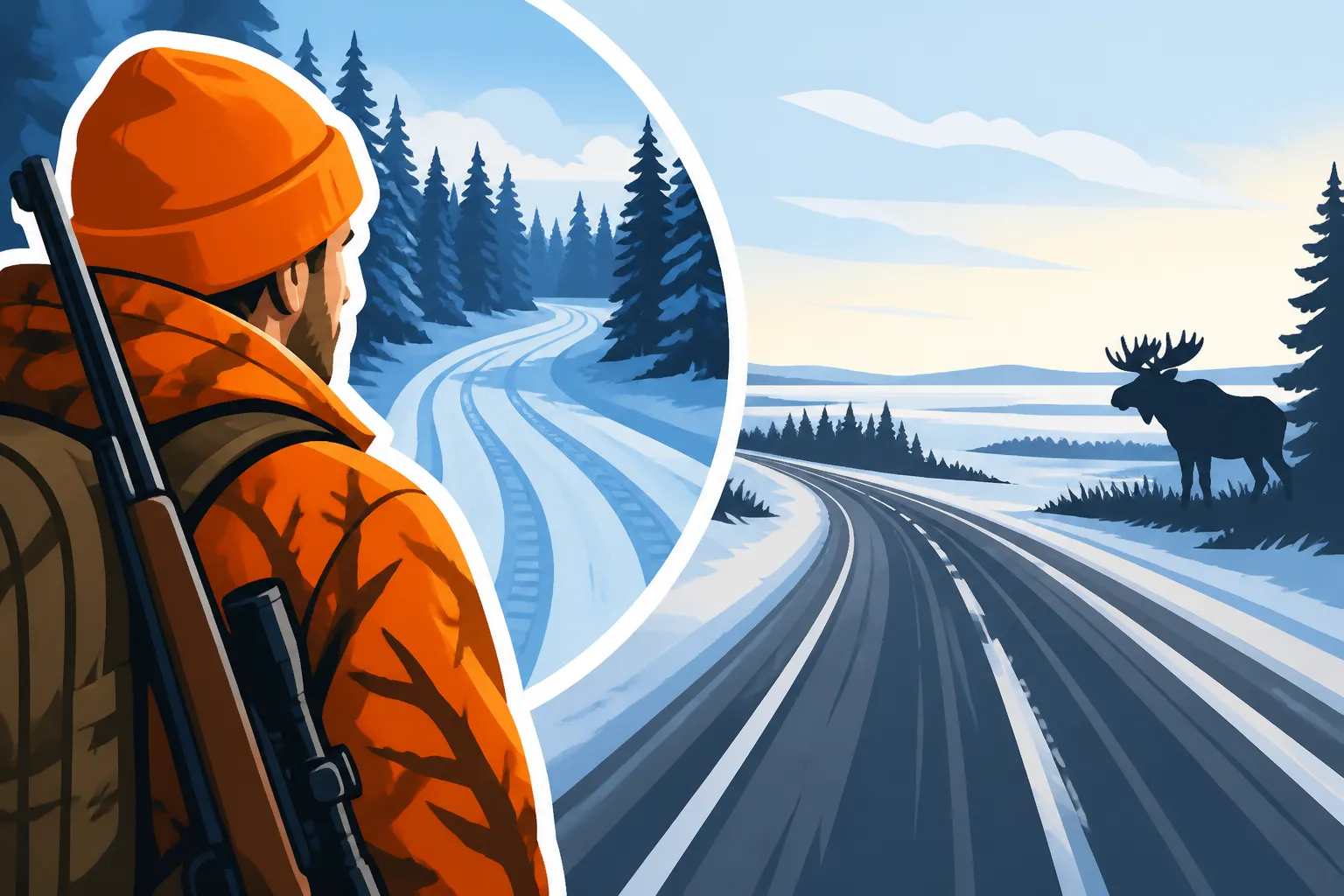
Winter in Manitoba is a formidable force, and it transforms road access into an entirely different beast. What was once a challenging gravel road becomes a snow-covered trail, and the risks associated with getting stuck or having a breakdown are amplified by the extreme cold. For those venturing out for Hunting the Late December Season or Hunting Whitetails at Thirty Below, understanding and preparing for winter road conditions is paramount for both success and safety.
Snow Drifts and Plowed Roads: What to Expect After a Fresh Dump
Manitoba receives significant snowfall, and while main provincial roads are usually plowed relatively quickly, secondary and resource roads can remain impassable for days or even weeks after a major snow event. Plowed gravel roads often develop a compacted snow base that can be slippery, especially in shaded areas. But the real challenge often comes with snowdrifts. Open fields adjacent to roads, particularly in the prairie and parkland regions, are prone to massive drifting, burying roads completely and making travel impossible without heavy equipment.
Before heading out after fresh snow, always consult road reports from Manitoba Infrastructure and Transportation. If venturing onto less-maintained roads, anticipate deep drifts and potentially unmarked obstacles under the snow. It's not uncommon to find yourself needing to shovel out a section just to proceed, or realizing the road disappears entirely into a massive drift. A capable 4×4 is a minimum here, and many hunters opt for ATVs or snowmobiles to get past the plowed sections and truly access deep winter hunting grounds.
Frozen Trails and Ice Crossings: Navigating Frozen Terrain
As temperatures plummet and stay consistently below freezing, many trails, muskegs, and even small bodies of water will freeze solid, creating new, albeit temporary, access routes. Hunters pursuing Moose Hunting Manitoba's Boreal Country or other northern species often rely on frozen lakes and rivers as winter roads. However, judging ice thickness is a skill that requires extreme caution and local knowledge. Never assume ice is safe without verifying its thickness, and always be aware of potential currents or springs that can create weak spots.
On frozen trails, conditions can range from smooth, hard-packed snow perfect for snowmobiles to treacherous glare ice hidden under a dusting of fresh powder. Old logging roads, once impassable bogs, might become firm corridors in winter. However, stumps, rocks, and uneven terrain can become hidden hazards under the snow, causing damage to vehicles or equipment. Traversing these frozen landscapes demands reduced speed, constant vigilance, and an understanding that winter travel, while sometimes opening new routes, always carries inherent risks.
Extreme Cold and Vehicle Preparedness: Beyond Just Getting There
Manitoba winters are synonymous with extreme cold. Temperatures of -30°C (-22°F) or colder are not uncommon, and they stress vehicles in ways you might not experience anywhere else. Batteries fail, fluids thicken, and mechanical components become brittle. Beyond just getting stuck, breaking down in extreme cold far from civilization is a life-threatening situation. Your vehicle isn't just transport; it's a lifeline.
Therefore, preparing your vehicle for winter hunting is critical. This means ensuring your block heater is working, your battery is robust, and your tires are rated for severe winter conditions. Carrying a comprehensive Winter Truck Kit for a Manitoba Hunt is non-negotiable. This should include booster cables, a tow strap, extra warm clothing, emergency food and water, a shovel, sand or traction aids, and reliable communication devices. Beyond physical items, it means having a full tank of fuel, letting someone know your travel plans, and understanding that if your vehicle dies, your survival depends entirely on your preparedness.
Planning Your Route: Tools and Strategies for Access
Successful hunting in Manitoba, especially when navigating varying road conditions and winter access, hinges on meticulous planning. You can't just jump in the truck and hope for the best, not in these parts. Leveraging modern technology combined with old-fashioned scouting and local wisdom will give you the best chance of getting to your spot and, more importantly, getting back home.
Digital Mapping and Satellite Imagery: Your Eyes in the Sky
In today's hunting world, digital mapping applications are indispensable tools for planning access. Services like onX Hunt and GoHunt provide detailed satellite imagery, topographic maps, and crucial land ownership layers that reveal public and private land boundaries. This allows you to scout potential access points from the comfort of your home, identify different road types, spot trails that might not appear on standard road maps, and even identify potential pinch points or funnels that might be accessible via a specific route.
Before you even leave your driveway, you can zoom in on your chosen Game Hunting Area (GHA) and identify all possible access roads. You can trace routes, mark potential parking spots, and identify areas of Crown Land accessible by vehicle or foot. Checking the most recent satellite imagery can sometimes even reveal current road conditions, like muddy sections or recent logging activity. However, remember that satellite images are historical; they might not reflect very recent changes, so always combine digital scouting with current information. Having these maps downloaded for offline use is also critical, as cell service quickly disappears in many remote Manitoba hunting areas.
Local Knowledge and Ground Scouting: The Unbeatable Advantage
While digital maps are powerful, they are no substitute for local knowledge and actual boots-on-the-ground scouting. Talking to local landowners, conservation officers, or other hunters can provide invaluable, up-to-the-minute information on road conditions. They can tell you which roads are perpetually muddy, which ones get plowed first in winter, or if a new logging road has opened up access to a previously inaccessible area. This is the kind of intelligence that no satellite image can provide.
Actual ground scouting is the second layer of this unbeatable advantage. Driving or walking potential access routes well before opening day allows you to physically assess the road conditions, identify any washouts, fallen trees, or deep ruts. It lets you gauge the true difficulty of a trail, rather than just guessing from a map. For winter hunts, a pre-season drive can help you understand which roads hold snow deeply and which ones drift less. Remember, a good plan accounts for what's actually on the ground, not just what's on the map. You might even find some hidden gems by Finding Ground Other Hunters Drive Past simply by putting in the scouting time.
Vehicle Choice and Essential Gear: Being Prepared for Anything
Your vehicle is your primary tool for accessing hunting areas in Manitoba. For many rural gravel roads, a reliable 4×4 or AWD vehicle with decent ground clearance is almost a necessity. If you plan to tackle resource roads, a true 4×4 with aggressive tires, a winch, and recovery gear becomes essential. For deep winter or really remote locations, an ATV or snowmobile might be the only way to get beyond the main access points. Quad and Side-by-Side Rules on Crown Land vary, so know what's allowed where you plan to hunt.
Beyond the vehicle itself, essential gear can make the difference between a minor inconvenience and a serious survival situation. Here's a quick table of some critical items:
| Category | Essential Items | Purpose |
|---|---|---|
| Vehicle Recovery | Winch (if applicable), tow strap, shovel, hi-lift jack, traction boards, tire repair kit, air compressor | Getting unstuck from mud, snow, or soft ground; emergency tire fixes. |
| Emergency/Safety | First-aid kit, emergency blankets, fire starter, headlamp/flashlight, extra warm clothing, water, emergency food, sat phone/SPOT device | Addressing injuries, staying warm, signaling for help, survival in case of breakdown. |
| Navigation | Downloaded offline maps (onX Hunt, GoHunt), compass, paper map (backup) | Staying found even without cell service. |
| Tools | Basic tool kit, axe/saw, duct tape, zip ties, jumper cables | Minor vehicle repairs, clearing fallen trees, general utility. |
Always over-prepare, especially when venturing into remote areas or during challenging seasons. Getting stuck or having a breakdown when help is hours away is no joke. Knowing What to Do If You Get Stuck in the Bush before it happens is invaluable.
Navigating Regulations: Legalities of Road and Land Access
Beyond the physical challenges of Manitoba's roads, hunters must also be acutely aware of the legalities surrounding road use and land access. Ignorance of the rules is not an excuse, and violating them can lead to fines, loss of hunting privileges, or worse. This means understanding the difference between public and private land, knowing where hunting is prohibited, and adhering to specific rules about hunting near roads.
Crown Land Access vs. Private Land: Knowing the Boundaries
Manitoba offers vast tracts of Crown Land, which is generally open for public use, including hunting. However, accessing Crown Land often means traversing private property, and that's where things get tricky. Manitoba's Crown Land Access might be excellent once you're on it, but you still need legal access to get to it. Public roads that pass through private land are fair game, but driving off a public road onto private land without permission is considered trespassing.
This is where detailed mapping tools truly shine, showing Manitoba Public Land Boundaries and distinguishing between Crown and private parcels. It's not always obvious on the ground, especially in areas with mixed ownership. If you're unsure, it's always best to assume land is private and seek permission. For private land access, Knocking on Doors in Manitoba Farm Country is the respectful and legal way to proceed. Establishing a good relationship with landowners can unlock some incredible hunting opportunities. Remember, respecting private property rights is fundamental to maintaining positive landowner-hunter relations across the province.
Restricted Access Areas: What to Watch Out For
Not all roads or land are open to hunting, even if they appear to lead into good habitat. There are specific restricted access areas that hunters must be aware of. These can include:
- Provincial Parks and Wildlife Refuges: Hunting is generally prohibited within the boundaries of provincial parks and designated wildlife refuges. While some exceptions exist for specific management purposes, they are rare. Always check the regulations for the specific area you intend to hunt.
- Settlement Areas and Indian Reserves: Hunting on First Nation reserves requires specific permission from the Band Council. Similarly, hunting within or too close to populated areas, rural homes, or businesses is typically restricted for safety reasons.
- Managed Hunting Areas (MHAs): Some areas might have specific access rules or require special permits.
- Wildfire and Road Closures: During dry periods, areas affected by wildfires may be closed to public access for safety reasons or to allow for regeneration. It's crucial to check Where Manitoba Posts Land Closures before heading out, as these closures can change rapidly.
Always consult the current Manitoba Hunting Guide and relevant GHA maps to identify any restricted areas. Ignoring these can lead to serious consequences, including heavy fines and confiscation of game and equipment.
Rules on Hunting From or Near Roads: Staying Legal and Safe
Manitoba has clear regulations concerning hunting from or near roads, designed to ensure public safety and ethical hunting practices. You generally cannot shoot from a vehicle, across a provincial highway or municipal road, or within a specified distance of these routes. The specific distances can vary, so always refer to the most current regulations in the annual Hunting Guide. These rules also apply to Rules on Shooting Across a Road or Rules on Hunting From a Vehicle.
These regulations are in place for a good reason. Roads are public thoroughfares, and other users – hikers, cyclists, local residents – might be present. Discharging a firearm or bow near a road poses a significant safety risk. Ethical hunters understand that responsible behavior includes ensuring shots are taken in a safe direction, with a clear backstop, and well away from any public or private infrastructure. Respecting these rules not only keeps you legal but also contributes to the positive public perception of hunters.
Disclaimer
This article is for general informational purposes only and does not constitute professional advice. Laws, prices and regulations vary by location and change over time. Consult a qualified professional for guidance on your specific situation.