Hunting Near a Provincial Park Boundary
The thought of hunting near a provincial park boundary can be a bit of a head-scratcher for many Manitoba hunters. You know the game animals are in there, finding refuge from pressure, but you also know those park lines are absolute. This guide aims to clear up the confusion, lay out the facts, and help you strategize effectively and ethically when hunting the often-productive fringe of Manitoba's provincial parks.
Understanding Manitoba's Provincial Parks and Hunting Regulations
It's a common scenario: you're driving through a prime hunting area in Manitoba, and suddenly you see the tell-tale green sign indicating a provincial park. Your mind immediately goes to the deer, moose, or bears you know are likely thriving within those protected borders, often living relatively unpressured lives. The frustration sets in when you realize those animals are essentially off-limits, creating a kind of invisible wall that separates you from a potential harvest. But what exactly does that park boundary mean for you as a hunter, and how can you navigate it legally and ethically? It’s not just about what’s inside the park, but how the presence of the park influences the surrounding habitat and game movement.
The "No Hunting" Zone: What It Means
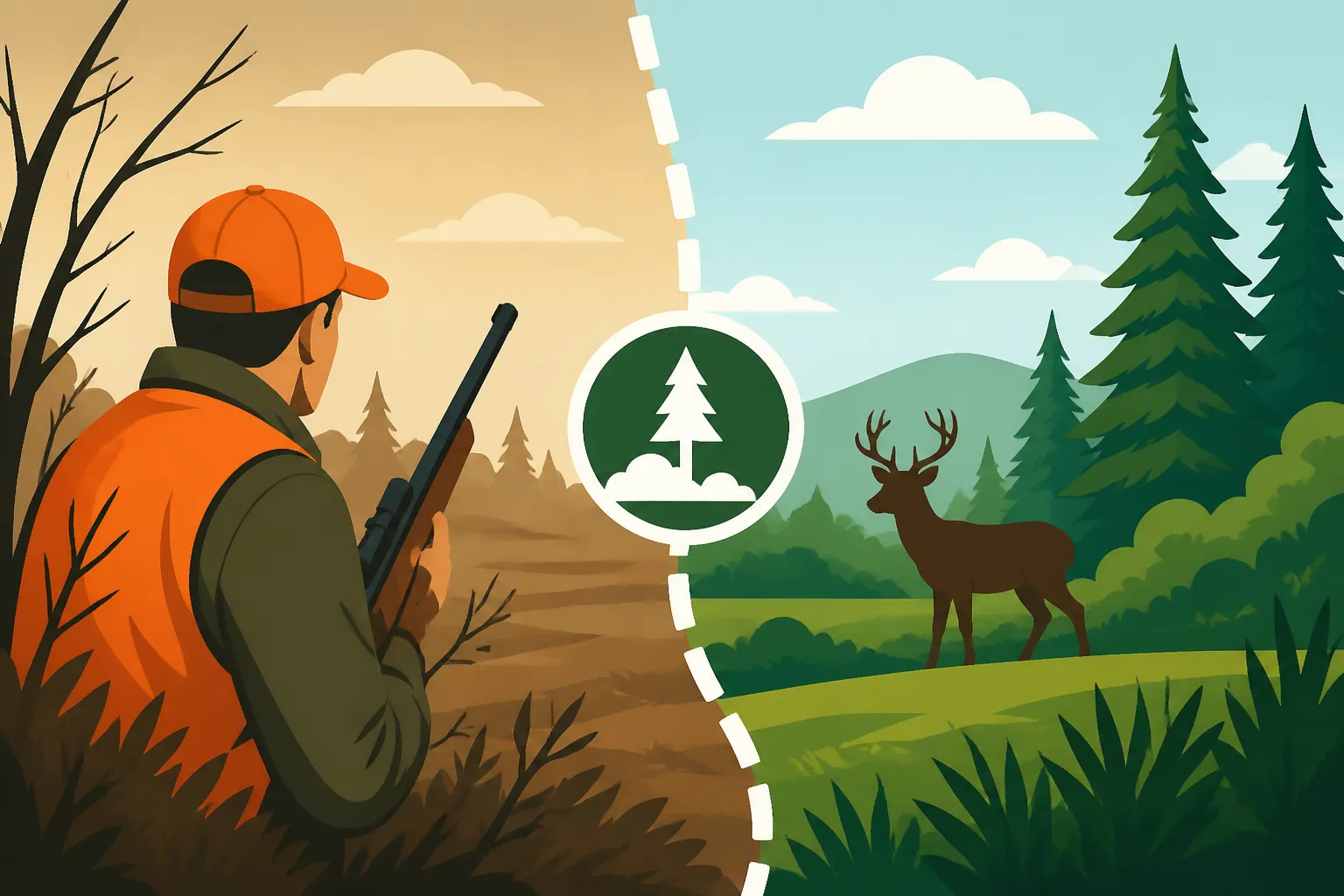
First and foremost, provincial parks in Manitoba are designated as areas where hunting is generally prohibited. This isn't just a suggestion; it's a hard and fast rule. The boundaries of these parks are legal lines, and crossing them with intent to hunt, or even shooting into them, can lead to serious penalties. Think of it as walking onto someone's private land without permission – except in this case, the landowner is the Province of Manitoba, and the rules are very clear.
There are no grey areas or "buffer zones" where you can take a chance. If an animal is inside the park, it's safe. Period. This can be incredibly frustrating when you watch a magnificent buck or a cow moose with a calf saunter just over the line, knowing your hunt for that particular animal is over. Always consult up-to-date provincial regulations and maps for any specific park you might be near, as regulations can sometimes vary slightly for certain designated areas within the broader park system, though the general "no hunting" rule remains steadfast for most.
It's also important to remember that even if you’re standing on legal hunting ground right next to the park, your projectile must not cross that boundary. This means careful shot selection and knowing your rifle's capabilities are paramount. An arrow or bullet that lands inside the park, even if you were standing legally outside, is a violation.
Why Hunters are Drawn to Park Edges
Despite the restrictions, park edges are often magnets for savvy hunters, and for good reason. Game animals, whether it's White-Tailed Deer, Manitoba's Most Hunted Animal, Moose Across Manitoba's Boreal Forest, or Black Bears Across Manitoba's Bush Country, quickly learn where the pressure ends and safety begins. Provincial parks, with their lack of hunting pressure, often become de facto sanctuaries. This means animals can grow older, larger, and establish undisturbed patterns within these protected areas.
Think of a whitetail buck that has survived several hunting seasons. He's learned that when the orange army descends, slipping into the thick cover of the adjacent provincial park provides immediate relief. He'll feed in agricultural fields or browse in the bush outside the park under the cover of darkness or during low-pressure times, then retreat to the security of the park as soon as he senses danger or daylight breaks. This behavior creates incredible opportunities for hunters who understand these patterns and are willing to put in the work on the perimeter. It’s like waiting for a flood of fish at the mouth of a river – they’re coming out, you just need to be in the right spot at the right time.
Not only do parks offer sanctuary from hunters, but they often contain excellent habitat that provides consistent food, water, and bedding areas. A provincial park might protect vast tracts of mature timber, pristine wetlands, or river bottomlands that are crucial for game survival. Animals don't recognize man-made boundaries; they simply use the best available habitat. So, if the best bedding is in the park, they'll bed there. If the best food is just outside, they'll venture out. This constant movement in and out of the park creates predictable patterns that can be exploited by observant hunters.
Legal Considerations Beyond the Boundary
While the park itself is a no-go, the land immediately adjacent can be a mixed bag of Crown land, private property, or even other designated hunting areas. This is where meticulous planning and understanding land ownership become absolutely crucial. You can't just assume that because it's not in the park, it's fair game.
Many provincial parks are bordered by a mosaic of different land types. On one side, you might have vast tracts of accessible Manitoba's Crown Land Access, perfect for setting up a stand along a natural funnel leading out of the park. On another side, the park might bump up against active farmland, where Getting Private Land Permission in Manitoba from the landowner is non-negotiable. Knowing who owns what piece of dirt is your first step once you've identified a promising park edge. This isn't just a courtesy; it's the law. Violating Manitoba Trespass Law for Hunters can result in fines, loss of hunting privileges, and a significant blow to the public image of hunters.
This is precisely where modern tools become invaluable. Apps like onX Hunt and GoHunt have become indispensable for hunters navigating these complex boundaries. They provide detailed satellite imagery overlaid with property lines, allowing you to instantly see if you're on Crown land, private property, or dangerously close to a park boundary. Always have these maps downloaded for offline use, as cell service can be spotty in some of Manitoba's more remote regions, especially near some of the larger provincial parks in the north. Using these resources, you can confidently identify legal hunting areas, landowner names, and even potential access points, saving you time and preventing unintentional trespassing. Reading a Manitoba GHA Map Before You Go should always be part of your pre-hunt routine.
Scouting and Strategy for Park Edge Hunting
Hunting successfully near a provincial park boundary requires a different mindset and a more focused approach than hunting an expansive block of general Crown land. You're essentially working a "hot zone" where animals are frequently moving between sanctuary and feeding/breeding grounds. This means your scouting needs to be precise, your strategy well-defined, and your understanding of game movement patterns heightened. It's not about covering miles; it's about dissecting inches of critical terrain.
Identifying Key Transition Areas
Animals moving in and out of the park won't just appear anywhere along a miles-long border. They'll use specific routes, often the path of least resistance or the most natural cover. Your job is to find these "doorways" or "transition areas." Look for funnels created by changes in topography, thickets, willow runs, or even man-made features like old fence lines or overgrown field edges. A narrow strip of bush connecting a dense park interior to an open agricultural field outside is a prime example of a funnel that game will almost certainly use.
Consider how game animals seek out food, water, and shelter. If the park offers ideal bedding, they'll likely venture out to adjacent feeding areas, whether those are natural browse lines, grain fields, or acorn flats, especially during dawn and dusk. Pay attention to water sources too; a creek or slough just outside the park boundary can be a major draw, especially in dry conditions. Hunting a Frozen Slough Crossing in late season can be particularly effective. These areas become natural intercept points. You need to identify where animals feel comfortable exiting the sanctuary and where they can quickly slip back in if threatened.
Reading sign becomes an art form in these areas. Look for well-used trails leading directly to and from the park boundary, rub lines, fresh scrapes, and consistent droppings. These aren't just random occurrences; they're direct indicators of animal activity and preferred travel routes. The freshest sign will tell you exactly where and when to focus your efforts. Reading Whitetail Sign in Manitoba Aspen can give you an edge in interpreting these subtle clues.
Utilizing Mapping Tools and Local Knowledge
Modern technology has revolutionized how we approach hunting, especially when dealing with complex land boundaries like those near provincial parks. Using an app like onX Hunt is almost mandatory here. You can literally sit at home, zoom in on satellite imagery, and identify likely travel corridors, pinch points, and potential stand locations right along the park edge. These apps clearly display property lines, distinguishing between Crown land, private land, and the park itself, ensuring you stay legal. GoHunt offers similar robust mapping capabilities that can help you visualize the terrain and potential animal movements.
But technology is only half the battle. Local knowledge is irreplaceable. If you’re hunting near private land adjacent to a park, take the time to knock on doors and talk to the landowners. They often have invaluable insights into game patterns, knowing exactly where deer cross or where a bear habitually feeds. Farmers, in particular, spend countless hours observing wildlife on their land and can provide details that no map can. Building these relationships is not just courteous, it's incredibly strategic. Knocking on Doors in Manitoba Farm Country can unlock access to some of the best hunting grounds.
Combine your digital scouting with boots-on-the-ground reconnaissance. Walk the edges, locate those trails, identify specific trees for stand placement, and mark potential shooting lanes. Remember, game animals are creatures of habit. If you can pinpoint their preferred exit and entry points, you're well on your way to success. Scouting a Manitoba Game Hunting Area comprehensively means blending all these approaches.
Patience and Precision in Stand Placement
Hunting the park edge is a game of patience and precision. You're not necessarily looking for animals that are already way out in the open; you're looking to intercept them as they transition. This means your stand placement needs to be absolutely perfect. Consider the prevailing winds – you must be downwind of any expected animal movement. Animals emerging from the park are often more alert, sensing they are leaving their sanctuary, making scent control and quiet movement even more critical.
Think about the time of day. Animals are most likely to move out of the park for feeding at dawn and return at dusk. Your stand should be set up to intercept them during these prime hours. This might mean being in position well before first light and staying until well after sunset, embracing the full "sit." Sitting All Day in a Manitoba Blind can pay off big time in these scenarios. You're not just waiting; you're patiently observing, ready for the moment an animal makes its move.
Careful consideration of natural cover and shooting lanes is also vital. You want to be concealed but have clear shots at the trails you've identified. Pruning a few branches to open up a lane can make all the difference, but do so minimally and ethically. Remember, you're looking for that crucial window of opportunity when an animal crosses the unseen boundary. Hanging a Stand on a Manitoba Bush Edge requires forethought about wind direction, sun position, and visibility.
| Aspect of Park Edge Hunting | Legal Requirements/Best Practices | Strategic Considerations |
|---|---|---|
| Boundaries | Absolute no hunting inside park. No shooting into the park. | Identify exact lines with GPS/apps. Focus on areas outside the boundary. |
| Land Ownership | Verify Crown land vs. private. Get permission for private land. | Use onX Hunt/GoHunt. Talk to local landowners for insights and access. |
| Game Movement | Ethical shot placement, ensure animal can be retrieved legally. | Animals use parks for sanctuary. Intercept them as they enter/exit. |
| Scouting | Stay on legal ground. Respect habitat. | Look for funnels, pinch points, fresh sign. Identify feeding/bedding outside. |
| Stand Placement | Ensure clear shot lanes on legal ground. | Position for prevailing winds. Set up for dawn/dusk transitions. |
| Retrieval | Do not enter park to retrieve game without prior official permission. | Plan for quick, ethical retrieves on legal ground. |
| Safety | Be aware of other hunters. Blaze orange as required. | Communicate with hunting partners. Have emergency plan. |
Ethical Hunting and Safety Near Protected Areas
Hunting near provincial park boundaries isn't just about knowing the rules and having a good strategy; it's also about upholding the highest standards of ethics and safety. Because these areas can concentrate game and, by extension, hunters, it's crucial to be extra mindful of your actions, your impact, and your interactions with others. Our reputation as hunters hinges on our responsible conduct, especially in sensitive areas like these.
Respecting Boundaries and Non-Hunting Zones
This cannot be stressed enough: a provincial park boundary is a hard line. You simply cannot cross it with a firearm or bow, or shoot into it. Doing so isn't just a minor infraction; it's a serious poaching offense that carries hefty fines, potential loss of hunting privileges, and can damage the public's perception of hunting. Imagine the outcry if a hunter was caught shooting an animal inside a provincial park – it reflects poorly on all of us.
What if an animal you've shot on legal ground crosses the boundary and drops inside the park? This is a tough situation, but one you absolutely must handle correctly. Your first step is not to pursue the animal into the park. Instead, you need to contact Manitoba Conservation or a park official immediately. Explain the situation clearly, provide your location, and request assistance. In some cases, they may grant you permission to enter the park, unarmed and accompanied, to retrieve your game. However, this is at their discretion, and without it, entering the park for retrieval is strictly prohibited. It's a bitter pill to swallow if a trophy animal is lost this way, but respecting the rules is paramount. Manitoba's Moose Conservation Closures often involve specific boundaries, reinforcing the need for exact adherence.
Always double-check your map, like those provided by onX Hunt or GoHunt, before every shot. Know where that boundary lies. Use physical landmarks if possible, and rely on your GPS. The few extra seconds it takes to confirm your position could save you a world of trouble.
Communication with Landowners and Park Staff
Effective communication is the bedrock of responsible hunting, particularly when you're operating in proximity to provincial parks and private land. If you’re hunting private land adjacent to a park, you absolutely need to have explicit permission from the landowner. A simple "yes" from years ago might not suffice. Reconfirm each season. What Manitoba Trespass Law Requires makes it clear that written permission is often preferred, and always be crystal clear about where you'll be hunting and what your intentions are. Remember, you are a guest on their land, and showing respect goes a long way.
Furthermore, being aware of park staff or conservation officers in the vicinity is part of the game. If you're approached, be courteous, cooperative, and ready to explain where you are, what you're doing, and demonstrate that you are adhering to all regulations. Having your licences and tags readily available, and being able to show your location on a mapping app, can streamline any interaction and build trust. They're doing their job, and your cooperation helps everyone.
Sometimes, establishing communication with park staff before your hunt, if you plan to hunt extensively on adjacent Crown land, can be beneficial. A quick call to the local park office might give you insights into specific local regulations, potential closures, or high-traffic areas you should be aware of. They might also appreciate knowing that hunters are in the area, allowing them to better manage visitor expectations and safety.
Managing Pressure and Shared Resources
Hunting near provincial parks, especially those within popular Game Hunting Areas (GHAs), can sometimes mean dealing with increased hunter pressure. Knowing that game animals use parks as sanctuaries, many hunters will naturally gravitate to the perimeter. This means you might encounter more vehicles, more foot traffic, and potentially more hunters in the woods than you would in more remote areas. Opening Weekend Crowds on Manitoba Public Land are a reality, and park edges are no exception.
It's vital to maintain a high level of hunter etiquette. Be courteous to fellow hunters, avoid crowding someone's spot, and if you see someone already set up, find another area. There's enough game to go around if we all act responsibly. The shared resource isn't just the game; it's the experience of being in the outdoors. Respecting other hunters' space and experience is key to maintaining a positive hunting culture. This also includes respecting non-hunters who might be using trails or accessing the park for recreation.
Ultimately, hunting near a provincial park boundary in Manitoba can be incredibly rewarding. It requires diligence, a deep understanding of regulations, sophisticated scouting, and an unwavering commitment to ethical conduct. By doing your homework, leveraging modern tools, and communicating effectively, you can successfully and responsibly pursue game where the wild meets the protected.
Disclaimer
This article is for general informational purposes only and does not constitute professional advice. Laws, prices and regulations vary by location and change over time. Consult a qualified professional for guidance on your specific situation.