Hunting a Pasture With Cattle On It
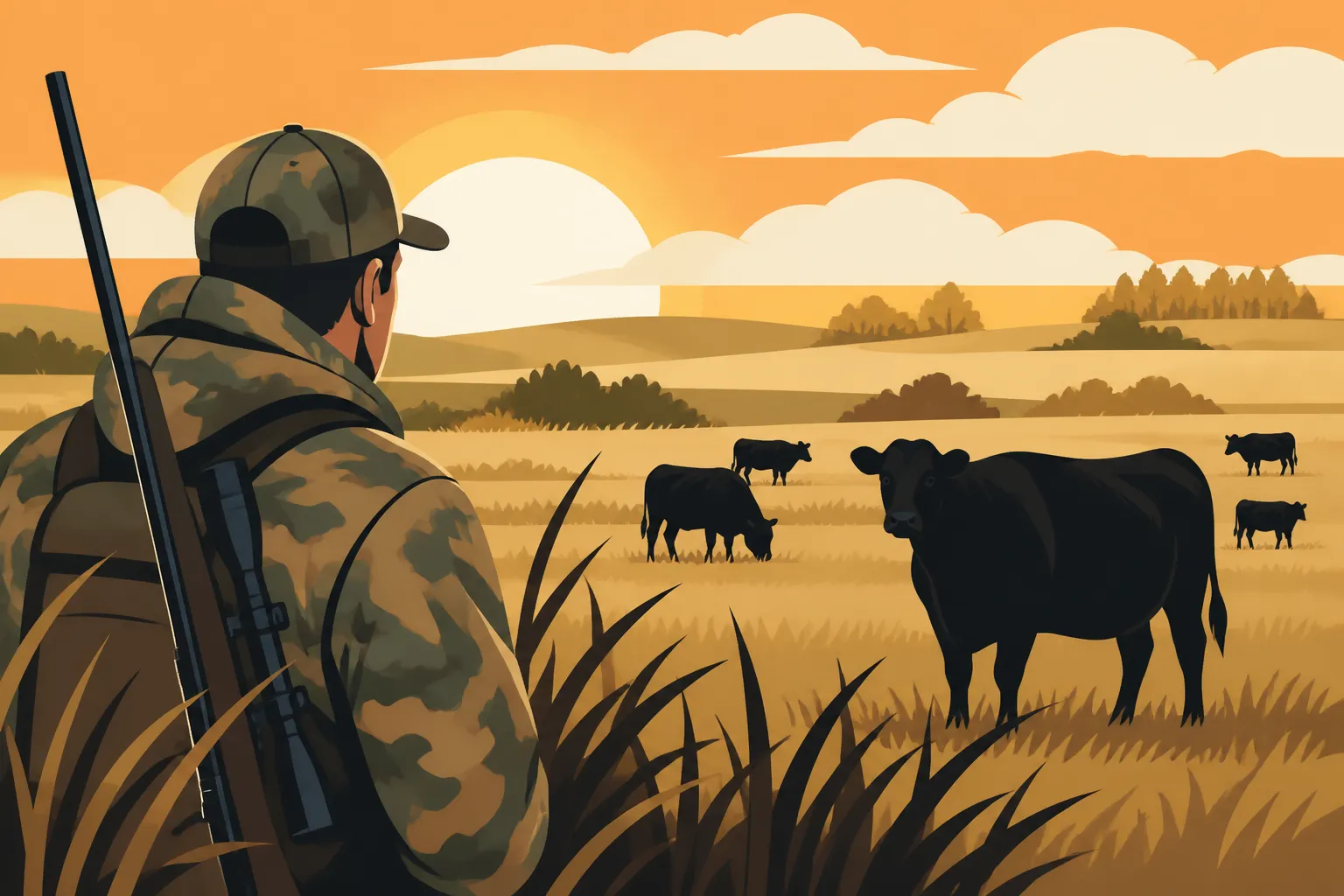
It’s a scene many Manitoba hunters know all too well: you’ve found a promising stretch of bush or a well-used game trail, only to realize it’s smack dab in the middle of a cattle pasture. That feeling of "so close, yet so far" when you spot prime habitat, but then see the cows grazing peacefully can be frustrating. But what if those seemingly incompatible elements — livestock and wild game — actually work together? This guide is all about helping you navigate these unique situations, ethically and effectively, so you can still pursue your passion where cattle share the land.
Understanding the Dynamics of Shared Habitat
Hunting in areas where cattle graze presents a distinct set of challenges and opportunities. It’s not just about avoiding the livestock; it’s about understanding how their presence shapes the environment and influences the behavior of wild game. Cattle aren't just obstacles; they are part of a complex ecosystem that can often benefit the very animals you're pursuing.
How Cattle Influence Game Movement and Behavior
Cattle, through their grazing habits, actually create and maintain certain habitat features that can be attractive to other animals. They can keep grasslands clipped short, creating open areas that deer, for example, might use for feeding on specific forbs that thrive in grazed conditions. Their constant movement can also create discernible trails that act as natural travel corridors for deer and elk, especially along bush edges or between water sources. These trails, while sometimes muddied by hoof traffic, can be highways for whitetails moving between bedding areas and feeding grounds. You might observe deer using the same worn paths as cattle, particularly if those paths offer the easiest route through thick brush or across open fields.
Furthermore, the presence of cattle often means there's a reliable water source nearby, such as dugouts, ponds, or troughs. These water points are magnets for all forms of wildlife, particularly during dry spells or in areas where natural water is scarce. Game animals will readily use these water sources, often timing their visits for periods when cattle activity is minimal, like early morning, late evening, or even at night. Understanding these patterns, perhaps by using tools like GoHunt to scout water locations, can be key to successful hunting.
Identifying Game Sign Amidst Livestock Activity
When hunting a pasture with cattle on it, distinguishing between livestock and game sign can be tricky, but it's far from impossible. Fresh deer tracks are generally more pointed and slender than the broad, rounded prints of cattle. Look for distinct dewclaw imprints on deer tracks, especially in softer ground. Deer droppings are another clear indicator, appearing as small, dark pellets, often in clusters, unlike the large, flattened patties left by cows.
Beyond direct sign, pay attention to rubs and scrapes along the edges of the pasture or in nearby woodlots. Deer, especially bucks, will still mark their territory, and these signs are unmistakable, regardless of whether cattle are nearby. Bedding areas might be found in thicker pockets of cover adjacent to the pasture, providing deer with a sense of security while still allowing them to access the grazed areas for food. Reading Whitetail Sign in Manitoba Aspen can offer more insights into identifying these crucial indicators. Even though the habitat is shared, deer still seek out their traditional cover and food sources, often just beyond the sightline of the grazing cattle. Look for where deer are transitioning from heavy cover to more open, grazed areas.
Navigating Legalities and Landowner Relations
Hunting on any private land in Manitoba, especially active agricultural land, requires careful consideration of legalities and, more importantly, building good relationships with landowners. This isn't just a courtesy; it's often a legal requirement and absolutely crucial for long-term hunting access.
Securing Permission and Understanding Landowner Concerns
The first and most critical step is always to Getting Private Land Permission in Manitoba. Never assume that just because land isn't explicitly posted, it's open for hunting. This is particularly true for pastures with active livestock. Approach the landowner well in advance of the season, ideally in person. Be polite, respectful, and prepared to explain exactly what you intend to do. Landowners have legitimate concerns about their livestock, property, and personal safety. They worry about fences being cut, gates left open, and, of course, the safety of their animals.
When you speak with them, assure them that you are a responsible hunter. Offer to share your hunting licence details. Ask specific questions:
- Are there any areas of the pasture that are off-limits?
- Are there specific times of day that work best for you to hunt?
- Should you report anything unusual you see, like sick livestock or damaged fences?
- Where should you park your vehicle?
- Are there any specific cattle breeds that are more skittish or protective?
Showing this level of respect and genuine concern for their operation goes a long way. Some landowners might even appreciate an extra set of eyes on their property. Building trust is paramount; it's a long-term investment that can lead to continued access year after year. For a deep dive into the legal framework, check out Manitoba Landowner Permission Law.
Respecting Property and Livestock Guidelines
Once you've obtained permission, adhering strictly to the landowner’s guidelines is non-negotiable. This isn't just good manners; it protects your access and the reputation of all hunters. This includes:
- Closed Gates: Always close gates behind you, even if you found them open. This is critical for keeping livestock contained.
- Fencing: Be incredibly careful around fences. If you have to cross one, do so at a sturdy point and avoid damaging wires or posts. Never cut a fence.
- Vehicle Access: Stick to designated access roads or trails. Driving off-road can damage crops, create ruts, and spread weeds.
- No Shooting Near Livestock: This should be obvious, but it bears repeating: never shoot in the direction of or near any livestock. A stray bullet or even the sound of a shot too close can injure or spook animals, potentially causing serious financial loss for the farmer.
- Ethical Shot Placement: When hunting big game in a pasture environment, always be absolutely certain of your target and what lies beyond it. The open nature of pastures means a projectile can travel a long distance. Always have a safe backstop.
- Carcass Handling: If you harvest an animal, discuss with the landowner how they'd prefer you to handle the carcass. Some may want you to remove it entirely; others might have a designated spot for gut piles if it's far from livestock. Maintaining cleanliness and respect for their land is vital.
By proactively addressing these points and consistently demonstrating responsible behavior, you reinforce the landowner's trust and ensure that future hunting opportunities remain open.
Tactics for Successfully Hunting Cattle-Grazed Land
Hunting effectively in a cattle pasture requires a slightly different approach than typical bush or forest hunting. You need to account for the cattle themselves, the altered landscape, and the distinct patterns of wild game that share the space.
Scouting and Stand Placement in Open Pasture
Scouting is paramount, as always, but with an added layer of complexity. Before the season, spend time observing how cattle use the pasture. Where do they typically graze, bed down, and water? Where do they usually not go, perhaps due to thicker brush, steeper terrain, or a specific feed location? These "cattle-free" zones, even small ones, can be prime hiding spots for deer or elk. Use scouting tools like GoHunt to analyze topography and vegetation patterns, looking for subtle changes in elevation, treelines, or brushy draws that might offer cover.
When it comes to stand placement, think about the edges. Deer and elk are often most comfortable entering open pastures from the safety of cover. A stand positioned along a treeline, a bluffy hillside, or a significant shelterbelt bordering the pasture can be incredibly effective. Consider pinch points – areas where natural topography or fencing funnels game into a narrower corridor. A good example might be Hunting a Bluff Between Two Fields or Hunting a Shelterbelt Between Two Fields.
Also, consider the wind. Livestock can carry a lot of scent, and if you’re downwind of them, they might pick up your scent and become agitated, which could alert any nearby game. Always hunt with the wind in your favour relative to where you expect game to appear, and try to minimize your exposure to large groups of cattle. Using a ground blind can also be an excellent option, as it helps break up your silhouette and can reduce visual disturbance to both game and cattle.
Still Hunting and Stalking Strategies
Still hunting or stalking in a cattle pasture demands patience and keen observation. The open nature of many pastures means cover can be sparse. Use natural features like folds in the terrain, large hay bales, brush lines, or even rows of taller grass as concealment. Move slowly, stopping frequently to glass the area. Pay close attention to any movement, as a deer might be bedded down in a dip or behind a small clump of brush, often indistinguishable from the background at first glance.
One effective strategy is to use the cattle themselves as cover. Deer are generally accustomed to cattle, so a hunter moving slowly and deliberately near a group of cows might go unnoticed by game animals. However, this requires a very calm and subtle approach to avoid alarming the cattle. If they start to get agitated or move away, you’re doing something wrong. It's a fine line to walk, and it requires careful attention to the demeanor of the livestock.
If you encounter deer or elk that are already spooked, don't press the issue immediately. Instead, observe their escape route and try to circle around, anticipating where they might regroup in nearby cover. Remember that game animals are creatures of habit, and even if disturbed, they often return to preferred areas.
Aspect of Hunting Pastures Advantages for Hunters Key Considerations
Cattle regularly maintain trails and clear areas, making it easier for hunters to spot and approach game. Always verify if there's any active livestock on the land.
Grazing can enhance certain forage species that attract game. Livestock might concentrate around water, impacting game access or visibility.
Game animals often become accustomed to cattle, potentially lowering their wariness if cattle are nearby. Scent and sound from cattle could mask subtle signs of game or make them more alert.
Landowner Relations Asking for permission often leads to deeper understanding of the property and its nuances from the farmer. Building trust requires consistent communication and respect, not just a one-time request.
Respectful behavior increases the likelihood of long-term hunting access. Any perceived disregard for property or livestock can quickly lead to revoked permission.
Opportunity to report issues (e.g., fence damage, sick animals) back to the landowner. May involve additional restrictions or specific hunting zones compared to un-grazed land.
Hunting Tactics Game might use cattle paths as convenient travel corridors. Hunter's presence might agitate cattle, potentially alerting game or requiring hunter relocation.
Open areas make glassing and spotting game easier. Limited cover for stalking or concealing a stand in wide-open pastures.
Water sources for cattle also attract game, especially during dry periods. Need for extreme caution with shot angles and backstops to ensure livestock safety.
Safety and Ethical Considerations in a Shared Environment
Hunting anywhere carries a responsibility, but when you're in a working pasture, that responsibility intensifies. Your actions directly impact someone's livelihood and the well-being of animals that aren't your target.
Prioritizing Livestock and Human Safety
The absolute top priority when hunting a pasture with cattle on it is safety, both for the livestock and for any people who might be working or living on the property. Always adhere to Manitoba Hunter Education Requirements, which emphasize safe firearm handling and ethical hunting practices.
- Positive Identification: Never, under any circumstances, take a shot unless you are 100% certain of your target and what lies beyond it. In a pasture, distinguishing between a deer and a calf, especially at a distance or in low light, is critical. Any misidentification could be catastrophic.
- Backstop: Always ensure you have a safe and adequate backstop behind your target. A bullet can travel a long way through open pasture, and you must account for this to prevent it from striking livestock, buildings, or other people. This often means carefully selecting your shot angle.
- Awareness of Others: Be acutely aware that landowners, their family, or employees might be working in the pasture, checking fences, or tending to livestock. Your presence should be as discreet as possible, and you should always assume there might be someone else around. Wear blaze orange as required, and perhaps even more than required, to maximize your visibility.
- Noise: While a shot is unavoidable, try to minimize other unnecessary noise. Loud conversations, barking dogs, or excessive vehicle noise can disturb livestock and alert game.
Ethical Considerations for Game and Land
Ethical hunting goes beyond legal requirements; it's about respecting the animals you pursue and the land you hunt on. In a cattle pasture, this includes several key points.
- Avoid Harassing Livestock: Intentionally spooking, chasing, or otherwise harassing cattle is not only unethical but potentially illegal. It can cause stress to the animals, lead to injuries, and is a surefire way to lose your hunting privileges.
- Minimize Disturbance: While some interaction is inevitable, try to move through the pasture in a way that minimizes disturbance to the cattle. If they see you, let them observe you calmly and continue grazing. If they start moving away, consider changing your route or waiting until they settle down.
- Quick and Clean Kills: As with all hunting, strive for a quick, clean kill to minimize suffering. In an open pasture, a wounded animal can be particularly difficult to track and recover, potentially leading to a lost animal and an unpleasant situation for the landowner. After a successful shot, recover your game quickly and efficiently. Meat Care in Manitoba's Cold Snaps is an important consideration, especially if you're hunting in cooler weather.
- Leave No Trace: Pack out everything you pack in. This includes spent casings, food wrappers, and any other trash. If you leave a gut pile, ensure it’s in an area where it won't attract predators close to the cattle or disturb the landowner. Taking pride in leaving the land cleaner than you found it demonstrates respect and responsibility.
Hunting a pasture with cattle on it can be a rewarding experience, offering unique challenges and opportunities. By understanding the dynamics of shared habitat, building strong relationships with landowners, employing smart hunting tactics, and always prioritizing safety and ethics, you can enjoy successful and responsible hunts in these distinctive Manitoba landscapes. Whether you're hunting for deer, elk, or even certain predators that might follow the cattle, these principles will guide you toward a positive outcome.
Disclaimer
The information provided in this guide is for general informational purposes only and does not constitute legal advice. Hunting regulations, land access laws, and season dates are subject to change. Always consult the most current Manitoba Hunting Guide and relevant provincial regulations before engaging in any hunting activities. Hunters are responsible for understanding and complying with all applicable laws and obtaining all necessary licenses and permissions.