Manitoba’s Record Whitetail Buck
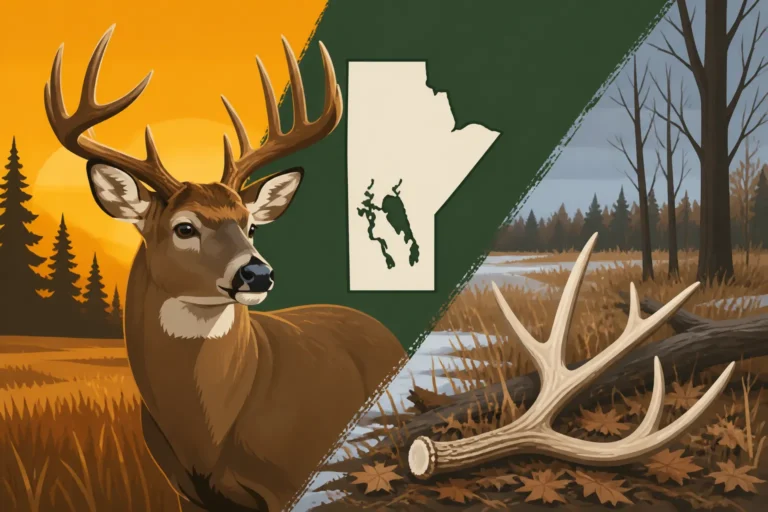
Every whitetail hunter, deep down, has a vision of that one buck – the deer that transcends a regular harvest and enters the realm of legend. In Manitoba, that dream isn't just a fantasy; it's a very real possibility, as our province consistently produces some of the biggest, most impressive whitetail bucks on the continent. This guide is all about understanding what makes a Manitoba whitetail a true giant, where these magnificent animals come from, and how you might just pursue one yourself.
Understanding the "Record" Whitetail Buck in Manitoba
When we talk about a "record" whitetail buck, we're not just talking about a big deer. We're talking about a buck whose antlers meet or exceed specific measurements set by official scoring organizations. It's a precise system that aims to objectively quantify the size and symmetry of a rack. For many, just seeing a huge buck is a record in itself, but for those who dream of the book, there are rules to learn.
The Boone & Crockett Club Standards
The Boone & Crockett Club (B&C) is the gold standard for North American big game records. Their scoring system is incredibly detailed, focusing on the symmetrical growth of typical antlers and providing a framework for nontypical racks. For a deer to be considered for the B&C record book, it must be taken by fair chase methods, and the antlers must have a 60-day drying period before official measurement. This isn't just about a big spread; it's about the length of main beams, the circumference of the bases, and the length of each tine, all contributing to a net score. Manitoba has a strong showing in the B&C record books, a testament to the quality of deer found here. Hunters often dream of a typical B&C buck, where every point matches its opposite side, creating that perfect, sweeping antler growth.
Typical Versus Nontypical Racks
Understanding the difference between typical and nontypical is crucial in the world of trophy whitetails. A "typical" rack is defined by its symmetry, with antler points originating from the main beam in a generally symmetrical fashion. Deductions are made for any abnormal points or differences in length between corresponding points on each side. The goal is perfection in balance and size. Many hunters prefer the classic aesthetic of a wide, tall, symmetrical typical rack.
"Nontypical" bucks, on the other hand, embrace the wild and unpredictable growth of antlers. These are the bucks with drop tines, kickers, stickers, and points growing in all directions. While they might not be as symmetrical, their sheer mass and unique formations are often breathtaking. The scoring system for nontypical racks still measures main beams, tines, and circumferences, but it also adds in the total length of all abnormal points, resulting in a much higher gross score. Some of Manitoba's most famous record bucks are actually nontypical, showcasing the incredible genetic potential and diverse antler growth found in our herds. It's truly a marvel to witness the sheer artistry nature can create on these magnificent animals.
Pope and Young Club for Archery Hunters
For the dedicated archery hunter, the Pope and Young Club (P&Y) serves as the equivalent record-keeping body. The P&Y scoring system is identical to B&C, but it's exclusively for animals harvested with a bow and arrow under fair chase conditions. If you're passionate about bowhunting, achieving a P&Y entry is a huge accomplishment, representing not just a trophy animal but also the skill and dedication required to take a mature buck with traditional methods. Manitoba's archery seasons, particularly the early season, offer fantastic opportunities for those hoping to connect with a P&Y caliber animal. Whether you're hunting during Manitoba's September Archery Opener or later in the fall, the potential is always there.
Where Manitoba's Giant Bucks Roam
It’s no secret that Manitoba produces giant whitetails. The combination of rich habitat, strong genetics, and often overlooked pockets of cover contribute to our reputation as a trophy whitetail destination. These aren't just random occurrences; there's a reason these areas are so productive.
The Blend of Agriculture and Bush
One of the primary factors contributing to Manitoba's trophy potential is the unique blend of agricultural land and dense bush. Think of areas where expansive grain fields meet thick aspen bluffs, willow runs, and deep river bottoms. This creates an ideal environment for whitetails: a buffet of high-energy agricultural crops (corn, canola, peas, wheat, barley) providing incredible nutrition for antler growth and body mass, coupled with impenetrable cover for bedding, security, and escape. Bucks can feed heavily, grow large bodies, and avoid pressure, leading to older age classes. You'll find these conditions in much of the Parkland region and portions of the Southwest. Hunters looking at Hunting a Field of Standing Corn or Hunting a Sunflower Field After Harvest know exactly the kind of food sources these big bucks are drawn to.
Genetics, Age, and Nutrition
Three pillars support the growth of a record-book buck: genetics, age, and nutrition. Manitoba's whitetail herds possess excellent genetics, which means they have the inherent capability to grow impressive racks. However, genetics alone aren't enough. A buck needs to reach maturity, typically 4.5 years or older, to express its full antler potential. This requires surviving multiple hunting seasons, which means finding safe havens and being smart.
Good nutrition is the final piece of the puzzle. The abundant, high-protein forage from our agricultural fields, supplemented by natural browse in the bush, provides the essential minerals and energy for rapid antler development year after year. A buck that consistently has access to quality food, particularly during the antler growing phase in spring and summer, will put on more mass and length. This is also Why Manitoba Bucks Grow Heavy Bodies – they are simply well-fed! Researching specific GHAs using tools like GoHunt can help you identify areas known for optimal habitat and deer health.
Productive Game Hunting Areas (GHAs)
While big bucks can turn up almost anywhere in Manitoba, certain Game Hunting Areas (GHAs) consistently produce higher numbers of trophy-class animals due to the aforementioned factors. The Parkland region, with its rolling hills, mixed forests, and agricultural pockets, is particularly renowned. Areas like the Duck Mountain, Turtle Mountain, and the Interlake often yield impressive bucks. The key is finding those areas where deer can age, find consistent nutrition, and avoid excessive pressure. Utilizing mapping tools, perhaps even something like the GoHunt platform, to scout public lands and understand habitat types can be incredibly beneficial. Knowing Where Manitoba Grows the Biggest Bucks isn't about a single secret spot, but rather understanding the habitat patterns that support them.
Stories of Manitoba's Trophy Whitetails
Beyond the official score sheets and record books, there are countless stories of legendary bucks, the ones that become local folklore or inspire years of pursuit. These are the deer that fuel the passion and obsession of whitetail hunters across the province.
The Unofficial Giants and Local Legends
Every hunting camp, every local diner, and every taxidermy shop in Manitoba has tales of "the one that got away" or the enormous buck that was seen but never harvested. These are the unofficial giants – bucks with incredible racks that might never make it into a record book because they were found as sheds, or simply admired from afar. These local legends are often just as inspiring as the official records, showcasing the sheer potential of our deer. Imagine the stories told over coffee about the "Ghost Buck of the Interlake" or the "Monster of the Pembina Valley." These deer become part of the hunting fabric, driving hunters to spend countless hours in the bush, hoping to catch a glimpse or perhaps even connect with a similar calibre animal. Sometimes, a mount in a local taxidermist's window, without an official score, is just as awe-inspiring as anything in the record books.
Famous Manitoba Bucks in the Record Books
Manitoba has a proud history of producing world-class whitetails, both typical and nontypical. When you flip through Manitoba's Trophy Record Book, you'll see names and dates that represent decades of incredible hunting success. These are the bucks that put Manitoba on the map for serious trophy hunters. Some of these animals have truly spectacular racks, pushing the boundaries of what's considered possible for whitetails.
Perhaps one of the most talked-about categories is Manitoba's Top Nontypical Whitetails. These are often the deer with truly wild and unique antler configurations that leave you shaking your head in wonder. These record entries aren't just numbers; they represent years of growth, perfect conditions, and a hunter's dedication. They remind us that the potential for a truly once-in-a-lifetime animal is always present when hunting in our province.
Pursuing Your Own Manitoba Giant
If the thought of a record-book whitetail stirs your soul, then Manitoba is an excellent place to make that dream a reality. It takes a combination of diligent scouting, strategic hunting, and a healthy dose of patience.
Strategic Scouting and Habitat Identification
The pursuit of a giant buck starts long before opening day. It begins with meticulous scouting. Utilize satellite imagery, topographic maps, and even online platforms like GoHunt to identify key habitat features. Look for areas with a mix of dense bedding cover, prime food sources, and water. Focus on transition zones – where bush meets field, where ridges drop into draws, or where different forest types converge. Bucks are creatures of habit, and understanding their movement patterns between bedding and feeding areas is paramount. Scouting helps you identify natural travel corridors, pinch points, and rub lines that indicate the presence of mature deer. Don't just look for deer; look for their deer. Learning to interpret Reading Whitetail Sign in Manitoba Aspen or understanding Hunting a Bush Edge can provide invaluable clues.
Patience, Persistence, and Stand Placement
Hunting trophy whitetails is not for the impatient. It often involves long hours in the stand, enduring challenging weather conditions, and passing on smaller bucks in the hope of a true giant. Persistence is key; a mature buck might only show himself for a few fleeting moments during daylight hours over an entire season. Strategic stand placement, often influenced by wind direction and predicted deer movement, is critical. You might only get one shot at the buck you're after, so making that shot count requires practice and preparation. When considering Hanging a Stand on a Manitoba Bush Edge, think about scent control, entry and exit routes, and how the deer will use that specific area. Remember, the biggest bucks are often the smartest and most elusive.
The Right Tools for the Hunt
Beyond your rifle or bow, having the right tools can significantly increase your chances of connecting with a trophy whitetail. High-quality optics are a must for spotting deer at a distance and evaluating their racks. Scent control products are essential for minimizing your human odor, especially when hunting mature bucks that have an uncanny ability to detect threats. A reliable GPS or mapping app (like the one offered by GoHunt) is invaluable for navigating unfamiliar terrain, marking stand locations, and tracking deer sign. Moreover, understanding the local regulations, especially concerning specific GHAs, seasons, and limits, is paramount. Always double-check Manitoba Big Game Season Dates for the specific area you plan to hunt.
Remember, the journey to a record-book buck is as rewarding as the harvest itself. It’s about understanding the land, respecting the animal, and challenging yourself as a hunter.
Record Book Scoring Quick Reference
Here's a simplified look at the main differences between Typical and Nontypical scoring:
| Feature | Typical Whitetail | Nontypical Whitetail |
|---|---|---|
| Primary Goal | Symmetry and balance of points | Overall mass and total antler material |
| Deductions | Significant for asymmetry, abnormal points | Minor for asymmetry; abnormal points are added |
| Abnormal Points | Counted as deductions from gross score | Added to the gross score, enhancing the final score |
| Appearance | Classic, symmetrical, clean look | Often wild, unique, with many irregular points |
| Minimum Score (B&C) | Generally higher than nontypical for entry | Often lower than typical for entry due to added points |
| P&Y Equivalents | Same scoring criteria, but for archery harvested bucks | Same scoring criteria, but for archery harvested bucks |
This table provides a basic overview; the actual scoring is far more intricate and involves multiple measurements of beam length, tine length, and circumferences at various points. For a detailed understanding, checking out Scoring a Typical Whitetail Rack is highly recommended.
Disclaimer
This article is for general informational purposes only and does not constitute professional advice. Laws, prices and regulations vary by location and change over time. Consult a qualified professional for guidance on your specific situation.