Manitoba’s Record Black Bear and Its Score
For many hunters, the dream of taking a truly exceptional black bear, one that stands out from the rest, is a powerful motivator. But when we talk about a "record" black bear here in Manitoba, what exactly does that mean, and how is such an animal officially judged and scored? This guide will pull back the curtain on the world of trophy black bears, helping you understand the criteria, the process, and the remarkable animals that call our province home.
Understanding How Black Bears Are Scored for the Record Books
It's one thing to see a big bear in the woods, and quite another for it to qualify for a recognized record book. In the world of big game hunting, official scoring systems provide a standardized way to compare trophies across different regions and years. For black bears, the primary system most hunters think of is Boone & Crockett, though Pope & Young also plays a significant role, especially for archery enthusiasts. These systems focus on the skull, which is the most consistent indicator of a bear's true size, regardless of its body condition at the time of harvest.
Skull Measurement Basics
The core of black bear scoring revolves around skull measurements. Specifically, it's the greatest length and the greatest width of the skull. This might sound straightforward, but there are precise rules to follow to ensure consistency. The length is taken from the tip of the nose to the back of the skull, typically by placing one jaw of the caliper on the most forward part of the premaxillae and the other jaw on the most posterior part of the skull. The width is measured across the widest point of the skull, usually the zygomatic arches. These measurements are taken after a mandatory drying period, often 60 days, to allow for any shrinkage to stabilize. This drying period is critical; a freshly harvested skull will always measure larger than one that has properly dried, which is why official scorers adhere strictly to this rule. Imagine taking a beautiful bear, only to have its green score diminish after drying – it's a common, if sometimes frustrating, reality.
Differences Between Boone & Crockett and Pope & Young for Bears
While both Boone & Crockett (B&C) and Pope & Young (P&Y) use the length and width of the skull, there's a fundamental difference in their acceptance criteria. Boone & Crockett is generally considered the "all-weapon" record-keeping organization, meaning it accepts entries from any legal hunting method, including rifle, muzzleloader, and archery. Their minimum entry score for a black bear is typically higher, representing the truly exceptional specimens. Pope & Young, on the other hand, is dedicated exclusively to records taken with traditional archery equipment. While their scoring methodology for the skull is essentially the same (length + width), their minimum entry score for black bears is typically lower than B&C, reflecting the added challenge and skill involved in bowhunting. So, if you're out there during Manitoba's Archery Season Opens and connect with a big bruin, you'll be looking at the Pope & Young minimums, whereas a rifle hunter later in the season would set their sights on Boone & Crockett. It's important to know which book you're aiming for, as it can influence your hunt planning and expectations.
The Anatomy of a Record Bear in Manitoba
Manitoba is known for growing some truly impressive black bears. Our vast tracts of boreal forest and mixed-wood regions provide excellent habitat, with plenty of diverse food sources that allow bears to grow large and robust. When you're out on a Black Bear Hunting in Manitoba trip, you quickly realize that judging a bear's size can be incredibly tricky. A "big" bear can often just be a medium-sized bear standing in a small clearing, or a younger bear with a fluffy coat. Understanding the nuances of what makes a true trophy takes practice and a keen eye.
Body Size Versus Skull Size in Judging Bears
This is perhaps the biggest misconception hunters face when trying to field-judge black bears. A bear can look enormous due to its coat, its posture, or the surrounding vegetation, yet still have a relatively modest skull. Conversely, a bear with a compact, slicker coat might not appear as massive but could possess a truly giant skull. Think about a bear that's been gorging on blueberries and has a distended belly – it looks huge! But that doesn't mean its skull is proportionally large. Experienced bear hunters often focus on indicators like a blocky head, small ears relative to the head, a Roman nose, and a thick neck that blends into the shoulders. These features tend to correlate more directly with older, more mature bears that have had years to develop larger skulls. Trying to judge a bear solely by its body size can lead to disappointment if your goal is a record-book animal. Many outfitters specializing in Manitoba Black Bear Hunt Prices will tell you that it's all about the head.
Age and Skull Development
Just like with deer antlers, a bear's skull size is largely a function of its age. Younger bears, even those with significant body mass, simply haven't had the time for their skulls to reach their maximum growth potential. A truly large skull, one that pushes into record book territory, almost always belongs to an older boar. These bears have survived multiple hunting seasons, dodged other predators, and thrived through many winters, indicating a robust genetic lineage and access to excellent food resources. A 10-year-old bear will almost certainly have a larger skull than a 4-year-old bear, even if their body weights are similar. When you're Spring Bear Hunting in Manitoba or out for Hunting Manitoba's Fall Bear Season, patience is key. Letting younger bears walk allows them to mature and reach that trophy potential. It's a testament to good wildlife management and the hunter's ethical commitment to quality animals.
What a Big Boreal Black Bear Weighs
While skull size is paramount for the record books, the sheer physical presence of a large Manitoba black bear is undeniable. Our northern bears, particularly those found deeper in the boreal forest where food can be plentiful and human pressure lighter, can grow to impressive weights. We're talking about bruins that can tip the scales well over the typical 300-pound mark. It’s not uncommon to hear tales of Manitoba black bears weighing upwards of 400, 500, or even 600 pounds, especially mature boars in prime condition leading up to denning. These exceptional individuals are truly giants of the forest. The abundance of berries, mast crops, and other forage in Manitoba's wild areas contributes significantly to their ability to pack on the pounds. This is why when you're thinking about What a Big Boreal Black Bear Weighs, you're often picturing a bear that has a good chance of also having an impressive skull.
Hunting Strategies for Trophy Bears in Manitoba
Chasing a record-book black bear in Manitoba isn't just about luck; it's about strategic planning, understanding bear behaviour, and often, a lot of hard work. Our province offers diverse terrain, from the dense bush of the Interlake to the vast forests of the north, each presenting unique challenges and opportunities for a hunter. Successful trophy hunters don't just wander into the woods; they put in their time, do their research, and often employ specific tactics to find those truly big bruins.
Baiting for Mature Bears
Baiting is arguably the most popular and effective method for consistently taking mature black bears in Manitoba. The strategy involves establishing a bait site, typically consisting of various food items high in calories and scent, designed to attract bears and encourage them to frequent the location during legal hunting hours. The real trick, though, isn't just setting up a bait; it's understanding how to manage it to target older, larger boars. Big boars are often nocturnal or crepuscular, and they can be wary of bait sites, especially those frequented by smaller bears or sows with cubs. Smart baiting involves keeping the site active for weeks, allowing bears to become comfortable. It also means using trail cameras extensively to identify the size and habits of the bears visiting. A hunter might wait weeks, passing on multiple smaller bears, all for the chance at that one dominant, mature boar that shows up perhaps only every few days, typically during low-light conditions. This dedication is crucial for success, and guides often spend weeks Setting a Bear Bait Site in Manitoba before their clients even arrive. You need to identify that specific animal you're after.
Spot and Stalk in Northern Manitoba
While baiting is common in many areas, the sheer vastness of northern Manitoba also opens up opportunities for spot-and-stalk hunting, especially in more open areas or along cutlines and burns. This method requires excellent optics, patience, and a willingness to cover a lot of ground. Imagine glassing a recent timber cut or a blueberry-covered hillside in the early morning or late evening. You're looking for movement, for that tell-tale black shape against the green or brown, or perhaps the distinctive swagger of a large boar. Once spotted, the challenge shifts to a calculated stalk, using terrain and wind to get within shooting range. This is a highly demanding form of hunting, requiring stealth, physical fitness, and an intimate knowledge of the wind and terrain. Areas with good sightlines and abundant natural food sources, like large berry patches or recent burns that have regenerated, can be prime candidates for this method. It's a completely different experience than sitting over bait, offering a more active and immersive hunt.
Timing for Peak Skull Growth
Understanding the seasonal cycles of black bears is vital for trophy hunting. While a bear's skull size is primarily determined by age, their overall health and condition can influence the expression of that size, and their patterns of movement. Early spring, when bears first emerge from their dens, they can be a bit leaner, but their movements might be more predictable as they seek out early green-up. However, the fall, particularly late summer into early fall, can be an exceptional time. Bears are in hyperphagia, meaning they are intensely feeding to put on fat reserves for winter. This translates to increased activity during daylight hours, as they spend more time foraging. If you're looking for Manitoba's Trophy Record Book entries, this is often when the biggest bears are most visible and active. Also, knowing When Bears Leave the Den in Spring can give you an early start, but waiting until the fall allows bears to bulk up, offering a better chance to assess their true size and health. Using tools like GoHunt can help you research specific Game Hunting Areas (GHAs) that have historically produced larger bears, allowing you to focus your efforts.
Manitoba's Place in the Record Books
Manitoba has a proud tradition of producing incredible black bears, and our province consistently ranks among the top destinations for trophy quality. The unique blend of expansive wilderness, varied habitats, and effective wildlife management has created an environment where black bears can truly thrive and reach their full potential. For any hunter eyeing a record, Manitoba offers a legitimate shot at that dream.
Manitoba's Top Black Bear Scores
While specific numbers fluctuate as new entries are recorded, Manitoba consistently contributes numerous black bear entries to both Boone & Crockett and Pope & Young. Our provincial record bears typically boast skull scores that are truly exceptional, reflecting the age and genetics of the animals found here. These aren't just big bears; they are world-class animals that represent the pinnacle of black bear hunting. Many of these top scores come from the vast, remote regions of the province, where bears face less pressure and have ample access to food. The sheer scale of Manitoba's wild spaces means there are always areas where mature bears can live out their lives undisturbed, eventually reaching remarkable sizes. When you look at the entries in the record books, you'll see Manitoba's name appear again and again, a testament to the quality of our bear resource. Checking out Manitoba's Trophy Record Book can give you an idea of the kind of giants that walk our woods.
Why Colour Phase Bears Are Common Here
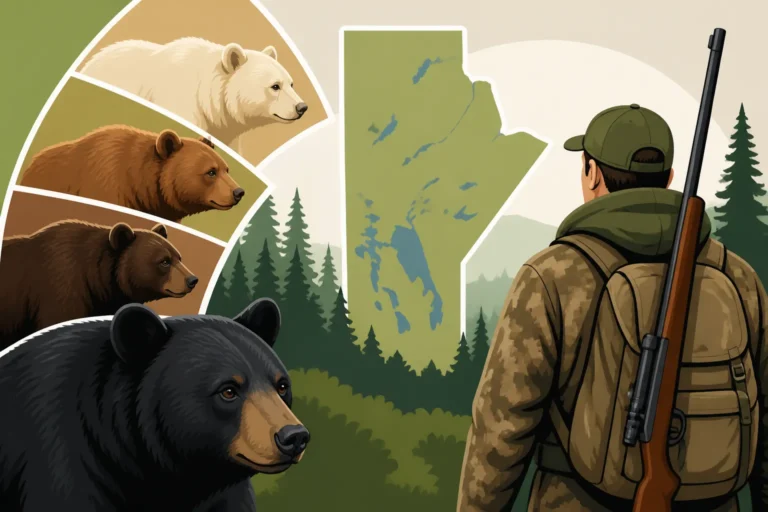
One of the unique aspects of black bear hunting in Manitoba is the prevalence of "colour phase" bears. While they are still genetically black bears, their fur can range from cinnamon and chocolate to blonde and even a striking blue-grey. These colour variations are particularly common in certain regions of Manitoba, adding another layer of excitement and uniqueness to the hunt. A magnificent blonde or cinnamon bear with a record-book skull is a truly rare and coveted trophy. The presence of Colour Phase Black Bears in Manitoba isn't just aesthetically pleasing; it's a genetic trait that adds to the rich biodiversity of our bear populations. While the colour of the fur has no bearing on the skull size or score, harvesting a large colour phase bear adds an extra element of distinction to the hunt, making it even more memorable. Many hunters specifically seek out these unique bears, adding another dimension to their trophy goals.
Where the Highest Bear Densities Are
Understanding bear densities can help trophy hunters focus their efforts, though higher densities don't always equate to bigger bears. Sometimes, areas with slightly lower, but healthier, populations can produce larger, older animals because there's less competition for resources. Generally, Manitoba's extensive boreal forests and mixed-wood regions offer excellent black bear habitat. Areas in the eastern, central, and northern parts of the province often report strong bear populations. Specific Game Hunting Areas (GHAs) within these regions, especially those with minimal human disturbance and rich food sources, tend to be highly productive. For example, parts of the Interlake region or the areas around the provincial forests like Duck Mountain or Porcupine Hills are historically strong bear producers. When using tools like GoHunt for your planning, investigating Where the Highest Bear Densities Are can guide your initial scouting and research, helping you identify prime areas for your hunt. Remember, finding high density is one thing, but consistently finding and harvesting trophy density takes a deeper level of scouting and strategic hunting.
Here's a quick comparison of the primary scoring systems:
| Feature | Boone & Crockett (B&C) | Pope & Young (P&Y) |
|---|---|---|
| Accepted Weapons | All legal weapons (rifle, bow, ML) | Archery equipment only |
| Measurement Focus | Greatest Length + Greatest Width | Greatest Length + Greatest Width |
| Drying Period | Mandatory 60 days | Mandatory 60 days |
| Minimum Entry Score | Generally higher (e.g., 20.0") | Generally lower (e.g., 18.0") |
| Typical Trophy Size | Truly exceptional, mature bears | Exceptional bears taken with bow |
| Organization Mission | Fair chase, conservation, record keeping | Archery fair chase, conservation, record keeping |
This table gives you a clear picture of what each system represents and what you'd need to achieve to enter a bear. Pursuing a record-book black bear in Manitoba is an incredible endeavor, combining skill, patience, and a deep respect for these magnificent animals.
Disclaimer
This article is for general informational purposes only and does not constitute professional advice. Laws, prices and regulations vary by location and change over time. Consult a qualified professional for guidance on your specific situation.