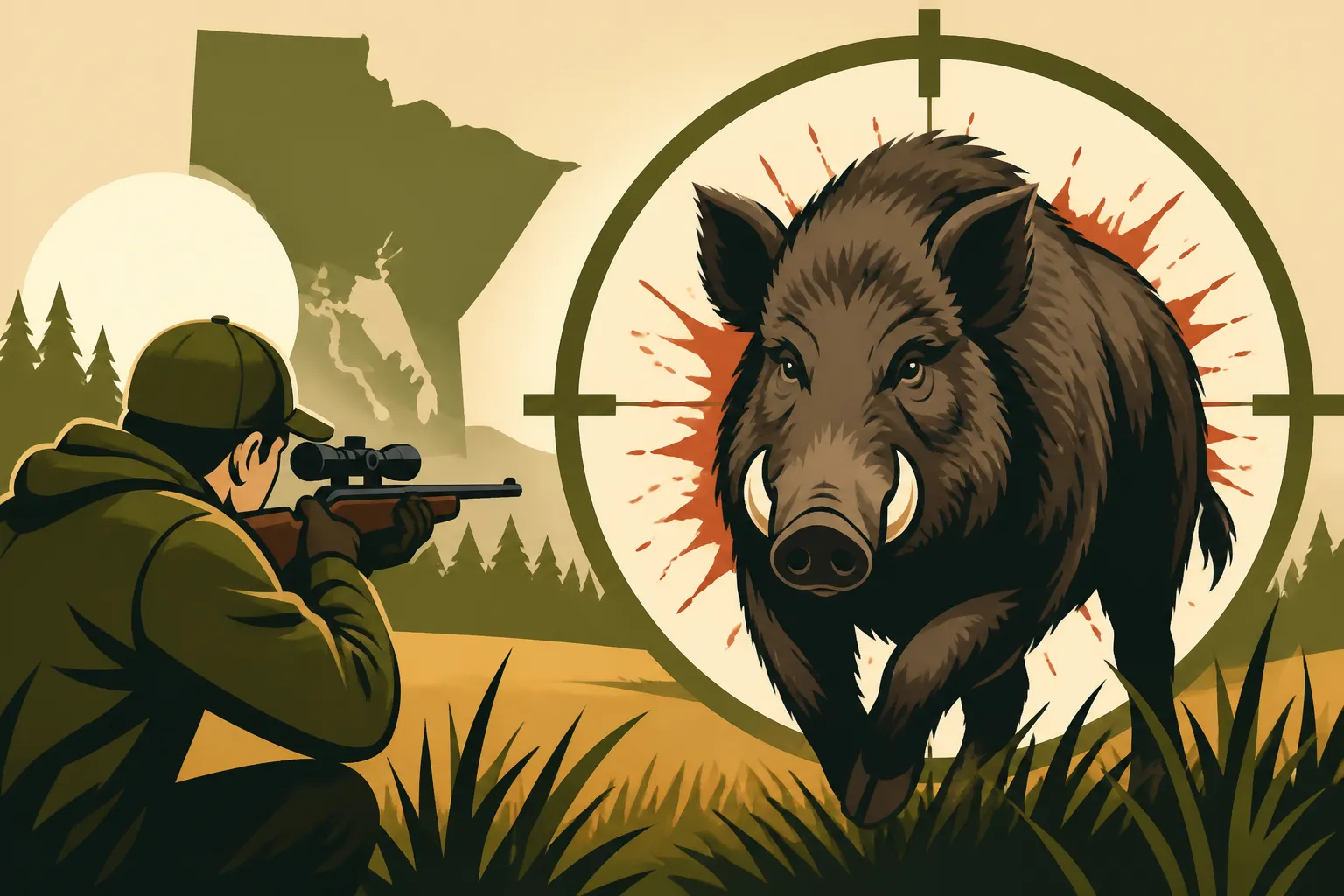
Manitoba’s Wild Boar Control Effort
Manitoba's beautiful wilderness and productive farmlands are increasingly under threat from an unwelcome invader: wild boars. These intelligent, destructive animals cause immense damage to crops, carry diseases, and disrupt native ecosystems, leaving many landowners and conservationists feeling helpless. This comprehensive guide will delve into the province's multi-faceted approach to controlling these invasive pigs and how every Manitoban can play a crucial role in protecting our land from their destructive presence.
The Growing Threat of Wild Boar in Manitoba
Wild boars aren't native to Manitoba, and their presence here is a relatively recent, and increasingly urgent, problem. These animals, often escapees from domestic farms or hybrid offspring of domestic pigs and European wild boar, have adapted remarkably well to our diverse landscapes, from dense bush to open agricultural fields. Their rapid spread and the significant damage they cause have made them a top concern for wildlife managers, farmers, and conservation groups alike. It's a frustrating situation because once they establish a foothold, they are incredibly difficult to dislodge.
Environmental and Agricultural Devastation
The immediate impact of wild boars is often seen in their destructive feeding habits. They are voracious eaters and notorious "rototillers" of the land. They use their powerful snouts to root up fields, pastures, and even sensitive natural habitats in search of roots, tubers, insects, and small animals. This rooting activity destroys crops, degrades soil health, and can create significant economic losses for farmers. Imagine a perfectly planted field of corn or potatoes, only to wake up and find large sections churned up overnight. The frustration is palpable for those who depend on the land for their livelihood. Beyond agriculture, their rooting disturbs delicate wetland ecosystems, disrupts nesting sites for ground-dwelling birds, and alters plant communities, impacting biodiversity across the landscape. They truly are an ecological bulldozer wherever they go.
Disease Transmission Concerns
Perhaps even more alarming than the physical damage is the potential for wild boars to act as vectors for a variety of diseases that can affect both livestock and native wildlife. They can carry diseases like bovine tuberculosis, brucellosis, leptospirosis, and trichinellosis, posing significant risks to the health of Manitoba's cattle, pigs, and even deer and moose populations. The concern around diseases like African Swine Fever (ASF), while not yet detected in North America's wild boar populations, is always at the forefront of wildlife health discussions. If ASF were to arrive, wild boars could act as a reservoir, making eradication incredibly difficult and devastating Manitoba's vital pork industry. The sheer thought of this kind of widespread disease is a nightmare scenario for ranchers and provincial officials alike, which is why prevention and control are so critical.
Manitoba's Multi-Faceted Control Strategy
Recognizing the escalating threat, Manitoba has implemented a comprehensive strategy aimed at controlling and, where possible, eradicating wild boars. This isn't a simple "hunt them out" approach; it requires a coordinated effort involving public awareness, reporting, research, and targeted removal programs. The goal is to minimize their population and prevent further spread, which is a monumental task given their intelligence and adaptability. It's a constant battle, and one that requires vigilance from everyone involved.
Encouraging Public Reporting and Surveillance
A cornerstone of Manitoba's control effort is robust public reporting. Wildlife officials depend heavily on sightings from landowners, hunters, and outdoor enthusiasts to track wild boar movements, identify new populations, and understand their distribution. This information is crucial for planning targeted control efforts. When you're out enjoying Manitoba's natural beauty, whether it's Hunting the Parkland Fringe for Big Bucks or just a weekend hike, keeping an eye out for signs of wild boar – such as tracks, rooting, or actual sightings – is incredibly helpful. The province often provides dedicated phone lines or online portals for reporting, and apps like GoHunt can be excellent tools for precisely pinpointing locations and sharing photos, making the data much more valuable for wildlife managers. Accurate reporting allows officials to act quickly before a small group becomes an entrenched population.
| What to Report | Why it Matters | How to Report |
|---|---|---|
| Sightings of live wild boar | Confirms presence, helps track movement | Provincial reporting hotline, online portal, or the GoHunt app |
| Evidence of rooting/damage | Indicates feeding areas, potential habitat | Provincial reporting hotline, online portal, or the GoHunt app |
| Dead wild boar carcasses | Helps assess disease status, population size | Provincial reporting hotline – do not touch |
| Tracks or scat | Confirms presence, helps identify travel corridors | Provincial reporting hotline, online portal, or the GoHunt app |
Trapping and Targeted Removal Programs
Trapping is considered one of the most effective methods for removing wild boars, especially when dealing with sounders (groups) of these animals. Wild boars are intelligent and can quickly become trap-shy, so successful trapping requires specialized equipment, strategic placement, and patience. Large corral traps, often equipped with remote-controlled gates, are used to capture entire sounders at once. These operations are usually coordinated by provincial wildlife staff or contractors with specific expertise in wild boar removal. The strategy often involves baiting a site for an extended period to habituate the boars to the trap area before setting the trigger. This is a labour-intensive and costly undertaking, but it's proven to be much more efficient at removing multiple animals than individual hunting efforts, particularly when dealing with the highly social nature of these pigs.
Research and Monitoring Initiatives
Understanding the biology and ecology of wild boars in Manitoba is vital for effective control. Researchers are constantly studying their movements, reproductive rates, diet, and disease prevalence. This scientific insight helps inform management decisions, identifying priority areas for control and predicting future spread patterns. For instance, understanding their habitat preferences might guide where new traps should be deployed or where public outreach needs to be intensified. Data on their reproductive success highlights why aggressive removal is necessary to stay ahead of their prolific breeding. This ongoing research, often in collaboration with universities and federal agencies, ensures that Manitoba's control efforts are based on the best available science, providing a more strategic and adaptive response to a dynamic problem.
The Critical Role of Hunters in Wild Boar Control
Hunters are on the front lines, often spending countless hours in Manitoba's diverse landscapes. Their intimate knowledge of the bush and farmland makes them invaluable allies in the fight against wild boars. However, simply hunting wild boars recreationally isn't a full solution; a coordinated and responsible approach is essential to make a real impact. This isn't just about bagging an animal; it's about protecting the province.
Responsible Hunting and Eradication Efforts
For many years, some jurisdictions have permitted hunting of wild boars, and in certain contexts, it can be part of a larger control strategy. However, it's crucial that hunters understand the specific rules and intentions behind any wild boar hunting opportunities in Manitoba. The goal isn't just population reduction; it's eradication. This means that recreational hunting, if not properly managed, can actually make the problem worse by dispersing sounders, making them warier, and more difficult for professional trappers to capture. Therefore, hunters are often encouraged to report sightings and allow professional teams to execute targeted removal, particularly large sounders, which is far more effective. If hunting is permitted, specific guidelines, such as hunting without disturbing the rest of a sounder, might be put in place to support the overall eradication effort. This is a distinct shift from traditional game hunting, where the focus is often on individual animals or sustainable harvest.
Preventing Accidental Spread
A major concern is the accidental spread of wild boars by people, including hunters. This can happen if live animals are transported, even inadvertently, or if carcasses are improperly handled. It's absolutely critical never to transport a live wild boar, under any circumstances, as this is how new populations become established. Furthermore, if you harvest a wild boar, understanding proper carcass disposal is vital to prevent the spread of diseases. This means not leaving gut piles where other wild boars or scavengers can access them, and ensuring that any parts not intended for consumption are buried deeply or incinerated according to provincial guidelines. Hunters also need to be mindful of baiting practices; while some areas allow baiting for other species, it could unintentionally attract wild boars and habituate them to human-provided food sources. Always check the specific regulations in your Game Hunting Area (GHA), as outlined in resources like Manitoba's Game Hunting Areas or Manitoba Rules on Baiting Big Game, before setting out bait. This kind of preventative action is just as important as active removal.
Utilizing Technology for Reporting and Scouting
Hunters are increasingly using modern technology in their outdoor pursuits, and these tools can be highly beneficial for wild boar control. GPS devices, satellite imagery, and mapping applications like GoHunt can help hunters pinpoint exact locations where they've seen wild boar sign or actual animals. This precise data, when shared with wildlife officials, greatly assists their efforts. Instead of a general "I saw tracks near the creek," you can report "Tracks seen at N 50.12345, W 97.67890, near the old aspen bluff." This level of detail saves wildlife staff valuable time and resources. When you're Scouting With Satellite Imagery in Manitoba, keep an eye out for patterns of disturbed ground or areas of thick cover that might indicate wild boar presence, and be sure to report anything suspicious. Every piece of information helps build a clearer picture of the wild boar distribution.
Challenges and the Road Ahead
Despite concerted efforts, controlling wild boar populations in Manitoba remains a significant challenge. These animals possess a remarkable set of traits that make them incredibly resilient and difficult to manage. Their rapid reproductive cycle, intelligence, and adaptability mean that efforts must be sustained and aggressive.
Understanding Their Resilience and Adaptability
Wild boars are biological success stories in many undesirable ways. They reach sexual maturity at a young age, often having multiple litters a year with several piglets per litter. This means their populations can explode in a very short time if not kept in check. They are also incredibly adaptable, thriving in diverse habitats from dense forests to open prairies, and can survive on a wide range of food sources. Their intelligence allows them to quickly learn to avoid traps and human activity, making them notoriously difficult to catch. This resilience means that control efforts must be persistent and strategically evolve, always aiming for a higher percentage of removal than their reproductive rate. This is not a battle you can win with half-measures, and the commitment to long-term control is paramount.
The Importance of Long-Term Commitment
Eradicating or even effectively controlling wild boars is not a short-term project; it's a long-haul commitment that requires consistent funding, dedicated personnel, and ongoing public engagement. Complacency can quickly lead to resurgent populations, undoing years of hard work. This means that provincial governments, landowners, and the hunting community must maintain their vigilance and support for control programs. Educational initiatives, like those offered through Manitoba Hunter Education Requirements, can help ensure that new hunters understand the severity of the wild boar problem and their role in the solution. Continued funding for research and specialized trapping teams is crucial. It’s about building a robust, enduring strategy that can adapt to the animals' own adaptability, rather than a sporadic, reactive approach.
Collaboration and Future Outlook
The most effective wild boar control programs often involve strong collaboration between government agencies, agricultural producers, Indigenous communities, and the public. Sharing information, coordinating efforts, and learning from successes and failures in other jurisdictions are all part of a robust strategy. While the challenge is immense, the outlook isn't hopeless. Through consistent, science-backed efforts and the active participation of all Manitobans, especially those who spend time outdoors, the province can work towards minimizing the impact of wild boars. Every reported sighting, every careful hunting decision, and every bit of support for control programs contributes to protecting Manitoba's natural resources and agricultural economy. We're all in this together, working to ensure our landscapes remain healthy and productive for generations to come. Manitoba's Wild Boar Control Effort isn't just a government initiative; it's a community responsibility.
Disclaimer
This article is for general informational purposes only and does not constitute professional advice. Laws, prices and regulations vary by location and change over time. Consult a qualified professional for guidance on your specific situation.