Getting a Deer Out on a Frozen Trail
There's nothing quite like the thrill of downing a deer in Manitoba, especially when the landscape is transformed by a crisp layer of snow and the air bites with winter's chill. But that elation can quickly turn to a daunting challenge when you realize you need to get your trophy out, and the trail back to your vehicle is a slick, frozen gauntlet. Many hunters have faced the frustrating reality of trying to drag a heavy animal over ice and rock-hard ground, risking injury and exhausting themselves. This guide is here to walk you through the realities of deer extraction on a frozen trail, offering practical tips and strategies to make the job safer and more efficient for Manitoba hunters.
The Challenges of Frozen Trails When Hauling a Deer
When the mercury drops below zero and stays there, the ground undergoes a significant transformation. What might have been a muddy two-track or a soft forest floor just weeks before becomes an entirely different beast. Understanding these changes is the first step to safely and successfully getting your deer out.
Understanding Frozen Ground and Ice
Manitoba winters are legendary, and with them come ground conditions that can range from mildly inconvenient to downright dangerous for deer extraction.
- Packed Snow and Glare Ice: After a fresh snowfall, especially if it's been followed by a thaw and refreeze cycle, trails can become sheets of packed snow or, worse, glare ice. This isn't just slick; it's a surface with almost no friction, making every step a potential slide. Imagine trying to get a 200-pound whitetail to budge across what feels like a hockey rink, and you're not far off. Vehicle tires lose traction, boots slip out from under you, and even the deer itself, stiff from the cold, can become an uncooperative sled, sliding uncontrollably on downhill slopes. This is where injuries happen, from pulled muscles to nasty falls. Keeping yourself upright and in control is paramount.
- Frozen Mud and Ruts: Beyond the icy veneer, many Manitoba trails are made of good old prairie gumbo or rich forest loam. When these freeze solid, they become a patchwork of jagged, rock-hard ruts and frozen divots. These aren't just uncomfortable to walk on; they create immense friction points for dragging a deer. The deer's hide can snag, tear, and essentially get "stuck" in these frozen trenches, making even a short drag feel like an eternity. Trying to pull a carcass over these frozen washboards can also do a number on the meat and hide, potentially bruising the valuable cuts you’ve worked so hard for. Plus, if you’re pulling a sled, those sharp frozen edges can quickly chew through the bottom, ruining your primary extraction tool.
- Frozen Vegetation and Obstacles: What might be soft undergrowth in the fall becomes stiff, brittle, and often sharp when frozen. Tangles of frozen willow branches, stiff grass, and embedded rocks can all snag your deer or your sled. Crossing a frozen slough can offer an easy path, but the edges can be surprisingly slick or treacherous. When considering a path, visualize how these rigid obstacles will interact with a solid deer carcass. Sometimes, a slightly longer route on a smoother, more packed surface is far more efficient than a shorter, obstacle-ridden one.
Impact on Equipment and Safety
The frozen landscape doesn't just make dragging tough; it puts a serious strain on your equipment and demands extra vigilance for personal safety.
- Vehicle and Sled Performance: If you're relying on a quad or side-by-side to get your deer out, frozen trails can drastically reduce traction. Even with good tires, glare ice or hard-packed snow can turn a simple trail ride into a white-knuckle experience. Skidding, losing control on descents, or getting completely stuck on an uphill can leave you in a worse predicament than just having to drag the deer manually. Tracks on an ATV or snowmobile can certainly help, but even they have their limits on extreme ice. As for deer sleds, while they're invaluable, they can take a beating. The constant friction against frozen ground, especially rough ruts, can wear through plastic sleds quickly, and sharp ice can tear holes in fabric models. Always inspect your sled before and after use.
- Personal Safety Risks: This is perhaps the most critical aspect. Hauling a heavy deer over frozen ground is physically demanding and inherently risky. Slips and falls are common, leading to sprains, fractures, or even head injuries. Add in sharp objects, cold temperatures, and potential isolation, and the stakes are high. Hypothermia is a real concern if you get too sweaty, then stop to rest in the cold. Exhaustion can lead to poor judgment, making you more prone to accidents. Always remember that your health and safety are more important than getting the deer out quickly. If you're feeling too tired or the conditions are too hazardous, it's always better to call for help, even if that means leaving the deer for a short while to reassess or retrieve more appropriate gear. Planning your approach and being aware of your surroundings are key to Hunting Safely in Deep Winter Cold.
Essential Gear for Frozen Deer Extraction
You wouldn't head out on a big game hunt without your rifle or bow, and similarly, you shouldn't try to extract a deer from a frozen trail without the right tools. Preparation is everything, and having the right gear can turn a monumental task into a manageable one.
Must-Have Tools and Aids
These items are your best friends when the ground is hard and slick.
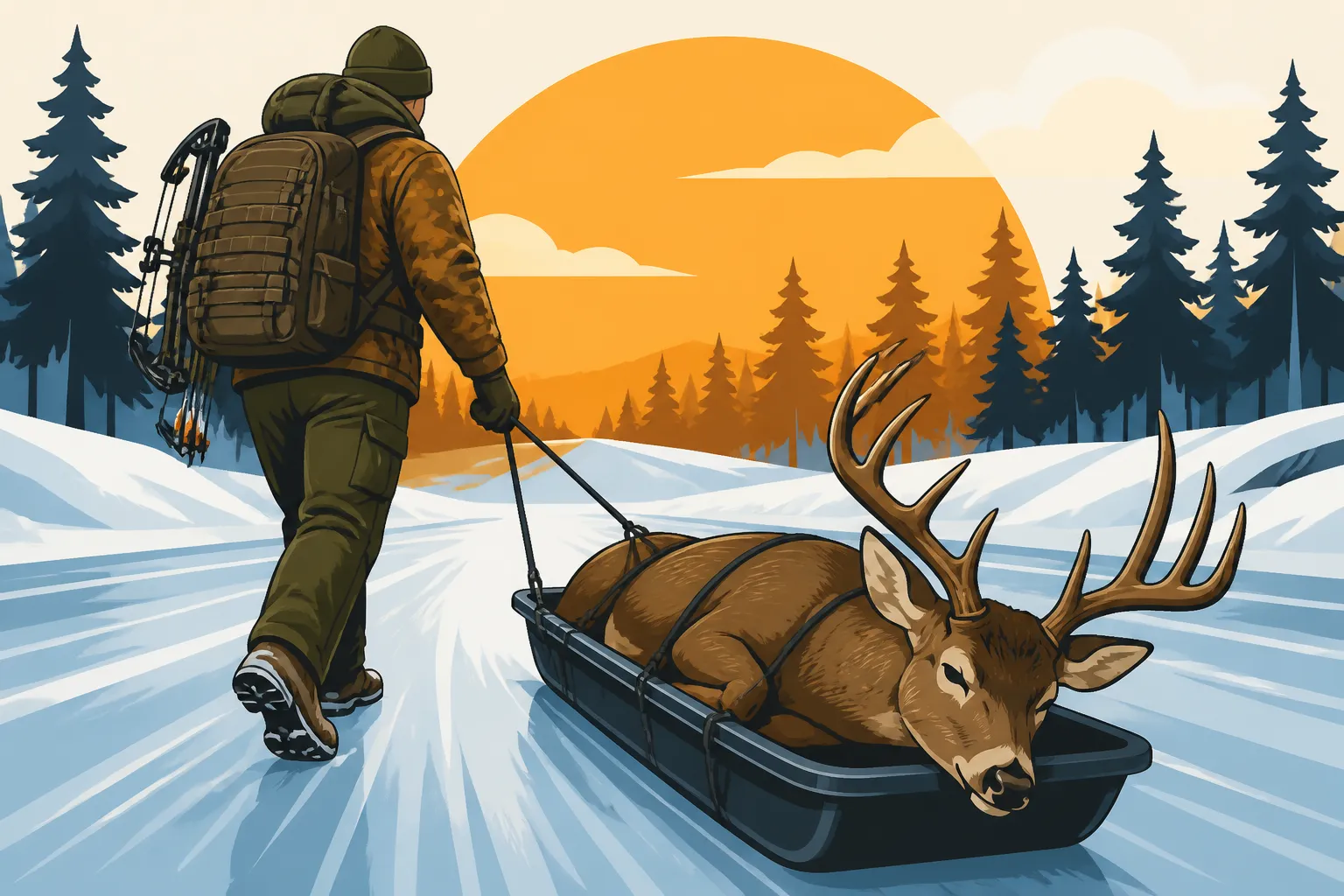
- Sturdy Deer Sled or Heavy-Duty Tarp: A purpose-built deer sled is a game-changer. Look for one made from thick, durable plastic, designed to slide easily over snow, ice, and rough terrain without tearing. Brands like Jet Sled or Otter Sleds are popular choices known for their toughness. If a sled isn't available, a heavy-duty canvas or synthetic tarp can work in a pinch. The key is to find something robust enough that the deer won't tear through it, and that provides a low-friction surface. Lay the deer on the tarp, fold the sides over, and pull it like a giant burrito.
- Strong Ropes and Straps: You'll need at least one good, long rope (20-30 feet of heavy-duty nylon or poly rope) for pulling. A shorter rope with a loop for your hand can be useful for manual dragging or securing the deer. Ratchet straps are excellent for securing the deer to a sled or quad, preventing it from sliding off on uneven terrain. A harness designed for dragging, which goes around your shoulders and waist, can distribute the weight more evenly and save your back. Don't underestimate the power of mechanical advantage; even a simple pulley system can significantly reduce the effort needed.
- Winch or Come-Along: If you're hunting in particularly rugged country or alone, a portable winch or come-along can be a lifesaver. These devices use a ratcheting mechanism to pull heavy loads, essentially multiplying your strength. They can be invaluable for getting a deer up a steep, frozen bank or out of a deep ditch where a vehicle can't reach. Ensure you have strong anchor points – a sturdy tree, or even your quad if securely positioned. Even a hand-cranked model can move mountains, or at least a large buck.
- Ice Cleats or Traction Devices for Boots: This is non-negotiable for personal safety. Attachable ice cleats, like those from Kahtoola MICROspikes or Yaktrax, fit over your regular hunting boots and provide exceptional grip on ice and packed snow. They prevent slips and falls, allowing you to focus your energy on the task at hand rather than constantly fighting for balance. Believe me, the cost of a good pair of cleats is far less than an emergency room visit.
- Hand Saws or Axe: For clearing brush or small downed trees that might be obstructing your path, a small hand saw or a lightweight axe can be incredibly useful. You don't want to get tangled up with frozen obstacles when you're already struggling with a heavy deer.
Clothing and Personal Safety Gear
Beyond the tools for the deer, you need to think about your own well-being in the unforgiving Manitoba winter.
- Layered Clothing: Dressing in layers is crucial. You'll likely be exerting a lot of energy, so you'll sweat. Start with a moisture-wicking base layer, add insulating layers (fleece, down), and finish with a windproof and water-resistant outer shell. The ability to shed layers as you work and put them back on when you pause is key to regulating your body temperature and preventing hypothermia. Even if you plan on Sitting All Day in a Manitoba Blind, exertion during extraction is a whole different beast.
- Insulated, Waterproof Boots: Your feet are your foundation. Good quality, insulated, waterproof boots with aggressive treads are essential. Even with ice cleats, a solid sole provides stability. Make sure they fit well and are broken in to avoid blisters, which can quickly turn a challenging situation into a miserable one. Consider bringing a spare pair of thick wool socks in your pack.
- Warm Gloves and Hat: Your extremities are the first to get cold. A warm hat, preferably one that covers your ears, is critical for retaining body heat. Waterproof, insulated gloves will protect your hands from the cold, rope burn, and abrasions. A thinner pair of work gloves might also be useful for tasks requiring more dexterity.
- First-Aid Kit: Always carry a well-stocked first-aid kit, especially when heading into remote areas. Include bandages, antiseptic wipes, pain relievers, and any personal medications. Accidents happen, and being prepared can make a big difference.
- Communication Device: A fully charged cell phone (though service can be spotty in many Manitoba hunting areas), a satellite messenger like a Garmin inReach, or a two-way radio should be part of your Winter Truck Kit for a Manitoba Hunt. If you get into trouble or need assistance, being able to call for help is vital. Remember, cold weather drains batteries faster, so keep devices warm.
Strategies for Moving a Deer on Frozen Terrain
Once you’ve got your deer field dressed and tagged, and you’re geared up, it’s time to tackle the actual extraction. This is where smart planning and technique truly shine, especially when dealing with Manitoba’s frozen landscape.
Manual Dragging Techniques
Sometimes, despite all your gear, you’re still faced with a good old-fashioned drag, either because vehicles can’t get in, or it’s just a short distance. Doing it right can save your back and energy.
- Solo Dragging Best Practices: If you're alone, position the deer on its back with its antlers (if present) pointing towards your destination. This helps prevent the antlers from digging into the ground. If it's an antlerless deer, tying the front legs back to the body can streamline its profile. Use a dragging harness that distributes the weight across your shoulders and hips, rather than just your arms or lower back. Keep your knees bent, use your legs to pull, and take small, steady steps. Rest frequently to avoid overexertion. The frozen, stiff hide might slide surprisingly well over packed snow or ice, but it will catch on every single rough spot. Consider getting the deer onto a sled or heavy-duty tarp as quickly as possible. When Field Dressing in Manitoba's Deep Cold, remember to do it efficiently to minimize exposure.
- Team Dragging Advantages: If you have a partner, the task becomes significantly easier. One person can pull from the head/shoulders, while the other pushes or pulls from the hindquarters. Synchronize your efforts: "One, two, three, PULL!" helps ensure you’re both working together. Having one person guide the deer over obstacles while the other pulls can prevent snags. Communication is key, especially if you’re navigating tight bush or uneven ground. Using two ropes, one for each person on opposite sides, can also help distribute the load and allow for better steering. Remember, even with two people, a good deer sled is still highly recommended to reduce friction and effort.
Utilizing Mechanical Advantage
When you’re dealing with a big buck, or a long distance, a little mechanical help goes a long way.
- Quads and Snowmobiles: These machines are invaluable for getting a deer out, provided the trail allows access and the conditions aren't too treacherous. If you're using a quad, ensure it's equipped with good tires, and consider tire chains for extra traction on ice. Attaching the deer (preferably in a sled) to the hitch with a sturdy rope or chain is the most common method. Drive slowly and deliberately, especially on turns or descents, to maintain control. Be mindful of the weight distribution; too much weight behind the quad can make the front end light and hard to steer. If you find yourself in deep snow or mud, knowing What to Do If You Get Stuck in the Bush is critical. Always check the Quad and Side-by-Side Rules on Crown Land for your specific hunting area.
- Winch Systems and Come-Alongs: For getting a deer up a steep bank, out of a ravine, or through particularly dense, obstacle-ridden sections, a winch or come-along is perfect. Secure your winch to a solid anchor point – a large tree, a deeply buried log, or another vehicle. Attach the cable to the deer (or the sled it’s on), ensuring the attachment point is strong and won't tear. Operate the winch slowly, watching for snags or resistance. Always stand clear of the cable under tension, as it can snap and cause serious injury. This method is slower but allows you to move heavy loads with minimal physical strain.
Overcoming Obstacles
Manitoba's bush, even on a defined trail, is rarely flat or perfectly clear. Frozen conditions amplify every hurdle.
- Navigating Hills and Ditches: Uphills on ice are notoriously difficult. For manual drags, angle your pull slightly to get more traction, and use any available brush or trees for leverage. On a steep uphill, a series of short pulls followed by rests is better than one long, exhausting haul. If you have a vehicle, you might need to try a different approach or use a winch from the top. Downhills can be even more dangerous. A deer on a slick surface can gain momentum quickly. If manually dragging, have one person pull from the front while another acts as a "brake" from the back, guiding the deer and preventing it from sliding too fast. With a quad, engage low gear and use engine braking, avoiding sudden braking that could cause a skid. A Hunting a Frozen Slough Crossing can present its own challenges with steep, icy banks.
- Dealing with Dense Bush and Snow Drifts: Even on a frozen trail, you might encounter sections of dense, frozen willow or jack pine. If the path isn’t wide enough, you'll need to clear it. A small axe or folding saw can cut through smaller frozen branches that snag your deer. For larger obstacles, try to maneuver around them if possible. When encountering deep snow drifts, especially later in the season, the deer will create a trench as it moves, making it even harder. If you’re pulling a sled, it will ride higher, but still requires significant effort. Sometimes, it’s best to break trail ahead of the deer, packing down the snow, before attempting to pull the animal through. This is particularly true if you are Hunting Whitetails at Thirty Below, where the snow is often dry and granular, making for tough pulling.
| Extraction Method | Pros | Cons | Ideal Conditions |
|---|---|---|---|
| Manual Drag (Solo) | Low equipment cost, quiet, good for short distances. | Extremely strenuous, high risk of injury, slow. | Short, relatively flat distance; thin snow/ice cover. |
| Manual Drag (Team) | Shares workload, better control, safer than solo. | Still strenuous, requires coordination, slow. | Moderate distances; mixed terrain; light to moderate snow. |
| Deer Sled/Tarp | Significantly reduces friction, protects meat/hide, easier to pull. | Can be cumbersome to carry, still requires effort, can tear on sharp ice/ruts. | Most frozen trail conditions; essential for larger deer. |
| ATV/Snowmobile | Fastest, least strenuous, handles long distances well. | Limited to accessible trails, noisy, requires fuel, risk of getting stuck or losing control on ice. | Well-maintained trails, longer distances, less extreme ice. |
| Winch/Come-Along | Moves very heavy loads, overcomes steep obstacles, conserves energy. | Slow, requires anchor points, can be cumbersome to set up, requires safety precautions. | Steep inclines, deep ditches, very heavy deer, limited access for vehicles. |
Post-Extraction Considerations and Trail Repair
You’ve conquered the frozen trail, your deer is safely out, and you’re breathing a sigh of relief. But the job isn’t quite done. There are a few final steps to ensure your hard work pays off and you leave the area responsibly.
Protecting Your Trophy and Meat
All that effort to get your deer out means you want to ensure the meat and any trophy parts are in prime condition.
- Keeping the Carcass Clean: Once you have the deer out to your vehicle, try to get it off the ground as soon as possible. Even though the ground is frozen, dirt, leaves, and other debris can still cling to the hide and potentially contaminate the meat. If you're transporting it in the bed of a truck, lay down a clean tarp. Avoid dragging the field-dressed deer over gravel or dirty snow unnecessarily once you're on a road, as this can bruise the meat or rough up the hide, especially if you plan on getting a bear rug tanned or a European mount done for a large buck.
- Preventing Freezing and Bruising: While Manitoba's cold snaps are excellent for preserving meat, you want to avoid flash-freezing the outer layer of the carcass if it's going to be transported for a while or processed later. If the temperatures are extremely low, consider loosely covering the deer to prevent the exterior from hardening like a rock before it can cool properly internally. This is especially important for Meat Care in Manitoba's Cold Snaps. Also, be gentle when loading and unloading; frozen meat can be brittle and more prone to bruising if dropped or handled roughly. If you're using a game processor, inform them of any special requests regarding caping for a mount.
- GoHunt Considerations: If you're documenting your hunt or using apps like GoHunt to mark your retrieval points, ensure you take a moment to add notes or photos of the extracted deer. This is not only for personal records but can also be useful for future hunts in terms of access points and terrain challenges. GoHunt is a fantastic tool for recording where you found the animal, the path you took for extraction, and even noting spots that were particularly challenging due to ice or deep snow. This data can be invaluable for planning next season's hunts and making more informed decisions about equipment and routes.
Minimizing Trail Impact
As responsible hunters, we always strive to leave the land better than we found it. This includes minimizing your impact on the trail and surrounding environment, even when it’s frozen.
- Clearing Obstacles: If you had to cut branches or move logs to clear your path, take a few minutes to either remove them entirely or move them off the main trail. This prevents them from becoming hazards for other hunters, hikers, or even wildlife. It's a small act of courtesy that goes a long way in maintaining good relationships between user groups.
- Assessing Trail Damage: While frozen ground is less susceptible to rutting than muddy conditions, heavy vehicles, especially quads with chains or tracks, can still leave their mark. If you notice significant ruts or broken ground, particularly in areas prone to erosion once the spring thaw hits, make a mental note. Report any severe damage to land management authorities if it's on public land, or communicate with the landowner if you were on private property. This proactive approach helps preserve access for everyone. Remember, using tools like GoHunt to mark areas that could be problematic in other seasons can also be a good way to contribute to collective knowledge and responsible land use.
- Leaving No Trace: Beyond physical damage, ensure you haven't left any trash, tags, or other refuse behind. Pack out everything you packed in. This includes any broken equipment pieces, rope scraps, or even deer hair if it's concentrated in one spot. It’s a core tenet of ethical hunting. By making an effort to minimize your footprint, you help ensure that Manitoba's stunning wild spaces remain pristine for generations of hunters and outdoor enthusiasts to come. Checking which GHAs have Manitoba's CWD Sampling Requirements is also important post-extraction, as some areas may require you to leave certain parts of the carcass at a designated drop-off to prevent the spread of disease.
Disclaimer
Please remember that hunting involves inherent risks. The information provided in this guide is for informational purposes only and should not replace professional advice, mandatory hunter education, or local regulations. Always prioritize safety, adhere to all Manitoba hunting laws and regulations, and respect private property. Conditions in the field can change rapidly, so always be prepared and exercise good judgment.