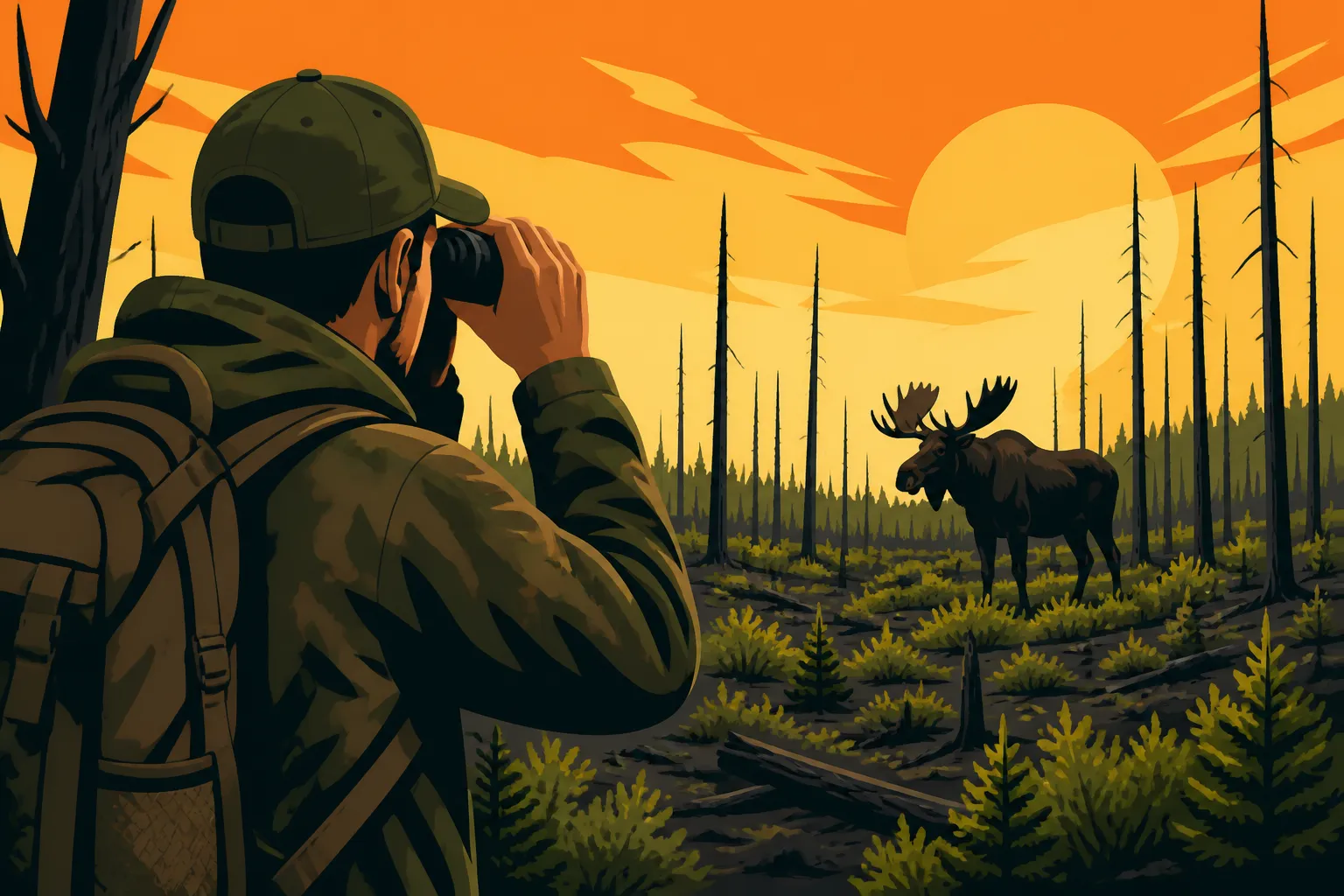
Glassing a Burn for Northern Moose
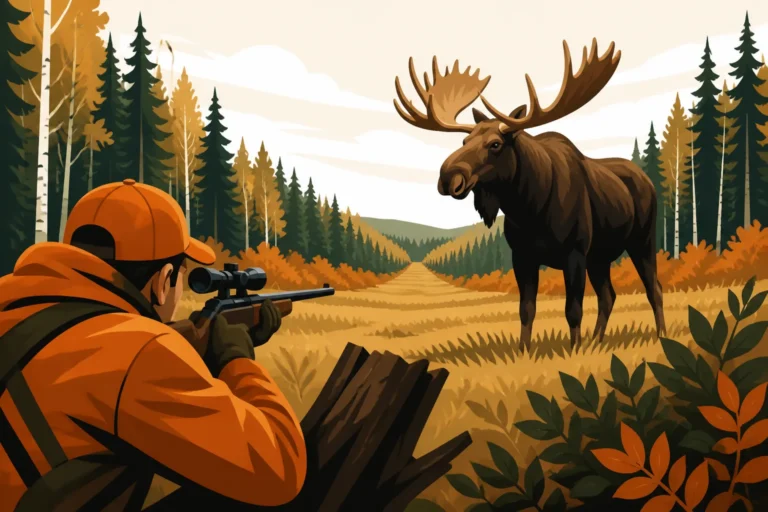
For many of us who dream of a northern Manitoba moose hunt, the sheer vastness of the boreal forest can be utterly daunting. It’s a land of endless timber and muskeg, making locating one of these magnificent giants feel like searching for a needle in a haystack. But there’s a secret many seasoned hunters swear by: the magic of a recent burn. This guide will walk you through exactly how to effectively glass these fire-scarred landscapes to increase your odds of finding that elusive bull.
The Irresistible Pull of Burned Landscapes for Moose
Wildfires, while destructive in the moment, are a natural and essential part of the boreal ecosystem, acting as a reset button that profoundly impacts wildlife, especially moose. For hunters, understanding this ecological dance is key to unlocking some of the most productive moose country Manitoba has to offer.
New Growth and Nutrient Rich Forage
When a wildfire sweeps through an area, it doesn't just destroy; it revitalizes. The intense heat clears out old, stagnant timber and underbrush, opening the forest floor to sunlight. More importantly, the ash left behind acts as a natural fertilizer, enriching the soil with a flush of nutrients. This creates an ideal seedbed for a new generation of plants, often referred to as early successional growth.
Moose, being primarily browsers, are incredibly drawn to these tender, nutrient-dense young shoots. Species like willow, aspen, birch, fireweed, and various shrubs explode in growth in the years following a fire. These plants offer a higher nutritional value than the mature, lignified browse found in an unburnt forest. A cow moose needs excellent nutrition to support calf growth, and a bull needs it for antler development, so they instinctively seek out these lush, post-fire buffets. It’s like a five-star restaurant opening up in the middle of nowhere for them, and they absolutely flock to it, making it an excellent place for scouting a Manitoba game hunting area.
Enhanced Visibility and Travel Corridors
Beyond the smorgasbord of food, burned areas offer a significant advantage that is often overlooked: improved visibility. Dense, mature boreal forest can be incredibly challenging to navigate, both for moose and for hunters. A bull moose can stand mere yards away in thick spruce, and you'd never know he was there. In a burn, especially in the first few years, the canopy is largely gone, and the understory is just starting to regenerate. This opens up sightlines dramatically.
For moose, this means easier travel through what was once impenetrable thicket. They can move more freely, often following old game trails that are now clearer, or creating new ones where access is easier. For the hunter, this translates into the ability to glass vast tracts of land that were previously impossible to see. You can cover more ground visually, scanning distant slopes and regenerating valleys for the tell-tale dark shape of a moose, its distinctive paddle, or even just the flick of an ear. This improved visibility is exactly why these areas are prime for Moose Hunting Across Manitoba's Boreal Forest.
Pockets of Cover and Thermal Regulation
It's a common misconception that burns are completely devoid of cover. While vast areas might be open, wildfires rarely burn uniformly. Often, you'll find unburnt pockets of spruce or pine, particularly in low-lying, damp areas, or on the leeward side of ridges. These islands of green provide crucial thermal cover and security for moose.
In colder weather, these unburnt stands offer shelter from wind and snow. In warmer periods, they provide shade. Moose will often feed heavily in the open, sunny regenerated areas during the morning and evening, then retreat to these patches of residual timber to bed down and chew their cud during the heat of the day or when seeking refuge from biting insects. Identifying these cover pockets within a larger burn is crucial, as they serve as natural magnets for moose seeking respite, and knowing where they might be can inform your approach when hunting these giants.
Mastering the Art of Glassing for Moose in Burns
Glassing is more than just looking through binoculars; it’s a systematic and patient approach to thoroughly inspect terrain for game. In the vast, often subtle, environment of a northern Manitoba burn, your optics are your most valuable tool.
Choosing the Right Optics
The quality of your binoculars and spotting scope can make or break your glassing success. For general scanning, a good pair of 10×42 or 12×50 binoculars are indispensable. They offer a wide field of view and enough magnification to pick apart distant details. Look for reputable brands known for crisp, clear glass and good low-light performance. Brands like Vortex, Swarovski, and Zeiss are popular choices among serious hunters, offering varying price points but generally delivering excellent performance. If you're looking for gear recommendations, online resources like GoHunt often have in-depth reviews and buyer's guides to help you choose the best optics for your budget.
For really picking apart distant slopes, especially in the larger burns that stretch for miles, a high-quality spotting scope (typically 20-60x magnification) is a game-changer. It allows you to resolve fine details like antler tine length, ear movement, or even the subtle sway of a moose's dewlap from a great distance. A stable tripod is absolutely non-negotiable for a spotting scope; trying to hand-hold it at high magnification is a recipe for frustration. For long days of glassing, I personally lean towards a lighter, robust carbon fiber tripod to cut down on pack weight without sacrificing stability.
Strategic Glassing Techniques
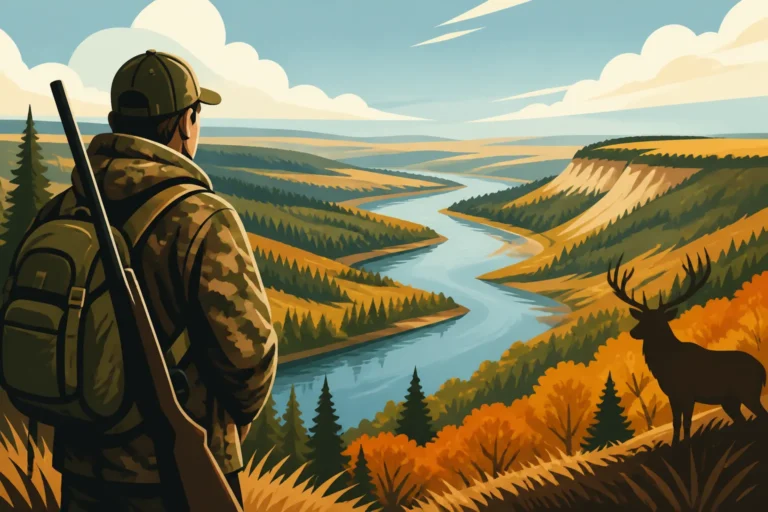
Effective glassing isn't random; it's methodical. Find an elevated vantage point that offers expansive views of the burn. Ridge tops, rock outcrops, or even the crest of an old logging road can provide the height you need. Once settled, set up your optics on a tripod, ensuring a stable platform.
Start by systematically scanning the entire area you can see. The "grid system" is incredibly effective. Pick a section, often starting from the closest visible point and working your way outwards. Slowly move your binoculars or scope across the landscape in small, overlapping sections, as if you're reading a book. Don't rush. Pause and let your eyes adjust, then move a tiny bit more. Look for anything that seems "out of place" – a dark blob against the lighter regenerating vegetation, a horizontal line where everything else is vertical, or a sudden change in texture. Remember, moose often blend in incredibly well, so you're looking for anomalies rather than obvious shapes.
Pay particular attention to the edges of the burn, where it meets unburnt timber, and any lingering pockets of green. These transition zones are prime areas where moose will move between feeding and bedding areas. Also, scrutinize any draws, creek bottoms, or north-facing slopes, as these can hold moisture and offer slightly different forage or cooler bedding spots.
Patience and Persistence
Glassing, especially for moose, is not a sprint; it's a marathon. You might spend hours without seeing a single animal. It requires immense patience and unwavering persistence. Early mornings and late evenings are typically the most productive times, as moose are most active and visible during these cooler hours when they are out feeding. However, don't discount midday altogether. Moose will often bed down in areas where they can be glassed, especially if they are catching some sun on a cool day or if the cover is sparse.
Sun angle is also critical. Early morning sun can make glassing east-facing slopes difficult due to glare, while late afternoon sun creates similar issues on west-facing slopes. Try to position yourself so the sun is at your back, illuminating the area you're scanning. If you're getting frustrated, take a break, rest your eyes, and then start again with fresh determination. Sometimes, simply shifting your position a hundred yards can open up new angles and reveal hidden animals.
A useful habit is to revisit promising spots multiple times throughout the day, or even on different days. Moose patterns change with weather, pressure, and food availability. A spot that was barren in the morning might be teeming with activity in the evening.
| Optic Type | Magnification | Pros | Cons | Best Use |
|---|---|---|---|---|
| Binoculars | 8×42, 10×42 | Wide field of view, easy to handhold | Less detail at extreme ranges | General scanning, quick spotting |
| Power Binoculars | 12×50, 15×56 | Increased detail, good balance | Heavier, hand fatigue, tripod recommended for 15x | Extended scanning, mid-range detail |
| Spotting Scope | 20-60x | Maximum detail, long-range identification | Heavy, requires tripod, narrow field of view, expensive | Confirming animals, trophy assessment, very long range |
Timing Your Glassing Efforts for Northern Moose
Finding moose in a burn isn't just about how you glass; it's very much about when you choose to do it. The time of day, the season, and even the immediate weather conditions can dramatically influence a moose's behaviour and, by extension, your chances of spotting one.
The Golden Hours of Dawn and Dusk
Just like many other big game animals, moose are most active during the twilight hours of dawn and dusk. This is when they typically move out of their bedding areas to feed. In a burn, with its abundant, regenerating browse, these are the prime windows to catch a moose standing in the open, munching away.
As the first light of morning begins to paint the eastern sky, moose will often be visible on slopes and in draws, taking advantage of the cool temperatures and fresh, dew-covered forage. By mid-morning, as the sun rises higher and temperatures increase, they'll often retreat to shadier, denser patches of remaining timber within or on the edges of the burn to bed down.
The evening hours offer a reverse scenario. As the sun dips towards the horizon, cooling temperatures once again draw moose out to feed. They might emerge from heavy cover, slowly making their way to the more open, browse-rich areas. This period, from late afternoon until last light, is often equally, if not more, productive than the morning, as moose push hard to fill their bellies before settling in for the night. Focusing your efforts during these "golden hours" will significantly increase your odds.
Seasonal Considerations and Hunting Pressure
The time of year you choose to glass a burn also plays a huge role. Early archery seasons, like Hunting Manitoba's September Archery Opener, can be fantastic. The leaves are often still on the trees, providing some cover, but the browse in the burns is at its peak. Moose are often less wary this time of year as hunting pressure hasn't fully set in. As the season progresses into late fall and early winter, the leaves drop, and snow can begin to fall, further enhancing visibility in burns.
The rut, particularly in early to mid-November, is another prime time. Bulls are actively seeking cows, making them more mobile and less cautious. While they may still feed in the burns, they'll also be ranging widely, and spotting a bull on the move, or hearing a cow call carried on the crisp air, can be exhilarating. Resources like GoHunt can help you zero in on specific rut dates and optimal hunting periods for various regions of Manitoba.
Later in the season, when deep snow arrives, moose often concentrate in areas with better cover and easier access to browse that's not buried too deep. Burns can still be productive if they have enough regenerating young trees that protrude above the snow, providing a critical food source. Knowing Where Manitoba Whitetails Bed in Deep Snow can also give clues as to how moose might utilize available cover in heavy snow conditions.
Weather Patterns and Their Influence
Weather is a fickle mistress, but understanding its patterns can give you an edge. Cool, cloudy, or misty days can be excellent for glassing. Moose often remain active later into the morning and come out earlier in the afternoon on such days, as they aren't driven to seek shade from intense sun.
Conversely, very warm, sunny days might see moose mostly active during the absolute earliest and latest hours, spending the bulk of the day bedded deep in cover. A light rain, especially after a dry spell, can also get moose moving, as it freshens up the vegetation and dampens the forest floor, making their movements quieter.
Wind is another critical factor. While it's vital for your final stalk, a strong, gusty wind can make moose feel uneasy and keep them bedded. On the other hand, a steady, moderate breeze can be your friend, masking your presence and helping you pick up distant calls. Always factor the current and forecasted weather into your glassing plans.
Navigating and Hunting Manitoba's Boreal Burns
Successfully glassing a burn is only half the battle; knowing how to navigate the challenging terrain and execute a hunt plan in these unique areas is crucial for success. Northern Manitoba's boreal burns present their own set of challenges and require specific strategies.
Access Challenges and Terrain Hazards
Getting into a remote burn can be an adventure in itself. Old logging roads that might have offered easy access before the fire can quickly become impassable due to fallen timber, washouts, or dense regeneration in the following years. Some burns might require significant hiking, often involving bushwhacking through dense new growth, navigating around standing deadfall, or crossing rough, uneven ground. For those venturing deep, knowing the Quad and Side-by-Side Rules on Crown Land is essential for navigating challenging tracks.
Once you're in a burn, the terrain itself poses hazards. Charred stumps and logs can be surprisingly slippery, especially when wet or covered in a thin layer of snow. Burnt trees (snags) can fall without warning, particularly on windy days, posing a serious safety risk. Always be vigilant about your footing and surroundings. It's often safer to stick to more open areas or established game trails, even if they add a bit of distance, rather than trying to force your way through treacherous sections.
Always carry a detailed topographical map and a GPS unit or a reliable mapping app like GoHunt that shows satellite imagery. Satellite views can often reveal unburnt pockets, old roadbeds, and the extent of the burn, helping you plan your approach and identify potential vantage points or escape routes. A good understanding of Hunting a Burned-Over Boreal Block will greatly benefit your trip.
Planning Your Approach and Stalk
Once you've successfully glassed a moose, the real work begins: planning the stalk. This is where you transition from observation to action. First and foremost, assess the wind. Moose have an incredible sense of smell, and a slight shift in wind can betray your presence instantly. Plan your approach to keep the wind consistently in your favour. If the wind isn't right, you may need to wait for it to change, or scrap the stalk and try another approach or another moose.
Consider the terrain between you and the moose. Look for natural cover like rises, draws, or patches of regenerating timber that you can use to conceal your movement. Move slowly and deliberately, taking care to avoid snapping twigs or rustling dry leaves, especially if you're in a more recently burnt area where the ground cover might still be brittle. This is especially true when attempting to get close enough for a shot during Bowhunting Manitoba's Early Season.
If the moose is actively feeding, it will periodically lift its head to scan its surroundings. Use these moments when its head is down to make your moves, freezing in place when it looks up. Be prepared to wait, sometimes for a long time, for the opportune moment to close the distance. Don't rush. Patience is key. Remember, What a Big Bull Moose Weighs Here – you want to ensure a clean shot and an ethical harvest.
Safety in Remote Northern Manitoba
Hunting in northern Manitoba, particularly in remote burned areas, demands a strong emphasis on safety. These are wild, often unforgiving landscapes. Always inform someone of your hunting plans, including your exact location, expected return time, and a detailed route. Carry a satellite communication device like a Garmin inReach or a Zoleo, as cell service is often non-existent in these remote regions.
Be prepared for sudden weather changes. Northern Manitoba weather can be unpredictable, even in the fall. Pack extra layers of clothing, rain gear, fire-starting materials, and sufficient food and water. Having a robust Winter Truck Kit for a Manitoba Hunt can extend to your on-foot essentials as well, even if snow isn't yet on the ground.
Bear awareness is paramount. Black bears are common in the boreal forest, and while usually shy, a surprise encounter or a bear drawn to your scent can be dangerous. Carry bear spray and know how to use it. Be vigilant and make noise periodically, especially when moving through dense cover. Understanding Manitoba's Black Bears Across Manitoba's Bush Country will help you anticipate their movements.
Finally, know your limits. Don't push yourself or your equipment beyond what's safe and reasonable. If a stalk feels too risky, the weather turns foul, or you encounter unexpected obstacles, it's always better to back off and live to hunt another day. The rewards of hunting a big bull moose in a Manitoba burn are immense, but they are never worth risking your safety.
Disclaimer
The information provided in this guide is for general educational purposes only and is not a substitute for professional advice. Hunting regulations and conditions can change rapidly. Always consult the most current Manitoba hunting regulations and local authorities before planning any hunting trip. Safety should always be your top priority.