Which Manitoba GHAs Hold the Most Crown Land
Finding good hunting ground can feel like a constant battle, especially when you're navigating a patchwork of private property and trying to respect landowner rights. It's frustrating to drive past endless "No Trespassing" signs when all you want is a place to stretch your legs and pursue game. This guide will help you pinpoint the Manitoba Game Hunting Areas (GHAs) that offer the most extensive tracts of Crown Land, giving you more opportunities to explore and hunt on public ground.
Understanding Crown Land in Manitoba's Hunting Landscape
The dream of vast, open wilderness where you can roam freely, unencumbered by fences or permission slips, is a powerful draw for many hunters. In Manitoba, that dream often translates to seeking out Crown Land. It’s a resource that provides unparalleled access and opportunity, but understanding where it is and how to effectively utilize it is crucial for a successful and ethical hunt.
Why Crown Land Matters to Hunters
For many of us, Crown Land represents the purest form of hunting: self-reliant, adventurous, and free from the costs and complexities of private land leases or outfitter fees. It offers a sense of wildness that's hard to replicate elsewhere. You're not just hunting game; you're immersing yourself in the landscape, reading the sign, and pitting your skills against the elements. This democratic access is especially important for resident hunters who might not have private land connections or the budget for guided experiences. It's also where you often find less pressured animals, simply because the sheer size of the territory makes them harder to locate and hunt. The challenges are real, from tougher access to more extensive scouting, but the rewards of harvesting an animal on public land are immense.
Beyond the personal satisfaction, Crown Land is vital for the health of Manitoba's hunting culture. It ensures that hunting remains accessible to a broad spectrum of people, fostering new generations of conservationists and outdoor enthusiasts. Without it, hunting could become an exclusive pursuit, diminishing its role in wildlife management and community engagement. When you're thinking about where to go for Moose Hunting Manitoba's Boreal Country or even Whitetail Hunting in Manitoba, the amount of accessible Crown Land should be a primary consideration.
What Exactly Is Crown Land?
Simply put, Crown Land in Manitoba is land owned by the provincial government, held "in right of the Crown." This land is managed by various government departments, often with multiple uses in mind, including forestry, mining, recreation, and, yes, hunting. It’s distinct from private property, which is owned by individuals or corporations, and also from federal lands like national parks, where hunting is generally prohibited. Knowing the difference is fundamental, as trespassing on private land, even unknowingly, can lead to serious legal consequences and damage the reputation of hunters as a whole.
While Crown Land is generally open for public use, including hunting, it's not a free-for-all. There can be specific regulations, restrictions, or even temporary closures that apply to certain areas. For example, some Crown Land might be designated as a Wildlife Management Area (WMA) or a Provincial Forest, each with its own set of rules regarding vehicle access, camping, or specific hunting methods. Understanding these nuances requires a bit of homework, but it's a small price to pay for the privilege of access. You'll often find these details outlined in the annual hunting guide or on government websites.
The Challenge of Finding It
One of the biggest frustrations for hunters, especially those new to an area or visiting from out of province, is identifying exactly where Crown Land begins and private land ends. Traditional paper maps can be helpful, but they often lack the detail needed to navigate complex boundaries in the field. This is where modern technology really shines. Imagine trying to sort out property lines in a dense bush country or on the fringe of farmland without clear markers; it's a recipe for confusion and potential trespass.
Thankfully, there are excellent digital mapping tools available today that make this process much simpler. Applications like onX Hunt have revolutionized how hunters interact with the landscape by overlaying property lines onto satellite imagery. With a tool like this, you can clearly see private parcels, different types of Crown Land, and even land ownership details right on your phone or GPS device. It takes the guesswork out of navigating unfamiliar territory and helps you plan your hunt with confidence, ensuring you stay on the right side of the law and maintain good relationships with landowners.
Identifying Manitoba GHAs with Significant Crown Land
Manitoba is a vast province, and its geography shifts dramatically from the agricultural south to the boreal forests and tundra of the north. This diverse landscape directly influences where you'll find significant tracts of Crown Land and, consequently, where certain hunting opportunities flourish. If you're looking to maximize your public land access, knowing which GHAs to target is half the battle.
The Boreal Forest GHAs – Untamed Wilderness
When you think of truly vast, untamed Crown Land in Manitoba, the boreal forest regions immediately come to mind. These northern GHAs are characterized by endless expanses of spruce, pine, and aspen, interspersed with countless lakes, rivers, and muskeg. This is where you'll find some of the largest, most contiguous blocks of public land, often with minimal human development.
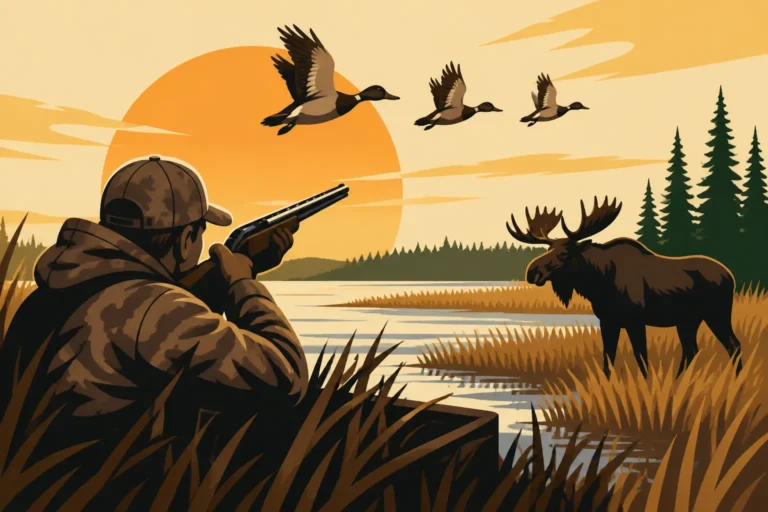
GHAs in areas like the Porcupine Provincial Forest (portions of GHAs 13, 13A, 18, 18A), the Duck Mountain Provincial Forest (GHAs 18, 18A, 18B), and the extensive regions further north (GHAs 26, 26A, 29, 31, 34) are prime examples. These areas are fantastic for hunters seeking a more remote experience, targeting species like moose, black bear, and wolf. Accessibility can be challenging, often requiring quads, boats, or even float planes for the most remote sections, but the solitude and potential for untouched hunting grounds are unparalleled. You'll want to be well-prepared for any hunt in these regions, as they truly are wilderness. You might even consider a Flying North for Manitoba Caribou trip in one of these massive northern GHAs.
Parkland Fringe – A Mix of Public and Private
Moving south from the deep boreal, the parkland fringe offers a different, yet still substantial, public land hunting experience. This zone is a beautiful blend of aspen bluffs, oak thickets, rolling grasslands, and agricultural fields. While private land becomes more prevalent here, there are still significant pockets of Crown Land, often associated with provincial forests, river corridors, and protected areas.
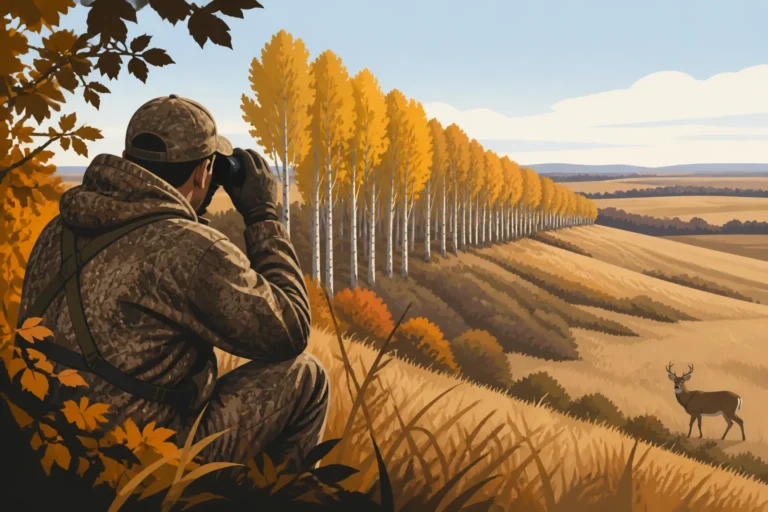
Consider GHAs around Riding Mountain National Park (though the park itself is off-limits to hunting, the surrounding Crown and private land offers great opportunity), the Interlake region (GHAs 20, 20A, 21, 21A), and areas like the Spruce Woods Provincial Forest (GHA 25) or the Turtle Mountain Provincial Forest (GHA 29A). These areas offer excellent opportunities for white-tailed deer, elk, and black bear, often in a more accessible setting than the far north. Hunting here often involves a more intricate dance between public and private lands, making detailed maps and scouting absolutely essential. You'll likely encounter more hunter pressure in these areas compared to the truly remote north, but the game populations can be robust. Scouting these mixed-use landscapes is a great way to find success, particularly when Hunting a Manitoba Bush Edge or exploring river systems.
Eastern Shield Country – Rock, Trees, and Public Access
To the east, Manitoba's Canadian Shield region presents a rugged, rocky landscape dominated by black spruce, jack pine, and countless lakes. GHAs in this part of the province, such as those within the Whiteshell Provincial Park (with specific hunting zones), Nopiming Provincial Park (GHAs 17, 17A), and the Manigotagan River country (GHA 17), boast extensive Crown Land. The terrain is challenging, with granite outcrops, dense timber, and swampy lowlands, but it offers a unique hunting experience.
This region is excellent for bear hunting, and can hold decent populations of moose and deer, though often at lower densities than the boreal forest due to the less fertile soil. Access is generally via provincial highways and secondary roads, with numerous boat launches providing entry to the vast lake systems. While not as remote as the far north, the ruggedness of the Shield country ensures that large sections remain wild and relatively untouched. Hunters here often rely on boats to access secluded bays and islands, or traverse old logging trails and traplines. If you're interested in Black Bear Hunting in Manitoba, the eastern Shield offers tremendous opportunity across its public lands.
Western and Southern GHAs – Smaller Pockets, High Value
In Manitoba's southwestern and southern agricultural belts, Crown Land becomes less common, often existing as smaller, isolated pockets. These might include river valleys, remnants of native prairie, or parcels of uncultivated bush. While these GHAs may not have the vast contiguous tracts of the north, these smaller pieces of public land can be incredibly valuable, especially for species like white-tailed deer and waterfowl.
GHAs like 29, 29A, 30, and others in the prairie pothole region might have limited Crown Land, but the small pieces present often concentrate game. Deer will use river breaks, treed coulees, and slough edges as cover and travel corridors through otherwise open farmland. Waterfowl, of course, rely heavily on wetlands and potholes, many of which are on Crown Land or are accessible with permission. For these areas, tools like GoHunt can be incredibly useful, as they allow you to pinpoint those smaller, often overlooked parcels of public land that might be just what you need for a successful hunt. These smaller areas require precise scouting and a good understanding of local game movements. Hunting a Frozen Slough Crossing on one of these public parcels can be incredibly effective during the late season.
| Region Type | Characteristic Crown Land Description | Primary Big Game Species (Common) | Typical Access Challenges |
|---|---|---|---|
| Northern Boreal Forest | Vast, contiguous blocks, deep wilderness, remote | Moose, Black Bear, Wolf | ATV, Boat, Float Plane, Winter Roads |
| Parkland Fringe | Mixed blocks, provincial forests, river corridors, aspen bluffs | Whitetail, Elk, Black Bear | ATV, Foot, some Road access |
| Eastern Canadian Shield | Rugged, rocky, dense spruce, numerous lakes, less developed | Black Bear, Moose, Whitetail | Boat, Foot, Logging Trails |
| Southwest Farmland/Prairie | Smaller, isolated pockets, river valleys, slough edges, bush patches | Whitetail, Waterfowl | Foot, good scouting to find pockets |
Navigating and Hunting Crown Land Effectively
Simply knowing which GHAs have Crown Land is only the first step. To truly unlock the potential of these public hunting grounds, you need a strategy for navigation, an understanding of the rules, and a commitment to effective scouting. It’s about being prepared, being respectful, and being smart.
Essential Tools for Crown Land Hunting
Hunting vast tracts of Crown Land without proper navigation tools is like trying to sail without a compass – you're bound to get lost, or at best, inefficiently cover ground. Beyond your trusty rifle or bow, a reliable mapping system is paramount. I can't stress this enough: a good GPS unit or a smartphone with a robust hunting app is non-negotiable.
As I mentioned earlier, apps like onX Hunt are incredible for this. They provide detailed satellite imagery, clearly delineate property boundaries (Crown vs. Private), and allow you to mark waypoints for scouting, game sightings, and tracking. Imagine being deep in the bush, having walked a few kilometers, and needing to confirm you're still on public land or find your way back to your vehicle – a digital map with your precise location is invaluable. Complement this with a physical map and compass as a backup, especially in areas with spotty cell service, which is common in Manitoba's more remote GHAs. Knowing how to use them both gives you a crucial layer of safety and confidence. You can use these tools to identify prime spots for Hanging a Stand on a Manitoba Bush Edge or to understand the lay of the land for Scouting a Manitoba Game Hunting Area.
Respecting Boundaries and Regulations
The privilege of hunting on Crown Land comes with the responsibility of understanding and adhering to all regulations. This isn't just about avoiding fines; it's about being a good steward of the land and ensuring these opportunities remain available for future generations. One of the most critical aspects is knowing exactly where Crown Land ends and private land begins. Even an accidental step onto private property can erode trust with landowners and reflect poorly on all hunters.
Before you head out, consult the provincial hunting regulations guide for any specific rules pertaining to the GHA you're visiting. This includes restrictions on vehicle use, camping, baiting, or specific weapon types. Some Wildlife Management Areas (WMAs), for example, might have different rules than general Crown Land. Always confirm whether the Crown Land you intend to hunt is part of a Provincial Park, WMA, or other special designation, as rules can vary significantly. Being informed is your first line of defense against unintentional violations. For instance, understanding Manitoba's Night Hunting Rules is critical, as certain Crown Lands may be approved, while others are not, or permission varies.
Scouting and Accessing Remote Areas
Hunting on Crown Land, particularly in the larger, more remote GHAs, demands a different approach to scouting and access than hunting smaller private parcels. You're often dealing with vast areas where game might be widely dispersed, or concentrated in less obvious locations. This means pre-season scouting is more critical than ever. Use your mapping tools to identify potential access points, natural pinch points, distinct habitat features, and areas far from roads where other hunters might not venture.
Accessing these remote areas can be a challenge. While some Crown Land is accessible by vehicle on well-maintained roads, many of the most productive spots might require hiking, using an ATV, or even a boat. Always assess the conditions of trails and access routes, especially after heavy rain or in winter, and ensure your vehicle is capable of handling the terrain. Remember to Winter Truck Kit for a Manitoba Hunt if you're heading out in cold weather. Planning your routes, understanding the time and effort required, and considering emergency preparedness are all vital. The deeper you're willing to go, the more likely you are to find less pressured animals and truly wild hunting experiences.
Disclaimer
This article is for general informational purposes only and does not constitute professional advice. Laws, prices and regulations vary by location and change over time. Consult a qualified professional for guidance on your specific situation.