Manitoba Whitetail Season Dates by GHA
Trying to pin down the exact dates for whitetail deer season in Manitoba can feel like trying to hit a moving target, especially when you start digging into the specifics for each Game Hunting Area (GHA). It's frustrating to plan your precious hunting days only to realize the dates shift depending on what corner of the province you're looking at. This guide is here to untangle that complexity, giving you a clear understanding of how Manitoba's whitetail season dates are structured by GHA, so you can plan your hunt with confidence.
Understanding Manitoba's Game Hunting Areas for Whitetails
Before we dive into the nitty-gritty of specific dates, it’s really important to grasp what Game Hunting Areas (GHAs) are and why they exist in Manitoba. It’s not just a random way to chop up the map; there's a real method to the madness that directly impacts when and where you can hunt your whitetail.
How GHAs are Structured and Why It Matters
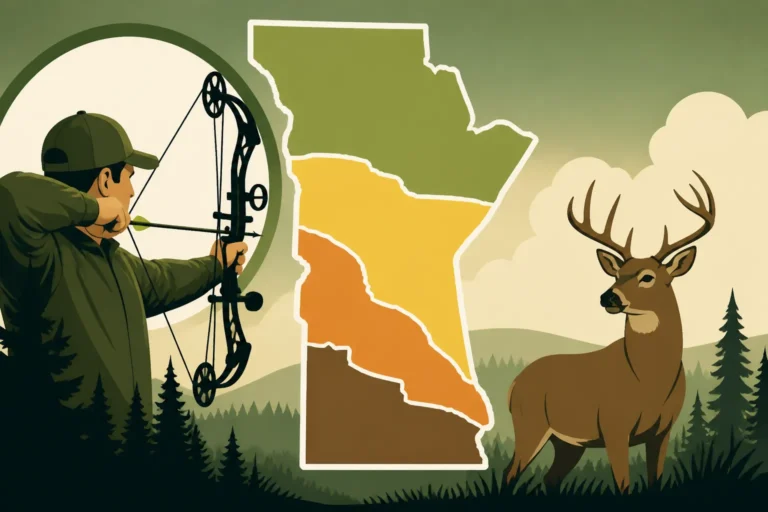
Manitoba is divided into a series of distinct geographical zones known as Game Hunting Areas, or GHAs. Think of them as individual management units, each with its own unique set of characteristics, from habitat and deer population density to human population and land access. These areas aren't just lines on a map for fun; they are crucial tools for wildlife managers to implement specific conservation strategies and harvest regulations tailored to local conditions.
For whitetail deer, this means that the season dates, bag limits, and even the types of weapons allowed can vary significantly from one GHA to another. A GHA in the densely forested Interlake region, for instance, might have different pressures and deer numbers than a GHA dominated by agriculture in the southwest. This localized approach allows the province to maintain healthy deer populations while providing diverse hunting opportunities. It can be a bit of a headache for hunters initially, especially if you're used to more uniform regulations elsewhere, but it's ultimately designed to ensure sustainable hunting for generations to come. Understanding how these GHAs work is the first step to truly mastering your Manitoba whitetail hunt. If you're looking for a comprehensive overview, checking out our guide on Manitoba's Game Hunting Areas is a great next step.
Key Factors Influencing GHA Season Dates
So, what exactly drives these differences in season dates across GHAs? It's a combination of ecological, biological, and socio-economic factors, all carefully considered by wildlife biologists and provincial authorities.
Firstly, deer population dynamics play a huge role. If a GHA has a robust and growing whitetail population, managers might allow for longer seasons, larger bag limits, or additional tags to help manage herd numbers and minimize agricultural damage. Conversely, in areas where deer populations are struggling due to harsh winters, disease outbreaks, or habitat loss, seasons might be shorter, bag limits reduced, or specific weapon types restricted to allow the herd to recover. For instance, areas impacted by severe winter kill might see tighter regulations in subsequent years.
Secondly, habitat type and land use are critical. GHAs with vast tracts of Crown Land and boreal forest might support different hunting methods and pressures compared to those dominated by private agricultural land. Areas with heavy public land access might experience higher hunting pressure, necessitating different season structures to spread out hunters or manage harvest more effectively. Urban-adjacent GHAs often have very specific regulations to ensure public safety and manage deer that might be venturing into suburban areas.
Lastly, historical harvest data and hunter success rates are constantly monitored. Wildlife managers use this information to fine-tune seasons, ensuring that current regulations are achieving conservation goals while still providing reasonable opportunities for hunters. They'll look at the number of tags issued, the reported harvest, and even the age and sex ratios of harvested deer to make informed decisions. It's a continuous balancing act to keep both the deer and the hunters happy.
Navigating the Whitetail Season Dates Across Manitoba GHAs
Now that we understand the 'why' behind the varied dates, let's get into the 'what' and 'when'. Manitoba offers a diverse range of whitetail hunting opportunities, primarily divided by weapon type: archery, rifle, and muzzleloader. Each of these generally has its own season, though they can overlap or run concurrently in certain GHAs.
General Season Structures
Typically, the whitetail hunting calendar in Manitoba kicks off with archery season. This is often the longest season, starting in late August or early September and sometimes running right through to the end of November or even into December in some GHAs. Early archery season provides hunters with a chance to pursue deer before the heavy hunting pressure of rifle season, often encountering bucks in velvet or newly stripped. Many bowhunters cherish the quiet of the woods and the challenge of getting close to unpressured deer. If you're keen on the early start, our guide on Manitoba Archery Season Dates by Zone offers a deeper dive.
Next comes rifle season, which is arguably the most popular and often the most regulated. Rifle seasons usually kick off in early to mid-November, coinciding with the peak of the whitetail rut in many areas. These seasons are generally shorter, often lasting two to three weeks, and are meticulously managed by GHA to distribute hunting pressure and ensure a sustainable harvest. This is when you see a lot of hunters hitting the bush, hoping to catch a cruising buck. For precise dates related to firearms, be sure to check out Manitoba Rifle Season Dates.
Finally, muzzleloader season typically follows the general rifle season, often extending into late November or early December. This season provides a unique challenge, appealing to hunters who enjoy the traditional aspect and the close-range demands of muzzleloading. These seasons can be quite cold, but often offer excellent opportunities after the main rifle pressure has subsided. Don't forget to look into Manitoba Muzzleloader Rules and Seasons if this is your preferred method.
It's crucial to remember that these are general patterns, and the exact start and end dates can fluctuate year to year and, most importantly, by GHA. Always consult the most current official Manitoba Hunting Guide or the provincial online licensing system (like the platform offered by GoHunt) for the precise dates for your chosen GHA.
Regional Variations and Specific Examples
Let's get down to some real-world examples, because this is where the GHA specificity really comes into play. While I can't list every single GHA's exact dates here (that's what the official guide is for!), I can give you a feel for how these dates vary across different regions of Manitoba. This is where a tool like GoHunt can be invaluable, allowing you to easily filter by GHA and weapon type to see the exact regulations.
Parkland Region (e.g., GHAs 23, 23A, 29, 29A): These GHAs, often encompassing areas like Riding Mountain National Park fringe and Duck Mountain, are known for their mixed forest and agricultural lands. They frequently have some of the most sought-after whitetail hunting.
- Archery Season: Often starts in late August or early September, running through mid-November.
- Rifle Season: Typically kicks off in early to mid-November for 2-3 weeks, perfectly timed with the rut.
- Muzzleloader Season: Usually follows rifle season, extending into late November or early December.
Interlake Region (e.g., GHAs 18, 20, 20A): Nestled between Lake Manitoba and Lake Winnipeg, this region is characterized by extensive wetlands, aspen parkland, and bush country.
- Archery Season: Similar early September start, often extending well into December.
- Rifle Season: Can vary, with some zones having slightly different windows in November, sometimes with shorter rifle seasons to manage populations.
- Muzzleloader Season: Often runs through the latter half of November and into December.
Western Farmland (e.g., GHAs 24, 25, 26, 26A): These GHAs are dominated by agriculture, with scattered bluffs and river corridors providing crucial deer habitat. Deer here are often concentrated in prime cover.
- Archery Season: Generally a longer season, starting in early September and often stretching into December.
- Rifle Season: Typically a November-only affair, timed with the rut. Some GHAs might have slightly longer windows.
- Muzzleloader Season: Often aligns with late November/early December.
Eastern Shield Country (e.g., GHAs 13, 17, 17A): These areas, closer to the Ontario border and often part of the Canadian Shield, feature dense boreal forest, rock outcrops, and numerous lakes. Hunting here is often more challenging but rewarding.
- Archery Season: May have a slightly shorter season length than other areas, but still typically starting in early September.
- Rifle Season: Generally a tighter window in November, reflecting the differing deer densities and habitat.
- Muzzleloader Season: Might be a shorter, more specific period in late November.
To illustrate, here's a simplified table showing hypothetical (but realistic) date ranges for various weapon types in different regions. Remember, these are illustrative and not to be used for actual hunting planning. Always check the current official Manitoba Hunting Guide for precise, up-to-date information.
| Region/GHA Type (Illustrative) | Archery Season (Approx.) | Rifle Season (Approx.) | Muzzleloader Season (Approx.) |
|---|---|---|---|
| Parkland (e.g., GHA 29) | Sep 1 – Nov 15 | Nov 8 – Nov 28 | Nov 29 – Dec 10 |
| Interlake (e.g., GHA 18) | Sep 1 – Dec 15 | Nov 10 – Nov 30 | Dec 1 – Dec 15 |
| Western Farmland (e.g., GHA 26) | Sep 1 – Dec 15 | Nov 10 – Nov 30 | Dec 1 – Dec 15 |
| Eastern Shield (e.g., GHA 13) | Sep 1 – Nov 10 | Nov 11 – Nov 24 | Nov 25 – Dec 1 |
| Remote Northern (e.g., GHA 15) | Sep 1 – Dec 31 | Oct 10 – Oct 31 | Nov 1 – Nov 15 |
You can see the variability even in these generalized examples. For serious hunters planning a trip, detailed research into your specific GHA is non-negotiable. If you're thinking about hunting the Parkland fringe for big bucks, for example, knowing the exact season start and end dates for that GHA is paramount to maximize your chances.
Using Official Resources for the Most Accurate Dates
Seriously, I can't stress this enough: the absolute, undeniable source for current and accurate Manitoba whitetail season dates is the official Manitoba Hunting Guide published annually by the provincial government. While blogs like ours can give you a fantastic overview and a solid understanding of the system, regulations change. Sometimes it's a minor tweak, sometimes it's a significant shift due to population concerns or CWD management.
Here's how you should always get your official dates:
- Manitoba Sustainable Development Website: This is the primary online portal for the province's hunting regulations. You can download the latest hunting guide in PDF format, which outlines all season dates, bag limits, and specific GHA rules.
- GoHunt or the Manitoba e-Licensing Portal: When you go to purchase your licence online through the official e-licensing system (often integrated with or similar to what GoHunt provides for other regions), you’ll be able to select your desired GHA and species, and the system will present you with the valid season dates for that specific choice. This is incredibly helpful because it's directly tied to the licensing process. This online portal is generally the easiest and most user-friendly way to confirm details before you even step foot in the bush.
- Local Conservation Offices: If you prefer a human touch or have very specific, nuanced questions, visiting or calling a local Manitoba Conservation office can provide clarity.
Never rely solely on information from previous years' guides or anecdotal advice. The peace of mind that comes from knowing you have the most up-to-date information is invaluable, especially when you consider the investment of time and resources into a hunting trip.
Important Considerations Beyond Just Dates
While knowing the season dates for your GHA is critical, there are several other factors that can significantly influence your whitetail hunting experience in Manitoba. Overlooking these details can lead to missed opportunities or, worse, potential violations.
Second Deer Licences and Extended Seasons
Manitoba offers opportunities for hunters to pursue additional deer through second deer licences in specific GHAs. These licences are typically for antlerless deer, aimed at managing populations in areas where deer numbers are healthy and sometimes impacting agricultural crops. Not all GHAs qualify for a second deer licence, and even within those that do, the season dates and weapon restrictions might differ from your primary tag. This is a fantastic way to extend your time in the field and fill your freezer, but it demands careful attention to the specific GHA regulations for these special tags. Checking out Manitoba's Second Deer Licence Rules will give you a comprehensive understanding of how these opportunities work.
Additionally, some GHAs might have extended seasons for certain weapon types, often for archery or muzzleloader, stretching into late December. These extended periods are usually in GHAs that can sustain a longer harvest or where managing deer populations through a longer season is beneficial. These late-season hunts can be challenging due to cold weather and wary deer, but they also offer a unique experience when much of the province's general hunting pressure has subsided. Always verify if your chosen GHA has such an extension and if it applies to your weapon of choice.
Chronic Wasting Disease CWD Sampling Requirements
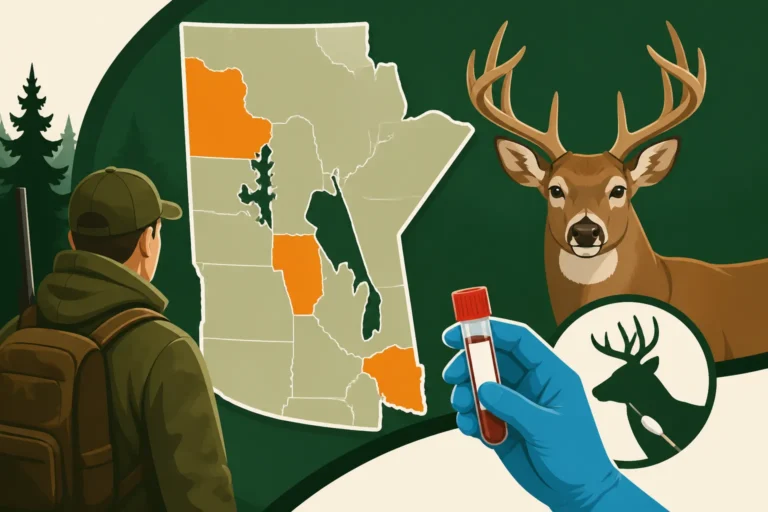
Chronic Wasting Disease (CWD) is a serious concern for deer populations, and Manitoba has implemented mandatory CWD sampling in certain high-risk GHAs. If you harvest a whitetail in a designated CWD-mandatory sampling GHA, you are required to submit the head (or specific tissue samples) for testing within a certain timeframe. Failing to do so can result in penalties.
This requirement isn't just a bureaucratic hurdle; it's a vital part of monitoring and managing the spread of this devastating disease. The GHAs requiring CWD sampling can change, so it's absolutely crucial to check the current regulations before you head out. A quick reference to our detailed guide on Which Manitoba GHAs Require CWD Sampling can help you determine if your hunting area is affected and what steps you need to take. Being proactive about CWD sampling helps protect Manitoba's deer herds for future generations.
Land Access and Permission
Manitoba is a mix of Crown Land (public land) and private land, and navigating these boundaries is a significant part of successful hunting. While many GHAs contain extensive public hunting areas, a substantial portion of the prime whitetail habitat, especially in the Parkland and agricultural regions, is privately owned.
For private land, explicit permission from the landowner is always required before you can hunt. This isn't just good manners; it's the law. Trespassing can lead to fines and loss of hunting privileges. Many hunters build relationships with landowners over the years, which can open up incredible opportunities. However, never assume permission; always ask well in advance. Our guide on Manitoba Landowner Permission Law provides all the details you need to navigate these interactions respectfully and legally.
Even on Crown Land, understanding access points, regulations for vehicle use, and designated wildlife management areas is important. Utilizing mapping tools like those offered by GoHunt, or consulting physical GHA maps, is critical for identifying land ownership boundaries and planning your approach. While it can feel like a chore, taking the time to understand land access will save you headaches and potentially lead to more productive hunting experiences. A great starting point for this is learning how to accurately Read a Manitoba GHA Map Before You Go.
Planning Your Whitetail Hunt with GHA Dates in Mind
Knowing your GHA's whitetail season dates is more than just a regulatory check; it's the foundation upon which you build your entire hunting strategy. The specific timing within the season, and how it aligns with deer behaviour and environmental conditions, should heavily influence your scouting and preparation.
Scouting and Timing Your Hunt
The GHA season dates directly dictate when you can be in the field, and that timing is everything. For instance, if you're primarily a bowhunter, the early archery season (often starting in September) offers a vastly different experience than hunting during the rifle rut in November. Early season deer are still in summer patterns, often feeding heavily in agricultural fields or food plots. Your scouting then would focus on identifying these food sources and the travel corridors leading to them. This is where active, focused scouting of a Manitoba Game Hunting Area comes into play.
However, if your GHA's rifle season coincides with the peak of the rut in mid-November, your scouting focus shifts entirely. You'd be looking for buck sign like scrapes and rubs, identifying pinch points, funnels, and natural travel routes that bucks will use while cruising for does. The rut is a high-energy, often unpredictable time, and understanding how your GHA's dates line up with this critical period is paramount. A comprehensive guide like Hunting Whitetail in Manitoba's Bush Country will show you how to identify deer movements in different environments throughout the season.
The later parts of the season, extending into late November or December, often mean colder weather and potentially deep snow. Deer patterns change again, concentrating around optimal bedding areas and sheltered thermal cover. Your strategy needs to adapt, focusing on these wintering areas and the most efficient travel routes to and from them. Knowing your GHA's specific late-season dates allows you to tailor your scouting efforts to the behaviours you're most likely to encounter.
Gear and Preparation for Specific Season Windows
Your GHA's season dates aren't just about deer behaviour; they're about weather, too. Manitoba is known for its dramatic temperature swings, and your gear absolutely needs to match the conditions of your specific hunting window.
Early Season (Late August/September Archery): This can still be warm, even hot, with plenty of bugs. Your gear needs to be lightweight, breathable, and provide good concealment. Bug repellent and head nets are often essential. Dehydration can be a real concern.
Mid-Season (October/Early November Archery/Rifle): This is often a transition period. You can experience anything from mild, pleasant days to sudden cold snaps, rain, or even early snow. Layering becomes key. You need versatile clothing that can be adjusted as temperatures fluctuate throughout the day. Water-resistant outer layers are a must.
Late Season (Mid-November through December Rifle/Muzzleloader): This is when Manitoba truly earns its reputation for cold. You're talking about potentially sub-zero temperatures, heavy snow, and strong winds. Your gear needs to be designed for extreme cold: heavy insulation, windproof and waterproof outer shells, insulated boots, and comprehensive hand and head protection. Sitting still in a stand in deep cold, as discussed in Hunting Safely in Deep Winter Cold, requires specialized gear. You'll need to think about how to stay warm and alert for extended periods.
Beyond clothing, think about your vehicle preparedness. Winter roads can be treacherous, and deep snow can limit access to some GHAs. Having an emergency kit in your truck is vital, especially for late-season hunts. Matching your preparation to the GHA's specific season dates ensures you're not just legally compliant, but also safe, comfortable, and ready for whatever Manitoba throws at you.
Disclaimer
The information provided in this guide is for general informational purposes only and is not intended to be a substitute for consulting the official Manitoba Hunting Guide and regulations. Hunting laws and season dates are subject to change by the provincial government. Always refer to the most current official sources before planning and embarking on any hunting activity in Manitoba.