Grunt Calls Late in Manitoba’s Rut
As the crisp bite of late November air settles over Manitoba, many deer hunters find themselves scratching their heads, wondering why the aggressive grunt calls that worked wonders a few weeks ago are now met with deafening silence or, worse, a buck high-tailing it in the opposite direction. It’s a frustrating shift, I know, when you’ve put in the time and effort, only for your tried-and-true tactics to suddenly fall flat. This guide is all about dissecting why those eager bucks change their tune after the main rut and, more importantly, how you can adapt your grunt calling strategy to still entice them when the breeding frenzy has wound down.
Navigating the Late Rut Dynamics in Manitoba
The late rut in Manitoba is a different beast altogether compared to the frenetic peak of breeding season. If you're still calling like it's early November, you're likely missing the mark. This period, typically from the latter half of November well into December, is characterized by a significant shift in whitetail behavior. Understanding these dynamics is crucial to any successful late-season hunt, especially when you’re relying on calling to bring that wary buck into range.
Understanding Whitetail Behavior After the Peak
During the peak rut, bucks are pretty much single-minded, often throwing caution to the wind in their pursuit of does. They're constantly on the move, covering vast distances, and are highly responsive to all sorts of vocalizations, from aggressive grunts to doe bleats. It’s a time of high energy and intense competition. However, once the majority of does have been bred, that intense drive begins to wane. Bucks are exhausted, often having lost a significant amount of body weight, and their primary focus shifts from breeding to survival. They become more nocturnal, more cautious, and much less tolerant of anything that signals competition or undue risk. This means your approach to calling needs a complete overhaul. The high-pitched, aggressive grunts that challenged a buck a few weeks prior might now only alert him to danger.
The Impact of Cold Weather and Snow Cover
Manitoba’s late season also brings with it the undeniable reality of cold weather and often, significant snow cover. These environmental factors dramatically influence deer movement and patterns. Bucks, along with the rest of the herd, start prioritizing food sources and bedding areas that offer maximum protection from the elements. This often means moving into thicker cover, seeking out thermal protection in dense bush, or frequenting sheltered river bottoms. Their energy reserves are low, and expending unnecessary energy running after a perceived rival or a distant doe is not in their best interest. This is where scouting becomes paramount. Tools like GoHunt can be invaluable for identifying these late-season sanctuaries and food sources, allowing you to focus your efforts in areas where deer are more likely to be concentrated. Knowing "Where Manitoba Whitetails Bed in Deep Snow" can give you a significant advantage.
When the snow gets deep, travel becomes harder, and deer paths become more defined, leading them to food or sheltered bedding. A buck isn't going to slog through two feet of snow just because he heard a grunt call that sounds like an aggressive challenger. He's going to evaluate the energy cost versus the potential reward, and in the late rut, that equation rarely favors blind aggression. Your calls need to reflect a more subtle, less demanding interaction to avoid spooking already wary animals.
Why Grunt Calls Evolve for Late Season Whitetails
As deer transition from the peak of the rut into the late season, their vocalizations naturally change. Hunters need to mimic this evolution to remain effective. The soundscape of the forest in December is quieter, more subdued, and calls that reflect this change will garner far more attention than those that don't.
Shifting from Aggression to Curiosity
During the frantic peak of the rut, aggressive grunts, snort-wheezes, and even rattling can effectively challenge dominant bucks, often drawing them in looking for a fight. These sounds scream "I'm here, and I'm taking your does!" But as the late rut sets in, that aggressive posturing largely disappears. Most does have been bred, and the few remaining estrous does are scattered and harder to find. Bucks are less interested in brawling and more focused on conserving energy and finding those last few receptive females.
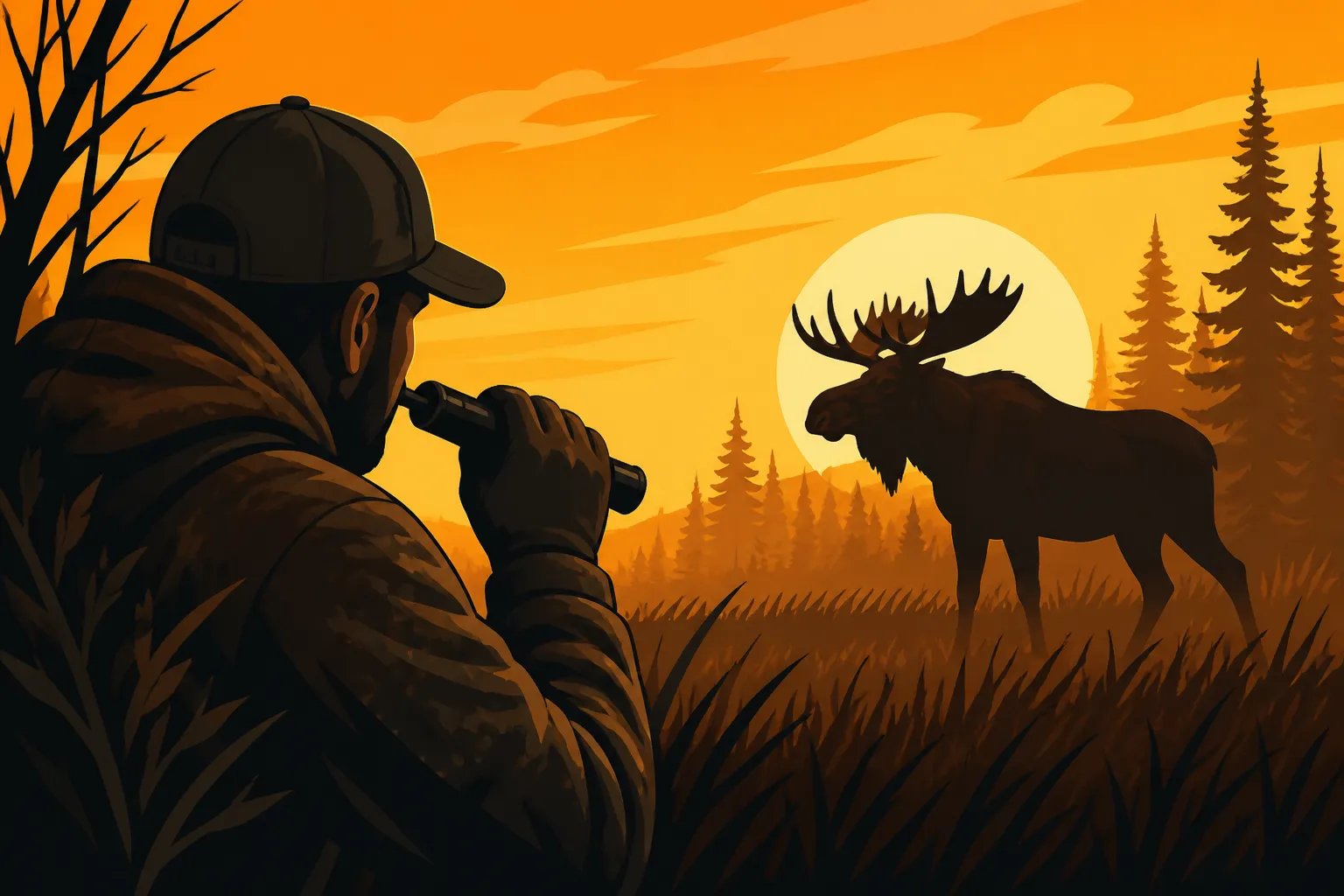
Instead of trying to instigate a fight, your late-season grunt calls should aim to pique a buck's curiosity or simulate a non-threatening social interaction. Think about a softer, almost questioning grunt, or a tending grunt that suggests a doe might still be in the area. This subtle shift from "I want to fight you" to "What's going on over there?" is critical. You're trying to appeal to the residual breeding instinct without triggering the fight-or-flight response of an already depleted and cautious buck.
Less Frequent and Softer Vocalizations
A common mistake in the late rut is overcalling. During the peak, you could often get away with more frequent, louder calling sequences because bucks were actively searching and highly agitated. In the late season, less is almost always more. Bucks are on high alert, and any unnatural or excessive sound will send them packing.
Instead of a long, drawn-out series of aggressive grunts, opt for a single, soft grunt. Wait patiently. If there's no response after 15-20 minutes, try another single, soft grunt. The goal is to imitate a buck that might be trailing a late-breeding doe or simply moving through his territory. These are typically short, subtle vocalizations. Imagine a buck that's "Hunting a Willow Run for Whitetails" – he's likely moving quietly, maybe grunting occasionally to signal his presence or check on a doe, but not broadcasting his position to the entire forest. This softer approach is especially important when you're "Hunting a Manitoba Bush Edge," where deer are often extra cautious.
It's also worth noting that the actual sound of a buck's grunt can change. Their voices might be a bit raspier or weaker after weeks of exertion. While it's hard to perfectly replicate this, the key takeaway is to reduce the volume and intensity of your calls significantly.
Mastering Late Rut Grunt Calling Techniques
So, how do you actually put this into practice? It's about precision, patience, and reading the deer sign around you. Your grunt tube isn't just a noisemaker; it's a tool for subtle communication.
Choosing the Right Grunt Call and Pitch
Not all grunt calls are created equal, and some are better suited for the softer, more controlled sounds needed in the late rut. Many adjustable grunt tubes allow you to change the pitch and tone. For the late season, aim for a deeper, more mature buck sound, but crucially, keep it soft. Avoid any calls that sound high-pitched or juvenile. A deeper, slightly raspy grunt often sounds more natural and less threatening to an older, more dominant buck who might still be on the prowl.
Experiment with your call at home or in a quiet area before heading to the woods. Practice making those soft, drawn-out grunts that are just loud enough to carry a short distance. You're not trying to call deer from a mile away anymore; you're trying to entice a buck that's already within a few hundred yards. Think of it as a conversation, not a broadcast.
Strategic Calling Sequences and Timing
When it comes to sequences, brevity is your friend. A single, short grunt, perhaps every 15-20 minutes, is often all you need. If you do decide to incorporate a short series, keep it to two or three very soft grunts, almost like a buck talking to himself or gently communicating with a nearby doe.
One highly effective tactic in the late rut is the "tending grunt." This is a series of soft, guttural grunts a buck makes when he’s closely following a doe that may or may not be quite ready to breed. It’s a subtle, non-threatening sound that can pique the curiosity of other bucks who might think there's a late-estrous doe in the vicinity. Combine this with a very soft doe bleat if your call allows it, but again, keep it subdued.
Timing is also crucial. While you might have been calling aggressively throughout the day during the peak rut, late-season success often hinges on calling during prime movement times – first light, last light, and sometimes during midday when deer might be moving from bedding to feeding or vice versa. During these times, deer are already inclined to move, and your subtle call might just be the nudge they need to investigate. Remember to be patient. After a call, give it plenty of time (15-30 minutes) before calling again, as a buck might be taking his time to circle downwind.
| Grunt Call Type | Primary Application (Peak Rut) | Late Rut Adaptation / Effect | Key Characteristics for Late Rut |
|---|---|---|---|
| Aggressive Grunt | Challenging dominant bucks, inciting a fight. | Avoid or use sparingly and softly. Can alert wary bucks to danger. | Deep, guttural, short, but extremely low volume and infrequent. |
| Tending Grunt | When a buck is pursuing an estrous doe. | Highly effective. Suggests a doe is present, appealing to residual breeding instinct without aggression. | Series of soft, drawn-out, rhythmic grunts. Mimic a quiet "hmmmp… hmmmp". |
| Social Grunt | General communication among deer. | Good for curiosity. Non-threatening, makes a buck think another deer is nearby, potentially a late-breeding doe. | Single, soft, mid-pitch grunt. |
| Snort-Wheeze | Aggressive challenge, typically by dominant bucks. | Rarely effective, usually detrimental. Almost always spooks late-season bucks. | Avoid entirely. |
| Doe Bleat/Estrus | Attracting bucks looking for a mate. | Use very sparingly and softly. Can be effective to simulate a late-estrous doe, especially when combined with a soft tending grunt. | Soft, drawn-out "Maaaaah." |
Integrating Grunt Calls with Comprehensive Late Season Strategies
Grunt calls are just one tool in your late-season arsenal. For true success in Manitoba’s cold, integrating your calling with other proven strategies is absolutely essential. The late rut demands a more holistic approach, where every piece of your hunting puzzle works in harmony.
Pairing Grunts with Decoys and Scents
In the late rut, a visual element can significantly enhance the effectiveness of your subtle grunts. A well-placed buck or doe decoy can provide the visual confirmation that a wary buck needs to commit. When using a buck decoy, consider positioning it as a subordinate buck, maybe bedded down or looking away, rather than a full-size, aggressive dominant pose. This again leans into the "curiosity" factor rather than a direct challenge. A single doe decoy, positioned as if browsing, can be equally effective, especially if you're using soft tending grunts and doe bleats.
Scents can also play a vital role. While peak rut often calls for estrus doe urine, the late season might be better served by less aggressive deer scents, such as social deer urine or even dominant buck urine used sparingly to mark a mock scrape (though mock scrapes are less effective this late in the year). Again, less is more. Don't douse the entire area in scent; a few strategically placed scent wicks near your decoy or on a tree branch downwind of your stand can be enough to draw a buck's nose. Consider using a wind checker frequently, as wind direction will dictate where you place your scents and how your calls carry.
Still Hunting and Stand Hunting Approaches
Given the increased wariness of bucks and the often sparse movement, combining your grunt calling with effective hunting methods is paramount. "Sitting All Day in a Manitoba Blind" can be a highly effective late-season strategy, allowing you to stay warm and remain undetected for extended periods. From a blind, you have the advantage of being able to make subtle calls without fear of giving away your position through movement. This stationary approach allows you to observe deer patterns, understand their travel routes between "Hunting a Poplar Bluff at First Light" and their primary food sources, and deploy your calls when the timing feels right.
For those who prefer a more active approach, still hunting or slow-moving spot-and-stalk can also work, especially in areas with good cover like "Hunting the Parkland Fringe for Big Bucks." When still hunting, move incredibly slowly, pausing frequently to scan the landscape and listen. After a pause, make a single soft grunt. Then, listen again. This allows you to cover ground while intermittently sounding like a deer moving through the woods. The key is to match your movement to the natural pace of a deer and to never rush your calls. Using a mapping app like GoHunt can help you identify subtle terrain features that might concentrate deer movement, allowing you to still hunt more effectively.
Adapting to Local Conditions and Buck Behavior
No two late ruts are exactly alike, and conditions can vary dramatically even across Manitoba's diverse hunting zones. A late fall with minimal snow and mild temperatures might see bucks still moving quite a bit, while an early deep freeze will push them quickly into thick cover. Always pay close attention to the local conditions, recent weather patterns, and fresh sign.
Are you finding fresh rubs and scrapes? If so, some breeding activity might still be occurring, and a slightly more aggressive call could still work. Are deer primarily focused on feeding on standing corn or browsing on woody stems? Your calling should reflect this focus. For example, if you're "Hunting a Field of Standing Corn," a tending grunt suggesting a doe is feeding nearby could be effective. If bucks are grouped up and largely ignoring does, a social grunt might draw their curiosity more than a breeding-focused call. Always prioritize stealth, patience, and adapting your strategy to the specific behavior of the deer in your hunting area. A detailed understanding of "Manitoba's Whitetail Season Dates by GHA" will also inform your strategy, as the rut's tail end can vary slightly by region.
Common Mistakes and How to Avoid Them
Even with the best intentions, it's easy to fall into old habits or make errors that can jeopardize your late-season hunt. Learning from common pitfalls can significantly increase your chances of success.
Overcalling and Aggressive Sequences
One of the most persistent mistakes hunters make in the late rut is simply calling too much, or with too much enthusiasm. We're often conditioned by the success of aggressive calling during the peak rut, and it's hard to dial back. However, a buck that has survived weeks of hunting pressure and breeding exertion is incredibly sensitive to anything that sounds out of place. An overly aggressive grunt or a rapid-fire sequence of grunts will almost certainly send him fleeing.
To avoid this, consciously limit yourself to very short, infrequent calling sessions. Think of it as a quality over quantity approach. Instead of trying to dominate the soundscape, aim to blend into it. If you have a partner, perhaps one person calls while the other focuses on scanning for movement and listening. Patience is crucial; it might feel like nothing is happening, but a subtle grunt can travel further than you think and can take a cautious buck a long time to investigate. When considering a long sit, especially in cold weather, remember that "Hunting Safely in Deep Winter Cold" is paramount, and constant, frantic calling can lead to unnecessary exposure.
Ignoring Wind Direction and Movement Patterns
Ignoring the wind is always a hunting faux pas, but in the late rut, it can be an absolute hunt-ender. Bucks are hyper-aware of their surroundings, and their noses are their primary defense mechanism. A subtle grunt might draw a buck in, but if he catches your scent, your hunt is over. Always position yourself downwind of where you expect deer to approach, and use a wind-checker puff bottle frequently. Even a slight shift in wind can give away your position.
Similarly, understanding and respecting late-season deer movement patterns is vital. Bucks are often moving between thick bedding cover and specific food sources. Setting up your stand on a travel corridor between these two points will put you in a prime position. If you're on public land, identifying "Finding Ground Other Hunters Drive Past" can be beneficial, as these areas may hold undisturbed late-season bucks. Using tools like GoHunt to analyze historical movement data, satellite imagery for identifying cover, and topographical maps for travel corridors will give you an edge. Don't just pick a spot and hope; analyze and strategize.
Lack of Patience and Giving Up Too Soon
The late rut can test a hunter's patience like no other time of year. Days can pass without seeing a single buck, or even much deer movement at all. It's easy to get discouraged, to assume the deer aren't there, or that your calling isn't working. However, the biggest mistake is often giving up too soon. A late-season buck, particularly an older, mature one, might only move significantly for a very short window each day, usually at dawn or dusk. He might also take a full 30 minutes to slowly circle downwind of your call before showing himself.
Commit to long sits, especially during those prime times. If you make a subtle grunt call, be prepared to wait. Resist the urge to fidget, check your phone, or pack up early. Often, the buck that finally steps out is one that has been observing you or circling your position for a considerable amount of time. The rewards of late-season hunting are often directly proportional to the patience you demonstrate. It can be a waiting game, but when that mature buck finally appears, it’s all worth it.
Disclaimer
Hunting is an inherently dangerous activity. Always prioritize safety, follow all local regulations and laws, and be aware of your surroundings. The information provided in this guide is for informational purposes only and should not be taken as a substitute for professional guidance or formal hunter education. Always hunt ethically and responsibly.