How Much to Tip a Manitoba Guide
The moment your incredible Manitoba hunting trip is wrapping up, and you're thinking back on all the stories, the challenges, and perhaps the trophy you're taking home, one question often pops up in every hunter's mind: "How much do I tip my guide?" It's a perfectly natural concern, a bit like the unspoken etiquette of dining out in a new place. You want to show your appreciation for their hard work, their knowledge, and the unforgettable experience, but you also want to be fair and understand the local customs. This guide is here to shed light on how tipping works with hunting guides in Manitoba, helping you navigate this often-awkward situation with confidence and genuine gratitude.
Understanding the Culture of Tipping in Hunting
Tipping in the hunting world, especially with outfitters and guides, is a bit different from your everyday restaurant experience. It's deeply ingrained in the culture and reflects the unique nature of the service provided.
Why Tipping is Expected and Appreciated
Let's be real: guiding is hard work. It's not a 9-to-5 desk job. Your Manitoba guide has likely put in countless hours scouting, preparing stands, checking bait sites, maintaining gear, and making sure every detail of your hunt is as perfect as possible. They’re up before dawn, often in challenging weather conditions, and they're usually the last to bed, ensuring camp is secure and plans are set for the next day. They're often out there in the biting cold, slogging through snow or thick bush, all to put you on game.
A guide's income often relies significantly on tips. It's a service industry, and while the outfitter charges a base fee for the hunt package, that tip is often a direct reflection of your guide's personal effort and dedication. It's more than just a bonus; it's a vital part of their livelihood. When you offer a generous tip, you're not just being polite; you're acknowledging the physical exertion, the mental fortitude, the years of accumulated bush knowledge, and the sheer passion they bring to their craft. It validates their commitment and fuels their desire to provide exceptional experiences for future hunters.
What Your Guide's Daily Rate Doesn't Always Cover
Many hunters mistakenly assume that the high cost of an outfitted hunt package fully compensates the guide. While the package price covers a vast array of expenses – like lodging, meals, transportation in the field, licenses, permits, equipment, and the general overhead of running an outfitting business – it doesn't always translate into a hefty personal wage for the guide themselves. Think of it this way: your guide might be driving hundreds of kilometres, quartering out an animal in the dark, or tracking a wounded buck for hours. Their base pay from the outfitter covers their time and effort, but the tip is for the extraordinary service, the extra mile, the personal connection, and the sheer dedication to your success and enjoyment.
They often invest in their own specialized gear, maintain their vehicles, and continue their education in wildlife management or first aid. These are professionals, often working seasonally, in demanding roles where customer satisfaction is paramount. When you look at platforms like BookYourHunt or GoHunt, you'll often see that reputable outfitters will transparently list what's included and what's extra, and tips for guides are almost universally considered an additional, expected expense. Understanding this distinction helps to frame the tip not as an optional extra, but as a recognition of true value.
Factors Influencing Your Tipping Decision in Manitoba
Deciding on the exact amount to tip isn't always a cut-and-dried calculation. Several factors should play into your decision, reflecting the nuances of your hunting experience.
The Quality of the Guiding Experience Beyond the Kill
This is perhaps the most important consideration. It’s natural to want to reward a guide who helped you fill your tag, but remember that a successful hunt isn't solely defined by harvesting an animal. Manitoba hunting, especially for big game, can be incredibly challenging. There are days when the weather doesn't cooperate, the animals aren't moving, or luck just isn't on your side. Even in these situations, an exceptional guide still deserves a good tip.
Consider these aspects of the "experience":
- Effort and Dedication: Did your guide work tirelessly, scouting new areas, adapting strategies, and trying every trick in the book to put you on game? Did they maintain a positive attitude even when conditions were tough?
- Knowledge and Woodsmanship: Was your guide intimately familiar with the Manitoba's Game Hunting Areas you were hunting? Did they demonstrate impressive tracking skills, call effectively, or know the subtle nuances of animal behaviour in that specific region? Did they teach you something new about the bush or the game you were pursuing?
- Patience and Communication: Were they patient with you, especially if you're a less experienced hunter or made a mistake? Did they communicate clearly about the plan, safety protocols, and what to expect?
- Safety and Comfort: Did you feel safe and well-cared for throughout the trip? Did they ensure you were comfortable in the blind or camp, offering advice on staying warm when Hunting Safely in Deep Winter Cold, or providing proper Meat Care in Manitoba's Cold Snaps?
- Personality and Camaraderie: Did your guide make the trip enjoyable? Were they good company, sharing stories, and fostering a positive atmosphere in camp?
If your guide consistently went above and beyond in these areas, regardless of whether you punched your tag, they earned a solid tip.
The Role of Camp Staff and Support Crew
On many guided Manitoba hunts, especially multi-day big game expeditions, your experience isn't just shaped by your primary guide. There's often a whole team working behind the scenes to make your trip comfortable and successful. This could include cooks, camp helpers, skinners, meat packers, or even additional trackers.
These individuals contribute significantly to your overall experience. The cook who provides delicious, hearty meals after a long day in the bush, the camp hand who keeps your cabin warm and clean, or the person who helps with Field Dressing in Manitoba's Deep Cold and getting your animal out of the bush – they all deserve recognition.
When it comes to tipping camp staff, you generally have a couple of options:
- Direct Tipping: If you've had direct, positive interactions with specific staff members, you can offer them a tip directly. This is often appreciated.
- Pooled Tip: Some outfitters have a system where you can give a lump sum to the head guide or outfitter, specifying that a portion is for the camp staff to share. It's wise to clarify this with the outfitter beforehand.
A common practice is to allocate a smaller percentage of your overall tip budget to the camp staff, as their direct contribution to your hunting success might be less than the guide's, but their impact on your overall enjoyment and comfort is undeniable.
Type of Hunt and Duration
The nature and length of your hunt also influence tipping norms. A short, one or two-day waterfowl hunt, for instance, typically involves a different tipping scale than a week-long Whitetail Hunting in Manitoba or Moose Hunting Manitoba's Boreal Country adventure.
- Duration: Longer hunts involve more days of a guide's intensive labour, logistics, and personal commitment. A guide spending five to seven days exclusively with you, deep in the bush, warrants a more substantial tip than someone assisting for a single morning's duck hunt.
- Intensity and Effort: Hunts for certain species or in particularly challenging terrain demand more from a guide. For example, a physically demanding mountain elk hunt or a remote fly-in caribou trip places immense pressure and physical strain on a guide, often requiring more specialized skills and endurance. This increased effort should be reflected in your gratuity.
- Logistics: The complexity of the hunt's logistics also plays a role. A remote camp accessible only by float plane, or a hunt requiring extensive vehicle support and meat transport, means more coordination and work for the outfitter and guides.
When planning your trip, consider the scope of the operation and the physical and logistical demands it places on your guide. This context can help you frame a fair and appropriate tip.
Practical Tipping Guidelines for Manitoba Hunts
Now, let's get down to the numbers and practicalities. While there's no universally fixed rule, we can offer some solid guidelines.
Standard Percentage Ranges
For most guided hunts in Manitoba, a general guideline for tipping your primary guide is somewhere between 10% to 20% of the total hunt cost. This range allows for flexibility based on all the factors we've discussed.
Here’s a breakdown of how to think about this range:
- 10-15%: This would be for a good, solid guiding experience. The guide was competent, worked hard, and met expectations. You had a good time, and they put in the effort, even if the animals didn't cooperate or the hunt was challenging.
- 15-20%: This is for an outstanding experience. Your guide went above and beyond, showed exceptional skill, knowledge, effort, and personality. They made the trip truly memorable, perhaps helped you overcome challenges, or simply made you feel incredibly welcome and well-cared for. If you harvested a trophy animal due to their exceptional efforts, this range is very appropriate.
For shorter, less intensive hunts, like a day of Waterfowl Hunting Manitoba's Grain Fields or a predator calling outing, a per-day flat rate might also be considered, typically ranging from $100-$250 per day, depending on the group size and intensity. Always remember these are guidelines, not strict rules.
It's also worth noting that when you're looking for an outfitter, resources like BookYourHunt often have reviews where previous clients mention tipping practices, which can give you a feel for what's customary. Don't hesitate to ask outfitters directly about their suggested tipping ranges when doing your Questions to Ask Before Booking research. Many reputable outfits will be upfront about it, allowing you to budget accordingly for What a Manitoba Guided Hunt Costs.
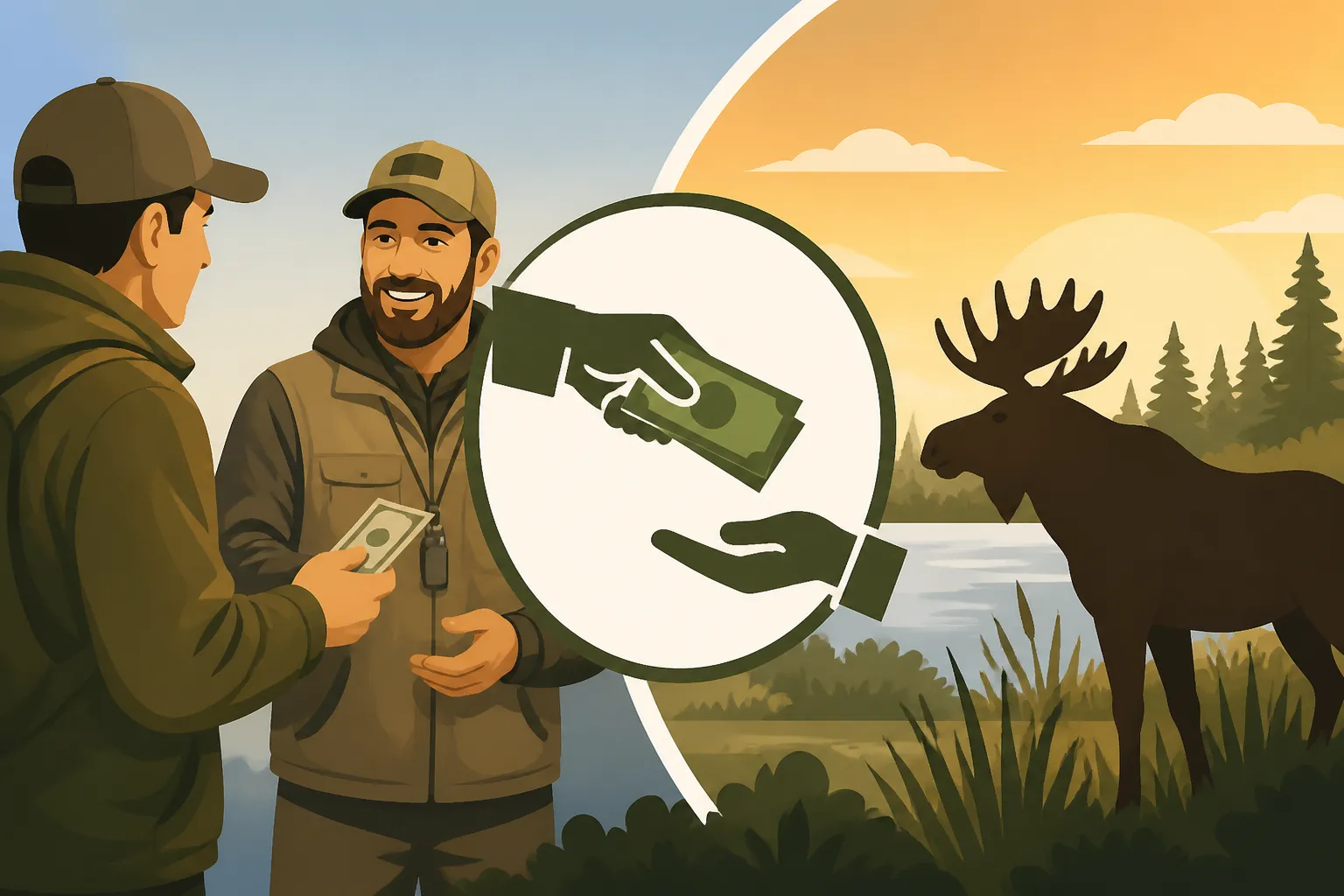
Cash is King and Other Payment Methods
When it comes to the actual transfer of the tip, cash is almost always the preferred method. Here's why:
- Immediate and Direct: Cash can be given directly to your guide at the end of the hunt, ensuring they receive it immediately without any delays or processing fees.
- No Fees: If you were to add the tip to a credit card payment for your hunt, the outfitter might incur transaction fees, and it might take longer for the guide to receive their share.
- Discreet: Handing over a wad of cash with a handshake is often the most discreet and common way to do it.
If carrying a large amount of cash isn't feasible or comfortable for you, other options might include:
- E-transfer/Interac Transfer: If both you and the guide or outfitter use Canadian banking, this can be a convenient, direct, and fee-free way to transfer funds. However, confirm if the guide is set up for this.
- Cheque: A personal cheque can work, but it means a delay for the guide to deposit and clear the funds.
Whatever method you choose, it’s best to discuss it with the outfitter or guide coordinator beforehand to ensure it's convenient for everyone involved. Having it ready at the end of the hunt is a sign of preparedness and respect.
When and How to Present the Tip
Timing and presentation matter. The best time to present your tip is at the very end of the hunt, typically before you depart from camp or say your final goodbyes. This allows you to offer your gratitude for the entire experience.
Here’s a simple etiquette guide:
- Private Moment: Try to find a moment to speak with your guide one-on-one, away from other clients or staff if possible, to make it a more personal exchange.
- Sincere Thank You: Offer a genuine thank you for their hard work, dedication, and the memories created. Be specific about what you appreciated most.
- Handshake: Extend your hand for a firm handshake as you discreetly pass the envelope or folded cash.
- Written Note: Consider including a short, handwritten thank-you note with the cash. This personal touch can mean a lot and gives the guide something tangible to remember you by, especially if you plan to book a return trip.
- Camp Staff: If you're tipping camp staff separately, do so similarly. If it's a pooled tip through the head guide, make sure to clearly communicate your intention for the funds.
Common Tipping Scenarios & Etiquette
Let's address a few specific situations that often cause confusion around tipping.
The Unsuccessful Hunt: Still Tip!
This is perhaps the most misunderstood aspect of hunting etiquette. It's a common misconception that a tip is solely contingent on harvesting an animal. This couldn't be further from the truth. Your guide's effort, skill, knowledge, and dedication are what you are primarily tipping for, not just the outcome. Hunting is not always about the kill; it's about the chase, the experience in nature, the camaraderie, and the knowledge gained.
Manitoba hunting offers incredible opportunities, but success is never guaranteed. Factors like extreme weather, animal movement, or simply bad luck can prevent you from filling your tag. If your guide worked tirelessly, scouted hard, put you in prime spots, provided excellent advice, and did everything within their power to make your hunt successful and enjoyable, they absolutely deserve a tip. A reduced tip, perhaps in the 10-15% range, or a solid flat daily rate, is appropriate to acknowledge their efforts, even if you didn't punch your tag.
Remember, many reputable outfitters, like those you might find on GoHunt, are upfront that they Manitoba Outfitters Who Guarantee Nothing – the hunt itself is the adventure, and the harvest is a bonus. Your tip reflects your appreciation for the adventure they provided.
Tipping an Outfitter Who Also Guides
Sometimes, especially with smaller operations, the outfitter themselves acts as your primary guide. This can create a bit of a quandary regarding tipping. In this scenario, you would generally tip the outfitter as you would any other guide, using the same percentage guidelines based on the overall quality of the guiding experience.
However, there might be slight nuances. Since the outfitter is also the business owner, their overall income structure might be different. Some might prefer a slightly lower percentage, while others rely on the tip equally. It's perfectly acceptable, and even encouraged, to discreetly ask the outfitter or their booking agent during your pre-trip planning phase about their preferred tipping practices or what is customary for their establishment. This upfront communication avoids awkwardness later and ensures you're prepared.
What if Service Was Poor?
While rare with reputable Manitoba outfits, there might be instances where you genuinely feel the guiding service was subpar. This is a difficult situation, as you want to be fair but also address legitimate concerns.
First, distinguish between bad luck and genuinely poor service. Bad luck (no animals, bad weather) is not the guide's fault and should not impact your tip significantly. Genuinely poor service means the guide was:
- Unprepared or unknowledgeable.
- Unprofessional or disrespectful.
- Did not put in a reasonable effort.
- Compromised your safety.
- Failed to deliver on agreed-upon services (e.g., What a Licensed Manitoba Guide Provides).
If you genuinely feel the service was poor, you have options:
- Address it with the Outfitter: Your first step should be to have a private, candid conversation with the outfitter or camp manager about your concerns. Give them an opportunity to understand and address the issues.
- Adjust the Tip: If the service was genuinely poor and significantly impacted your experience due to the guide's shortcomings, it might be appropriate to reduce your tip to the lower end of the percentage scale, or even decline to tip if the service was truly egregious and unprofessional. This decision should not be taken lightly and should be based on concrete reasons, not just a lack of harvest.
- Review, Don't Vent: Later, consider leaving an honest, constructive review on hunting forums or platforms like GoHunt, focusing on specific facts rather than emotional venting. This helps future hunters make informed decisions.
A table outlining a general approach to tipping can be helpful:
| Hunt Type / Duration | Service Quality | Recommended Tip Range (of hunt cost) | Notes |
|---|---|---|---|
| Multi-Day Big Game | Exceptional (Goes above & beyond) | 15-20% | Guide was outstanding, highly skilled, great company. |
| Multi-Day Big Game | Good (Met expectations, worked hard) | 10-15% | Competent, diligent, positive attitude, even if harvest didn't happen. |
| Multi-Day Big Game | Poor (Lack of effort, unprofessional) | 0-10% (after discussion with outfitter) | Reserve for legitimate performance issues, not just bad luck. |
| 1-2 Day Waterfowl/Predator | Exceptional | $150-$250+ per day | Guide was tireless, put you on birds/game, fantastic setup. |
| 1-2 Day Waterfowl/Predator | Good | $100-$150 per day | Guide was competent, provided opportunities, good experience. |
| Camp Staff (Cooks, skinners etc.) | Overall experience | 5-10% of total tip pool, or $50-$100 per person for longer trips | Can be given directly or through head guide for distribution. |
This guide should provide you with a clear understanding of tipping etiquette in Manitoba's hunting world. By being prepared and thoughtful, you can show your genuine appreciation for the hard work and dedication of your guide and the entire outfitting team, ensuring your trip ends on a positive and respectful note.
Disclaimer
This article is for general informational purposes only and does not constitute professional advice. Laws, prices and regulations vary by location and change over time. Consult a qualified professional for guidance on your specific situation.