Getting a Bear Rug Tanned
You've just wrapped up a successful bear hunt here in Manitoba, maybe on a spring trip or a fall adventure deep in the bush. The freezer's stocked with prime meat, and that incredible hide is now staring at you, brimming with potential. But getting that beautiful pelt transformed into a stunning bear rug for your den or cabin? That's a whole other journey, and it's one that starts long before you even drop it off at the tannery. This guide is all about navigating the detailed steps, decisions, and considerations involved in getting a bear rug tanned, ensuring your trophy lasts a lifetime.
The Initial Field Care: Your First Steps to a Great Rug
The quality of your finished bear rug hinges almost entirely on the care you give that hide in the field. This isn't just about common courtesy to the animal; it's about preserving the integrity of the hair and skin, preventing bacterial growth, and making the tanner's job exponentially easier – which often translates to a better end product for you. Skip or rush these crucial steps, and you might find yourself with a less-than-perfect, or even unusable, hide.
Why Proper Skinning and Salting Are Non-Negotiable
Think of field care as the foundation of your rug. If the foundation is weak, the whole structure suffers. Improper skinning can lead to cuts in critical areas, making the final sewing and shaping of the rug difficult or impossible. If the hide isn't properly fleshed – meaning all fat and muscle tissue removed – it won't salt or dry effectively. This trapped moisture and tissue become a breeding ground for bacteria, leading to hair slip, a truly heartbreaking outcome where patches of hair simply fall out. Imagine spending all that effort on your hunt, only to have the hide ruined by an oversight. I've seen it happen, and it's a gut punch. Salting is the first, best line of defence against this decay, drawing out moisture and inhibiting bacterial growth until the hide can reach a professional tanner. Meat Care in Manitoba's Cold Snaps isn't just for venison; proper handling is critical for bear hides too.
Crucial Steps for Caping a Bear for a Rug
Caping for a rug is a distinct process from, say, a shoulder mount for a deer. For a rug, you need the entire hide, including the head, paws, and tail, all meticulously removed with as much care as possible. The goal is to keep the entire hide intact, with no major cuts or holes. When you're making your initial cuts, think about symmetry. You'll typically make a cut down the middle of the belly, from the chin all the way to the tip of the tail. Then, you'll cut around the paws, circling the pads and leaving the claws and bone intact (the tanner will handle those details later). For the head, the cut usually goes in a straight line from the corner of the eye to the back of the skull, carefully peeling back the hide to include the ears, lips, and nose. This is often the trickiest part, and if you're unsure, watch some videos or better yet, have an experienced hunter walk you through it. Every little piece needs to be there for a good rug.
Salting and Drying the Hide
Once the hide is off, the clock is ticking. You need to get it fleshed and salted as quickly as possible. Fleshing involves meticulously scraping away all residual fat, muscle, and membrane from the hide. This exposes the raw leather to the salt and allows for thorough drying. You can do this with a fleshing knife or even a dull kitchen knife, being careful not to cut through the hide itself.
After fleshing, lay the hide out flat, fur-side down, on a clean, dry surface. Apply a generous, even layer of fine-grained, non-iodized salt (like rock salt or saddle salt) over the entire flesh side. Don't skimp on the salt; it's cheap insurance. Really work it into the edges and thicker areas like the head and paws. The salt will draw out moisture, creating a brine. After 24-48 hours, you'll see a puddle of liquid, and the hide will feel stiffer. Scrape off the wet salt, discard it, and apply a fresh, heavy layer of new salt. Repeat this process until the hide feels dry and stiff, almost like cardboard. This usually takes several applications over a few days. Store the salted, dried hide in a breathable bag (like a burlap sack) in a cool, dry place away from pests until you can get it to the tanner. Field Dressing in Manitoba's Deep Cold can present its own challenges, but the principles of quick, clean work still apply.
Finding the Right Tanner for Your Manitoba Bear
Choosing the right tanner is just as critical as proper field care. This isn't a job for just anyone with a drum; bear rugs, especially, require specialized knowledge and experience to ensure the hide is supple, durable, and free from issues like hair slippage or shrinkage. You want someone who understands the unique properties of bear hide and who can bring out its best.
Local Manitoba Taxidermists and Tanners
Start your search locally. Many reputable taxidermists in Manitoba also offer tanning services, or they partner with dedicated tanneries that specialize in wild game. Ask around at local hunting clubs, gun shops, or even check with outfitters you might have used. Word-of-mouth recommendations are golden in the hunting community. Someone who has had a positive experience with their bear rug from a specific tanner is a strong endorsement. When researching, pay attention to their portfolio – do they showcase bear rugs? What do they look like? You want to see vibrant fur, clean seams, and a natural posture if it's an open-mouth rug. Manitoba Taxidermists and Trophy Shipping is a great resource for starting your search. Remember, a good tanner will treat your trophy with the same respect you gave it in the field.
What to Ask When Choosing a Tanner
Don't be shy about asking questions. This is your trophy, and you're investing a significant amount of money and time into preserving it. Here's a table of essential questions to ask any prospective tanner:
| Question | Why It Matters |
|---|---|
| How much experience do you have with bear hides specifically? | Bear hides are thick, greasy, and require specialized treatment compared to deer. |
| What tanning method do you use (e.g., chrome, oil)? | Different methods affect the hide's softness, durability, and cost. |
| What is your typical turnaround time for a bear rug? | Tanning can take many months; manage your expectations. |
| Do you offer options for backing (e.g., felt color, double felt)? | Customization allows you to match the rug to your home decor. |
| Do you do open-mouth or closed-mouth mounts for the head? | This is a significant aesthetic choice for the rug. |
| Is fleshing included, or do I need to do it myself? | Clarifies expectations and potential additional costs. |
| How do you handle paws and claws? Are they included? | Ensures all parts of your bear are properly preserved and integrated. |
| What happens if there's an issue (e.g., hair slip, tears)? | Understand their policy on damage or unforeseen problems. |
| Do you have references or photos of past bear rugs? | Visual proof of their quality and consistency. |
| What is the total cost, including all add-ons? | Get a clear, all-inclusive quote to avoid surprises. |
Understanding Tanning Methods and Their Impact
There are several tanning methods, each with pros and cons. The most common for rugs is chrome tanning, which uses chromium salts. This process results in a very soft, pliable, and durable leather that resists decay and is excellent for draping. It's often preferred for rugs because it creates a beautiful, long-lasting product. Other methods, like brain tanning (traditional and natural) or various oil tans, might be available but are less common for commercial rug production due to complexity or different end-product characteristics.
A good tanner will be able to explain their chosen method and why it's suitable for a bear hide intended for a rug. Ultimately, you want a method that yields a supple, easy-to-care-for rug that retains its natural beauty. If you're researching outfitters for future hunts, resources like BookYourHunt or GoHunt might have reviews or recommendations for tanneries associated with specific regions or guides. For example, a hunt booked through one of these platforms might also offer connections to local taxidermists as part of their package.
The Tanning Process: What Happens to Your Bear Hide
Once you've delivered your meticulously cared-for bear hide to the chosen tanner, the real transformation begins. It's a complex, multi-stage process that takes time and specialized equipment to turn a raw, stiff hide into a soft, durable, and beautiful rug. Understanding these steps can give you a greater appreciation for the craftsmanship involved.
From Raw Hide to Supple Leather
The journey starts with the raw hide, even if it's already salted and dried. The tanner will first rehydrate it, often in a salt solution to prevent further hair slip. Then comes the critical fleshing stage, where any remaining fat, muscle, and membrane are meticulously scraped off the hide. This has to be done perfectly; any left-over tissue will prevent the tanning chemicals from penetrating evenly.
Next, the hide enters a pickling solution, usually an acidic bath, which helps to further clean and "open up" the fibres of the skin, preparing them to accept the tanning agents. After pickling, the hide goes into the tanning solution itself. As mentioned, chrome tanning is very common. This chemical process permanently alters the protein structure of the skin, preventing decomposition and making it durable and flexible. After tanning, the hide is neutralized to balance its pH, then goes through a re-oiling process, often with specialized tanning oils, to restore moisture and softness. Finally, the hide is stretched, dried, and tumbled or "staked" (mechanically softened) until it reaches that beautiful, supple texture you expect in a finished rug. It's a precise dance of chemistry and mechanics.
Preparing the Rug for Display
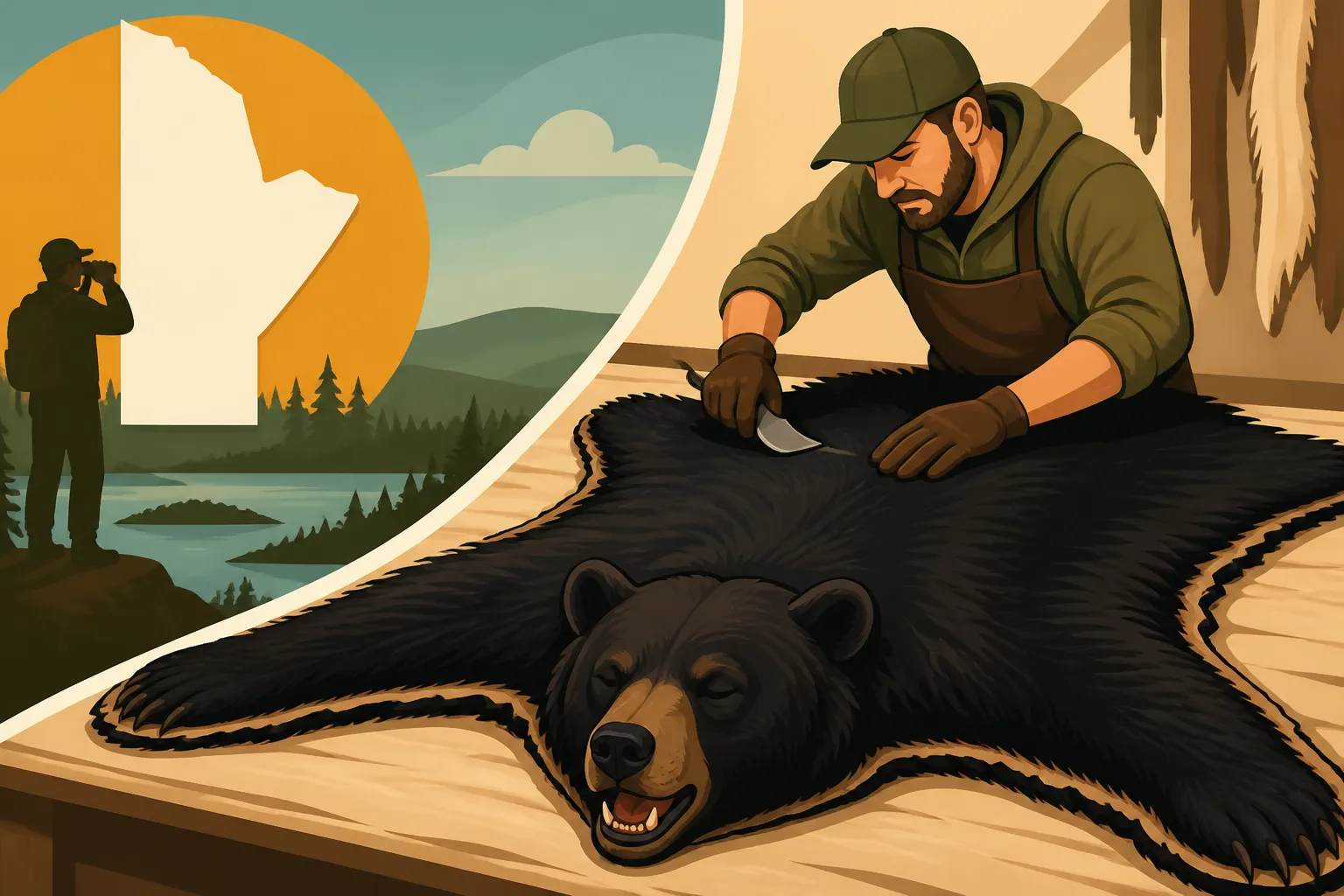
Once the hide is fully tanned and softened, it's ready for the "rug making" stage. This involves adding the backing and detailing the head.
- Backing: The tanned hide itself isn't enough for a rug; it needs a durable backing. This is typically heavy-duty felt, often in a contrasting or complementary colour. The felt is carefully cut to the shape of the bear and sewn onto the perimeter of the hide, providing stability, protecting the leather, and preventing stretching or curling. Sometimes, hunters opt for a double-felted edge for extra durability and a more finished look. The sewing is done carefully, often with an industrial machine, to ensure a strong, lasting bond.
- Head Mount: For the head, you generally have two main options:
- Open Mouth: This is the classic look, where the bear's mouth is sculpted open, showing its teeth and tongue. It gives a very lifelike, dynamic appearance. This requires more intricate taxidermy work on the head, including a custom form, artificial teeth, and a sculpted tongue.
- Closed Mouth: This offers a more subdued, sleeping appearance. The head is still mounted, but the mouth is sculpted shut. It's often a bit less expensive than an open-mouth mount because it requires less detailed work.
The paws are typically finished with leather or felt pads sewn onto the underside, mimicking the natural pads of the bear. The claws remain intact, providing an authentic detail.
Average Timelines and Expectations
This isn't a quick process. From the moment you drop off your hide until you pick up your finished rug, you should expect anywhere from six months to over a year. This timeline depends on several factors:
- The tanner's workload: Popular tanneries often have a backlog.
- The size and condition of the hide: Larger hides or those requiring more repair work can take longer.
- The complexity of the rug mount: An open-mouth mount takes more detailed taxidermy than a closed-mouth one.
- The tanning method: Some methods are quicker than others.
It's crucial to get an estimated timeline from your tanner when you drop off the hide, and then practice patience. They're working with natural materials, and rush jobs rarely turn out as well as carefully crafted ones. While you might be eager to see your Manitoba Black Bear Hunting in Manitoba trophy displayed, a good rug is worth the wait.
Costs and Considerations for Your Bear Rug
Investing in a bear rug is a significant decision, both financially and in terms of the space it will occupy in your home. It’s not just about the tanning; it’s about the long-term care, display, and honouring the animal.
Breaking Down the Investment
Without getting into specific numbers, which can vary wildly, the cost of getting a bear rug tanned is typically a combination of several factors. Most tanners will charge based on the size of the hide, often by the linear foot or square foot, sometimes with a flat fee for the full rug work. Here's a general breakdown of what contributes to the total cost:
- Basic Tanning: This is the core process of preserving and softening the hide.
- Fleshing: If your hide wasn't perfectly fleshed in the field, there might be an additional charge for the tanner to complete this.
- Head Mount: Whether you choose an open-mouth or closed-mouth mount will impact the cost, with open-mouth typically being more expensive due to the intricate taxidermy involved in sculpting the jaws, adding artificial teeth, and detailing the tongue.
- Backing Materials: The type and quality of felt used for the backing will factor into the price. Some hunters opt for heavier, more premium felt, or even a double layer.
- Paw Detailing: Finishing the paws with leather or felt pads is usually included, but highly custom work might be extra.
- Repairs: If the hide has tears, cuts, or areas of hair slip due to field mishandling, the tanner may charge for repair work, which is often very time-consuming.
- Shipping: If you're sending your hide to an out-of-province tanner, shipping costs (both ways) will add to the overall expense.
- Sales Tax: Don't forget applicable taxes on the services.
It's wise to get a detailed, written quote upfront so there are no surprises. This is a significant investment, often comparable to a small portion of the cost of a guided hunt. Consider what a Manitoba Black Bear Hunt Prices might be, and then factor in the trophy preservation.
Long-Term Care for Your Finished Rug
Once your beautiful bear rug is home, proper care is essential to ensure it remains a prized possession for decades.
- Placement: Avoid direct sunlight, which can fade the fur and dry out the leather. Also, keep it away from heat sources like fireplaces or heating vents. High traffic areas are generally not ideal, as constant foot traffic can wear down the fur.
- Cleaning: Regular, gentle vacuuming with a brush attachment can remove dust and loose debris. Always vacuum with the lay of the fur, not against it. For deeper cleaning or spills, consult a professional cleaner specializing in furs or taxidermy. Avoid harsh chemicals or excessive moisture.
- Pest Control: Moths and other insects can be a threat. Periodically inspect the rug for any signs of pest activity. Storing it in a cedar chest or using moth repellents (designed for furs) can help, but avoid direct contact of chemicals with the fur. Freezing the rug for a few days once a year (if possible) can also kill any dormant insect larvae.
- Humidity Control: Extreme changes in humidity can affect the leather. A stable indoor environment is best. Too dry, and the leather can become brittle; too humid, and it can encourage mould.
- Professional Maintenance: Every few years, consider having your rug professionally inspected and cleaned by a taxidermist or furrier. They can address any minor issues before they become major problems.
Ethical and Practical Considerations
Displaying a bear rug is a powerful statement, a tangible connection to your experience in the wild. It serves as a reminder of the hunt, the beauty of the animal, and the wilderness of Manitoba.
- Honouring the Animal: Many hunters feel a deep sense of respect and gratitude for the animals they harvest. A rug is one way to honor that animal, ensuring its presence continues to enrich your life.
- Space Requirements: Bear rugs take up significant floor space. Consider where it will lie or hang in your home. A full-size black bear rug can easily be 5-7 feet long, plus the head. Make sure you have an appropriate spot where it won't be constantly stepped on or obstructed.
- Personal Preference: Ultimately, getting a bear rug tanned is a personal choice. Some prefer skull mounts, others European mounts, and some just the meat. But for those who choose a rug, it becomes a focal point, a conversation starter, and a constant connection to your hunting adventures. Whether you were Hunting Bear on a Late August Bait or chasing a Colour Phase Black Bears in Manitoba in the spring, that rug captures the essence of the moment.
The process of turning a raw hide into a finished bear rug is a blend of science, art, and patience. By understanding each step, from careful field care to choosing the right tanner and providing long-term maintenance, you ensure that your Manitoba bear trophy will be a source of pride and memories for many years to come.
Disclaimer
This article is for general informational purposes only and does not constitute professional advice. Laws, prices and regulations vary by location and change over time. Consult a qualified professional for guidance on your specific situation.