Hunting Manitoba’s Eastern Shield Country
Oh, the Eastern Shield! If you've ever felt the pull of truly wild country, where the land itself seems to breathe with ancient granite and whispering pines, then Manitoba's Eastern Shield country has likely called to you. It's a place that challenges you, rewards you, and utterly captivates your spirit. But let's be real, it's not like hunting the wide-open prairies or even the mixed-wood parkland. This isn't a "drive your truck down a section line" kind of hunt. This is dense bush, unforgiving rock, and water, water everywhere. Navigating this majestic but rugged landscape, understanding its unique ecosystem, and finding success here requires a completely different mindset and skillset. This guide is here to walk you through everything you need to know to not just survive, but thrive, while hunting in Manitoba's Eastern Shield.
Understanding the Eastern Shield Landscape
When we talk about Manitoba's Eastern Shield country, we're delving into a truly unique ecological zone, a vast expanse of ancient rock, boreal forest, and countless freshwater bodies that stretches from the southeastern corner of the province all the way up into the northern reaches. It’s a stark contrast to the agricultural lands of the south and west, offering a wilder, more challenging, but incredibly rewarding hunting experience.
The Ancient Rock and Water Mosaic
At its heart, the Eastern Shield is defined by the Precambrian Shield, some of the oldest rock formations on Earth. This means you're dealing with exposed granite outcrops, rocky ridges, and a landscape that feels literally carved by glaciers. This isn't soft, loamy soil; it's hard rock, often covered in a thin layer of organic matter, moss, and lichen. Water, too, is a dominant feature here. The Shield is a mosaic of thousands of lakes, ponds, rivers, and winding streams, all interconnected. These waterways are often clear, cold, and teeming with life, but they also create natural barriers and corridors that significantly influence how game animals move through the landscape.
Think about it: a deer or a moose isn't going to simply walk across a deep, wide river if there's an easier path. They'll use pinch points, beaver dams, shallow crossings, or follow shorelines. This makes understanding the hydrography of your chosen Game Hunting Area (GHA) absolutely crucial. These water features aren't just scenic; they are highways for game, defining their travel routes, bedding areas, and feeding grounds. You might find yourself Hunting a Beaver Flowage in the Bush, knowing that it serves as a natural crossing point or a rich source of browse. The sheer volume of water also means that travel is often easier by boat or canoe than by trying to bushwhack through impenetrable forest and over rugged terrain.
Boreal Forest Dominance
Overlaying this ancient rock and water is the vast, sprawling boreal forest. This isn't the open, aspen parkland you might find further west. Here, the trees are predominantly coniferous – jack pine, black spruce, white spruce, and balsam fir – interspersed with deciduous species like trembling aspen and white birch, especially in areas that have seen fire or logging activity. The forest floor can be a tangled mess of fallen timber, thick moss, and dense undergrowth like Labrador tea, alder, and willow, particularly along wetter fringes. This creates incredibly dense cover, offering game abundant places to hide, feed, and bed down without ever being seen from a distance.
The density of this forest means that visibility is often very limited. You'll rarely get those long-range shots you might expect in more open country. Instead, it's a game of close quarters, of careful movement, and keen observation. The sounds of the forest become your primary tool – the snap of a twig, the rustle of leaves, the distant call of a raven. Understanding the different tree species can also give you clues; for example, moose will favour certain browse species, and grouse will be found in specific forest types. It's an ecosystem that demands a hunter's full attention, where every step and every glance matters.
Unique Challenges of the Terrain
Hunting in the Eastern Shield is not for the faint of heart, or for those unprepared for demanding physical exertion. The terrain itself presents a constant series of challenges. Elevation changes, while not mountainous, can be surprisingly steep and abrupt, especially when you're scrambling over rocky ridges and dropping into low-lying wetlands. These subtle rises and falls create microclimates and distinct habitat zones that game animals utilize.
Muskeg, those spongy, waterlogged bogs covered in moss and low-lying vegetation, are another defining feature and a major obstacle. They can be deceptively deep, swallowing boots and making forward progress agonizingly slow and wet. You'll quickly learn to spot the subtle signs of solid ground versus a quagmire. Fallen timber, the natural debris of a healthy forest, creates labyrinthine obstacles that force you to climb over, crawl under, or detour around. It’s an endless obstacle course. Furthermore, the rocky ground, while offering firm footing in places, can be uneven, slippery when wet or icy, and incredibly noisy if you're not careful with your foot placement. This environment demands robust footwear, excellent physical conditioning, and a patient, methodical approach to hunting.
Key Game Species and Their Habits
The Eastern Shield country, with its unique blend of rock, water, and dense boreal forest, supports a different cast of characters than the agricultural plains. While deer are present, the true monarchs of this region are moose and black bear. Understanding their habits, preferred habitats, and movements is paramount to success here.
Moose: Kings of the Boreal
If there's one animal that embodies the spirit of the Eastern Shield, it's the moose. These magnificent creatures are perfectly at home in this rugged, water-rich environment. Their long legs are ideal for navigating deep snow, fallen timber, and wading through muskeg and shallow lakes. They thrive on the abundant browse found along shorelines, in beaver ponds, and in recently disturbed areas like old burns or logging cuts. Key food sources include willow, aspen, birch, and aquatic vegetation. You'll often find them near water, especially during warmer months, as they seek relief from insects and feed on nutrient-rich plants.
Look for signs of their presence: large tracks in soft ground or mud, fresh droppings, heavily browsed willows and alders, and rubs on trees during the rut. In dense cover, these signs might be subtle, so pay close attention. Moose Across Manitoba's Boreal Forest explains just how important this habitat is to their survival. During the fall hunting season, especially around the rut, bulls become more vocal and active, making calling a very effective strategy. Their sheer size means that a successful moose hunt is a true wilderness undertaking, requiring careful planning for game retrieval from remote locations. Hunting pressure can be light in some of the more remote areas of the Shield, increasing your chances if you're willing to go deep.
Black Bear: Denizens of the Deep Woods
The Eastern Shield is prime black bear country. With vast tracts of uninterrupted forest, abundant food sources like berries, nuts, and insect larvae, and endless cover, bears flourish here. They utilize the dense timber for bedding and security, often denning in rocky crevices, under large root masses, or within thickets. While they are opportunistic feeders, they have distinct seasonal patterns. In spring, after emerging from dens, they'll seek out green-up in open areas, along southern slopes, and near watercourses. By late summer and fall, their focus shifts to berries (blueberries, saskatoons, cranberries) and other mast crops, building up fat reserves for hibernation.
Hunting black bear in the Shield often involves baiting, which can be very effective in drawing bears out of the dense cover. However, still-hunting or spot-and-stalk can also be productive, particularly around known food sources or along travel corridors between feeding and bedding areas. Knowing the signs of bear activity – scat, tracks, claw marks on trees, and disturbed berry patches – is essential. Black Bear Hunting in Manitoba offers more detailed insights into pursuing these elusive forest dwellers. Be mindful of scent control and move quietly, as bears have excellent senses of smell and hearing.
Whitetails: Adapted to the Bush
While white-tailed deer are ubiquitous across Manitoba, the whitetails of the Eastern Shield are a different breed, literally and figuratively, than their prairie cousins. They tend to be more solitary, smaller in body size on average (though tough as nails), and incredibly adept at surviving in dense bush. Their numbers are generally lower than in agricultural zones, and finding them requires intimate knowledge of the terrain and their habits. They rely heavily on the thick cover for security and feed on browse species found in clearings, along forest edges, and in regenerating cuts. They don't typically grow the massive racks seen in grain-fed bucks, but a mature Shield buck is a hard-earned trophy.
Look for whitetail activity along the fringes of different habitat types, where denser cover meets more open areas, or near small clearings and water sources. Old logging roads, hydro lines, and natural corridors through the bush can be productive travel routes. The rut still plays a significant role, concentrating deer and making them more active, but don't expect to see dozens of deer. Success often comes down to persistent still-hunting, careful glassing of small openings, and understanding how these deer utilize every bit of cover. For general strategies, Whitetail Hunting in Manitoba provides a good foundation, but remember to adapt it for the specific challenges of the Shield.
Predators and Small Game
The Eastern Shield is a wild ecosystem, and apex predators play a vital role. Wolves are present, especially in the more remote areas, preying on moose, deer, and smaller animals. While not typically hunted by most big game hunters, their presence indicates a healthy wilderness. Lynx are also found here, closely tied to the cycles of their primary prey, the snowshoe hare. For the small game hunter, the boreal forest offers excellent opportunities for ruffed grouse and spruce grouse. Ruffed grouse will be found along forest edges, old logging roads, and near thickets, while spruce grouse prefer denser coniferous stands. Snowshoe hare, with their cyclical populations, can provide exciting hunting, especially during peak years, often found in thick willow and young conifer growth.
Essential Gear for Shield Country Hunting
Hunting Manitoba's Eastern Shield is an undertaking that demands proper preparation and reliable gear. This isn't a place where you want to cut corners or rely on subpar equipment. The rugged terrain, variable weather, and remote nature of the region mean your gear needs to be robust, functional, and capable of keeping you safe and comfortable.
Navigation and Communication Tools
Getting lost in the vastness of the Eastern Shield is a very real concern, and something you absolutely want to avoid. Reliable navigation is non-negotiable. A high-quality handheld GPS unit loaded with detailed topographic maps is essential. Don't just rely on your phone, as cell service is often non-existent in much of this country. Always carry a traditional compass and a paper map as a backup, and know how to use them. Mark your starting point, your vehicle, and any key landmarks. Many hunters find digital mapping tools like onX Hunt incredibly valuable for detailed satellite imagery and land ownership information, even if used for pre-trip planning or when a signal is available. Likewise, GoHunt offers similar benefits, helping you scout terrain and understand features from afar.
For communication, especially if venturing into truly remote areas, a satellite communication device is a smart investment. These allow you to send SOS messages, check in with family, or even send short texts when out of cell range. A two-way radio might be useful for communication within your hunting party, but remember their range limitations in dense bush and over varied terrain. Always tell someone your exact hunting plan, including your expected return time and location.
Appropriate Clothing and Footwear
The weather in the Eastern Shield can change rapidly, and temperatures can swing dramatically, especially in fall. Layering is key. Start with a moisture-wicking base layer, add insulating layers (fleece or down), and top it off with a waterproof and windproof outer shell. You'll be working hard, generating heat, but then sitting still, cooling down. Being able to shed or add layers is crucial for comfort and preventing hypothermia. Given the amount of water and wet ground, waterproof gear is non-negotiable. A good quality rain suit that can stand up to bushwhacking is vital.
Footwear might be the single most important piece of gear. You'll be walking over uneven rocky ground, through muskeg, over fallen timber, and possibly through snow or slush. Sturdy, waterproof, insulated boots with excellent ankle support are a must. Many hunters opt for rubber boots with aggressive tread for navigating wet areas, or a high-quality leather/synthetic boot with a Gore-Tex membrane. Make sure they're well broken-in before your hunt to avoid blisters, which can quickly ruin a trip in this demanding terrain. Bring multiple pairs of wool or synthetic socks.
Shelter, Fire, and Emergency Supplies
Even for a day hunt, always be prepared for an unexpected night out. A lightweight emergency shelter, like a tarp or bivvy bag, could be a lifesaver. Pack multiple fire-starting methods – waterproof matches, a reliable lighter, and a ferro rod – along with some tinder to get a fire going even in damp conditions. A good quality headlamp with extra batteries is essential, as the forest can become incredibly dark once the sun drops.
A comprehensive first-aid kit is critical. Include essentials for cuts, blisters, sprains, insect bites, and any personal medications. Carry extra food and water, more than you think you'll need for a single day. High-energy snacks like nuts, dried fruit, and energy bars are perfect. A small but sharp knife, a multi-tool, and a roll of brightly coloured flagging tape for marking trails or game are also invaluable. Never underestimate the importance of these small but mighty items; they are your insurance policy against the unpredictable nature of the wild.
| Gear Category | Essential Items | Why It's Crucial in the Eastern Shield |
|---|---|---|
| Navigation | GPS unit, paper map, compass, onX Hunt/GoHunt apps | Dense bush, limited visibility, numerous waterways; easy to get disoriented. |
| Communication | Satellite communicator, two-way radios (group) | No cell service in remote areas; essential for emergencies or group coord. |
| Clothing | Layered system, waterproof outerwear, extra socks | Rapid weather changes, heavy exertion, wet terrain, preventing hypothermia. |
| Footwear | Sturdy, waterproof, insulated boots | Uneven rocky ground, muskeg, fallen timber, water crossings. |
| Safety/Survival | Emergency shelter, fire starters, first-aid kit | Potential for unexpected nights out, injuries, or severe weather. |
| Tools | Sharp knife, multi-tool, flagging tape | Game processing, gear repair, marking trails or game recovery. |
| Food & Water | Extra high-energy snacks, water/purification | Sustained physical exertion, remote access; prevent dehydration/bonking. |
Hunting Strategies for the Rugged Terrain
Hunting in Manitoba's Eastern Shield country requires a unique blend of patience, physical endurance, and a keen understanding of how game animals interact with this challenging environment. Forget long-range glassing; this is close-quarters work where every rustle and every track tells a story.
Slow and Deliberate Still-Hunting
In dense boreal forest, simply walking through the woods will likely alert every animal within a quarter-mile. The most effective strategy here is often still-hunting. This isn't about covering vast distances quickly; it's about moving incredibly slowly, taking only a few steps, then stopping to observe and listen for extended periods (5-10 minutes or more). Scan every shadow, every cluster of trees, every fallen log. Look for parts of an animal – an ear flick, a patch of hide, a horizontal line in a vertical world. Your eyes need to become accustomed to picking out the subtle anomalies.
The key is to use the terrain to your advantage. Move into the wind, or crosswind, to keep your scent from blowing ahead of you. Utilize the noise of the environment – a gust of wind, falling rain, or the sound of a distant creek – to mask your own movements. Focus on areas where visibility is slightly better, such as along old logging trails, small clearings, or sparse stands of timber, but always be ready for a shot in extremely tight quarters. This method requires immense patience, but it allows you to detect game before it detects you, giving you the critical first advantage in this visually obstructive environment.
Hunting Water Features and Drainage Basins
As we discussed, water is an omnipresent feature of the Eastern Shield, and game animals are inextricably linked to it. Lakes, rivers, creeks, and drainage basins serve as natural highways, food sources, and security cover. Moose, in particular, spend a great deal of time in and around these aquatic environments, feeding on succulent vegetation and seeking refuge from insects. Following the edge of a large lake or slowly canoeing a winding river can put you directly into prime moose habitat. Hunting Moose Around Manitoba Beaver Ponds is a classic strategy in these areas, as beaver activity creates ideal browse and water access.
Look for game trails leading to and from water sources. These trails often follow the path of least resistance through the dense bush, making them reliable travel corridors for deer, moose, and bear. Small islands in lakes or marshy areas can also be excellent bedding sites for deer, offering protection from predators. Hunting these areas often involves a combination of still-hunting the shoreline, using a canoe or small boat to access remote points, or setting up overlooking a known crossing point. The key is to understand that water isn't just a barrier; it's a magnet for wildlife in this particular landscape.
Calling and Scouting in Dense Cover
While glassing open fields is largely ineffective here, calling can be an incredibly potent tool, especially for moose and bear. For moose, cow calls and bull grunts during the rut can be incredibly effective in drawing a bull out of the thick timber. Learning to accurately mimic their vocalizations and understanding when and where to call can turn a quiet hunt into an adrenaline-pumping encounter. Patience is crucial after a call; a bull might take considerable time to respond and approach cautiously through the dense forest.
For black bear, particularly when hunting without bait, calling with a fawn or rabbit distress call can sometimes bring a curious bear in close, though this is less reliable than baiting. Scouting in dense cover relies less on seeing the animals and more on reading their subtle signs. Look for fresh tracks in damp soil near water, rubs on trees, browse lines where animals have fed, and fresh scat. Pay attention to changes in terrain – a subtle rise, a small rock outcrop, a slightly drier patch of forest – as these micro-habitats can be preferred bedding or staging areas. Using tools like onX Hunt to identify potential funnels, benches, and thick cover before you even set foot in the woods can give you a massive advantage.
Accessing the Eastern Shield
One of the biggest hurdles and defining characteristics of hunting Manitoba's Eastern Shield country is access. This isn't a place with a grid of gravel roads every mile. The vast, rugged landscape, dominated by rock, forest, and water, means you need to be strategic and prepared for various modes of travel.
Main Road Systems and Off-Road Travel
While much of the Eastern Shield feels utterly wild, there are main highway systems and a network of gravel and forestry roads that provide initial access points. Highways like the Trans-Canada (Hwy 1) and other provincial roads that run through areas like the Whiteshell and Nopiming Provincial Parks (though hunting within these parks has specific limitations, access to Crown Land outside of them is key) serve as starting points. From these, a spiderweb of smaller, often unmaintained gravel and dirt roads branches off. These forestry roads and old logging trails can lead you deeper into the bush, but they quickly become rough. You'll often need a high-clearance 4×4 vehicle, and in many cases, an ATV or side-by-side (SXS) is invaluable for truly penetrating the wilderness.
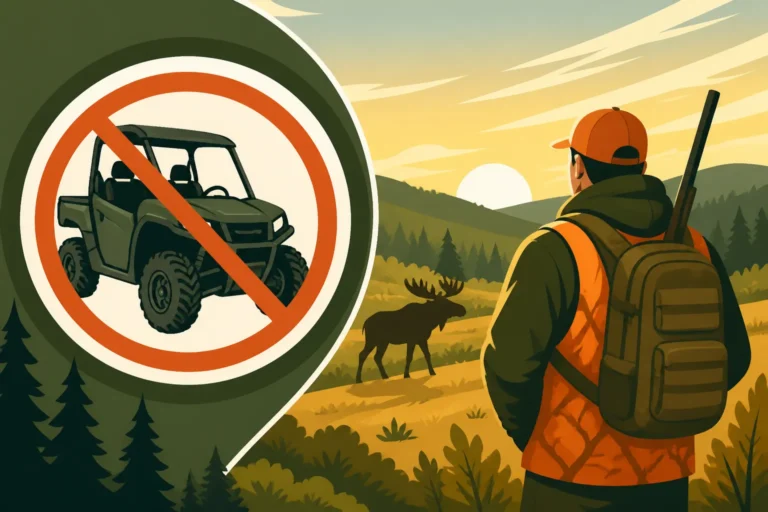
Be prepared for washouts, mud holes, and fallen trees that can block trails. Always carry recovery gear – a winch, tow strap, shovel, and axe – and know how to use them. It's also crucial to understand the Quad and Side-by-Side Rules on Crown Land before venturing off the beaten path, as regulations exist regarding their use. Many remote areas simply don't have roads at all, which is where other access methods come into play. Look for opportunities to hunt along corridors like Hunting a Hydro Line Right-of-Way, which often provide easier travel and small clearings, or Hunting an Old Logging Road in the North which can provide access to regenerating forest that attracts game.
Boating and Canoe Access
Given the omnipresent water features of the Shield, boating and canoeing become primary modes of transportation and access in many areas. Thousands of interconnected lakes, rivers, and streams offer an unparalleled way to explore and hunt remote sections. A robust canoe or a small, stable boat with a reliable outboard motor can open up vast tracts of country that are otherwise impenetrable. This is especially true for moose hunting, as they often frequent lake and river edges.
Portaging – carrying your canoe and gear between lakes – is often part of the experience, demanding physical fitness and efficient packing. You'll need to research portage routes and be prepared for strenuous activity. Always carry appropriate safety gear for boating, including PFDs, a bailer, a whistle, and a waterproof first-aid kit. Understanding wind conditions and water levels is critical, as large, open lakes can become dangerous quickly in strong winds. This form of access allows for silent, stealthy approach to game and the ability to cover significant distances through otherwise roadless terrain.
Remote Fly-In Opportunities
For the truly adventurous and those seeking an unparalleled wilderness experience, the Eastern Shield, particularly its northern reaches, offers remote fly-in opportunities. This is how many hunters access some of the most untouched and pristine hunting grounds, often for species like Barren-Ground Caribou in the far north, or trophy moose and bear in areas rarely seen by humans. Small float planes can drop you off at remote lakes, where you can establish a wilderness camp. This type of hunt requires meticulous planning, often through an outfitter.
These trips are generally more expensive due to the cost of air charter, but they provide access to areas with minimal hunting pressure and often higher densities of older, larger animals. When considering a fly-in hunt, be acutely aware of weight restrictions on the aircraft and plan your gear accordingly. Every ounce counts. Flying North for Manitoba Caribou can give you a sense of what this kind of adventure entails. It's the ultimate immersion in the vastness of the Shield, offering a truly wild and unforgettable hunting experience.
Rules, Regulations, and Safety Considerations
Hunting in Manitoba's Eastern Shield country is an incredible adventure, but it comes with immense responsibility. The wilderness here demands respect, and adherence to regulations and prioritizing safety are non-negotiable for a successful and ethical hunt.
Specific GHA Rules and Season Dates
Manitoba is divided into numerous Game Hunting Areas (GHAs), and the Eastern Shield region encompasses several of these. Each GHA has specific regulations regarding species, season dates, bag limits, and often even methods of take. It is absolutely critical that you thoroughly research the GHA you plan to hunt well in advance. Don't assume that rules are universal across the province. For example, some GHAs might have specific moose conservation closures, or different archery and rifle seasons for deer. The official Manitoba hunting guide, available online, is your best friend here.
Always confirm the specific season dates for your target species in your chosen GHA. Remember to check for any special draws or licensing requirements for species like moose or elk. You can find comprehensive information on Manitoba's Game Hunting Areas and Manitoba Big Game Season Dates to help you plan. It's not enough to just buy a licence; you need to understand the nuances of the regulations that apply to your specific hunting zone. This due diligence ensures you're hunting legally and ethically.
Blaze Orange and Ethical Hunting Practices
Given the dense cover and limited visibility in the Eastern Shield, blaze orange isn't just a suggestion; it's a legal requirement and a critical safety measure. Manitoba regulations mandate specific amounts of blaze orange to be worn by big game hunters. This high-visibility clothing significantly reduces the risk of accidental shootings, especially when moving through thick brush or during times of low light. Always check the current regulations for the precise requirements, but generally, a minimum amount of headwear and outer garment coverage is required.
Ethical hunting practices extend beyond legal compliance. In a wild, remote setting like the Shield, it's even more important to practice good sportsmanship, shot placement, and game recovery. Ensure you have a clear, ethical shot at your target. If an animal is wounded, expend every effort to track and recover it, even if it means an extra day or pushing yourself further into the bush. Meat Care in Manitoba's Cold Snaps is also vital to prevent waste. Leaving gut piles away from common travel routes and packing out all trash also contributes to responsible wilderness stewardship. Respect the land, respect the animals, and respect your fellow hunters.
Wildlife Encounters and Backcountry Safety
Hunting in the Eastern Shield means you're entering true wilderness, and with that comes the potential for encounters with large, potentially dangerous wildlife. Black bears and wolves are common here. While bears generally avoid humans, surprise encounters can happen, especially if you stumble upon a sow with cubs or a bear on a kill. Carry bear spray and know how to use it. Make noise as you move through dense cover to avoid startling animals. When in camp, secure all food and attractants to prevent unwelcome visitors.
Beyond wildlife, the backcountry itself poses significant safety challenges. Hypothermia is a constant threat, even in milder temperatures, if you get wet and the wind picks up. Dress in layers, stay dry, and know the signs of hypothermia. Getting lost is another major concern, which is why robust navigation tools and knowledge are so crucial. Always let someone know your plans, carry emergency communication devices, and pack a survival kit. Injuries, from sprains and cuts to more serious accidents, can be hours or even days away from professional medical help. Being prepared, staying vigilant, and knowing your physical limits are paramount to a safe and enjoyable hunt in this wild and beautiful landscape. Hunting Safely in Deep Winter Cold offers further insights for those brave enough to venture out later in the season.
Planning Your Eastern Shield Adventure
Venturing into Manitoba's Eastern Shield for a hunt isn't something you can decide on a whim. It requires meticulous planning, both in terms of understanding the landscape and preparing yourself physically and logistically. The more effort you put into planning, the greater your chances of a safe and successful adventure.
Scouting and Research (Pre-Trip)
The true work for a successful Shield hunt often begins long before you even leave home. This initial phase of scouting and research is absolutely critical. Start by pouring over topographic maps, which reveal the subtle contours of the land, the rocky ridges, the extent of muskeg, and the intricate network of waterways. Identifying potential travel corridors, pinch points, and areas of dense cover where game might bed is key. Look for areas where different habitat types converge, as these "edges" are often prime hunting grounds.
Modern technology has revolutionized this pre-trip scouting. Tools like onX Hunt and GoHunt provide invaluable satellite imagery that lets you virtually explore the terrain, identify potential access routes, and pinpoint clearings or recent logging cuts that might attract game. You can mark waypoints, measure distances, and gain an understanding of the vastness you'll be entering. Pay attention to historical wildfire maps, as burns from a few years prior can create fantastic new browse for moose and deer. Look for Hunting a Burned-Over Boreal Block – these can be goldmines. Don't forget to consult the official Manitoba GHA maps and regulations to confirm land status and specific rules for the areas you're eyeing. Scouting With Satellite Imagery in Manitoba provides a deeper dive into these techniques.
Physical Preparation
Unlike hunting in flatter, more accessible regions, the Eastern Shield demands a significant level of physical fitness. You'll be navigating uneven terrain, climbing over rocks and fallen timber, possibly slogging through muskeg, and potentially portaging canoes or hauling heavy loads of game meat out of remote areas. Long days of strenuous activity are the norm, not the exception.
Start an exercise regimen well in advance of your hunt. Focus on cardiovascular endurance (hiking, running), strength training (especially legs and core), and flexibility. If possible, practice hiking with a loaded pack over uneven terrain to simulate actual hunting conditions. Comfortable, broken-in boots are crucial here. Being physically prepared won't just make the hunt more enjoyable; it will also significantly increase your safety and your ability to retrieve your animal should you be successful. Don't let a lack of conditioning be the reason your hunt is cut short.
Hiring a Guide vs. DIY
The decision to hire a guide or embark on a do-it-yourself (DIY) hunt in the Eastern Shield is a significant one, and it largely depends on your experience level, budget, and desired challenge. For first-time visitors to the Shield, or those with limited wilderness experience, a reputable Manitoba guide or outfitter can be an invaluable asset. They possess intimate knowledge of the local terrain, game movements, and regulations. They can provide essential equipment, safe transportation into remote areas, and expertly handle game recovery and processing. What a Licensed Manitoba Guide Provides outlines the extensive services and expertise you can expect. This can significantly increase your success rate and, more importantly, your safety in an unfamiliar and challenging environment.
However, for experienced backcountry hunters who thrive on self-reliance and possess a strong understanding of wilderness navigation and survival, a DIY hunt can be incredibly rewarding. It offers the ultimate freedom and challenge, allowing you to truly immerse yourself in the wilderness on your own terms. If going DIY, ensure you have all the necessary gear, a detailed plan, and backup plans for contingencies. Consider starting with a more accessible area of the Shield before tackling the deepest, most remote regions. Whichever path you choose, the Eastern Shield promises an unforgettable hunting adventure.
Disclaimer
This article is for general informational purposes only and does not constitute professional advice. Laws, prices and regulations vary by location and change over time. Consult a qualified professional for guidance on your specific situation.