Lynx and the Snowshoe Hare Cycle
If you've spent any time at all in Manitoba's northern bush country, or even just heard stories from seasoned trappers and hunters, you've probably heard hushed conversations about the "rabbit cycle" or the mysterious ways of the lynx. It's a fundamental part of our boreal ecosystem, a fascinating dance between predator and prey that dictates the health and numbers of many other species, not just the two stars of the show. This guide will take a deep dive into the compelling, often dramatic, population cycles of the snowshoe hare and its primary predator, the elusive Canada lynx, right here in Manitoba.
Understanding the Snowshoe Hare Population Cycle
The snowshoe hare is more than just a cute, fluffy bunny; it's the keystone species in one of nature's most classic and dramatic boom-and-bust cycles. These aren't just random fluctuations; they are predictable, rhythmic shifts that ripple through the entire food web of our northern forests. Hunters often notice these changes first, wondering why one year the bush is teeming with hares, and the next, they're almost impossible to find.
The Ten-Year Boom and Bust
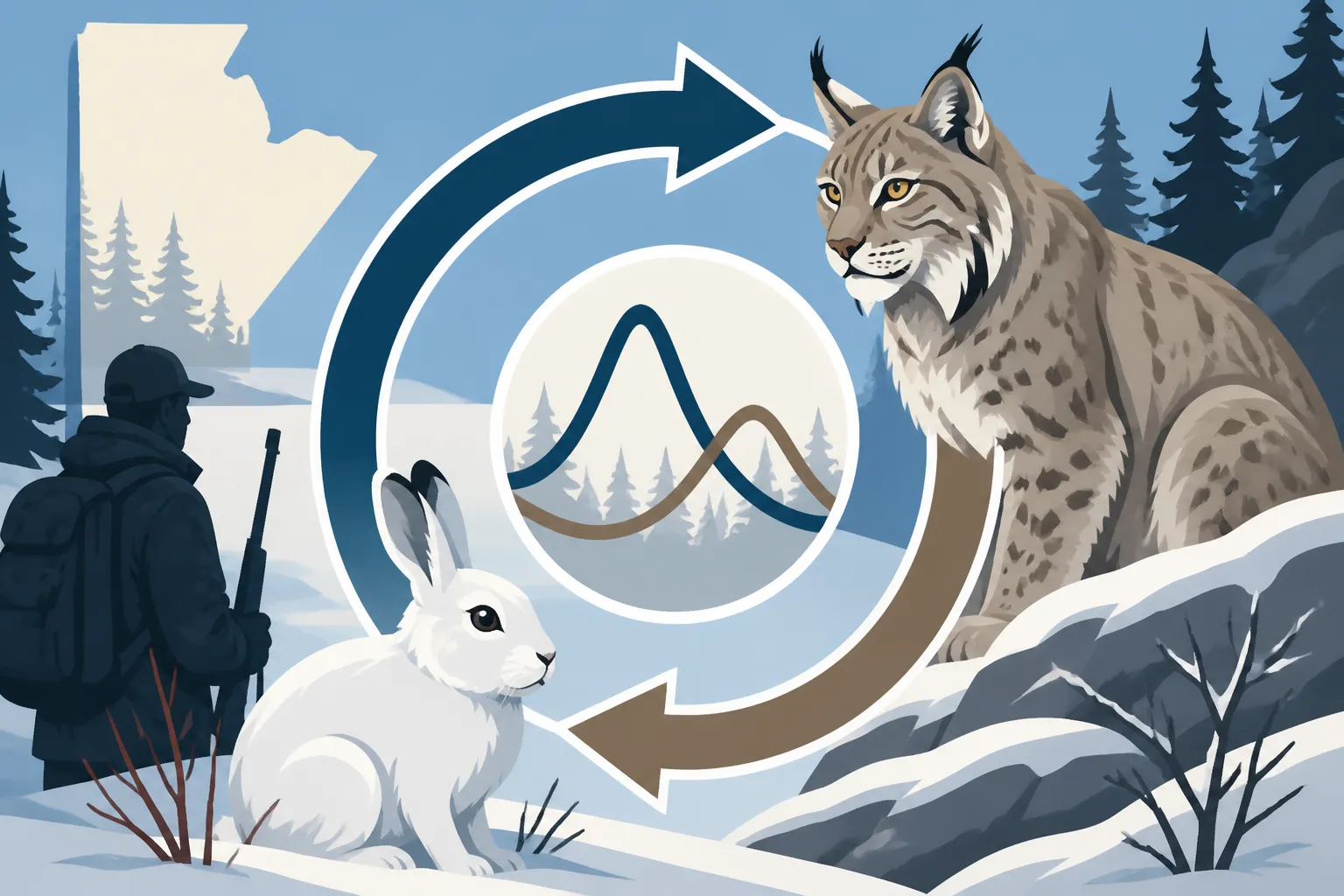
The most striking characteristic of the snowshoe hare is its famous population cycle, typically occurring over an 8-to-11-year period. Imagine standing in the bush, and one year, it's alive with hares. They seem to be everywhere, bounding through the undergrowth, leaving tracks that crisscross every patch of snow. This is the "boom" phase. During this time, hare numbers can explode, reaching densities that seem almost unsustainable. We're talking thousands of hares per square mile in prime habitat. They breed prolifically, and survival rates for their young are relatively high. The vegetation in their preferred habitats starts to show the strain of their heavy browsing.
Then, almost as suddenly as it began, the crash comes. Within a year or two, those seemingly endless numbers plummet. You might go from seeing dozens of hares on a short walk to not seeing a single one for days. What causes this dramatic "bust"? It's a complex interplay of factors. As hare numbers peak, their food supply, especially preferred browse, becomes depleted. The stress of overcrowding, combined with nutritional deficiencies, can lead to increased susceptibility to disease and a drop in reproductive success. More critically, the population of their predators, particularly the lynx, has also built up in response to the abundant food source. The sheer pressure from an increased predator load, coupled with their weakened state, drives the hare population down to extremely low levels. It's a tough but natural reset button for the ecosystem. For a deeper dive into these population swings, check out Snowshoe Hare and Its Ten Year Cycle.
Habitat Preferences of the Snowshoe Hare
To understand the hare cycle, you really need to understand where these critters live. Snowshoe hares aren't just found anywhere; they have very specific habitat preferences that offer them the best chance of survival against a host of predators. In Manitoba, you'll find them primarily in dense, regenerating forests. Think of young conifer stands – spruce, fir, and jack pine – where the branches grow thick and low, providing excellent cover from overhead predators like owls and hawks. They also thrive in areas with dense deciduous shrubbery, like willows and alders, often found along the edges of muskegs or clearings, or in areas with aspen regeneration after a fire or logging operation. Hunting a Boreal Muskeg Edge can give you an idea of these prime locations.
This dense cover is absolutely critical. It provides thermal insulation in harsh winters and, most importantly, a place to hide. When hare numbers are low, this dense cover becomes even more vital for the few remaining individuals to evade the hungry eyes of lynx, coyotes, and foxes. During the winter, their iconic large, furry feet – much like snowshoes – allow them to navigate deep snow with relative ease, giving them an advantage over some predators who might sink in. Knowing these preferred habitats is key for anyone interested in small game hunting or even just observing wildlife in our province. Scouting for these thick, brushy areas often leads to good hare sign.
The Lynx: A Specialized Predator
The Canada lynx (Lynx canadensis) is a creature perfectly designed for one thing: hunting snowshoe hares. Its very existence, its physical adaptations, and its population dynamics are inextricably linked to the hare cycle. You don't often see a lynx in the wild; they're incredibly elusive, ghost-like hunters of our northern forests, making them one of Manitoba's Northern Species Hunters Rarely See.
Anatomy and Adaptations for Hunting Hares
Take a good look at a lynx, and you'll see a masterpiece of evolutionary design for a specific purpose. Their most striking features are their enormous, heavily furred paws. These act like natural snowshoes, allowing them to travel silently and efficiently over deep snow, giving them a significant advantage when pursuing hares that are also adapted to snowy conditions. Their long, powerful legs further aid in navigating challenging terrain. The distinctive tufts of hair on their ears, while adding to their mysterious appearance, are thought to enhance their already incredible hearing, helping them pinpoint the rustle of a hare in dense cover.
Lynx are obligate specialists, meaning their diet is almost exclusively snowshoe hares. Some estimates suggest hares can make up 75% to 90% of their diet, sometimes even more. When hares are abundant, lynx thrive. They are ambush predators, often stalking their prey silently before a quick, explosive pounce. Their keen eyesight, especially in low light, makes them formidable nocturnal hunters. This extreme specialization means their survival and reproductive success are directly tied to the availability of their primary food source. If the hares aren't there, the lynx struggle.
Lynx Numbers Tracking Hare Populations
This is where the incredible synchronicity of the cycle truly comes into play. Lynx populations don't just exist independently; they follow the snowshoe hare cycle with a remarkable, if slightly delayed, precision. As the hare population begins its boom, lynx numbers will start to rise, usually lagging about a year or two behind. This lag occurs because it takes time for lynx to increase their reproductive output in response to the abundant food. More hares mean lynx can successfully raise larger litters, and more of their young survive to adulthood.
When the hare population inevitably crashes, the lynx population soon follows suit. Suddenly, there's not enough food to sustain the high numbers of predators. Lynx experience much lower reproductive rates, kittens are less likely to survive, and adult lynx often face starvation. This period also sees increased dispersal, as desperate lynx venture far and wide in search of new food sources, sometimes showing up in areas where they are rarely seen. This tight coupling of predator and prey is one of the most well-studied examples of population dynamics in ecology, offering a powerful lesson in how deeply connected species are within an ecosystem. You can often track these cycles yourself if you're Reading Sign After a Fresh Snow, looking for those distinctive lynx tracks following hare trails.
The Ecological Impact and Broader Picture
The lynx and snowshoe hare cycle isn't just a fascinating two-species story; it's a fundamental rhythm that sets the tempo for much of the northern ecosystem. The dramatic swings in hare numbers, in particular, create ripple effects that influence many other creatures in Manitoba's forests.
Ripple Effects on Other Species
When snowshoe hare populations are at their peak, many other predators benefit. Coyotes, foxes, bobcats (though less common in prime lynx habitat), great horned owls, and various raptors will also key in on the abundant food source. Their own numbers might increase slightly, or they might simply be in better condition. However, when the hare population crashes, it's not just the lynx that suffer. These other predators, too, face a severe food shortage. This can lead to increased competition for the few remaining hares or a shift in their diets to other prey, which then puts pressure on those alternative prey species. For instance, a hungry coyote pack might turn its attention more heavily to deer fawns or other small game, creating a cascade effect. Manitoba's Predators and Furbearers are all interconnected in this intricate web.
For trappers, understanding this cycle is paramount. The abundance of furbearers like lynx, marten, and fisher is closely tied to hare numbers. A trapper looking to target Marten and Fisher in the Boreal will know that good hare years often mean better years for other furbearers that also prey on hares or benefit from the overall health of the ecosystem. It's a complex, dynamic system that requires careful observation and a deep understanding of natural patterns.
Conservation and Management Considerations
For wildlife managers in Manitoba, the snowshoe hare and lynx cycle is a natural, healthy process. It's an example of a self-regulating system that has evolved over millennia. Therefore, direct intervention in the cycle itself is generally not necessary or effective. Instead, management efforts often focus on maintaining healthy habitat for both species, which in turn allows the cycle to continue naturally. This includes responsible forest management practices, such as ensuring a mix of forest ages and types, including the dense young growth that hares need. While logging can initially disrupt habitat, How Logging Cutblocks Change Deer Range illustrates how it can also create new, preferred hare habitat in the long term through regeneration.
For hunters and trappers, understanding these cycles helps in planning seasons and setting expectations. A year following a major hare bust will likely see lower numbers of lynx and potentially other furbearers, so adjustments in effort or target species might be wise. Tools like GoHunt can be invaluable here, offering satellite imagery and habitat maps that help hunters identify areas with the dense cover preferred by hares, helping them predict where the "action" might be even during low points in the cycle. This kind of ecological knowledge is crucial for anyone engaging with Manitoba's wild spaces responsibly.
Table: Snowshoe Hare and Lynx Cycle Phases
| Cycle Phase | Snowshoe Hare Population | Lynx Population | Habitat Impact (Hares) | Predator Impact (Lynx) |
|---|---|---|---|---|
| Low Point (Bust) | Very low, few sightings | Very low, struggling | Recovering, less browse pressure | High competition, low reproduction |
| Increase | Slowly rising | Slowly rising (lagging) | Moderate browsing | Improving survival, increasing litters |
| Peak (Boom) | Very high, abundant | High, thriving (lagging) | Heavy browsing, noticeable damage | High reproduction, excellent survival |
| Decline (Crash) | Rapidly falling | Falling (lagging behind hares) | Significant browse depletion | High mortality, starvation, dispersal |
Ultimately, the lynx and snowshoe hare cycle is one of the most captivating stories of survival and interdependence in the natural world. It's a reminder that even in our vast province, every species plays a vital role, and their fates are interwoven in ways that continue to humble and fascinate us.
Disclaimer
This article is for general informational purposes only and does not constitute professional advice. Laws, prices and regulations vary by location and change over time. Consult a qualified professional for guidance on your specific situation.