How Heavy a Northern Wolf Gets
There's a certain awe that comes with encountering a wolf in Manitoba's wild country, especially up north. You might see tracks or hear a howl, and a common thought that pops into a hunter's mind is, "Just how big do those northern wolves get?" It’s not just about curiosity; knowing their potential size impacts everything from gear choice to recovery strategies. This guide will dive deep into the factors influencing the immense size some of these northern predators attain, offering a realistic look at what you might expect when you encounter one of Manitoba's apex canids.
Understanding Manitoba's Northern Wolves
Manitoba is a vast province, stretching from the agricultural south up into the Arctic tundra. The wolves that roam the northern reaches are a different breed, both literally and figuratively, from their southern counterparts. When we talk about "northern wolves," we're generally referring to the timber wolves, or grey wolves (Canis lupus), that inhabit the boreal forest and even the tundra transition zones. These aren't the smaller coyotes you find in the farmland; these are big, powerful animals built for survival in harsh conditions.
The Boreal Forest and Tundra Habitat
The sheer scale of the northern wilderness in Manitoba provides an ideal environment for large predators to thrive. Imagine endless stands of spruce and jack pine, crisscrossed by rivers and lakes, with vast stretches of muskeg and rock outcrops. This is the domain of the northern wolf. Further north, as the trees thin, you move into the tundra transition zone, another prime hunting ground for these adaptable animals. This immense, relatively untouched landscape allows wolf packs to establish large territories and maintain healthy populations of their primary prey, which in turn contributes to their impressive size.
The prey base in these northern regions is incredibly diverse and abundant. From moose and caribou to beaver and snowshoe hare, there's a constant supply of food. A wolf's size is intrinsically linked to its food source, and the robust ungulate populations in Manitoba’s north provide the sustenance necessary for these animals to reach their maximum potential. When you're out hunting for Moose Across Manitoba's Boreal Forest or tracking Barren-Ground Caribou in Northern Manitoba, you're often in prime wolf country, a testament to the rich ecosystem these predators call home.
Why Northern Wolves Tend to Be Larger
It's a well-observed phenomenon that animals tend to be larger in colder climates, a principle known as Bergmann's Rule. This holds true for wolves in Manitoba. The northern climate demands a larger body mass to conserve heat more efficiently. A bigger body has a smaller surface area to volume ratio, meaning less heat loss to the environment. This evolutionary adaptation is a significant reason why wolves in the boreal forest and tundra regions often dwarf those found in more temperate zones.
Furthermore, the prey animals in the north, such as large ungulates, require wolves to be formidable hunters. Smaller, less powerful wolves would struggle to consistently take down a mature moose or caribou. Over generations, natural selection favours the larger, stronger individuals who are more successful at hunting and reproducing. This ongoing pressure contributes to the genetic predisposition for larger size among Manitoba's northern wolf populations.
Factors Influencing a Wolf's Weight
Pinpointing an exact weight for a "northern wolf" is tricky because so many variables come into play. It's not a static number; it's a range influenced by a variety of biological and environmental factors. Understanding these helps paint a more accurate picture of how heavy a wolf can truly get.
Age and Sex: The Primary Determinants
Just like most mammals, a wolf's weight is heavily influenced by its age and sex. Mature males, or "alphas," are typically the largest and heaviest individuals within a pack. They continue to grow and put on muscle mass well into their prime, often reaching their peak size around 3-5 years old. Younger wolves, while often appearing gangly and large, haven't yet filled out their frames and developed the dense musculature of an adult.
Female wolves, while still powerful animals, are generally smaller and lighter than their male counterparts. This sexual dimorphism is common across many predator species. A large alpha female might be comparable in size to a younger or less dominant male, but rarely will she outweigh a prime alpha male. When you're glassing for Wolves in Manitoba's North, it's often the dominant males that stand out with their massive heads and broad chests.
Diet and Seasonal Fluctuations
A wolf's diet is paramount to its physical condition and weight. A pack that consistently brings down large prey like moose or caribou will generally have healthier, heavier individuals than a pack struggling on a diet of smaller game. The abundance of prey during different seasons also plays a significant role. In the fall, after a summer of successful hunting and with the winter approaching, wolves often gorge themselves, building up fat reserves. This means a wolf caught in late fall or early winter will likely be at its heaviest.
Conversely, the leanest times for wolves are often in late winter or early spring, after months of burning calories in deep snow and facing scarcer food sources. Wolves can appear almost gaunt during these periods, having utilized much of their stored fat. This natural cycle means a wolf's weight can fluctuate by a significant margin – sometimes 20-30 pounds or more – throughout the year, depending on the availability of food and the demands of the season.
Regional Variations and Genetics
Even within northern Manitoba, there can be regional variations in wolf size. Factors like local prey density, habitat quality, and even specific genetic lines within certain packs can lead to differences. Some areas might consistently produce larger wolves due to optimal conditions, while others might host slightly smaller, though no less formidable, animals. Using a tool like GoHunt can sometimes provide insights into game densities in different Manitoba's Game Hunting Areas, which indirectly relates to the health and size of local predator populations.
Genetic factors also play a subtle but important role. Just like in domestic dog breeds, certain wolf lineages may carry genes that predispose them to larger growth. While environmental factors like food availability are crucial, the underlying genetic potential sets the maximum size an individual wolf can achieve. It’s a complex interplay between nature and nurture that ultimately determines how heavy a northern wolf gets.
Average Expectations Versus Record Breakers
When hunters talk about wolf weights, there's often a blend of realistic averages and awe-inspiring tales of giants. It's important to differentiate between what's typical and what's truly exceptional.
Typical Weight Ranges for Northern Manitoba Wolves
For a mature, healthy northern wolf in Manitoba's boreal or tundra regions, you can generally expect a substantial animal.
Typical Northern Manitoba Wolf Weights
| Trait | Average Male (lbs) | Large Male (lbs) | Average Female (lbs) | Large Female (lbs) |
|---|---|---|---|---|
| Weight Range | 80 – 110 | 110 – 150+ | 65 – 95 | 95 – 125 |
| Height (shoulder) | 28 – 34 inches | 32 – 38 inches | 26 – 32 inches | 30 – 36 inches |
| Length (nose to tail) | 5 – 6 feet | 6 – 7.5 feet | 4.5 – 5.5 feet | 5 – 6.5 feet |
| Appearance | Stocky, broad | Very muscular, massive head | Leaner, agile | Strong, well-built |
These numbers represent a significant animal, much larger than most people imagine when they think of a "dog." A wolf in the 90-120 pound range is a very respectable animal and a common trophy for many hunters. These are apex predators, and their weight reflects their power and ability to dominate their northern ecosystem.
When you’re preparing for a hunt where you might encounter Manitoba's Predators and Furbearers, having an idea of these typical sizes can help you visualize the scale of the animal you're pursuing. It underscores the challenge and the reward of such a hunt.
The True Giants: What's the Maximum?
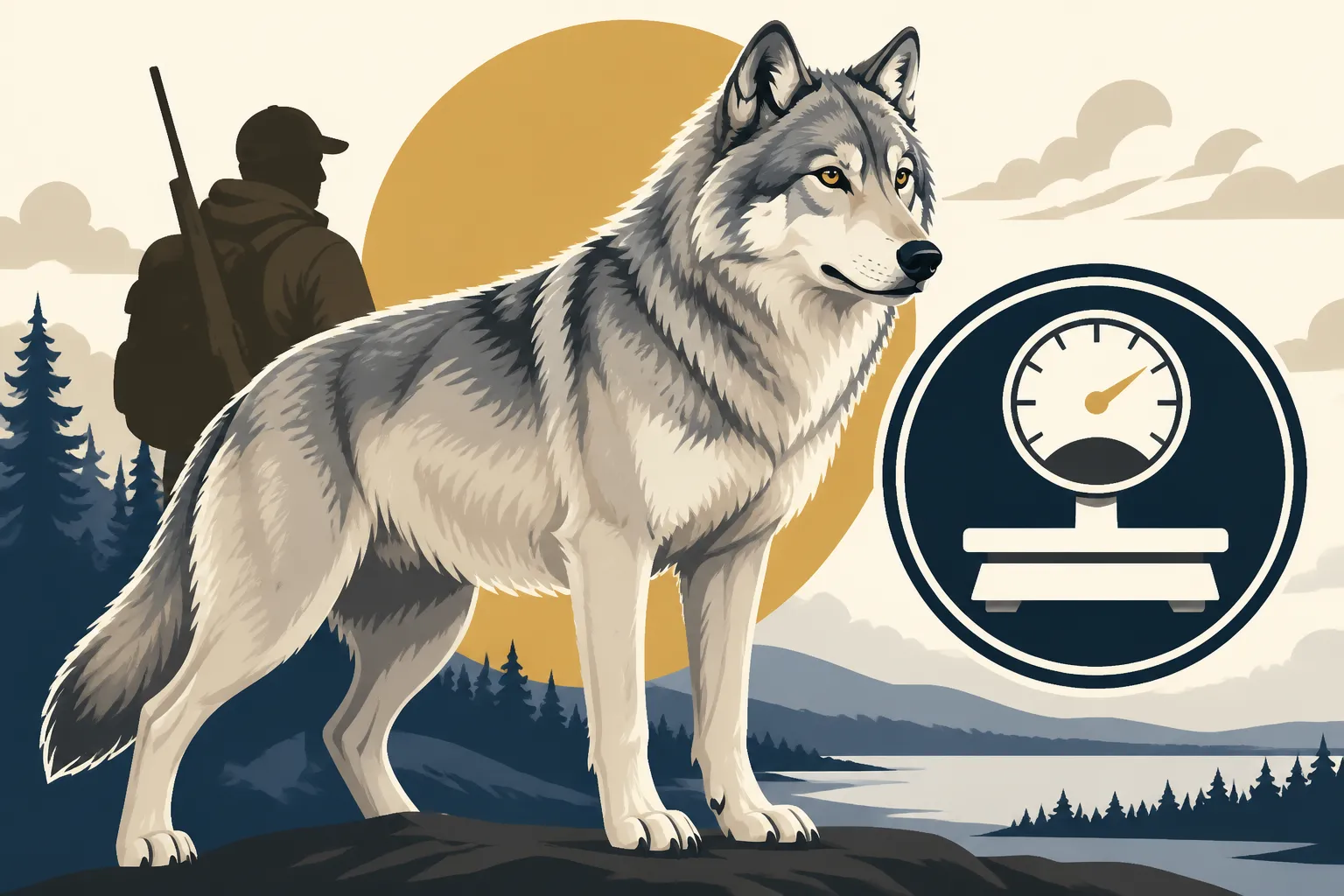
While the typical range is impressive, every now and then, a truly massive wolf is harvested, pushing the upper limits. These are the wolves of legend, the ones that make seasoned hunters stop and stare. It's not unheard of for prime male northern wolves to tip the scales well over 150 pounds. In rare instances, and often depending on the specific region and time of year, some individuals have been reported to approach or even exceed the 170-pound mark.
These exceptional animals are usually older, dominant males who have had years of successful hunting and access to abundant food sources. They are the epitome of the northern wilderness, surviving and thriving in some of the toughest conditions on earth. Keep in mind that confirmed weights often come from official weigh stations or accurate field scales, as an animal can feel significantly heavier when dragged through snow or dense bush than its actual weight. Always approach stories of "200-pound wolves" with a healthy dose of skepticism unless backed by verifiable evidence, as while possible, they are exceedingly rare.
Practical Considerations for the Hunter
Knowing how heavy a northern wolf can get isn't just for bragging rights; it has real, practical implications for anyone venturing into their territory. Whether you're specifically targeting wolves or just hoping to manage an incidental encounter, preparing for a substantial animal is wise.
Recovery and Transportation Challenges
Imagine you've successfully harvested a large wolf deep in the boreal forest. Now what? A 120-pound animal, even with its slender build, is surprisingly heavy and unwieldy, especially if you're alone or hunting in deep snow. Unlike a deer, which often has long, relatively stiff legs, a wolf is more flexible and can be a challenge to drag or carry. This is where planning ahead truly pays off.
Consider what you'll use for extraction. A game sled or toboggan can be invaluable for pulling an animal out of the bush, particularly when Hunting Safely in Deep Winter Cold or trying to navigate dense undergrowth. If you're on a multi-day trip and relying on a quad or side-by-side, ensure your vehicle has enough capacity and a winch if you expect to be in really rugged terrain. Even quartering a large wolf can be an option if you have the knowledge and tools, making it easier to pack out to camp or your vehicle.
Gear and Firearm Selection
While a wolf isn't as robust as a moose, their tough hide, dense bones, and incredible will to survive mean you need adequate firepower. For most big game hunters, their existing rifle calibres suitable for deer or moose will be more than sufficient. However, if you are specifically targeting wolves, especially in areas where long shots might be common or follow-up shots crucial, a rifle chambered in a flat-shooting, hard-hitting calibre is a good choice.
Don't skimp on optics. Spotting a wolf, especially one partially obscured in the bush, can be challenging. Good quality binoculars or a spotting scope can make all the difference in identifying an animal, and a reliable scope on your rifle ensures precise shot placement. You'll also want to consider proper skinning knives and a sharpening stone, as a wolf's hide can be quite thick and tough, especially on the neck and shoulders of a large male.
Trophy Care and Meat Handling
If you're lucky enough to harvest a northern wolf, you'll want to ensure proper care of the hide, especially if you plan to get a rug or a mount. The thickness of their fur, particularly in winter, contributes significantly to their overall appearance and value as a trophy. For a full-body mount or rug, you'll need to skin the animal carefully and get the hide properly salted and frozen as quickly as possible. This might mean having a large cooler and plenty of ice or snow if you're in a remote camp. Skinning a Bear for a Rug often involves similar principles of hide care, which can apply to wolves as well.
As for the meat, while some hunters choose to consume wolf meat, it's generally not as palatable as venison or moose. The flavour can be quite strong, and the texture often tough. However, if you choose to process it, handle it like any other wild game. Rapid cooling is essential, and careful butchering will yield the best results. Many hunters, however, primarily pursue wolves for their pelts or for predator control, and the meat might be less of a priority. Remember that some provinces, including Manitoba, have specific rules regarding the wasting of game meat, so always check the current regulations. Tools like the GoHunt app can sometimes help you quickly access regulatory information in the field.
| Consideration | Description |
|---|---|
| Physical Effort | A large wolf, especially in deep snow or dense bush, requires significant effort to drag or carry. Expect it to be heavier than it looks. |
| Equipment Needed | Game sled, toboggan, stout rope, sharp knives, and potentially a quad/ATV with a winch for extraction. |
| Firearm Choice | A reliable big-game rifle (.270, .30-06, .308, etc.) with good quality optics is recommended for effective and ethical harvest. |
| Trophy Care | Proper field skinning, salting, and freezing of the hide are crucial for preserving a wolf pelt for tanning or taxidermy. |
| Meat Usage | While edible, wolf meat is often considered less palatable than other wild game. Adhere to regulations regarding the utilization of harvested animals. |
| Safety | Be aware of other predators or scavengers attracted to a fresh kill site during recovery, particularly in remote areas. |
Ultimately, understanding how heavy a northern wolf gets prepares you for a rewarding and challenging experience in Manitoba's wild. It ensures you respect the animal, the environment, and the demands of the hunt itself.
Disclaimer
This article is for general informational purposes only and does not constitute professional advice. Laws, prices and regulations vary by location and change over time. Consult a qualified professional for guidance on your specific situation.