Duck Daily Bag Limit by Species
It can be incredibly confusing to keep track of all the different waterfowl regulations, especially when you're excitedly planning a hunting trip. You've got the rush of finding the perfect field or marsh, getting your gear ready, and then you hit the snag: what exactly are the duck daily bag limits by species in Manitoba? It feels like you need a law degree just to understand what you can and can't harvest without running afoul of the rules. This guide is here to break down those daily bag limits for ducks in Manitoba, helping you understand the specifics for different species so you can hunt confidently and ethically, without the stress of deciphering dense regulations on the fly.
Understanding Manitoba's Duck Hunting Regulations
Manitoba is a waterfowl hunter's paradise, sitting right in the heart of the Central Flyway, which sees millions of ducks and geese migrating through every fall. But with such abundant opportunities comes the responsibility to understand and adhere to the regulations designed to protect these populations. It's not just about getting your limit; it's about contributing to sustainable hunting for future generations.
Why Species-Specific Limits Matter
You might wonder why different duck species have different daily bag limits. It seems overly complicated when you're out there, trying to make a quick ID and get a shot off. However, these species-specific limits are a cornerstone of wildlife conservation and management. Not all duck populations are created equal in terms of their numbers, breeding success, or vulnerability to hunting pressure.
For instance, a species like the Mallard might have a generous daily limit because its population is robust and widespread across North America, including the many nesting grounds throughout Manitoba's potholes. On the other hand, a species like the Canvasback, which has a more specialized habitat requirement and fluctuates more in population, will often have a much lower, more restrictive limit. This approach ensures that we're not overharvesting a particular species that might be struggling, while still allowing hunters to enjoy the bounty of healthier populations. It’s all about balancing hunter opportunity with the long-term health of the resource, a principle that guides all wildlife management. Accurately identifying your birds in the air or on the water becomes absolutely crucial, not just a matter of curiosity, but a legal and ethical obligation.
Where to Find Official Regulations
Navigating the maze of hunting regulations can be a genuine headache. You want to make sure you have the most up-to-date information, but bouncing between various government websites and printed pamphlets can be frustrating. The primary sources for Manitoba's duck hunting regulations are the Manitoba Hunting Guide and the Federal Migratory Game Bird Hunting Regulations. Both are essential, as waterfowl hunting falls under both provincial and federal jurisdiction. The provincial guide will give you details specific to Manitoba, while the federal regulations cover migratory birds across Canada.
While these official documents are the ultimate authority, digital tools can make accessing and understanding them a lot easier. For example, some hunters find resources like the GoHunt app incredibly useful for organizing regulations digitally, making it simple to pull up specific rules even when you’re out in the field. Having these resources at your fingertips, whether printed out or on your phone, can prevent an honest mistake from becoming a serious violation. Always double-check the current year's guide, as rules can and do change annually based on population surveys and conservation needs. It's a small step that makes a huge difference in having a compliant and enjoyable hunt.
Daily Bag Limits for Common Duck Species in Manitoba
Okay, let's get down to brass tacks: what are the actual numbers? Manitoba's daily bag limits for ducks can vary quite a bit, reflecting the population status and management goals for each species. It’s not just "six ducks" for everyone; it’s six ducks, but only so many of this species, and only so many of that species. This nuanced approach helps ensure sustainable hunting practices for Manitoba's Ducks and Geese by Flyway.
Here’s a breakdown of common duck species you'll encounter in Manitoba and their typical daily bag limits during the regular open season. Remember that these are subject to change, so always consult the current year's hunting guide.
| Species Group / Specific Species | Daily Bag Limit | Possession Limit (typically double the daily bag) | Notes |
|---|---|---|---|
| Mallard (Northern Region) | 8 (max 2 hens) | 16 (max 4 hens) | Higher limit in Northern Region GHAs. |
| Mallard (Southern Region) | 6 (max 2 hens) | 12 (max 4 hens) | Lower limit in Southern Region GHAs. |
| Pintail | 1 | 2 | Restrictive limit due to population concerns. |
| Canvasback | 2 | 4 | Moderate limit, monitor for identification. |
| Redhead | 2 | 4 | Moderate limit. |
| Scaup (Greater & Lesser) | 6 | 12 | Fairly common, but still managed. |
| Wood Duck | 2 | 4 | Distinctive, often found in timbered areas. |
| Gadwall, Wigeon, Shoveler | 6 combined | 12 combined | Usually combined with other "other ducks". |
| Green-winged Teal, Blue-winged Teal, Cinnamon Teal | 6 combined | 12 combined | Known for fast flight, often found in numbers. |
| Other Ducks (e.g., Ring-necked, Goldeneye, Bufflehead, Mergansers) | 6 combined | 12 combined | Includes various diving and puddle ducks. |
Disclaimer: This table provides a general overview for common species. Always refer to the official Manitoba Hunting Guide and Federal Migratory Game Bird Hunting Regulations for the most current and complete information.
Diving Ducks vs. Dabbling Ducks
One of the fundamental distinctions in waterfowl hunting, which directly impacts bag limits, is the difference between diving ducks and dabbling (or puddle) ducks. Understanding this helps you identify them quickly and accurately in the field, crucial for staying within your limits.
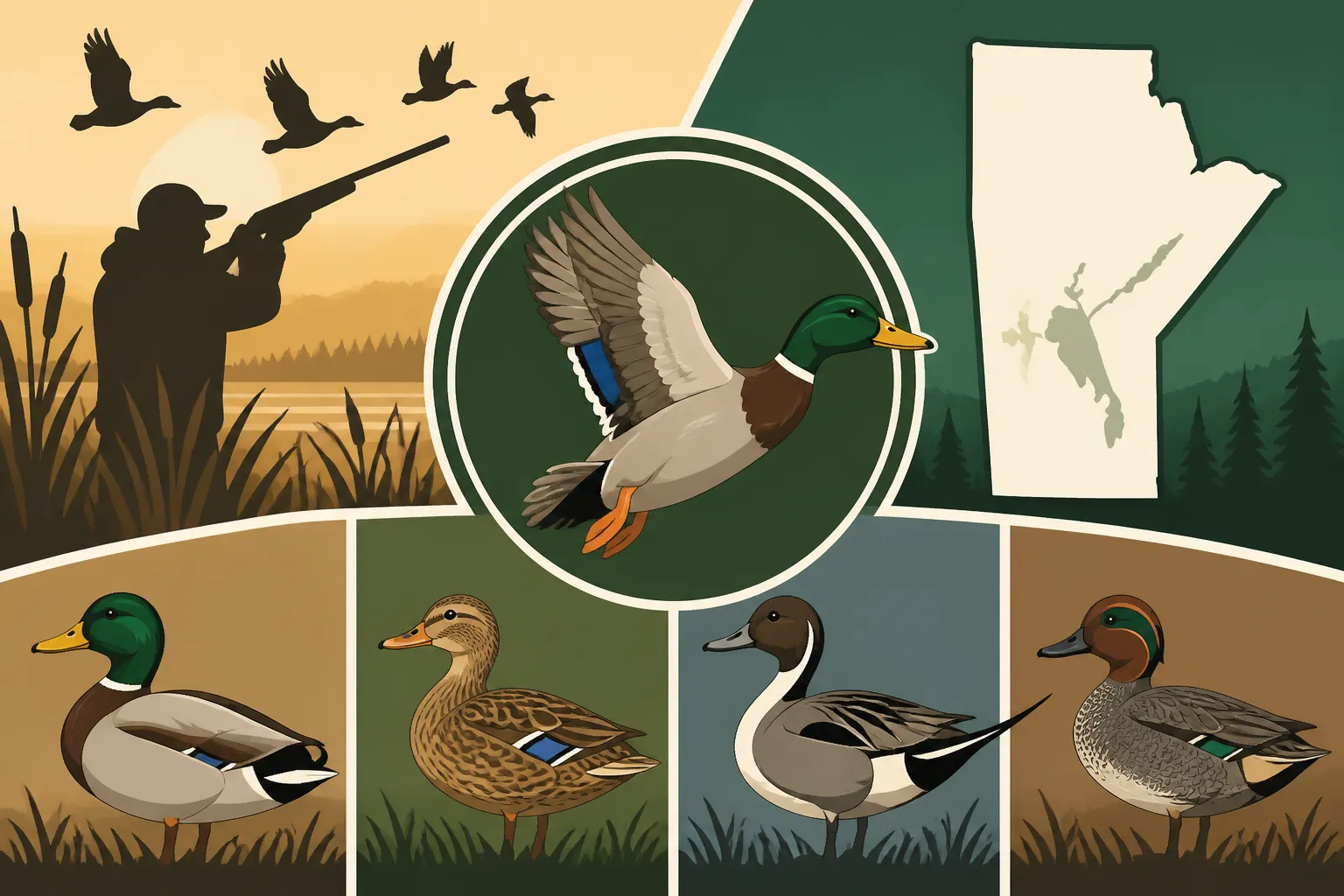
Dabbling Ducks (also known as Puddle Ducks) are your classic shallow-water feeders. Think Mallards, Pintails, Green-winged Teal, Gadwalls, American Wigeon, and Northern Shovelers. They typically feed by "tipping up" in shallow water, with their tails pointing skyward, rather than fully submerging. When they take off, they spring directly into the air. Many of these species are found abundantly throughout Manitoba's fertile agricultural lands and marsh systems, particularly the Hunting a Delta Marsh Style Wetland areas. Their diets often consist of seeds, grains, and aquatic vegetation, making them frequent visitors to Hunting Ducks on a Manitoba Stubble Field. Because many dabbler populations are healthy, their limits tend to be more generous, though specific species like Pintails often have stricter limits due to conservation concerns.
Diving Ducks, on the other hand, feed by diving completely underwater for their food, which often consists of aquatic insects, mollusks, and fish. Species like Canvasbacks, Redheads, Scaup (bluebills), Ring-necked Ducks, Goldeneyes, Buffleheads, and various mergansers fall into this category. They generally prefer larger, deeper bodies of water like lakes, large rivers, and deeper sloughs. When taking flight, divers typically "run" along the water's surface to gain momentum before becoming airborne. Many diving duck populations require careful management due to more specialized habitats or slower recovery rates from population dips. This is why you'll often see more restrictive limits for certain diving duck species like Canvasbacks. Learning to tell them apart, even in challenging light, is an essential skill for any waterfowl hunter.
Special Consideration Species
While most ducks fall into general categories, there are a few species that demand particular attention due to more restrictive bag limits. These are often indicators of specific conservation needs or population fluctuations that wildlife managers are monitoring closely.
Pintails are a prime example. Known for their elegant, slender profile and the drakes' distinctive long tail feathers, Northern Pintails are absolutely beautiful birds. However, their populations have seen significant declines over the past few decades, prompting very conservative bag limits. In Manitoba, you’ll typically find the daily limit for Pintails to be just one bird, with a possession limit of two. This means if you harvest a Pintail, you need to be acutely aware of it and manage your remaining daily bag carefully. Mistaking a Pintail for a Mallard hen, for example, could put you over your legal limit without even realizing it. Hunters really need to be proficient at identifying them, particularly the hens, which can be harder to distinguish in flight.
Canvasbacks also fall into this category. These large, fast-flying diving ducks are prized by many hunters for their distinctive wedge-shaped heads and "can" colored backs on the drakes. While their populations have shown some recovery, they are still managed with a lower limit, often two per day. Again, this emphasizes the need for quick, accurate identification, especially when a mixed flock of divers comes into range over a larger body of water. Understanding these specific restrictions for key species is paramount to being a responsible waterfowl hunter in Manitoba.
Navigating Possession Limits and Provincial Zones
Hunting in Manitoba isn't just about the daily bag limit; it's also about understanding the possession limit and how various provincial zones can impact your hunt. These are crucial details that often trip up even experienced hunters if they're not paying close attention.
What is a Possession Limit and How Does it Work?
The possession limit is distinct from the daily bag limit. While the daily bag limit is the maximum number of birds you can harvest in a single day, the possession limit is the maximum number of birds you can have in your possession at any given time, regardless of when or where they were harvested. For most duck species in Manitoba, the possession limit is typically double the daily bag limit. For example, if the daily bag limit for Mallards is 6, the possession limit would be 12.
This becomes especially important on multi-day hunts or when you're hunting with a group. Let's say you hunt on a Friday and take your daily limit of 6 Mallards. On Saturday, you can hunt again and take another 6 Mallards, bringing your total to 12. At this point, you've reached your possession limit for Mallards, and you cannot harvest any more until you process or consume some of your existing birds, thus reducing your "possession." If you were to hunt Sunday and take more Mallards, you'd be over the possession limit. This rule is designed to prevent hunters from accumulating an excessive number of birds over an extended period and ensures fair chase and sharing of the resource. Always ensure your cooler, freezer, or game bag doesn't exceed the stated possession limits, and always leave an identifiable feather or wing on the bird for transport.
Geographic Zones and Their Impact on Limits
Manitoba isn't a monolithic entity when it comes to waterfowl hunting regulations. The province is divided into distinct geographic zones, and the season dates, and sometimes even the bag limits, can vary from one zone to another. Generally, Manitoba is split into a Northern Region and a Southern Region for migratory bird hunting, with the boundary typically running along provincial road 262 and other landmarks.
For instance, Manitoba Duck Season Dates will usually open earlier in the Northern Region. Also, as noted in our table, the daily bag limit for Mallards can differ between these regions, with the Northern Region sometimes having a slightly higher limit. These zonal distinctions are put in place by wildlife managers to account for different migration patterns, breeding success, and hunting pressure across the province. Ducks that breed in the far north might migrate through northern Manitoba earlier than those breeding further south, necessitating earlier openers. Additionally, localized populations in specific areas, like those ducks nesting in Which Ducks Nest in Manitoba's Potholes in the Parkland or Interlake, might require different management strategies.
Before you head out, it's absolutely critical to consult the most current hunting guide and identify which zone your chosen hunting area falls into. Don't assume the rules for one part of the province apply everywhere. Missing this detail could lead to a violation, even if you’re otherwise being careful. You'll also need your Manitoba Migratory Bird Permits and The Federal Migratory Game Bird Permit, which are mandatory regardless of the zone.
Practical Tips for Staying Compliant and Ethical Hunting
Beyond just knowing the numbers, responsible duck hunting in Manitoba requires a commitment to ethical practices and continuous learning. It’s about more than just avoiding a fine; it’s about respecting the game, the environment, and the hunting tradition.
Field Identification Skills are Key
Let's be honest, those ducks come screaming in, wings cupped, and in the heat of the moment, distinguishing a Pintail from a Mallard hen or a Canvasback from a Redhead can be incredibly tough. But it's absolutely paramount. Developing strong field identification skills is perhaps the single most important thing you can do to ensure you stay within the species-specific bag limits.
Here are some tips to sharpen your ID skills:
- Study Before You Go: Invest in a good waterfowl identification guide. Familiarize yourself with common species' plumage, body shape, flight patterns, and vocalizations. Know what Non-Toxic Shot Requirements for Waterfowl are too.
- Use Digital Aids: Apps like GoHunt, or other dedicated bird identification apps, often have excellent photo and audio libraries that you can review. Practice with flashcards or quizzes before the season.
- Observe Without Shooting: Early in the season, or on days when the birds aren't working well, take time to simply observe ducks. Watch how they fly, how they land, how they feed. Pay attention to subtle differences in size, speed, and colour patterns.
- Focus on Key Features: Look for specific markers like bill colour, head shape, wing patches (speculum), and tail length. For instance, the iridescent green speculum on a Mallard or the plain, dark speculum on a Black Duck are key identifiers.
- Learn to Identify Hens: Often, the drakes are easier to ID due to their more vibrant plumage. However, hen identification is crucial, especially for species with hen-specific limits (like Mallards).
- When in Doubt, Don't Shoot: This is the golden rule. If you cannot positively identify a bird as a legal species within your open limits, simply don't pull the trigger. There will always be another opportunity, and it’s far better to pass on a bird than to accidentally violate regulations. This applies whether you're Jump-Shooting a Manitoba Prairie Pothole or sitting in a blind.
Counting and Recording Your Harvest
It sounds simple, but in the excitement of a productive morning, it can be easy to lose track. When you're hunting with a group, the confusion can compound quickly. Establishing a clear system for counting and recording your harvest for yourself and your party is essential for staying compliant with both daily and possession limits.
Consider these strategies:
- Designated Counter: If hunting in a group, appoint one person as the official bird counter for the group. They keep a tally of each species taken by each hunter.
- Physical Tags/Markers: Some hunters carry small tags or markers (like zip ties or coloured bands) that they can attach to each bird immediately after it's retrieved. This provides a tangible count.
- Field Notes App: Use a simple note-taking app on your phone, or a dedicated hunting app, to quickly log each bird as it's brought in. This not only helps with compliance but can also be useful for tracking success patterns and learning for future hunts.
- Be Honest and Communicate: Open and honest communication within your hunting party is vital. If someone accidentally shoots a bird that puts them over a species-specific limit, address it immediately. Knowing the rules and having a system in place removes ambiguity and potential conflict.
- Plan Ahead for Possession: If you're on a multi-day trip, have a plan for how you'll manage your possession limit. This might involve processing birds each evening, sharing them with non-hunting camp members, or having adequate cooler space to transport them back home legally. Staying on top of your count ensures a smooth and ethical hunting experience from start to finish. Scouting a Manitoba Game Hunting Area also involves knowing the specific regulations for that area.
Disclaimer
The information provided in this guide is for general informational purposes only and is not intended as legal advice. Hunting regulations in Manitoba and Canada are complex and subject to change. Always consult the most current official Manitoba Hunting Guide and Federal Migratory Game Bird Hunting Regulations before engaging in any hunting activities. It is the hunter's responsibility to know and obey all applicable laws and regulations.