Hunting a Railway Right-of-Way
The allure of finding untouched hunting grounds can lead us to consider some pretty unconventional spots, and a railway right-of-way might just be one of those places that pops into your head. While these linear strips of land often look like promising travel corridors for game, the reality of hunting them or even near them in Manitoba is incredibly complex, fraught with significant safety risks and stringent legal restrictions. This guide will walk you through the harsh truths and nuanced considerations of hunting anywhere near these active transportation arteries.
Navigating the Complexities of Railway Rights-of-Way in Manitoba
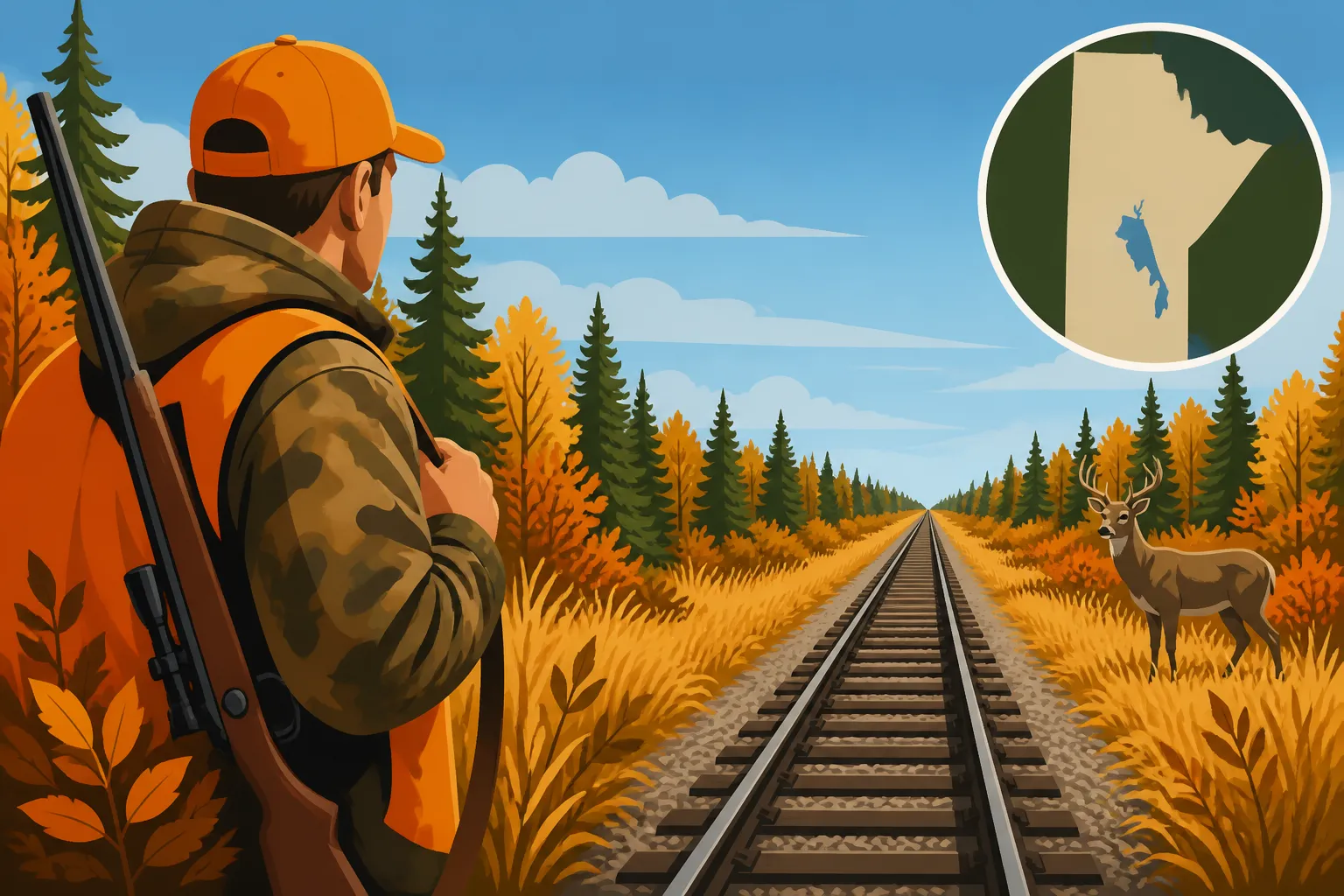
Railway lines cut across vast stretches of Manitoba, traversing everything from dense bush to open farmland. From a distance, these cleared paths can appear to be ideal travel routes or edges for deer, moose, or even predators. However, they are far from being "just another piece of land," and understanding their unique nature is the first critical step before even considering hunting close by.
What Defines a Railway Right-of-Way?
A railway right-of-way (ROW) is essentially a strip of land owned or controlled by a railway company, like CN Rail or CPKC (formerly CP Rail), for the purpose of constructing, maintaining, and operating a railway. This land isn't just the tracks themselves; it includes the ballast, ties, rails, bridges, culverts, and a significant buffer zone on either side. The width can vary, but it's often much wider than you might assume, sometimes extending 100 feet or more from the centerline of the tracks in each direction.
Crucially, these lands are considered private property. They are not Crown land, nor are they typically under the same provincial jurisdiction as other private properties when it comes to trespass and use. Railway companies have strict federal regulations governing their property, primarily focused on safety, security, and the uninterrupted operation of trains. This means access is heavily restricted, and what might be acceptable on an adjacent farmer's land is absolutely forbidden on railway property. You might see a perfect patch of cover or a game trail leading into the ROW and think it’s a golden opportunity, but it’s a legal minefield.
The Critical Legalities of Access and Hunting
This is where things get very serious. Unlike hunting on private land where you can often seek permission from the landowner, railway companies generally do not grant permission for recreational activities, including hunting, on their rights-of-way. The risks are simply too high for them to assume liability. Federal legislation, specifically the Railway Safety Act in Canada, gives significant power to railway companies to control access and enforce safety.
Trespassing on railway property is not just a minor infraction; it can carry substantial fines and even criminal charges. More importantly, it's incredibly dangerous. Trains travel at high speeds, often much faster and quieter than you anticipate, especially freight trains. They cannot stop quickly, and they always have the right-of-way. Hunting on railway property would put you directly in harm's way, and any projectile traveling onto or across railway land also poses a serious safety risk. The implications for stray bullets, even if you are hunting near the boundary, are profound. This isn't just about hunting safety; it's about public safety and the safety of railway personnel.
It's also important to remember that even if you have permission from an adjacent landowner to hunt their property, that permission does not extend onto the railway right-of-way. You must always know precisely where that boundary lies. Utilizing a reliable mapping application, perhaps like GoHunt, can be instrumental in accurately identifying these critical property lines and ensuring you remain on legal ground. Always consider What Manitoba Trespass Law Requires means in a scenario like this. The last thing you want is to find yourself in a legal battle, or worse, an accident, because you misjudged a boundary or assumed permission.
Why Wildlife Uses Railway Corridors (And How Hunters Can Capitalize Safely)
Despite the legal and safety hurdles, it's undeniable that wildlife, particularly large game, frequently interacts with railway rights-of-way. These linear features often provide benefits for animals that are worth understanding, even if your hunting strategy must be strictly confined to adjacent, legally accessible land.
Understanding Wildlife Movement and Habitat
Railway corridors, especially those running through agricultural land or vast bush, can act as natural travel routes. The cleared ground or sparse vegetation along the tracks offers easier movement compared to dense forests or deep snow. Deer, for example, will often follow these paths as a low-energy way to travel between bedding areas and food sources. Similarly, coyotes and wolves use them for hunting or moving through their territory. In more remote areas, even moose and elk might cross or briefly utilize these strips.
The edges of these rights-of-way also create diverse habitat. The transition zone between the cleared path and the surrounding forest or field can provide excellent cover and food sources. Tall grasses, brush, and smaller trees that grow up along the fringe offer bedding and hiding spots. The exposed ground can also attract certain insects or offer an early spring green-up, drawing in game. You might observe heavy sign, like tracks and droppings, indicating frequent animal activity along these margins. This is particularly true for species like whitetails in the Parkland regions or predators like coyotes in the farm belt, making the idea of Calling Coyotes at First Light a relevant tactic when hunting near these areas.
Prioritizing Safety Around Active Railway Lines
If you decide to hunt adjacent to a railway right-of-way, your personal safety, and the safety of others, must be your absolute top priority. This isn't just about legal compliance; it's about staying alive and preventing catastrophic incidents.
Firstly, trains are deceptively fast and often quieter than you'd expect until they are very close. A freight train can travel at speeds of up to 100 km/h (60 mph) or more in rural areas. They also create significant air displacement. Always assume a train could be coming from either direction at any time. Never walk on, cross, or place equipment on the tracks. This should be non-negotiable.
Secondly, visibility is often limited. Curves, dense brush along the ROW, or even weather conditions like fog or snow can obscure approaching trains. Never wear camouflage that blends in with the tracks or the train itself. Wear ample blaze orange, even beyond legal requirements, to ensure you are highly visible to any railway personnel or emergency responders should an unforeseen event occur. This is especially true when considering Hunting Safely in Deep Winter Cold, where snow can amplify sound but also make it harder to spot distant movement.
Finally, be aware of unexpected hazards. Railway property can contain hidden dangers such as discarded equipment, unstable ballast, or even high-voltage lines for signals and switching mechanisms. Never assume an area is safe because it looks clear. The safest approach is always to maintain a significant buffer zone from the tracks themselves, well outside the legal right-of-way, and to strictly confine your hunting activities to legally accessed land adjacent to the railway. This minimizes risk and ensures you're not interfering with critical infrastructure or operations.
Strategic Hunting Adjacent to Railway Rights-of-Way
Given the serious legal and safety implications of being on a railway right-of-way, your best — and safest — bet for capitalizing on game movement near these corridors is to focus your efforts on adjacent private or Crown lands where you have legal access and permission. This requires diligent scouting, careful planning, and a strong commitment to ethical hunting practices.
Essential Scouting and Permission Protocols
Before you even think about setting foot near a railway line, meticulous scouting is non-negotiable. Start by using detailed mapping tools. Online resources and dedicated hunting apps like GoHunt are invaluable for overlaying property boundaries onto satellite imagery. These tools can show you exactly where private landowners’ property ends and the railway right-of-way begins, as well as identify any adjacent Crown land that might be legally accessible. This helps prevent accidental trespass and ensures you're operating within the bounds of Manitoba's Game Hunting Areas.
Once you've identified potential adjacent hunting spots, the next step is securing permission. If it's private land, you absolutely must knock on doors and talk to the landowners. Explain your intentions, assure them you understand and respect railway property boundaries, and discuss your safety plan. Building a good relationship with landowners is paramount, and it will give you peace of mind knowing you're hunting legally and ethically. For instance, if you're looking to hunt whitetails, understanding how to approach landowners for permission on their fields or bush edges that border a railway is critical. The same principles apply if you're looking to hunt Whitetail Hunting in Manitoba in general.
Scouting also involves observing game patterns from a distance. Look for established trails that cross the railway line and continue onto adjacent land, or trails that parallel the railway on the outside of the right-of-way. Identifying pinch points, creek crossings, or areas where the railway forms a natural funnel for game can reveal prime ambush locations on your legal hunting ground. Pay attention to prevailing winds and access points that allow you to approach your stand or blind without alerting game or trespassing. Remember, the goal is to hunt near the railway, not on it.
Recommended Tactics and Ethical Considerations
When hunting adjacent to a railway right-of-way, your tactics need to be tailored to the unique environment. Think about how game might use the cover and travel routes provided by the railway, and position yourself accordingly on your legal hunting ground.
Stand Placement:
Position your tree stand or ground blind on the outside edge of the railway right-of-way, on land you have permission to hunt. Your shooting lanes should be directed away from the tracks, or at a severe angle that ensures any projectile will impact safely on your permitted land. Never shoot towards or across the railway line. Elevated stands can provide a safer shooting angle that sends the projectile into the ground quickly, minimizing any risk of overshooting onto the railway. When considering Hunting a Manitoba Bush Edge, similar principles apply, ensuring your position maximizes visibility of game movements along the edge while prioritizing safety.
Calling and Decoys:
Calling techniques can be effective here, especially for deer or coyotes. Animals might be using the railway as a travel corridor, and a well-placed call can draw them off the ROW and onto your property. Use calls that mimic local game, understanding that the sound of a passing train can temporarily drown out your calls, so timing is key. Decoys can also be effective if placed to lure animals away from the right-of-way.
Game Retrieval:
This is a critical, and often overlooked, aspect. What happens if you shoot an animal and it runs onto the railway right-of-way? Under no circumstances should you pursue it onto railway property. You must immediately contact the railway company (e.g., CN Police or CPKC Police, whose numbers are often available online) to report the incident. They will have protocols for retrieving game from their property, or they may simply deny access due to safety concerns. This can be a frustrating situation, but it's vital for your safety and legal standing. Have these contact numbers saved in your phone before you ever head out. Planning for retrieval is an essential part of Manitoba Hunter Education Requirements.
Ethical Hunting and Public Perception:
Hunting near a railway line means you are often in close proximity to human activity and potentially visible to the public. Maintain a highly ethical approach at all times. Ensure your shots are safe and responsible, and always be mindful of where your projectile will go. Your actions reflect on all hunters, and a lapse in judgment near such a visible public thoroughfare can quickly lead to negative public perception and potential restrictions for everyone. Leave no trace of your presence, and always be courteous if you encounter railway personnel or curious members of the public.
Here’s a quick summary of the pros and cons of focusing your hunting efforts near a railway right-of-way:
| Aspect | Pros | Cons |
|---|---|---|
| Game Accessibility | Natural travel corridors, good edge habitat, funnels game movement | Direct access to ROW is prohibited, game might bed in inaccessible areas |
| Legal Status | Can utilize adjacent private/Crown land with permission | Direct hunting on ROW is trespass (federal charges), complex jurisdiction |
| Safety | Can choose safe stand locations on adjacent land | EXTREME DANGER FROM TRAINS, limited visibility, noise, unexpected hazards |
| Scouting | Linear features easy to spot on maps, visible game sign | Boundaries can be unclear without precise mapping tools like GoHunt |
| Retrieval | Game might drop on your property | GAME ON ROW IS OFTEN UNRETRIEVABLE, requires railway contact |
| Public Perception | Can maintain ethical distance from tracks | Highly visible to public, potential for negative image if rules are broken |
Remember, the goal is to hunt smart and safe. Railway rights-of-way are not shortcuts to hunting success if they compromise safety or legality. Focusing on the legal, adjacent lands and employing sound hunting ethics is the only responsible way to approach these unique environments.
Disclaimer
The information provided in this article is for general guidance only and does not constitute legal advice. Hunting regulations and railway rules are subject to change and vary by jurisdiction. Always consult the most current Manitoba Hunting Guide, federal railway regulations, and local authorities to ensure full compliance. Personal safety should always be your top priority when recreating outdoors, especially near active railway lines.