Hunting a Slough Edge for Whitetails
There’s nothing quite like the thrill of chasing a whitetail buck in Manitoba, but finding where they consistently travel and bed can often feel like solving a complex puzzle. Many hunters overlook one of the most productive, yet often challenging, habitats: the unassuming slough edge. This guide will walk you through the nuances of identifying, scouting, and effectively hunting these wetland borders to significantly improve your chances of success.
Understanding the Allure of a Slough Edge for Whitetails
Slough edges, those often-overlooked transitions where dry land meets wetland, are absolute magnets for whitetail deer across Manitoba. They might not look as grand as a sweeping river valley or a dense forest, but these subtle strips of habitat offer a perfect blend of everything a whitetail needs to thrive and feel secure. If you’ve been struggling to find consistent deer activity, it might be because you’re walking past some of the best cover available.
What Makes Slough Edges Prime Deer Habitat?
Imagine a landscape feature that offers dense thermal cover, a reliable water source, and a buffet of natural browse, all while providing a clandestine travel corridor. That's precisely what a slough edge provides. During the harsh Manitoba winters, the thick cattails, willow bushes, and often standing reedy vegetation along a slough offer incredible protection from biting winds and heavy snowfalls. Deer can hunker down in these spots, conserving energy when the mercury plummets, making them crucial bedding areas.
Beyond just shelter, sloughs are vital water sources. Even if the slough itself freezes solid, deer will paw through the snow and ice for residual moisture, and the surrounding low-lying areas often hold pockets of unfrozen water longer than higher ground. These damp zones also support a different type of vegetation, often richer and more succulent, providing a consistent food source throughout the year. Think about the variety of forbs, grasses, and woody browse that flourish in these wetter soils, contrasting sharply with drier uplands. This diverse food offering is a major draw. Furthermore, deer often use these edges as natural highways, moving between bedding areas within the slough and feeding areas in nearby fields or bush, making them predictable travel routes for bucks checking does or simply moving from cover to food. If you've ever spent time Hunting a Willow Run for Whitetails, you'll appreciate how similar the cover and travel patterns can be along a good slough edge.
Reading the Landscape: Identifying Promising Sloughs
Not all sloughs are created equal, and knowing which ones hold the most promise is key. A small, open slough surrounded by heavily grazed pasture might offer water but little cover. The really good ones are often larger, irregular in shape, and possess a substantial "fringe" of dense vegetation, like a mix of cattails, bulrushes, and robust willow thickets. Look for sloughs that are adjacent to or connect larger blocks of timber, agricultural fields (especially standing corn or unharvested canola), or even denser bush country. These connections create natural funnels and transition zones that deer love to exploit.
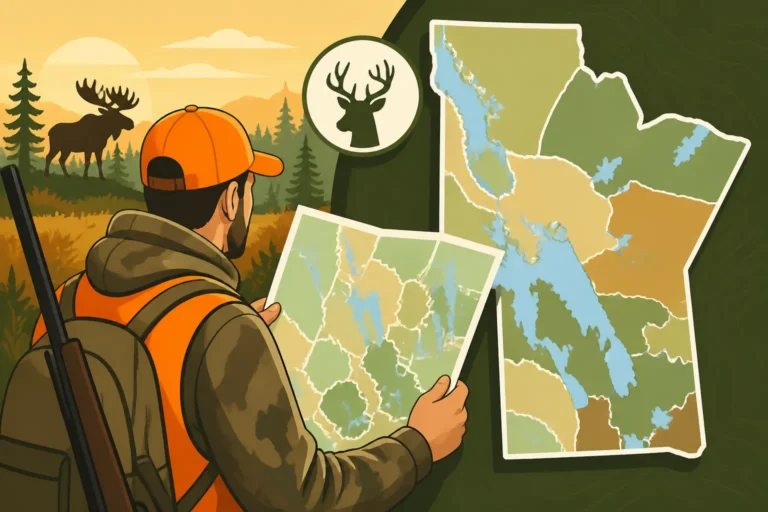
When you're looking at a map, whether it's a paper GHA map or a digital tool like GoHunt, pay close attention to the contours and vegetation overlays. You want to see dark green areas indicating dense cover immediately bordering the blue of the water. Swaths of dense aspen or poplar bluffs leading right up to the slough edge are prime indicators. You can use platforms like GoHunt to visualize these areas from above, spotting those critical bottlenecks and dense pockets of cover that might go unnoticed from the ground. Consider the proximity to human disturbance; a slough deep within a larger block of public land or nestled against a private woodlot with minimal traffic will almost always be more productive than one right off a busy road. Understanding the general layout of Manitoba's Game Hunting Areas and where different habitat types converge can also give you a significant advantage.
Scouting Strategies for Manitoba Slough Edges
Effective scouting is the bedrock of successful hunting, and slough edges demand a specific approach. Because the cover can be so dense and the ground often soft, signs might be harder to read or appear less obvious than in drier, more open woods. However, if you know what to look for, these areas will reveal their secrets, allowing you to pinpoint exactly where deer are living and moving.
Pre-Season Reconnaissance and Sign Reading
Your scouting efforts should ideally begin long before opening day. The late summer and early fall are fantastic times to get out there. Start by walking the perimeter of promising sloughs, but be mindful of your scent and disturbance, especially closer to the season. Look for obvious deer trails—these will often be worn paths leading in and out of the dense cover, heading towards food sources or linking up with other patches of bush. Pay close attention to where these trails converge or bottleneck, as these are excellent spots for a stand. Look for droppings, which will tell you not only that deer are present but also what they've been eating. Fresh droppings, still moist and dark, indicate recent activity.
Rub lines and scrapes are absolutely critical indicators, especially for mature bucks. Bucks will often rub saplings and small trees along the edges of cover, marking their territory. Look for these rubs on willows, small poplars, and even cattails where the bark has been stripped. Scrapes, often found near rub lines or under low-hanging branches, are patches of disturbed ground where bucks paw, urinate, and deposit scent from their forehead glands. The presence of fresh rubs and scrapes suggests a buck is actively working that area, making it a prime candidate for a hunt, especially during the pre-rut and rut. Reading these subtle cues is part of mastering Reading Whitetail Sign in Manitoba Aspen, which often grows right up to these wet edges. Don't forget to look for bedding areas—flattened patches in the thick cover, often protected from prevailing winds.
Utilizing Technology: Satellite Imagery and Trail Cameras
In today's hunting world, technology is your best friend, and it’s especially powerful when deciphering the complexities of slough country. Start with high-resolution satellite imagery on a platform like GoHunt. Zoom in and identify the densest cover, the subtle fingers of brush that extend into fields, and any natural pinch points where deer would be funneled. You can use GoHunt to drop pins on potential bedding areas, travel corridors, and stand locations. This digital scouting saves countless hours on the ground and allows you to identify areas you might never find otherwise. Look for variations in vegetation density, subtle elevation changes that offer deer a dry spot, and connections to other prime habitats like adjacent woodlots or food plots. This kind of detailed analysis is a game-changer for Scouting With Satellite Imagery in Manitoba.
Once you've identified potential hot spots using your mapping tools, deploy trail cameras. Place cameras on those primary deer trails leading in and out of the slough, particularly where they merge. Look for funnels created by the slough's shape or by changes in surrounding vegetation. Position cameras to cover rub lines and scrapes, giving you intel on the specific bucks using the area and their patterns of movement. Consider placing cameras slightly inside the densest cover, looking out, to catch deer as they emerge. Wireless trail cameras can be particularly effective in these areas, allowing you to monitor activity without disturbing the area with frequent visits, which can be crucial for pressured bucks. Check your cameras regularly, but not so often that you leave excessive scent.
Effective Hunting Methods for Slough Edges
Hunting slough edges successfully means understanding deer behavior in these unique habitats and adapting your tactics accordingly. It's not just about sitting and waiting; it's about smart positioning, keen observation, and sometimes, a little proactive persuasion.
Stand Placement and Wind Considerations
Choosing the right stand location is paramount. Given the dense cover of many slough edges, you often have excellent natural concealment, but it also means visibility can be limited. Your goal is to find a spot that offers a clear shooting lane down a primary trail or across an opening where deer are likely to pass, while also providing enough cover to break up your silhouette. An elevated treestand in a sturdy willow or a poplars bordering the slough can give you a crucial vantage point above the dense ground cover, allowing you to see deer approaching long before they spot you. For situations where mature trees are sparse, consider a well-placed ground blind, especially if you can set it up well in advance to allow deer to habituate to its presence.
Regardless of your stand type, wind direction is your absolute number one consideration. Deer rely heavily on their sense of smell, and a single gust of wind carrying your scent into a deer’s nose will blow your hunt. Before every hunt, check the wind and choose a stand location that keeps your scent blowing away from where you expect deer to approach or travel. Slough edges can be tricky because the water and dense vegetation can sometimes create swirling winds, so always have an exit strategy in mind if the wind shifts. For detailed guidance, check out Hanging a Stand on a Manitoba Bush Edge, as many of the principles apply directly to the timber bordering these wetlands.
Timing Your Hunt: Best Hours and Conditions
Deer activity around slough edges often peaks during the low light hours of dawn and dusk, as they move from bedding cover to feeding areas or vice versa. During these times, deer feel most secure utilizing the edge as a travel corridor. However, during the rut, these patterns can change dramatically. Bucks will cruise slough edges throughout the day, scent-checking for does, making midday hunts incredibly productive. If you're hunting the rut in early to mid November, a slough edge is a fantastic place to sit all day.
Weather also plays a huge role. Cold, crisp mornings, especially after a fresh snow, can get deer moving. Overcast days with light precipitation can also be excellent, as the reduced visibility and muffled sounds make deer feel more secure. In deep winter, when snow piles up, sloughs become even more critical thermal cover and travel routes, so don't overlook them in late season. Pay attention to changes in barometric pressure; a falling barometer before a storm often triggers increased deer activity.
Calling and Decoying in Slough Environments
Using calls and decoys can be highly effective around slough edges, especially during the rut. The dense cover often means deer are less likely to see you coming, but they are very attuned to auditory cues. Rattling antlers can simulate two bucks fighting, which can draw in curious or territorial bucks looking for a challenge. In open parkland areas, you might need to adjust your Rattling Volume in Open Parkland to carry further. Follow up rattling with some aggressive grunts, especially if you think a buck is nearby but hesitant. Doe bleats and estrous bleats can also be potent, mimicking a receptive doe and drawing in searching bucks. Consider using a can call or a mouth call to reproduce these sounds.
Decoying can be a bit more challenging in dense slough cover due to visibility issues, but it can still work wonders. A single buck or doe decoy placed strategically to be visible from a key travel corridor can draw a buck right into shooting range. Place the decoy quartering away from your stand, which presents an ethical shot opportunity and makes the decoy look more natural. Always consider wind direction when placing a decoy, as you want the buck to approach head-on or quartering to, allowing you to see his reaction and get a shot. If you plan on Sitting All Day in a Manitoba Blind, having these tools at your disposal can really break up the monotony and bring the action to you.
Overcoming Challenges and Maximizing Success
Hunting slough edges in Manitoba, while rewarding, definitely comes with its own set of challenges. From the elements to getting permission, being prepared and adaptable is key to turning these tricky spots into successful hunts.
Dealing with Mosquitoes and Tough Terrain
Let's be honest, slough edges can be bug heaven, especially during the early season. Mosquitoes, black flies, and deer flies can make even the most dedicated hunter miserable. Come prepared with effective insect repellent, head nets, and long-sleeved clothing. Brands like Thermacell can also be a lifesaver, creating a scent-free zone around your stand. Beyond the bugs, the terrain itself can be difficult. Sloughs often mean soft, muddy ground, dense brush, and hidden water pockets. Waterproof, knee-high boots are a non-negotiable for staying dry and comfortable. Consider a sturdy walking stick or trekking poles to help with balance and test questionable ground. Be mindful of your footing, especially when carrying gear or a harvested animal. Getting stuck in the mud is a real possibility, so always tell someone where you're going and when you expect to be back.
Adapting to Changing Conditions
Manitoba weather is notoriously unpredictable, and slough edges are dynamic environments that shift with the seasons. A dry fall might mean deer are using the slough primarily for water, concentrating activity. A wet fall, however, could flood parts of the slough, altering travel routes. In winter, heavy snow can push deer deeper into the thickest cover of the slough for thermal protection, or conversely, if the snow becomes too deep, they might pack trails on the firmer edges. Freezing and thawing cycles can turn muddy trails into icy death traps. Being aware of these changes and adapting your strategy is crucial. You might need to shift your stand location or alter your entry and exit routes. Understanding how deer react to Hunting Safely in Deep Winter Cold around these areas is vital, as their patterns will change significantly from the mild early season. Always scout for new sign after a significant weather event.
Respecting the Landowner and Local Regulations
Many of the best slough edges are located on private land, often bordering agricultural fields. This means obtaining permission from the landowner is not just good etiquette, it’s a legal requirement and essential for maintaining positive hunter-landowner relations. Always approach landowners respectfully, well in advance of the season, and offer to help with chores if possible. Explain your intentions, promise to respect their property, and follow through on your word. If you're fortunate enough to gain access, ensure you're familiar with all the terms of your permission, including parking, access routes, and any areas that are off-limits. This is covered extensively in Manitoba Landowner Permission Law.
Beyond private land, always be aware of the specific regulations for the Game Hunting Area (GHA) you're in. Check the Manitoba Hunter's Guide for specific season dates, bag limits, and any restrictions unique to that GHA. This includes understanding rules around baiting (which is prohibited for big game in many areas), legal shooting hours, and blaze orange requirements. Being a responsible and informed hunter not only keeps you on the right side of the law but also helps preserve hunting opportunities for everyone.
Hunting Slough Edges: Seasonal Considerations
| Season/Condition | Primary Deer Use | Recommended Tactics | Key Considerations |
|---|---|---|---|
| Early Archery | Water, browse, dense cover for heat protection. | Stand high on travel corridors, focus on morning/evening. | Mosquitoes, heavy foliage, scent control. |
| Pre-Rut/Rut (Nov) | Travel corridors for bucks, bedding/staging for does. | All-day sits, rattling, grunting, decoy placement. | Wind direction paramount, peak activity throughout day. |
| Late Season (Dec) | Thermal cover, sheltered bedding, residual browse. | Ground blinds, focus on sunny slopes/lee sides, tracking snow. | Deep snow, extreme cold, Meat Care in Manitoba's Cold Snaps. |
| After Fresh Snow | Easier travel, distinct tracks. | Tracking, fresh sign reading, identifying specific deer routes. | Visibility (white camo), cold, quiet movement. |
| Dry Conditions | Critical water source. | Focus on trails directly to water, early morning/late evening. | Deer concentrated around remaining water, increased competition. |
| Wet Conditions | Drier edges become important for travel/bedding. | Hunt higher ground adjacent to slough, waterproof gear. | Mud, difficulty moving, less distinct sign. |
Disclaimer
Please remember that hunting regulations and conditions can change. Always consult the most current Manitoba Hunting Guide and relevant government resources before planning any hunt. Safety should always be your top priority.