Trapping Prairie and Boreal Furbearers
Trapping furbearers in Manitoba is a tradition as old as the province itself, but it's far from a simple endeavor. Navigating the diverse landscapes, from the sprawling prairie farmlands to the dense boreal forests, presents unique challenges, species, and strategies. This comprehensive guide will equip you with the knowledge needed to understand and successfully engage in trapping across Manitoba's varied terrain, from understanding furbearer habits to mastering ethical techniques and crucial regulations.
Understanding Manitoba's Furbearer Regions
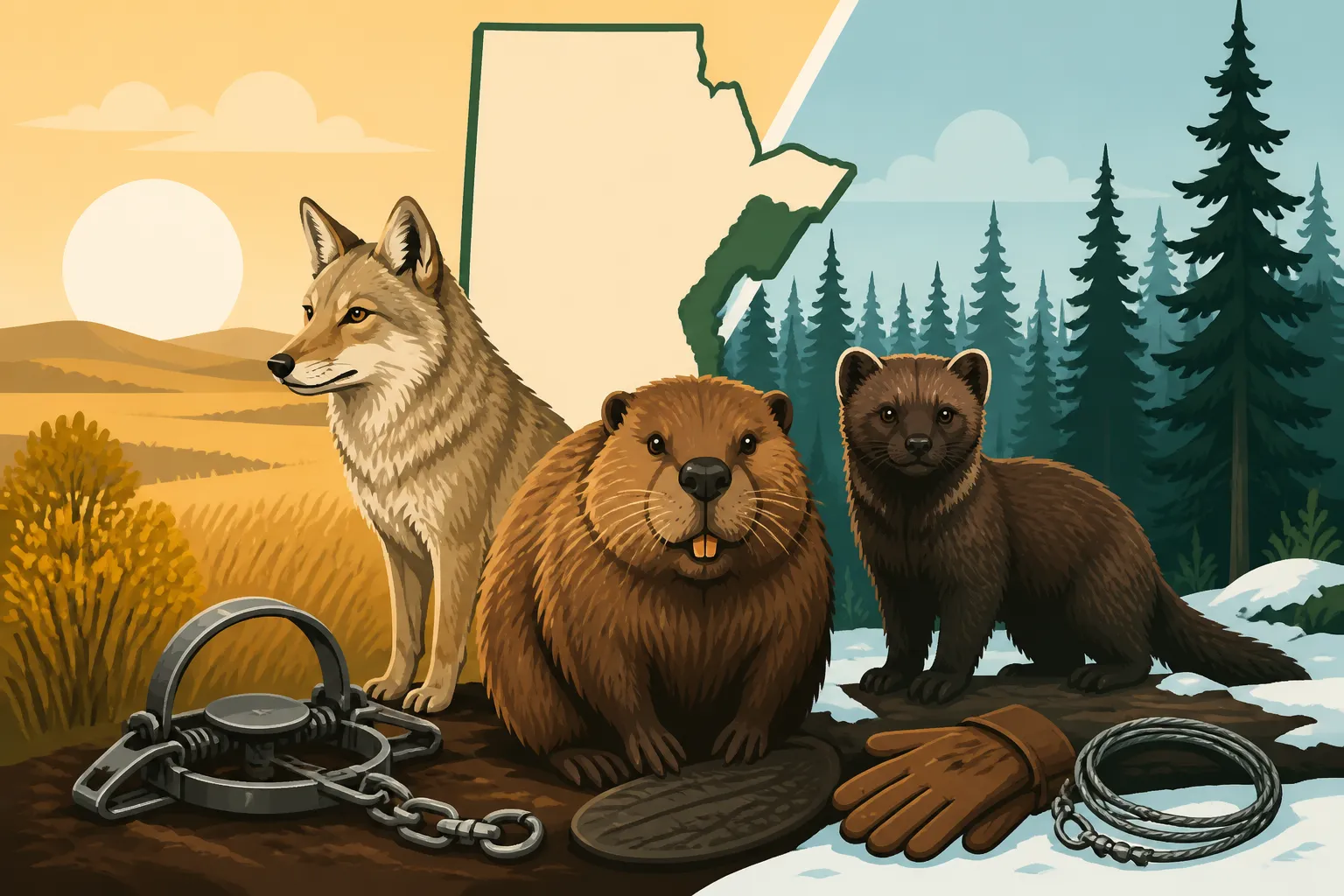
Manitoba is a province of dramatic contrasts, and these ecological shifts profoundly influence where different furbearers live and how trappers approach their craft. You can't trap a marten in a prairie pothole, and you'd be hard-pressed to find a badger in the far northern muskeg. Understanding these distinct regions is the first step to a successful trapline.
The Prairie and Parkland Zone
This region, stretching across the southern and central parts of Manitoba, is characterized by its agricultural lands, interspersed with aspen bluffs, river valleys, shelterbelts, and countless sloughs and wetlands. It's a land shaped by farming, and the furbearers here have adapted to a landscape heavily influenced by human activity.
Species like coyotes, red fox, skunks, raccoons, badgers, muskrats, and beaver thrive in this mosaic environment. Coyotes, in particular, are incredibly adaptable, roaming vast distances across open fields and denning in bluffs or coulees. Red fox often stick closer to the edges of cultivated land or shelterbelts, utilizing the abundance of small prey. Beavers and muskrats, of course, are tied to the water—the countless drainage ditches, small creeks, and prairie potholes provide ample habitat. The challenges here include navigating private land access, often requiring explicit permission from landowners, and dealing with a higher density of human activity. Trap placement needs to be careful, considering livestock, pets, and recreational users. Furthermore, the territories of many prairie furbearers, while sometimes expansive for species like coyotes, can also be quite concentrated around specific resources, demanding precise set locations.
The Boreal Forest and Northern Shield
Venture north, and the landscape transforms into the vast, rugged expanse of Manitoba's boreal forest and Canadian Shield country. This is a land of dense coniferous and mixed wood forests, interconnected lakes, rivers, and extensive muskeg bogs. It's wild, remote, and unforgiving, offering a completely different trapping experience.
Here, you'll primarily find species like marten, fisher, lynx, beaver, otter, and wolves. While rare, wolverines also call this remote wilderness home. Marten prefer the deep, mature conifer forests, while fishers are a bit more adaptable, often found in mixed woods. Lynx, a specialized predator, follow the cycles of their primary prey, the snowshoe hare, across large territories. Beaver and otter dominate the countless waterways, their activities shaping the aquatic landscape. Wolves, the ultimate wilderness predators, roam in packs across immense areas. The challenges in this region are starkly different from the south. Remote access is a major factor; many traplines require snowmobiles, ATVs, or even float planes to reach. The extreme cold, deep snow, and vast distances mean that trappers must be exceptionally self-sufficient and well-prepared. Larger trap lines are the norm, and predator pressure on other furbearers can influence their movements and numbers.
Transitional Zones and Overlap
Manitoba also features significant transitional zones where the prairie gives way to the parkland and then seamlessly blends into the boreal forest. These areas, like the Interlake region or the Riding Mountain foothills, often present an interesting mix of furbearer species.
In these overlapping habitats, you might find species typically associated with the prairie, like fox and coyotes, coexisting with forest dwellers such as beaver, and occasionally even marten or fisher on the forest fringes. River valleys that cut through different zones, like the Assiniboine River or the Pembina Valley, create linear corridors where both prairie and forest species can be found. For trappers, these transitional areas demand adaptability. Strategies often need to blend elements of both prairie and boreal trapping, utilizing knowledge of both open-country and dense-cover sets. Scouting becomes even more critical to identify which species are present and in what numbers. Understanding these nuanced ecotones can unlock unique trapping opportunities, but it also requires a broader skill set and a keen eye for diverse animal sign.
Key Furbearer Species and Their Habits
To be a successful trapper, you need to be more than just good with a trap. You need to be a student of the wild, understanding the specific habits, preferred habitats, and even the personality of each furbearer you pursue. Each species presents its own set of challenges and rewards.
Prairie Furbearers
The animals of Manitoba's open and semi-open country have unique behaviors shaped by their environment.
Coyotes: The Adaptable Survivors
Coyotes are perhaps the most ubiquitous furbearer in Manitoba's prairie and parkland. They are incredibly intelligent, wary, and adaptable, thriving everywhere from remote agricultural fields to the very outskirts of urban centres. Their diet is broad, including rodents, rabbits, birds, and even deer fawns, especially during spring. This adaptability makes them formidable. They're often found travelling along fence lines, natural draws, field edges, and frozen slough crossings. Understanding their pack structure, though less rigid than wolves, is important; lone coyotes and pairs behave differently than a larger group. Their intelligence means trap placement needs to be meticulous, scent control paramount, and sets need to be as natural as possible. Many trappers find success in understanding their travel patterns and utilizing highly attractive lures. If you're looking to get a jump on understanding these cunning creatures, you might find some useful tips in Calling Coyotes in Manitoba Farm Country.
Red Fox: The Elusive Neighbours
Red fox are smaller and often more elusive than coyotes, typically preferring areas with more cover, like shelterbelts, brushy coulees, and the edges of woodlots. They're opportunistic feeders, preying on small mammals, birds, and insects. While their range can overlap with coyotes, they tend to be more sensitive to direct competition. Trapping fox often requires more subtle approaches than coyotes. They are notoriously good at detecting foreign smells, so extra attention to clean traps and natural sets is crucial. Look for their distinctive tracks along fence lines or old roads, and dens often located in sandy banks or under fallen trees.
Beaver and Muskrat: Aquatic Architects
These two aquatic furbearers are the backbone of many traplines, particularly in wetland-rich areas. Beavers are famous for their engineering, building dams and lodges that transform landscapes, creating vital habitat for countless other species. Their diet consists of bark, leaves, and aquatic vegetation. Muskrats, smaller relatives, primarily feed on aquatic plants and build smaller push-ups or burrow into banks. Both are highly valuable for their pelts. Beaver are found in virtually any permanent water body with suitable woody vegetation – rivers, creeks, lakes, and even large drainage ditches. Muskrats prefer slower-moving water with abundant emergent vegetation. Trapping these species requires an intimate knowledge of their underwater world – understanding current flows, main runs, and lodge entry points. Beaver ponds, like those discussed in Hunting Moose Around Manitoba Beaver Ponds for other species, are prime locations for these aquatic engineers.
Boreal Forest Furbearers
The species of the deep bush country face different challenges and exhibit distinct behaviors.
Marten and Fisher: Agile Mustelids of the Forest
Marten and fisher are highly sought-after furbearers of the boreal forest. Marten are small, quick, and prefer mature conifer forests with plenty of deadfall and canopy cover, feeding mainly on voles, mice, and squirrels. Fishers are larger, more powerful, and adaptable, thriving in both coniferous and mixed-wood forests, with a diet that includes squirrels, hares, and even porcupines. Both species are highly territorial. Trapping them often involves elevated sets, utilizing their natural curiosity and arboreal habits. Baits like fresh meat or fish, combined with strong attractants, are very effective. You can learn more about these fascinating animals in detail by looking into Marten and Fisher in the Boreal.
Lynx: The Ghost of the North
The lynx is a specialized predator, almost entirely reliant on snowshoe hare populations. When hare numbers are high, lynx numbers boom, and when hare numbers crash, so do the lynx. They roam large territories, often following the hare's movements. Their large, padded feet are perfectly adapted for silently navigating deep snow. Trapping lynx requires understanding this hare cycle and placing sets along known hare trails, natural pinch points, or near areas of dense hare sign. Snares are often effective for lynx, carefully placed in their travel corridors. The intricate relationship between these cats and their prey is fascinating, and you can delve deeper into it with Lynx and the Snowshoe Hare Cycle.
Wolf: The Wilderness Apex Predator
Wolves are the apex predators of Manitoba's northern boreal forest, living in complex social packs that can roam hundreds of square kilometres. Their primary diet consists of large ungulates like moose and caribou, but they will also take smaller prey. Trapping wolves is incredibly challenging due to their intelligence, wariness, and vast territories. It requires extensive knowledge of their travel routes, kill sites, and denning areas. Foothold traps and snares are typically used, with heavy emphasis on scent control and natural presentation. Many trappers in Manitoba's north consider a wolf a true trophy, a testament to their trapping prowess. For those interested in the broader context of these impressive animals, the information in Hunting Wolves in Manitoba's North provides valuable insights into their presence and movements.
Manitoba's Trapping Regulations and Ethics
Just like any other outdoor pursuit, trapping in Manitoba is governed by a strict set of regulations designed to ensure sustainability, animal welfare, and public safety. As a trapper, it's your responsibility to know these rules inside and out, and to always practice ethically.
Licences and Seasons
Before you can even think about setting a trap, you need the proper authorization. In Manitoba, this means holding a valid trapping licence. For first-time trappers, this typically involves completing the Manitoba Trapper Education Course, which covers everything from furbearer biology and identification to humane trapping methods and relevant regulations.
Once you have your licence, you need to pay close attention to the specific season dates for each furbearer species. These dates can vary depending on the Game Hunting Area (GHA) or trapping district you're in, and they are set to align with prime fur conditions and conservation goals. For instance, the season for marten and fisher often opens later in the fall and extends through the winter, when their pelts are thickest and most valuable. Aquatic furbearers like beaver and muskrat might have both fall and spring seasons. Always consult the current Manitoba Hunting, Angling and Trapping Guide, or the provincial website, for the most up-to-date and accurate information on specific seasons, limits, and any recent changes. For a detailed breakdown of what's required, take a look at Manitoba Trapping and Furbearer Licences.
Trap Types and Set Restrictions
Manitoba has specific rules regarding the types of traps that are legal for furbearers and how they must be set. The province emphasizes humane trapping, meaning that traps must be designed and used in a way that minimizes suffering.
Generally, legally permitted traps include certain sizes and types of conibear-style traps (kill traps), snares, and foot-hold traps. Body-grip (conibear) traps are highly effective for many species, particularly smaller furbearers and aquatics, and are designed for quick dispatch. Snares are often used for larger canids and lynx, and their use typically comes with strict regulations regarding cable size, stops, and break-aways. Foot-hold traps are also legal but require specific modifications to be humane, such as padded jaws or laminations, and typically require swift follow-up for dispatch. Beyond the trap type, there are crucial setback distances that must be observed. For example, traps and snares cannot be set within a certain distance of public roads, trails, or occupied dwellings to ensure public safety and prevent accidental captures of non-target animals or pets. All traps must be tagged with the trapper's licence number or other identifying information. Ignorance of these rules is not an excuse, and violations can lead to severe penalties.
Ethical Trapping Practices
Beyond the letter of the law, ethical trapping practices are a cornerstone of responsible furbearer management. Trappers have a moral obligation to ensure the quick, humane dispatch of any animal caught. This means selecting the appropriate trap for the target species and setting it correctly.
Regular trap checks are absolutely paramount. The frequency of checks is often specified in regulations (e.g., every 24 or 48 hours), but ethical practice dictates checking traps as often as possible to prevent undue suffering. Using humane trap types, as outlined by best management practices, is also a key part of ethical trapping. These practices are continually evolving, and responsible trappers stay informed about the latest research and recommendations. Furthermore, ethical trapping involves avoiding non-target species, minimizing disturbance to the environment, and properly handling all captured animals, whether for fur, meat, or release. The long-term sustainability of trapping depends on trappers upholding these high standards and demonstrating respect for the wildlife they pursue.
Essential Trapping Techniques and Strategies
Mastering the art of trapping is a lifelong pursuit, combining deep knowledge of animal behaviour with practical skills in reading sign, constructing sets, and maintaining your equipment. The techniques vary significantly depending on the target species and the environment you're in.
Land-Based Sets for Canids and Mustelids
When you're out in the field, whether it's prairie farmland or boreal forest, most of your sets for animals like coyotes, foxes, marten, and fisher will be land-based. These require precision and an understanding of how animals move and investigate their surroundings.
Dirt Hole Sets: Coyote and Fox Magnets
The dirt hole set is a classic and highly effective technique for coyotes and foxes. It mimics a rodent or animal den, piquing the curiosity of passing canids. To construct one, you'll dig a small hole, angled slightly downward, roughly 6-8 inches deep and 3 inches wide. The excavated dirt is scattered or placed neatly on a ground cloth nearby. A properly prepared foot-hold trap is then bedded firmly in front of the hole, about 6-8 inches back, and carefully camouflaged with a thin layer of sifted dirt. Lure, bait (a small piece of meat or commercial bait), and often urine are strategically placed inside or around the hole. The key is to make it look utterly natural, blending into the surroundings so the wary animal approaches without suspicion. Scent control is paramount; trappers often wear gloves and use clean tools to avoid leaving human scent.
Trail Sets and Snares: Strategic Placement for Lynx and Wolves
For larger furbearers like lynx, wolves, and sometimes coyotes, trail sets and snares are commonly employed. These are often placed in natural travel corridors, such as game trails, pinch points between cover and open areas, or along old logging roads. Snares, in particular, must be set to very specific legal dimensions, including cable length, loop size, and break-away devices, to ensure humane capture. For lynx, which often follow snowshoe hare trails, snares can be set subtly along these routes. Wolves, with their larger ranges, might be snared along main travel corridors they use to move between feeding and denning areas. Placement height, loop size, and anchoring strength are all critical for effective and humane snaring. These sets demand extensive scouting and knowledge of the animal's exact travel patterns.
Box Traps and Conibears: Elevated for Marten and Fisher
For agile mustelids like marten and fisher, box traps and body-grip (conibear) traps are highly effective. These are often set elevated off the ground, sometimes on leaning poles or in cubby boxes. This helps to target the specific species, as many larger animals won't bother climbing, and it keeps the traps clear of deep snow. Bait, often fresh meat (like beaver or squirrel), and a strong visual attractor (like a piece of shiny foil or bird wing) are placed inside the box or behind the trap jaws. The animal enters, investigates the bait, and triggers the trap for a quick, humane dispatch. These sets are popular in the boreal forest where marten and fisher are common, and the elevated nature helps to keep them operational through heavy snowfall.
Water-Based Sets for Aquatics
Trapping aquatic furbearers like beaver, otter, and muskrat demands a different set of skills, primarily focused on understanding their movements in and around water.
Conibear Placements: The Submerged Master
Body-grip (conibear) traps are exceptionally versatile for aquatic furbearers. For beaver, these traps are typically set in their main runs or channels, at dam breaks, or at underwater lodge entries and exits. The traps must be fully submerged, guiding the beaver through the trap opening. For otter, sets are often placed at slides, crossover points between waterways, or where they enter and exit the water along banks. Muskrats can be taken with smaller conibears placed in push-ups, bank burrows, or feed beds. The key is to funnel the animal directly into the trap's killing zone. Proper stabilization and anchoring are vital, especially for powerful animals like beaver.
Snare Sets for Beaver in Channels
Snares can also be effectively used for beaver, particularly in narrow channels or constricted waterways. These sets are usually submerged, with the snare loop positioned to intercept a swimming beaver. The snare cable must be strong and secured to a sturdy anchor point. As with land-based snares, specific legal requirements for design and placement must be followed. The depth of the set is crucial, ensuring the beaver is caught efficiently and humanely.
Lodge and Bank Sets for Muskrats
Muskrats, being smaller and often more numerous, offer different trapping opportunities. Smaller body-grip traps can be placed at the entrance to their bank burrows or in their push-ups (small, domed houses made of vegetation in shallow water). They can also be caught using simple box traps or small snares placed on feed beds where they regularly gather to eat. These sets are often less complex than those for beaver, but still require a keen eye for muskrat sign and habits.
Scouting and Location
No matter the species or the set, success in trapping hinges on meticulous scouting and choosing the right location. It’s about knowing where the animals are and how they move. Using tools like GoHunt can provide a significant advantage in this regard, offering detailed mapping capabilities that help identify promising areas before you even step foot in the bush.
Reading Sign: Your Wilderness Newspaper
The wilderness leaves clues for those who know how to read them. Tracks in the snow or mud, scat, chewed branches, rub marks on trees, dens, and territorial markings all tell a story. For beaver, look for fresh cuttings, peeled sticks, and active lodges or dams. For coyotes and fox, find their tracks along field edges, fence lines, and check for scat on prominent rises. Marten and fisher might leave tracks in the snow or evidence of their climbing on trees. Lynx tracks are unmistakable in the snow, often following hare trails. Becoming proficient at Reading Sign After a Fresh Snow is an invaluable skill, allowing you to gauge animal presence, recent activity, and even direction of travel.
Understanding Animal Travel Routes and Pinch Points
Animals, like humans, tend to follow paths of least resistance or established routes. These can be game trails through thick bush, frozen river edges, fence lines, or narrow strips of cover between open fields. Identifying these travel routes, as well as natural "pinch points" (where terrain funnels animals into a narrow corridor), is critical for effective trap placement. A good pinch point can concentrate animal movement, increasing the odds of an encounter with your set.
Leveraging Technology: GoHunt and Satellite Imagery
Modern technology has revolutionized scouting. Platforms like GoHunt provide detailed satellite imagery, topographic maps, and land ownership information. This allows you to "scout" from your home, identifying potential trapping locations, assessing terrain, finding access points, and avoiding restricted zones. You can mark potential pinch points, water bodies, and areas of dense cover before you even load your traps. This is especially useful in vast and remote regions, helping you plan your trapline efficiently and safely. For those who want to maximize their digital scouting efforts, Scouting With Satellite Imagery in Manitoba is a fantastic resource that can save you countless hours in the field.
Preparing for the Manitoba Trapline
Trapping in Manitoba, particularly in the deep winter or remote northern regions, is not for the faint of heart. It requires meticulous preparation, the right equipment, a strong emphasis on safety, and knowing how to properly care for your hard-earned furs.
Equipment and Supplies
The gear you need for a successful and safe trapline extends far beyond just traps. It's about being ready for anything Manitoba's diverse environments can throw at you.
First, your traps themselves. You'll need a variety of types and sizes appropriate for the species you're targeting – from small body-grip traps for muskrats and marten to larger footholds and snares for coyotes, beaver, or wolves. Ensure all traps are clean, well-maintained, and legally tagged with your licence number. You'll also need setting tools for each trap type, as some, especially larger conibears, require considerable leverage to set safely.
Lures, baits, and attractants are your secret weapon. Specific scents (like gland lures for canids, essential oils for mustelids) and visual attractors (feathers, shiny objects) are crucial for drawing animals to your sets. Carry enough of these for the duration of your trip. Don't forget trap wax or dye for protecting traps and reducing scent.
Beyond trapping specific items, your personal gear is paramount for survival and comfort. This includes multiple layers of warm clothing, suitable for extreme cold in winter, good insulated boots, snowshoes or skis for navigating deep snow, and a reliable sled or toboggan to haul traps and gear. In more accessible areas, an ATV or snowmobile is indispensable. Always pack a comprehensive first-aid kit, navigation tools (GPS with extra batteries, compass, detailed maps), fire-starting supplies, extra food, water, and emergency shelter. A dependable headlamp or flashlight is also critical. To get a better handle on what a well-equipped outdoor kit looks like, check out Winter Truck Kit for a Manitoba Hunt, as many of the principles apply to trapping.
Safety on the Trapline
Manitoba's wilderness, while beautiful, can be unforgiving. Safety must be your number one priority, especially when trapping alone or in remote areas.
Communication is Key: When heading into remote areas, cell service is often non-existent. Invest in a satellite messenger (like a Garmin inReach or Zoleo) or a satellite phone. Always leave a detailed trip plan with someone responsible, including your route, expected return time, and contingency plans.
Weather Preparedness: Manitoba winters are legendary for their cold. Be prepared for rapidly changing weather, sudden blizzards, and temperatures that can plummet to -40°C or colder. Dress in layers, carry extra insulation, and know the signs of hypothermia and frostbite.
Wildlife Encounters: While rare, encounters with larger animals like wolves or even bears (if trapping in fall/spring) are possible. Carry bear spray and know how to use it. Be aware of your surroundings at all times.
Navigating Remote Terrain and Ice Safety: Learn to use your navigation tools effectively. If traveling over frozen waterways, never assume ice is safe. Learn how to assess ice thickness and carry ice picks. If you're on Crown land, remember to understand Manitoba's Crown Land Access rules and stay within your designated trapping area.
Pelting and Fur Care
The work isn't over once you've caught an animal. Proper pelting and fur care are crucial to maximizing the value of your catch. A poorly handled pelt can fetch a fraction of the price of one that's been meticulously prepared.
Skinning and Fleshing: Each species requires a specific skinning technique (open, cased, dorsal). Once skinned, the pelt must be thoroughly fleshed, removing all fat and muscle tissue. This prevents spoilage and allows the fur to dry properly. Invest in quality skinning knives and a fleshing beam with a good fleshing knife.
Drying and Stretching: After fleshing, the pelt is stretched onto a drying board or stretcher, shaped according to industry standards for that species. This ensures the fur dries evenly and takes on the desired form. Pelts are then air-dried in a cool, dry, well-ventilated area, away from direct sunlight or heat, which can damage the fur.
Storage: Once dried, pelts should be stored in a cool, dark, dry place, ideally in breathable bags to protect them from insects and humidity until they are sold. Understanding good Meat Care in Manitoba's Cold Snaps provides transferable knowledge, as both involve meticulous handling in cold temperatures to preserve the product.
Comparing Prairie and Boreal Trapping Environments
| Feature | Prairie and Parkland Zone | Boreal Forest and Northern Shield |
|---|---|---|
| Primary Species | Coyotes, Red Fox, Beaver, Muskrat, Raccoon, Skunk | Marten, Fisher, Lynx, Wolf, Otter, Beaver, Wolverine |
| Dominant Habitat | Farmland, shelterbelts, coulees, sloughs, aspen bluffs | Dense conifer/mixed forests, lakes, rivers, muskeg |
| Access | Often private land (requires permission), gravel roads | Remote, requires ATVs/snowmobiles, some fly-in zones |
| Terrain | Relatively flat to rolling, river valleys | Rugged, rocky shield, extensive wetlands, dense bush |
| Challenges | Human encroachment, non-target captures (pets), wind | Extreme cold, deep snow, vast distances, isolation |
| Common Sets | Dirt hole, trail sets (canids), submerged conibears | Elevated box/conibears (mustelids), snares (lynx/wolf) |
| Scouting Aids | Field edges, fence lines, slough rings, satellite maps | Game trails, cutlines, frozen waterways, satellite maps |
Disclaimer
The information provided in this guide is for general informational purposes only and is not a substitute for the official Manitoba Hunting, Angling and Trapping Guide or direct consultation with provincial wildlife authorities. Regulations can change frequently, and it is the responsibility of every trapper to be aware of and comply with all current laws, regulations, and permit requirements before engaging in any trapping activities. Always prioritize safety and ethical practices in the field.