Hunting Beside a National Park Border
Many hunters in Manitoba find themselves eyeing the lush, untouched lands of our national parks, not for hunting within them, of course, but for the incredible game opportunities that often lie just outside their boundaries. It's a tricky situation that brings up questions about legality, ethics, and animal behavior. This guide is here to walk you through everything you need to know about successfully and responsibly hunting the land that borders a national park in Manitoba, helping you understand the nuances and maximize your chances while staying on the right side of the law and good sportsmanship.
Understanding the National Park Buffer Zone in Manitoba
National parks are truly special places, set aside for conservation, education, and recreation. For hunters, they often represent a paradox: a haven for wildlife that, by its very nature, isn't open to hunting. This creates a fascinating dynamic on the lands immediately adjacent to these protected areas, drawing both opportunity and potential pitfalls for the unprepared hunter.
The Legalities of Park Boundaries
It's crucial to understand that a national park boundary is a hard, unyielding line. There's no grey area, no "buffer zone" in the traditional hunting sense where rules are relaxed. Once you cross that boundary, even by a few feet, you are in a federal park and subject to federal laws and Parks Canada regulations, which strictly prohibit hunting. This isn't just about discharging a firearm; it's about carrying a hunting implement, pursuing game, or even retrieving a downed animal. The consequences for violating these rules can be severe, ranging from hefty fines to the confiscation of equipment and even imprisonment. It's a stark reminder that ignorance of the boundary is not an excuse in the eyes of the law.
Think of it like this: your hunting licence and provincial regulations apply right up to one side of an invisible fence, and on the other side, a completely different set of rules kicks in. There's no blending. This means you have to be absolutely, 100% certain of your location at all times when hunting near these protected areas. It's not enough to have a general idea; precision is key to avoiding serious legal trouble.
Why Game Animals Use Park Borders
Here's the exciting, and sometimes frustrating, truth: animals don't carry maps or respect human-drawn lines on the landscape. They move freely based on instinct, seeking food, water, cover, and mates. National parks, being largely undisturbed and often managed for wildlife health, provide prime habitat. They are sanctuaries where animals face no hunting pressure, allowing them to grow old and often grow large. This abundance of mature animals and rich habitat makes the perimeter of a national park incredibly attractive to hunters.
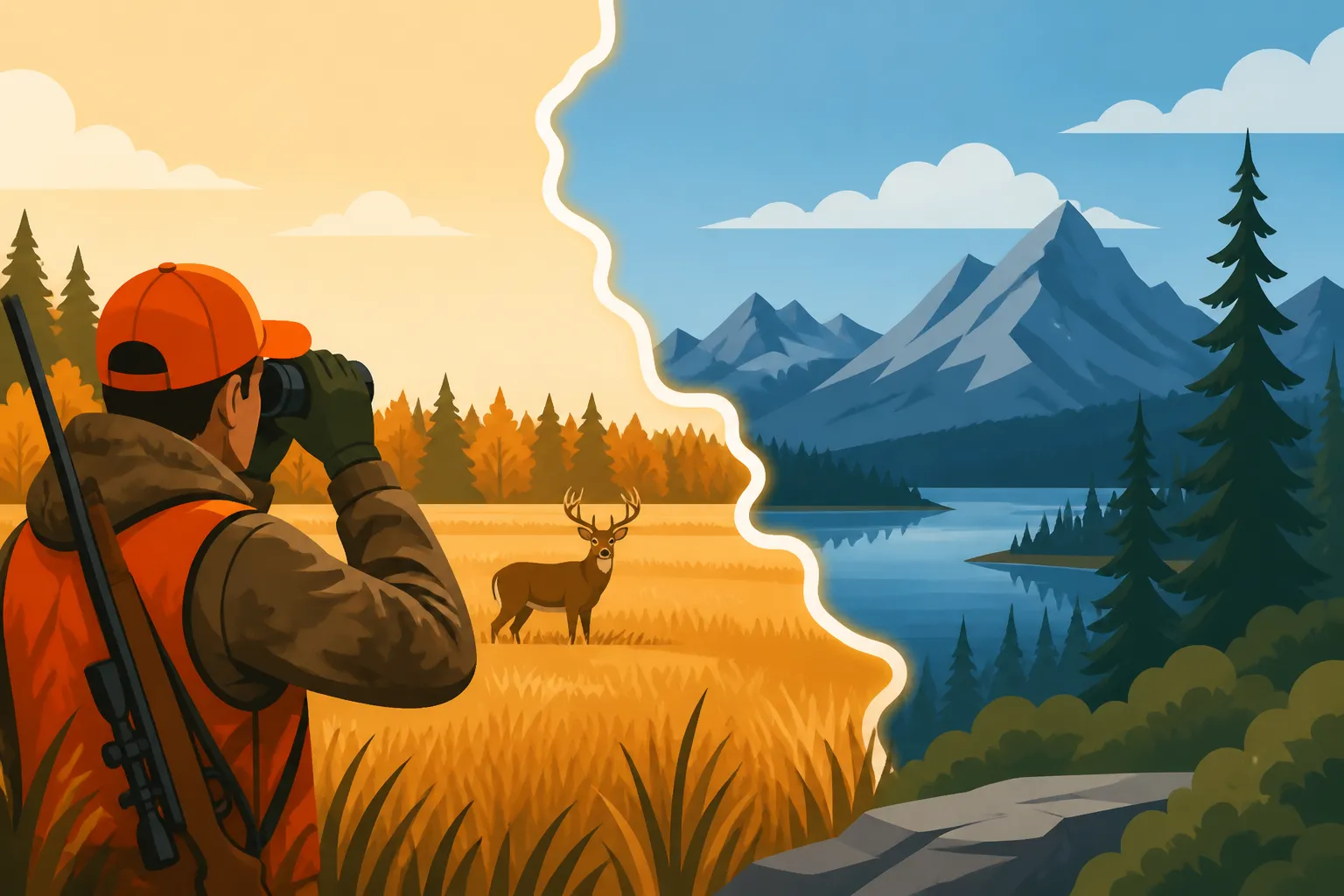
Deer, elk, moose, and even bears will frequently move in and out of park boundaries. They might bed down deep within the park where they feel safe, then venture out onto adjacent Crown land or private fields to feed, especially during low-light hours or when food sources within the park are scarce. The rut, in particular, can be a major driver of movement, as bucks and bulls become less cautious in their pursuit of does and cows, pushing them across these artificial lines. Hunters who understand these patterns and scout these transition areas effectively can find incredible success, but it requires careful observation and strategic planning.
Common Misconceptions and Risks
One of the most dangerous misconceptions is thinking "close enough" is fine. It absolutely is not. The boundary is the boundary. Another common, and potentially costly, mistake is assuming that if you shoot an animal legally on your side of the line, you can automatically retrieve it if it runs into the park. This is almost never the case. Pursuing wounded game into a national park without explicit permission from Parks Canada or a conservation officer is a serious offense. This means that if an animal crosses into the park after your shot, there's a very high chance you will not be able to recover it.
Beyond the legal risks, there are ethical and public perception considerations. Hunting near a national park often means you're in areas with higher non-hunting recreational use. Hikers, photographers, and wildlife enthusiasts may be present, and they often hold strong views on hunting. A stray shot, an animal suffering near a park boundary, or any perceived violation can quickly escalate into public outcry and negative attention for hunters. It's vital to maintain the highest ethical standards, exercise extreme caution, and ensure your actions reflect positively on the hunting community as a whole. Your conduct acts as a powerful ambassador for hunting.
Identifying and Navigating Park Boundaries for Hunters
Knowing exactly where you are, and where the park begins, is paramount. This isn't a task where you can simply eyeball it from a distance. Modern technology, combined with traditional scouting methods, provides the tools you need to stay compliant and safe.
Essential Tools for Boundary Identification
In this day and age, a reliable GPS unit or, even better, a hunting specific mapping app on your smartphone, is an absolute non-negotiable. Apps like onX Hunt are game-changers, showing detailed property lines, including national park boundaries, right on your screen. They use satellite imagery and GPS to pinpoint your exact location in real-time, displaying land ownership, public lands, and park boundaries with remarkable accuracy. This allows you to stand on the provincial side of the fence and know precisely how much room you have. You can even set up geo-fences that alert you if you get too close to a boundary, which is an invaluable feature, especially in dense bush or low light.
While digital tools are fantastic, don't underestimate the value of a physical map, especially one from a reputable source like the government of Manitoba that clearly delineates Manitoba's Game Hunting Areas and protected zones. Batteries die, phones get dropped. A physical map and a compass can be lifesavers. Scouting on the ground before the season also plays a critical role. Walk the boundary if possible, identify natural features that correspond with your map, and look for any physical markers the park may have installed. Combining all these tools gives you the most robust understanding of the landscape. Many hunters even use platforms like GoHunt for planning and scouting, which integrate various data points for comprehensive trip preparation.
Reading Physical Boundary Markers
While not always present or perfectly maintained, national parks often try to mark their boundaries. This could be anything from large, official Parks Canada signs to painted blazes on trees, specific types of fencing, or even old survey markers. These markers might be sparse, especially in remote or heavily treed areas, and they can certainly become overgrown or damaged over time. Never rely solely on these physical markers. They are a helpful reinforcement, but your primary navigation should come from your GPS or mapping app.
When scouting, make a mental note, or better yet, a digital waypoint, of any physical markers you encounter. This helps create a clearer picture in your mind of where that invisible line actually runs. It's particularly useful if you're hunting an area where the boundary follows a natural feature like a creek, an old road, or a specific ridge. Even if a fence has fallen, the original fence line itself often indicates the legal boundary, but again, always double-check with your digital tools.
Strategies for Hunting Near the Edge
When setting up near a national park border, your strategy needs to be conservative. Position yourself well within the legal hunting area, giving yourself ample room from the park line. This means setting your stand or blind with a clear shot opportunity away from the park boundary. You want any animal you shoot to fall on your side, or at least run away from the park, not into it. Consider the terrain and potential escape routes. If the park is uphill, an animal might naturally run downhill. If it's dense cover, they might dive straight into it.
Focus on early morning and late evening hunts, as these are often peak movement times when animals are venturing out to feed. Funnels, pinch points, and natural travel corridors that lie just outside the park are golden opportunities. Always have a recovery plan in mind, and if possible, hunt with a partner who can help track and retrieve swiftly. Be prepared to pass on a shot if there's any doubt about the animal's direction of travel or if it's too close to the boundary. Losing an animal is heartbreaking, but breaking the law is far worse for yourself and the reputation of hunters everywhere.
Game Movement and Ethical Considerations
Hunting adjacent to a national park isn't just about understanding maps and legal lines; it's about deeply understanding animal behavior and practicing the highest forms of ethical hunting. The very presence of a sanctuary influences how game animals use the landscape.
How Big Game Uses the Park Edges
Deer, elk, and moose often treat national parks as their primary bedding and security zones. During daylight hours, especially when hunting pressure is high on surrounding lands, they will retreat deep into the park's cover. However, as evening approaches, or during specific times of the year like the rut, they become more daring. You'll often find them feeding on agricultural fields, browsing in aspen parkland bluffs, or utilizing willow runs and treed shelterbelts that border the park. These fringe areas become crucial staging grounds. Hunting Around Riding Mountain National Park is a classic example of this, where large elk and deer populations utilize the vast protected interior and spill out onto surrounding farmlands and Crown timber.
Understanding these patterns is key. For example, during the whitetail rut, bucks will often cruise the park edges looking for does that have ventured out. When the Whitetail Rut Peaks Here is a critical time to be on stand near these transition zones. Similarly, mature bull elk will often bugle from within the park but move outside to challenge rivals or gather cows. Scouting these edges using trail cameras, looking for fresh sign like tracks, rubs, and droppings, and observing actual animal movements will give you the best chance of intercepting them legally.
Ethical Hunting Practices Near Parks
The ethical bar is raised significantly when hunting near a national park. Your actions are scrutinized, not just by fellow hunters and law enforcement, but by a wider public who may be recreating nearby. The most crucial ethical consideration is shot placement. You must be absolutely confident in your shot to ensure a clean kill and prevent the animal from running into the park. This means practicing your shooting skills diligently and knowing your weapon's capabilities. Never take a Hail Mary shot simply because an animal is close to the park line. It's just not worth the risk, both to the animal and your hunting future.
It's also important to be mindful of noise, especially if the park is popular with campers or hikers. While not always possible to be silent, being respectful of other users of the land contributes to a positive image of hunting. Furthermore, understand that national parks often have staff and researchers actively monitoring wildlife. Respect their work, and if you encounter them, be courteous and cooperative. We all share a vested interest in healthy wildlife populations.
Dealing with Wounded Game Entering a National Park
This is perhaps the most difficult, and most critical, ethical and legal situation you might face. If you shoot an animal legally on your side of the boundary, and it crosses into the national park, you cannot pursue it. It is absolutely illegal to do so without express permission. Your first step is to immediately contact Parks Canada dispatch or a Manitoba Conservation Officer. Explain the situation clearly, providing as much detail as possible about the shot, the animal's last known location, and your exact position.
Be prepared for the reality that permission might not be granted, or that it might take time to arrange, by which point recovery may be impossible. Parks Canada has strict protocols for these situations, which often involve their own staff or designated individuals assessing the scene. They prioritize public safety and park regulations. While heartbreaking, accepting this outcome is part of the responsibility of hunting near such sensitive areas. It reinforces the importance of taking only high-percentage, ethical shots that minimize the chance of an animal crossing into protected territory. This is why thorough practice and knowing your limits are so vital.
Specific Manitoba National Parks and Hunting Proximity
Manitoba is home to a couple of national parks, but only one truly impacts the majority of big game hunting discussions in the province. Understanding its specific influence is key for hunters.
Riding Mountain National Park: A Prime Example
Riding Mountain National Park (RMNP) is by far the most significant national park in Manitoba for hunters to consider when talking about border zones. Located in the southwestern part of the province, it's an ecological island of boreal forest, aspen parkland, and fescue prairies, surrounded by agricultural land and smaller provincial forests. This park is a known stronghold for significant populations of Manitoba's Elk Herds and Their Range and White-Tailed Deer, Manitoba's Most Hunted Animal, as well as moose and black bears.
The park acts as a massive sanctuary, allowing these animals to thrive, often to older age classes and larger sizes. Hunters on the surrounding provincial Crown land and private property within Manitoba's Game Hunting Areas such as 23A, 23B, and 23C, regularly encounter animals that move back and forth across the park boundary. This creates incredible hunting opportunities but also requires heightened awareness of boundary lines. The challenge here is precisely because the hunting is so good; the temptation to push boundaries can be high, making diligence even more important. Understanding the movement of game around RMNP during different seasons, and particularly during the rut for both deer and elk, is crucial for success.
Other Park Proximity Considerations
While Wapusk National Park in far northern Manitoba is also a national park, its remote location, focus on polar bear habitat, and extremely limited general hunting access in the surrounding region mean it doesn't typically factor into the same "hunting beside the park" discussions as RMNP. Most hunting activities in the far north, such as Barren-Ground Caribou Hunting in Northern Manitoba or Moose Hunting Manitoba's Boreal Country, occur in vast, largely uninhabited areas far from park boundaries.
Therefore, for the vast majority of Manitoba hunters concerned with national park borders, the focus will always be on Riding Mountain. However, the principles discussed – accurate navigation, ethical shot selection, and understanding game movement – apply universally to any scenario where a protected area might influence hunting opportunities. Always remember to consult the latest provincial hunting guide and relevant GHA maps for any specific area you plan to hunt. Reading a Manitoba GHA Map Before You Go will highlight any nearby protected zones.
To summarize the key points for hunting near national park borders, here’s a quick overview of best practices:
| Category | Do's | Don'ts |
|---|---|---|
| Preparation | Use GPS/mapping apps (e.g., onX Hunt) & physical maps | Rely solely on outdated maps or general knowledge |
| Scout boundaries thoroughly before the hunt | Assume physical markers are always clear or present | |
| Location | Establish clear, well-known positions relative to boundary | Position yourself too close to the park line |
| Set geo-fences or alerts on your mapping app | Risk unintentional trespass | |
| Shot Choice | Take only high-percentage, ethical shots | Shoot if there's any doubt about trajectory or recovery |
| Aim to drop animals well away from the park boundary | Take shots that risk an animal running into the park | |
| Recovery | Have a clear plan for tracking and retrieving game | Pursue wounded game into the park without permission |
| Contact Parks Canada/Conservation Officer if game enters park | Hide or ignore the situation | |
| Ethics | Be a responsible ambassador for hunting | Create negative public perceptions |
| Know Manitoba Trespass Law for Hunters | Violate laws or regulations |
Remember, hunting is a privilege, and respecting all land boundaries, especially those of national parks, is fundamental to preserving that privilege. Understanding Manitoba Conservation Officer Powers will also help you understand the serious implications of boundary violations. Stay safe, stay legal, and enjoy the incredible hunting opportunities our province offers.
Disclaimer
This article is for general informational purposes only and does not constitute professional advice. Laws, prices and regulations vary by location and change over time. Consult a qualified professional for guidance on your specific situation.