Manitoba Conservation Officer Powers
It's completely normal to feel a bit of apprehension when you see those distinctive green and white vehicles or encounter an officer in the field, even if you know you're doing everything by the book. There's a lot of folklore and misinformation out there about what conservation officers can and can't do, which only adds to the confusion. This guide is here to cut through all that noise, clarify the real powers and responsibilities of Manitoba's Conservation Officers, and help you understand your rights and obligations when you meet them out in our beautiful hunting grounds.
Understanding the Role of Conservation Officers in Manitoba
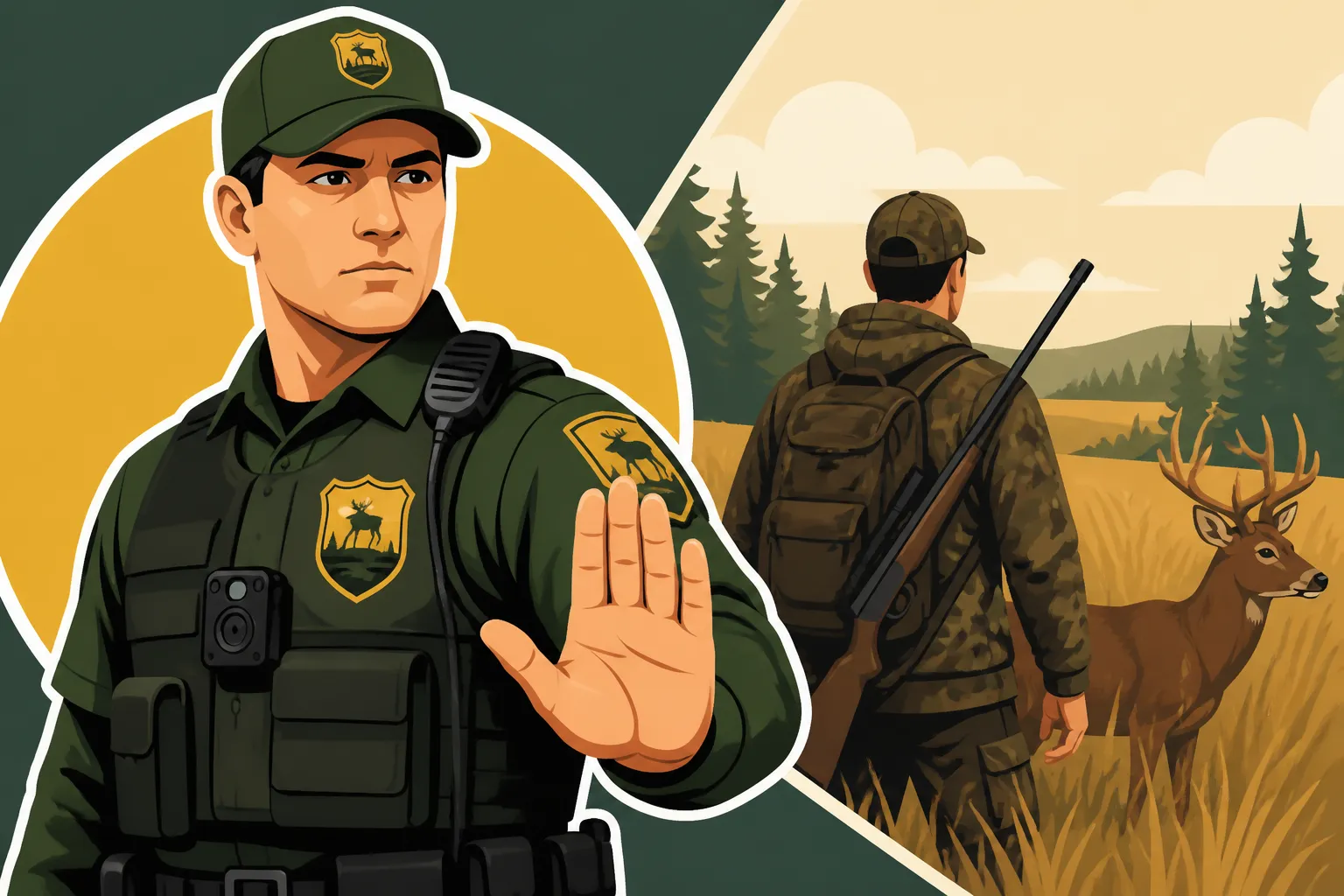
Conservation Officers (COs) in Manitoba are much more than just "game wardens" or "fish cops," as they're sometimes colloquially known. Their mandate is incredibly broad, encompassing not only wildlife and fisheries but also provincial parks, forestry, and environmental protection. They are highly trained professionals, dedicated to upholding the laws that protect our natural resources for everyone to enjoy, now and for future generations.
More Than Just "Game Wardens"
When you think of a Conservation Officer, your mind probably jumps straight to hunting and fishing regulations. And yes, enforcing those rules is a huge part of their job, no doubt about it. They're the ones ensuring we're all abiding by bag limits, season dates, and ethical hunting practices. But their responsibilities extend far beyond that. They’re tasked with enforcing a wide array of provincial legislation, including the Wildlife Act, Fisheries Act, Provincial Parks Act, Crown Lands Act, Forest Act, and various environmental regulations. This means they could be investigating anything from illegal logging and polluting waterways to enforcing backcountry camping permits or ensuring proper waste disposal in protected areas.
This broad mandate means that a CO needs to be incredibly versatile and knowledgeable across many different fields. They undergo rigorous training that covers everything from advanced investigative techniques and firearm proficiency to wildlife biology, habitat management, and even search and rescue operations. It's a demanding job that requires a deep understanding of the natural world and the laws designed to protect it. They often work in remote, challenging environments, sometimes alone, relying on their training and experience to handle complex situations. Their dedication to preserving Manitoba's wilderness and its inhabitants is truly commendable, and it’s what sets them apart from other law enforcement agencies.
Why We Have Conservation Officers
At its core, the presence of Conservation Officers is about stewardship and sustainability. Manitoba's natural resources are a shared heritage, and without proper management and enforcement, they would quickly be depleted or damaged. COs play a critical role in ensuring that hunting, fishing, and other resource-based activities are conducted in a way that is ethical, safe, and sustainable. They are on the front lines, acting as the eyes and ears of conservation.
Consider the intricate balance of wildlife populations. Without COs enforcing limits and seasons, overharvesting could quickly decimate species like moose or whitetail deer. They ensure that everyone has a fair chance at harvesting game by cracking down on illegal activities such as poaching, hunting out of season, or using illegal methods. Their work contributes directly to maintaining healthy animal populations, protecting critical habitats, and ensuring that our pristine lakes and rivers remain clean and abundant with fish. Beyond conservation, they are also deeply involved in public safety, responding to wildlife conflicts, ensuring safe boating practices, and often being the first responders in remote emergencies. They help manage disease outbreaks, like Chronic Wasting Disease (CWD), by ensuring hunters comply with Manitoba's CWD Sampling Requirements, which is vital for monitoring and containing such threats. Essentially, COs are crucial to preserving the very outdoor lifestyle that so many of us cherish in Manitoba.
Specific Powers and Authority of Manitoba Conservation Officers
When a Conservation Officer encounters you in the field, it's natural to wonder what they can actually do. Their powers are quite specific and designed to allow them to effectively carry out their conservation and enforcement duties. It's important to understand these powers, as well as your own responsibilities, to ensure a smooth and respectful interaction.
Stopping, Inspecting, and Detaining
One of the most fundamental powers of a Manitoba Conservation Officer is the authority to stop and inspect individuals, vehicles, and equipment in areas where hunting, fishing, or other regulated activities are taking place. This isn't just a courtesy; it's a legal requirement for you to comply. If a CO signals you to stop, whether it's on a road, a trail, or even while you're out on the water, you must do so. This applies even if you're just driving through a Game Hunting Area (GHA) and not actively hunting.
During such a stop, a CO can request to see your hunting or fishing license, your identification, and any permits you might need. They can also inspect your firearms, bows, ammunition, and any harvested game or fish. This inspection is to ensure you are compliant with all relevant regulations, such as having a valid license, adhering to bag limits, and using legal equipment. For instance, they'll check your Manitoba Tag Validation Rules to ensure your harvest is properly tagged. They can also ask you about your activities, your hunting plans, and where you've been. It's crucial to be polite and cooperative, answering their questions honestly and producing requested documents promptly. Remember, it's your responsibility to have your licence on you, so make sure you understand the rules for Carrying Your Licence in the Field. Failure to comply with a lawful stop or inspection can lead to serious charges, even if you weren't committing any other offense.
Search and Seizure Authority
The power to search and seize is perhaps one of the most misunderstood aspects of a CO's authority. Unlike general police officers, COs often have specific powers under wildlife and fisheries acts that allow for warrantless searches in certain contexts, particularly when related to resource enforcement. This means they can, without a warrant, search vehicles, vessels, aircraft, camps, and any other place where game, fish, or related equipment might be stored, if they have reasonable grounds to believe an offense has occurred or is occurring under the acts they enforce. For example, if they observe you hunting and suspect you've exceeded your bag limit, they can inspect your cooler or game bags.
However, this doesn't mean they can search your private residence without a warrant, unless there are very specific and immediate exigent circumstances (like hearing shots fired and seeing someone flee into a house with fresh game, a situation that would be quite rare). Generally, for a private dwelling, they would need to obtain a search warrant, just like any other law enforcement officer. If they find evidence of a violation during a lawful search, they have the authority to seize any illegally taken game, fish, firearms, bows, traps, vehicles, or any other equipment used in the commission of an offense. This could include a perfectly good rifle if it was used to hunt out of season, or an ATV if it was used to access a closed area. The seized items can then be held as evidence and may be forfeited upon conviction. This also applies to situations where hunters might disregard rules like Rules on Wasting Game Meat, where illegally taken or abandoned game could be seized.
Enforcement Actions: Tickets, Arrests, and Charges
When a Conservation Officer identifies a violation, they have several enforcement options available, ranging from issuing a warning to making an arrest. The choice depends on the severity of the offense, the hunter's cooperation, and their past record. For minor infractions, like a forgotten tag or a slightly undersized fish, you might receive a verbal warning. However, more serious offenses or repeat minor infractions will likely result in a ticket, which comes with a set fine.
For more serious violations, such as hunting without a license, poaching, night hunting without a permit, or significant over-limits, COs have the power to lay charges that require a court appearance. In these situations, they might also seize your equipment and game as evidence. In extreme cases, where an individual refuses to identify themselves, poses a threat, or is suspected of a very serious offense, a CO has the authority to make an arrest. This means you would be taken into custody, similar to an arrest by the RCMP. You would then be processed, and potentially released on conditions or held for a bail hearing.
It's crucial to understand that facing charges can lead to significant penalties, including hefty fines, mandatory surcharges, forfeiture of seized items (which can be very expensive), and even hunting license suspensions or prohibitions. For a deeper dive into the repercussions, you can read more about Manitoba Penalties for Hunting Violations. COs are dedicated to ensuring fair play and conservation, and they do not take these enforcement actions lightly.
Your Rights and Responsibilities During an Encounter
Encountering a Conservation Officer is a part of hunting in Manitoba. Knowing what to do and what to expect can make the interaction go smoothly, ensuring you comply with the law while also understanding your own rights. It’s about mutual respect and cooperation towards the common goal of responsible resource management.
What to Expect During a Stop
When a Conservation Officer signals you to stop, whether you're in a vehicle, on a quad, or walking through the bush, the first and most important thing is to remain calm and comply immediately. If you're in a vehicle, pull over safely to the side of the road, turn off your engine, and keep your hands visible on the steering wheel. If you’re on foot, stop moving, and show your hands. Avoid any sudden movements that might be misconstrued.
The CO will typically introduce themselves, state their purpose for the stop, and ask for your identification and relevant licenses (hunting, fishing, firearm possession). They may also ask about your hunting activities, where you've been, and if you've harvested anything. Be polite, answer truthfully, and provide the requested documents without hesitation. It's a routine part of their job to conduct checks, especially during peak seasons or in popular hunting areas. They are checking for compliance with everything from basic licensing to specific rules like Evidence of Sex Requirements for deer or moose, or proper Legal Firearms and Bows for Big Game usage. Cooperating fully demonstrates your respect for the law and the officer, and helps expedite the process.
Understanding Your Rights
While you have a responsibility to comply with a CO's lawful requests, you also have specific rights during an encounter. Firstly, you have the right to ask the officer why you have been stopped or what the purpose of the inspection is. This helps clarify the situation. You also have the right to remain silent if you are being investigated for an offense, beyond identifying yourself and providing necessary documents. However, it's usually in your best interest to be cooperative and answer straightforward questions about your hunting activities.
If an officer arrests you, you have the right to legal counsel. This is a fundamental right, and you should invoke it if you find yourself in that situation. It’s important to distinguish between a general, routine check and a situation where you are being specifically investigated for an alleged offense. In a routine check, the questions are usually broad and aimed at ensuring compliance. If an officer's questions become more pointed, or they suggest you have committed an offense, that’s when you might consider your right to silence regarding further details beyond identification. Remember that services like GoHunt can be invaluable for staying informed about specific regulations, which minimizes the chances of you inadvertently running afoul of the law and needing to assert these rights in a more serious context.
Reporting Concerns or Misconduct
Manitoba’s Conservation Officers are professionals, but like in any profession, issues can arise. If you witness what you believe to be a wildlife or resource violation, or if you have concerns about unsafe practices by other hunters, it's your responsibility as a conservation-minded individual to report it. Manitoba has a dedicated "Turn In Poachers" (TIP) line, which is an excellent resource for reporting suspected illegal activity. You can find more information on Reporting a Poacher in Manitoba or contact Manitoba's Turn In Poachers Line directly. These reports are crucial for helping COs protect our wildlife.
On the other hand, if you feel that a Conservation Officer has acted improperly, unprofessionally, or outside the scope of their authority during an interaction with you, you have the right to lodge a complaint. This should typically be done through Manitoba Natural Resources and Northern Development. You would need to gather as many details as possible: the officer's name or badge number, the date, time, and location of the incident, and a clear description of what occurred. This formal process ensures accountability within the service and helps maintain the high standards expected of our COs.
Common Scenarios and Misconceptions
Understanding the formal powers is one thing, but how do these powers manifest in real-world scenarios? It’s useful to dispel some common myths and clarify what you can expect during typical interactions with Manitoba Conservation Officers.
Roadside Checks and Camp Inspections
One of the most frequent ways hunters and COs interact is through roadside checks or camp inspections. You might be driving along a gravel road in a prime GHA, particularly during the archery opener or the November rifle season, and encounter a checkpoint. These are routine and perfectly legal. Officers will often have a designated area set up, sometimes with multiple vehicles and officers present, checking licenses, asking about recent hunts, and inspecting any game in your possession. They are specifically looking for adherence to bag limits, proper tagging, and evidence of sex or species requirements, as outlined in rules like Manitoba's CWD Sampling Requirements (especially in designated CWD zones) and Manitoba Tag Validation Rules. Don’t be surprised if they ask to see the head or other identifying parts of a harvested animal to ensure it meets legal criteria.
Similarly, COs often conduct inspections at hunting camps, especially on Crown land. They may visit your camp, introduce themselves, and again, ask to see licenses, check for any harvested game, and ensure compliance with other regulations like proper waste disposal or fire safety. This isn’t an invasion of privacy; it’s part of their job to ensure that all activities within these areas are conducted legally and responsibly. They are particularly visible during busy periods, like when Hunting the Rut in Early to Mid November or during the initial days of any major season, precisely because that’s when the most activity (and potential for violations) occurs. Being prepared and welcoming during these checks reflects well on you and helps COs efficiently carry out their duties.
Off-Duty Encounters and Private Land
A common misconception is that a Conservation Officer only has authority when they are in uniform or on duty. This is generally not the case. COs are designated peace officers and their powers often extend regardless of whether they are in uniform or on their designated shift, particularly if they witness a violation. So, don't assume that an individual you recognize as a CO, even if they're in plain clothes, has no authority if they observe illegal activity.
When it comes to private land, the waters can sometimes seem a bit murkier. However, a CO's authority still applies. If they have reasonable grounds to believe a wildlife or fisheries violation has occurred or is occurring on private land, they generally have the power to investigate, and in some cases, enter the land. This does not give them carte blanche to ignore trespass laws; rather, their authority usually relates directly to enforcing the acts they are mandated to uphold. For example, if they see someone illegally hunting deer on private property without permission, they certainly have the authority to intervene. As hunters, it is your responsibility to ensure you have obtained proper permission before hunting on private land, and COs enforce Manitoba Landowner Permission Law strictly. They are also empowered to investigate instances of poaching or other wildlife crimes that occur regardless of land ownership.
The Use of Technology and Surveillance
In today’s world, technology plays a significant role in law enforcement, and Conservation Officers are no exception. COs utilize various forms of technology to aid in their investigations and patrols. This can include everything from GPS mapping and night vision equipment to drones for aerial surveillance in remote areas. Trail cameras are a common tool for COs, particularly for monitoring areas with high suspected illegal activity or for gathering evidence of baiting violations. As a hunter, while you are allowed to use trail cameras on Crown land, you should be aware that COs may also be using them.
Furthermore, COs may use social media and other digital platforms to gather intelligence or identify potential violations. The information age means that what you post online, even if seemingly innocuous, could potentially be observed by authorities. Hunters often use apps like GoHunt to study land boundaries and regulations, which is a fantastic way to stay compliant. However, if that same app's tracking data were used to prove an illegal shot across a road or a trespass, it could also be evidence. The bottom line is that while technology offers many advantages, it also means a greater likelihood of being observed, and hunters should always operate under the assumption that they are accountable for their actions.
Here’s a quick overview of what to expect during a typical CO encounter:
| Scenario | Hunter's Action Expected | CO's Typical Actions | Potential Outcome (if compliant) |
|---|---|---|---|
| Roadside Check | Pull over safely, engine off, hands visible. Provide ID, license, permits. Answer questions truthfully. | Request ID, check licenses, inspect firearms/bows, check game bags/coolers. Ask about hunting activities. | Thanked, released promptly. |
| Camp Inspection | Welcome CO to camp, provide ID/licenses. Show game if requested. Be cooperative. | Check licenses, inspect harvested game, ensure camp compliance (e.g., fire safety, waste). | All clear, continue enjoying your hunt. |
| Field Encounter | Stop, identify yourself, show license/ID. Cooperate with requests for inspection of equipment or game. | Verify identity, check licenses/tags, inspect equipment or game in possession. Ask about activities. | Advice given, or simply a quick check and good wishes. |
| Violation Suspected | Remain calm, comply with lawful commands. Provide ID. Understand your right to remain silent regarding details of an alleged offense. | State the reason for the stop/investigation. Gather evidence, issue warning/ticket, or make an arrest. | Warning, ticket, charges, or arrest depending on severity. |
Disclaimer
The information provided in this article is for general informational purposes only and does not constitute legal advice. While we strive to provide accurate and up-to-date information, hunting regulations can be complex and are subject to change. Always consult the most current Manitoba Hunting Guide or contact Manitoba Natural Resources and Northern Development directly for the definitive and most current legal information. Your compliance with all provincial and federal hunting laws is your sole responsibility.