Hunting a Winter Trapline Trail
When winter settles in Manitoba, blanketing the landscape in deep snow, hunters often face the daunting challenge of accessing prime deer and moose habitat. Logging roads get plowed shut, bush trails become impassable, and even familiar paths vanish under drifts. But there's a hidden network, often overlooked, that can open up incredible hunting opportunities: the winter trapline trail. These routes, meticulously cut and maintained by trappers, offer ready-made arteries into otherwise impenetrable bush, providing easier movement for both hunter and game. This guide will help you understand the unique advantages of hunting these trails and how to successfully navigate and hunt them while respecting the land and other users.
Why Winter Trapline Trails Are a Goldmine for Hunters
Trapline trails aren't just lines on a map; they're lifelines in the winter wilderness, providing crucial access and unique hunting scenarios. They represent a significant investment of time and effort by trappers, who know the land intimately. For us as hunters, they offer a pathway to success that might otherwise be impossible.
Understanding the Appeal of Established Winter Access
Imagine breaking trail through waist-deep snow, every step a monumental effort, your legs burning and your breath frosting in the frigid air. It's exhausting, slow, and often results in spooked game. This is the common reality for many winter hunters. Now, picture walking on a relatively clear, packed snowmobile trail, moving swiftly and silently deeper into the bush. That's the primary appeal of a trapline trail. Trappers, whether by snowmobile, ski, or even snowshoe, create and maintain these routes because they need reliable access to their trap sets. This means they often follow natural contours, avoid impassable terrain, and generally offer the easiest path through thick cover. For a hunter, this translates into conserved energy, quieter movement, and the ability to reach areas that would otherwise remain untouched by human presence. It also gives you a consistent, predictable route for getting game out, which is a massive consideration when hunting in Manitoba's deep winter. Getting a Deer Out on a Frozen Trail or Getting a Moose Out With a Quad becomes a much more feasible task when you have an established path.
The Ecosystem Advantage of Trapline Routes
Beyond mere human convenience, trapline trails create a distinct advantage because game animals use them too. Deer, moose, and even predators instinctively seek the path of least resistance, especially when snow depths become a hindrance. A packed snowmobile trail is far easier to traverse than breaking through fresh, deep powder. This means these trails often act as natural funnels, concentrating animal movement along predictable routes. You'll find tracks – deer, moose, wolf, coyote, lynx – consistently using these trails, especially between bedding areas and feeding grounds. Sometimes, a trapline might follow a natural ridge, a river break, or a specific timber edge that deer naturally travel. The trapper’s route often optimizes for animal presence, meaning they've already identified areas with high game activity. This ecological insight, baked into the very layout of the trapline, provides a significant advantage for the observant hunter.
How to Identify and Locate Active Trapline Trails
Finding these elusive winter lifelines takes a combination of digital savvy and keen observation skills once you're in the field. It’s not always as simple as looking for a designated trail on a general map.
Digital Tools for Scouting Potential Trapline Areas
Before you even step foot in the bush, modern mapping applications are your best friend. Programs like onX Hunt are invaluable for identifying potential trapline routes. Start by looking for subtle linear features on satellite imagery that might not be official roads or trails. These could be old logging cutlines that have grown in, forgotten exploration lines, or even power line rights-of-way that trappers might utilize. Look for areas with a history of logging or resource extraction, as these often leave behind a network of trails that trappers then adapt. Sometimes, you'll see faint, narrow clearings winding through dense timber, or patterns of activity that suggest regular travel. While onX Hunt won't label something specifically as a "trapline," you can infer their presence by looking for logical travel corridors in areas with good cover and proximity to water or food sources. Another great resource is GoHunt, which often provides excellent articles and mapping tips for understanding how animals move in different terrains, information that directly correlates with where trappers would likely establish their lines. Cross-referencing these features with topographical maps can also help, as traplines often follow lower elevations in valleys or ridge lines, maximizing efficiency for both trapper and wildlife. Scouting With Satellite Imagery in Manitoba is a critical skill here.
On-the-Ground Reconnaissance and Reading the Sign
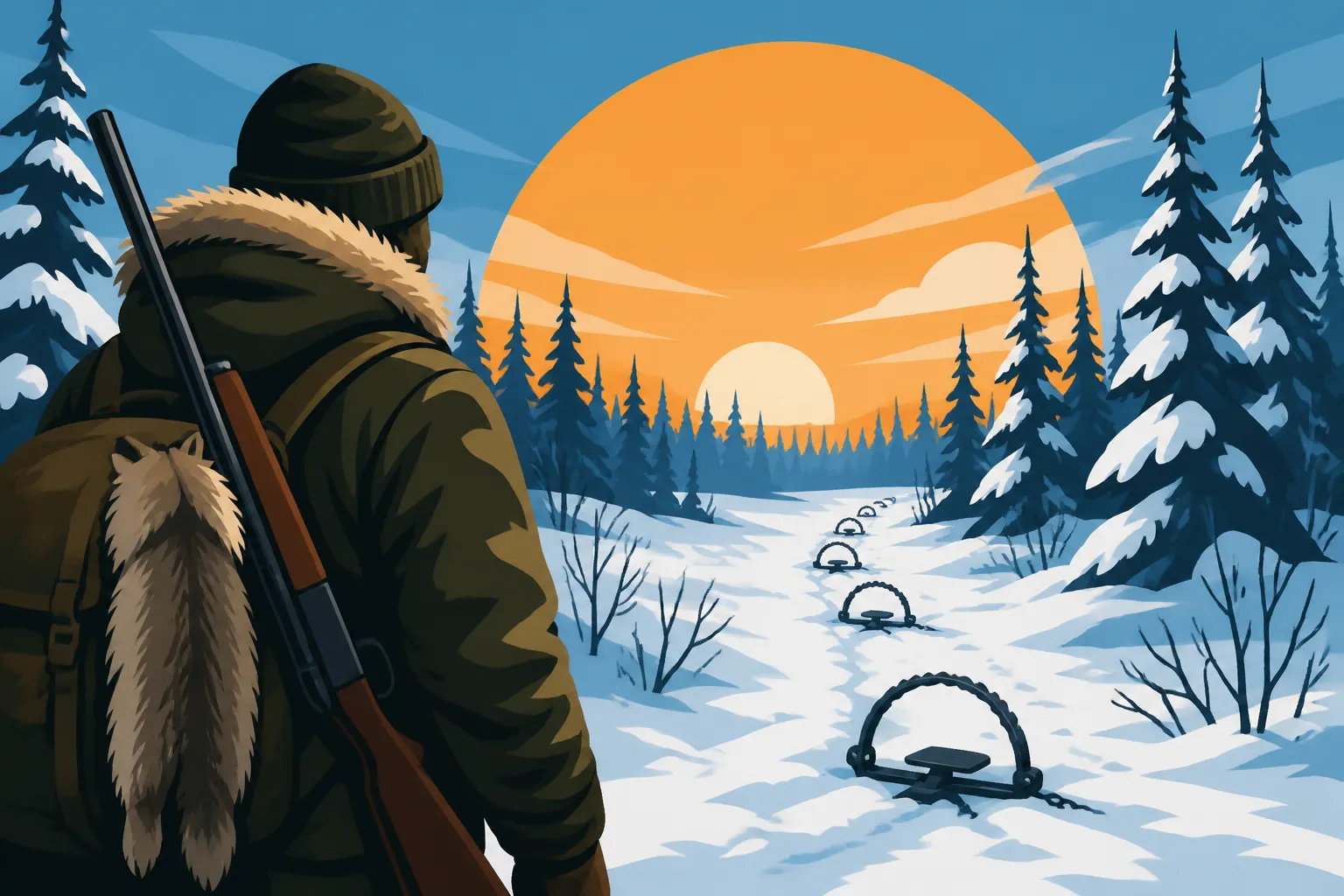
Once you have a few promising areas identified on your map, it's time for boots on the ground, or rather, snowshoes or skis on the snow. What you're looking for specifically is evidence of regular human travel in winter. Fresh snowmobile tracks are the most obvious sign, but even older, faded tracks can indicate a route that's regularly used. Look for cut branches along the trail, indicating it’s been cleared recently. Sometimes you’ll see small blazes on trees or flagging tape marking the route. The most definitive sign, of course, is an actual trap set, or evidence of old sets – a small cleared area, a scent post, or even a log set in place for a body-grip trap. If you find actual traps, do not disturb them. This is a trapper's livelihood and interrupting their sets can be illegal and is certainly disrespectful. Take note of the location, give them a wide berth, and move on. Observing the density and freshness of game tracks along and crossing the trail will also tell you if the animals are using it as much as the trapper is. Fresh wolf, coyote, or fox tracks are often a dead giveaway that a trapper is working the area for furbearers.
Ethical and Legal Considerations When Hunting Trapline Trails
Hunting trapline trails is a fantastic opportunity, but it comes with a strong responsibility to act ethically and legally. Respect for other users of the land is paramount, especially when it comes to individuals who derive their livelihood from the wilderness.
Respecting Trappers and Their Lines
Imagine putting in countless hours to establish and maintain a productive hunting stand, only for someone else to come along and disrupt it. That's exactly how a trapper might feel if their line is disturbed. Trapping is a demanding and traditional activity in Manitoba, and trappers are often deeply connected to the land. The golden rule here is simple: if you find an active trapline, give it space. Do not touch or interfere with any traps, snares, or sets. Walk around them, not through them. Avoid intentionally walking directly on a trapper’s established snowmobile trail if possible, especially if you can see fresh tracks, to prevent breaking their packed trail or leaving human scent directly on their route. The best approach, if you know who holds the registered trapline in an area, is to make contact beforehand. A friendly conversation, expressing your intent to hunt nearby and asking if there are areas they'd prefer you avoid, can go a long way. Most trappers are reasonable individuals and appreciate the courtesy. Building these relationships helps foster positive multi-use wilderness environments.
Navigating Land Ownership and Access Rules
Just because there's a trail doesn't mean you automatically have the right to hunt it. It's crucial to verify land ownership before planning your hunt. Most traplines are on Crown land, where public access for hunting is generally permitted, provided you follow all provincial regulations. However, some traplines might cross private property, and in Manitoba, you always need explicit permission from the landowner to hunt on private land. This is where your onX Hunt app, or other similar mapping tools, become indispensable for showing property lines and landowner information. Manitoba Landowner Permission Law states that you must have permission, so don't assume. Always check your Game Hunting Area (GHA) boundaries as well, as some traplines might traverse areas with specific hunting restrictions or closures for certain species. Being informed about these details beforehand ensures a legal and respectful hunt.
| Factor | Advantages for Hunters | Disadvantages for Hunters |
|---|---|---|
| Access | Easier travel in deep snow; reaches remote areas | May be limited to one direction; can be predictable for game |
| Game Movement | Natural funnels for deer/moose; concentrates tracks | Game can become wary of human presence on heavily used lines |
| Scouting | Clear evidence of game activity (tracks) | Potential disturbance of trapper's sets |
| Navigation | Clear path simplifies bush travel; harder to get lost | Can be indistinct under fresh snow; not always on maps |
| Ethical Aspect | Builds respect for other land users | Requires careful consideration of trappers' livelihood |
| Recovery | Easier to drag/sled game out of the bush | May require specific equipment (sleds, toboggans) |
Effective Hunting Strategies Along a Winter Trapline Trail
Hunting a trapline trail requires a slightly different approach than typical bush hunting, blending stealth with an understanding of how animals use these linear features.
Still Hunting and Ambush Tactics
Winter conditions, particularly fresh snow, create an ideal environment for still hunting. The quiet crunch of snow underfoot (if not too cold and noisy) and the stark visibility can work to your advantage. When still hunting a trapline trail, move slowly, taking only a few steps at a time, then pausing to scan thoroughly. Pay close attention to areas where the trail bends, crosses other game trails, or passes through a pinch point between heavy cover and a natural barrier. These are prime ambush spots. Whitetails, in particular, will often use the trail until they reach a point where they can dart into thicker cover unseen. Setting up on one of these natural transitions, especially if you have a vantage point, can be incredibly effective. Consider how a deer or moose would react if something approached them on the trail – where would they run? Where would they pause to look back? Use that knowledge to your advantage. Hunting a Poplar Bluff at First Light or Hunting a Bluff Between Two Fields strategies can be adapted here, using the trail as your primary access and ambush point.
Tracking and Driving Through Adjacent Cover
A trapline trail isn't just a path; it's a base for your hunting efforts. If you find fresh tracks indicating a large deer or a moose has recently crossed or followed the trail, you can use the trail as a starting point for tracking. Leave the trail, following the tracks into the adjacent cover, and use the trail as a reference point to keep your bearings. The benefit here is that you know you have an easy route back to the trail if the tracking gets too difficult, or if you manage to harvest an animal. For deer, especially in dense bush, you might even consider a coordinated drive. Have one or two hunters quietly walk the trapline trail, while others push through the parallel thick cover, attempting to gently move deer towards the trail where standers are waiting. This works best in areas where the trapline is relatively straight and bordered by consistent cover. Always prioritize safety in a drive, ensuring all hunters know each other's positions and lines of fire. Hunting Whitetails in Manitoba's Bush Country often involves these types of pushing tactics.
Positioning for Optimal Visibility and Wind
Like any hunting scenario, wind direction is absolutely critical when hunting a trapline trail. Your scent will travel, and if the wind is carrying it down the trail ahead of you, any animals using that trail will likely smell you long before you see them. Always try to hunt with the wind in your face, or a crosswind if topography allows. Understanding thermals, the movement of air as it warms and cools throughout the day, is also important. In the morning, cold air sinks into valleys and low spots, while in the afternoon, it rises. Position yourself accordingly. Use any natural clearings or small rises along the trapline for better visibility, but always ensure you have adequate cover to break up your silhouette. Sometimes, even sitting back 10-20 yards off the main trail, in the thicker timber, can give you an edge, allowing you to see animals on the trail without being directly in their line of sight.
Essential Gear and Safety for Winter Trapline Trail Hunting
Manitoba winters are no joke. Hunting a trapline trail means being prepared for remote, cold conditions. Your gear choices and safety planning are as crucial as your hunting skills.
Dressing for Success in Manitoba's Winter Cold
Staying warm is paramount, not just for comfort but for safety and focus. Layering is key, starting with a good moisture-wicking base layer against your skin, followed by insulating mid-layers, and finally, a windproof and waterproof outer shell. Pay special attention to your extremities. High-quality, insulated boots are non-negotiable, especially for periods of sitting or slow movement. Consider chemical hand and foot warmers, and bring multiple pairs of gloves or mittens. A warm hat, balaclava, or neck gaiter is essential, as a significant amount of body heat is lost through the head. Hunting Safely in Deep Winter Cold is a comprehensive resource for ensuring you're dressed appropriately for Manitoba's often brutal temperatures. Remember, you might start out hiking in, but once you stop moving to glass or sit, the cold will set in quickly.
Navigational Aids and Emergency Preparedness
While a trapline trail provides a clear route, getting lost is still a possibility, especially if you leave the main line to track an animal or if fresh snow obscures the path. Always carry a reliable GPS device, like your phone with the onX Hunt app, and a backup physical compass and map. Know how to use them. Cell service can be spotty or non-existent in many of Manitoba's remote hunting areas, so don't rely solely on your phone. A satellite communication device, such as a Garmin inReach or a Zoleo, is a wise investment for communicating in emergencies. Carry a robust emergency kit that includes fire-starting materials, extra high-energy food, a first-aid kit, a headlamp, and a means to signal for help. Let someone know your hunting plan, including your specific route and expected return time. What to Do If You Get Stuck in the Bush is not something you want to learn the hard way.
Animal Recovery and Meat Care in the Cold
Once you've harvested an animal, the work truly begins, and a trapline trail can be a huge asset. Getting a deer or moose out of the bush in deep snow is physically demanding. A quality sled or toboggan is an invaluable piece of equipment for hauling game along a packed trapline trail. If the trail is wide enough and permits vehicle access (check local regulations!), a quad or side-by-side with a winch can dramatically reduce the effort. However, be sure to check Quad and Side-by-Side Rules on Crown Land before assuming vehicle access. The cold temperatures of a Manitoba winter are excellent for preserving meat, but you still need to field dress your animal quickly and properly. Hang the carcass if possible to allow it to cool thoroughly and evenly. Protecting the meat from scavengers, dirt, and snow is also important. Meat Care in Manitoba's Cold Snaps provides detailed guidance on handling your harvest in freezing conditions.
Disclaimer
This article is for general informational purposes only and does not constitute professional advice. Laws, prices and regulations vary by location and change over time. Consult a qualified professional for guidance on your specific situation.