Hunting Access Near The Pas
One of the biggest headaches for any hunter, especially when venturing into a new part of the province, is simply figuring out where you can actually go to chase game. Near The Pas, Manitoba, this challenge can feel amplified by the vastness of the northern boreal forest and the intricate mix of waterways, Crown land, and scattered private holdings. This comprehensive guide is here to untangle the complexities of hunting access around The Pas, helping you pinpoint promising areas, understand local regulations, and prepare for a successful and legal hunt in this incredibly rich region.
Understanding The Pas Region's Unique Hunting Landscape
The area around The Pas isn't just another spot on the map; it's a vibrant, complex mosaic of ecosystems that offers a distinctly different hunting experience from much of southern Manitoba. This transition zone, where the agricultural plains meet the vast boreal forest, creates incredible biodiversity and presents both unique opportunities and challenges for hunters.
Geographical Overview and Ecosystems
To really grasp hunting access near The Pas, you first need to understand the lay of the land. This region is a true meeting point of environments. To the south, you'll find the last gasps of agricultural land, slowly giving way to expansive marshes, deltas, and the dense boreal forest that stretches northward. The Pas itself sits on the banks of the Saskatchewan River, a major artery that carves through the landscape, feeding into Cedar Lake and ultimately Lake Winnipeg. This river system, along with countless smaller lakes, sloughs, and muskeg, creates a water-rich environment that is a magnet for wildlife. Think thick stands of black spruce, tamarack, and poplar, interspersed with open fens, bogs, and willow runs. It's a land shaped by water, fire, and ice, resulting in varied habitats from dry jack pine ridges to saturated cedar swamps. This makes for a diverse hunting ground, but it also means understanding the terrain is paramount. When you're looking at a map, don't just see green and blue; imagine the hidden channels, the dense underbrush, and the challenging footing that define this wilderness.
The transition from farmland to boreal forest also means you're seeing a shift in geological features. The Pas is near the edge of the Canadian Shield to the east, but much of the immediate area is characterized by vast, flat, post-glacial lakebeds and river deltas. This creates extensive areas of wetland and forest on relatively flat ground, which can make travel difficult off established trails or waterways. Understanding these subtle shifts is key to knowing what kind of game to expect and how to approach your hunt. Are you in an area where beavers are constantly changing the landscape, or on a drier upland ridge favored by deer? Knowing the local ecology helps you narrow down your search for good access.
Primary Game Species Attracted to the Area
The diversity of ecosystems around The Pas naturally translates to a wide variety of game. For many, this region is synonymous with moose hunting. The extensive boreal forest, rich in browse and water, provides ideal habitat for these giants. Opportunities for Moose Across Manitoba's Boreal Forest are a significant draw here. Beyond moose, white-tailed deer are also present, often found in the transitional areas where forest edges meet more open ground or old cut lines. While perhaps not as abundant as in the parkland region, the deer here can be exceptionally large-bodied due to the nutrient-rich browse.
Black bear hunting is another major pursuit. The Pas region, with its dense bush and plentiful food sources, supports a healthy bear population, making it a prime destination for both spring and fall hunts. Predators like wolves and coyotes also thrive in this environment, offering unique hunting opportunities, especially in the winter months. For bird hunters, the numerous wetlands and river systems make it an absolute paradise for waterfowl. Ducks and geese stage here in incredible numbers during migration, and localized populations provide steady action throughout the season. Upland birds like ruffed grouse and spruce grouse are also common in the dense bush, offering another challenging and rewarding pursuit.
Hunter Population and Pressure Dynamics
Compared to the more accessible and heavily hunted areas of southern Manitoba, the region around The Pas generally sees less hunting pressure, especially once you venture off the main roads. This isn't to say it's unhunted, but the sheer vastness of the Crown land means that solitude is much easier to find. Many hunters who come to this area are targeting moose or bear, often through outfitters or on self-guided trips deep into the bush.
However, "less pressure" doesn't mean "no pressure." Easily accessible areas, particularly those close to town or along major access roads, will still see their fair share of hunters, especially during opening weekends or peak rut periods. Waterfowl hunting can also draw considerable crowds to specific staging areas. The key is to be prepared to put in the effort – whether that means hiking further, using a boat or ATV for access, or doing your homework with mapping apps like onX Hunt – to get away from the competition. Understanding these pressure dynamics helps you plan your hunt to maximize your chances of success and find the kind of wilderness experience you're looking for.
Navigating Crown Land Access Around The Pas
For most hunters in the The Pas region, Crown land is going to be your bread and butter. Manitoba boasts an impressive amount of public land, and much of it lies north of the farmlands, extending deep into the boreal. However, just knowing it's "Crown land" isn't enough; you need to understand how to find it, what rules apply, and how practical access can change with the seasons.
Identifying Public Land with Mapping Tools
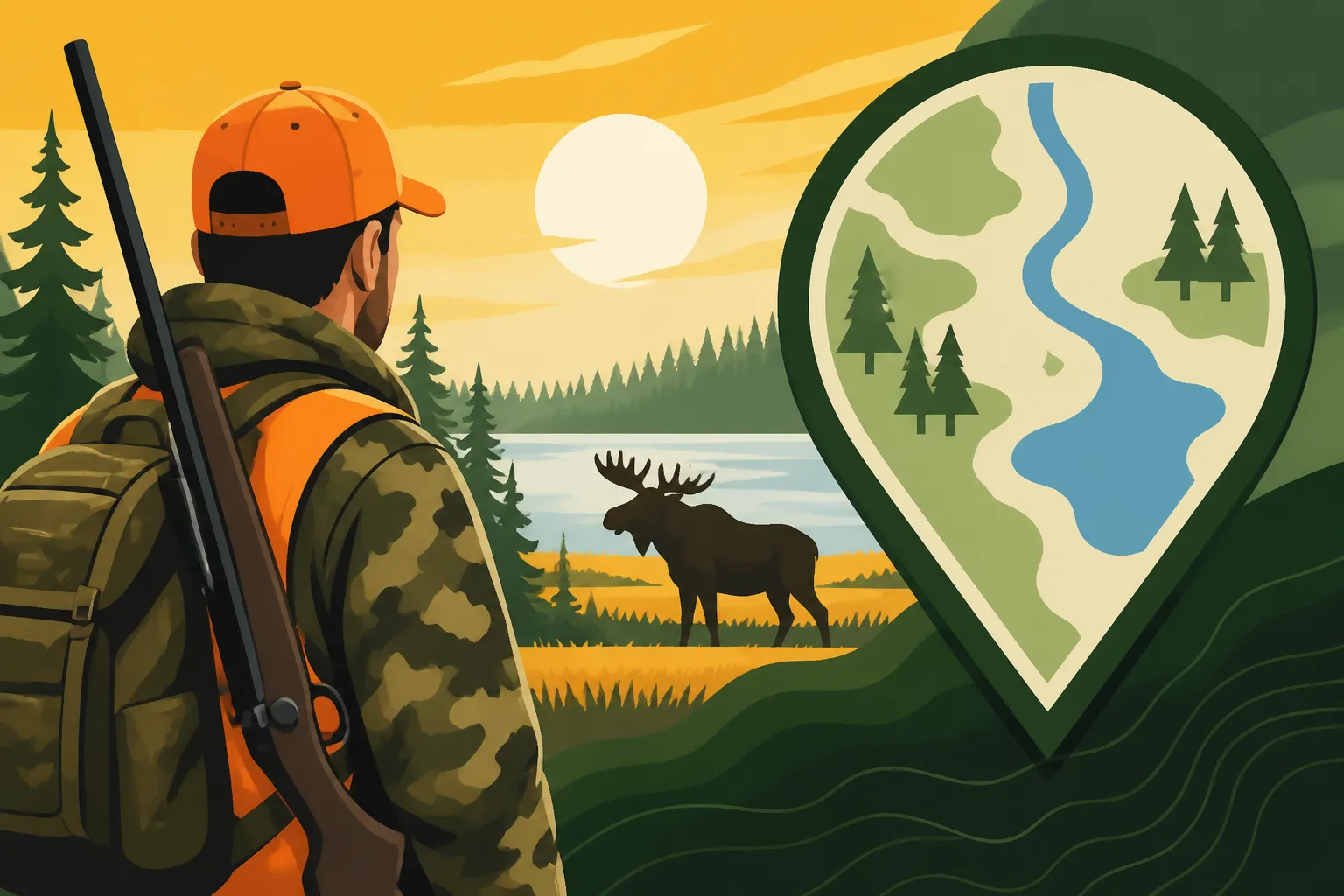
The first and arguably most crucial step to hunting Crown land anywhere, but especially in a sprawling area like The Pas, is to accurately identify where it is. Gone are the days of relying solely on paper maps with often outdated or generalized land designations. Modern mapping applications are indispensable tools for this. Platforms like onX Hunt have Manitoba-specific layers that clearly delineate Crown land from private property, Wildlife Management Areas (WMAs), Provincial Forests, and other special designations. These apps can show you legal road access, ATV trails, and even topographical features, helping you plan your route and identify potential hunting spots from the comfort of your home. They are a game-changer for Scouting With Satellite Imagery in Manitoba.
When using these tools, pay close attention to the various colours and boundary lines. Crown land might be identified differently than, say, a Provincial Park where hunting rules can vary significantly, or even be prohibited entirely in certain zones. Always cross-reference with official provincial maps or the current hunting regulations guide. Sometimes, a small isolated block of Crown land might be completely surrounded by private property, making legal access tricky without landowner permission. Don't just assume; verify your access points before heading out. Finding a Manitoba GHA Map is essential, and digital maps make this process far more efficient.
Rules and Regulations for Crown Land Use
Hunting on Crown land in Manitoba comes with a specific set of rules that every hunter must understand and follow. These rules cover everything from discharge of firearms to camping, vehicle use, and the establishment of hunting camps. While Crown land generally permits hunting, certain areas within Crown land might have restrictions. For example, some Crown land might be part of a designated "No Hunting" zone or have specific limitations on target practice. Always check the current hunting guide for the specific Game Hunting Area (GHA) you plan to hunt.
Regarding vehicle use, ATVs and snowmobiles are often permitted on established trails within Crown land, but off-trail use, especially on fragile terrain like muskeg or newly reforested areas, is usually restricted or prohibited. Respecting these rules is not only about legality but also about responsible land stewardship. Littering, damaging natural features, or disturbing other users can lead to fines and negatively impact the perception of hunters. Remember, you're sharing this land with hikers, trappers, anglers, and other outdoor enthusiasts. Your behaviour reflects on all of us. Detailed information on Manitoba's Crown Land Access can be found in the regulations.
Seasonal Access Challenges and Road Conditions
Accessing Crown land around The Pas changes dramatically with the seasons. In the spring and fall, many of the gravel roads and bush trails can become extremely muddy and impassable, especially after heavy rains or during spring thaw. A four-wheel-drive vehicle is often a necessity, and even then, you might encounter sections that require an ATV or good old-fashioned foot power to get through. Knowing what to do if you get stuck in the bush is a critical skill for this region.
In winter, snow depth becomes the primary challenge. While frozen ground might make some areas more accessible by snowmobile, deep drifts can completely block roads and trails. Ice crossings on lakes and rivers are common in winter, but they demand extreme caution and knowledge of local conditions; never assume ice is safe without verifying. Always inform someone of your route and expected return time, carry emergency supplies, and be prepared for rapidly changing weather. Hunting Safely in Deep Winter Cold is not just a suggestion but a necessity when venturing into Manitoba's northern bush. Roads that might be well-maintained in summer for logging operations can become completely impassable or even non-existent in winter for general access.
Key Game Hunting Areas (GHAs) Near The Pas
The Pas region is carved up into several Game Hunting Areas, each with its own characteristics, regulations, and dominant game species. Understanding these GHAs is vital for any hunter planning a trip to this part of Manitoba. It's not just about drawing lines on a map; it's about recognizing unique habitat, game populations, and access points.
GHAs for Big Game Opportunities
When it comes to big game, the GHAs surrounding The Pas offer some fantastic opportunities, particularly for moose and black bear. GHA 10, for example, encompasses a vast area directly north and east of The Pas, extending into the heart of the boreal forest. This region is known for its extensive moose habitat, characterized by wetlands, lakes, and regenerating forest stands. Hunters here often rely on boat access along rivers and larger lakes, or ATVs on old logging trails and cut lines. Success in GHA 10 for moose often means getting deep into the bush, away from easily accessible points. Other nearby GHAs, like 8 and 9 to the west and south, also offer substantial big game prospects, though they tend to be more influenced by the transition zone characteristics, meaning a mix of boreal forest and some agricultural fringe.
Deer hunting, while not the primary draw, can be rewarding. The white-tailed deer here tend to be larger-bodied, and while densities might be lower, the quality can be exceptional. Look for deer in GHAs that have more mixed forest and agricultural interfaces, or along the edges of the vast tracts of boreal where logging has created younger, brushier growth. Why Northern Bucks Carry More Body Mass is a testament to the rich environment here. Always check the specific Manitoba Big Game Season Dates for each GHA, as they can vary.
Waterfowl and Upland Bird Hotspots
The Pas region is a duck and goose hunter's dream, especially due to its proximity to major waterways and extensive marsh systems. The Saskatchewan River Delta, just south of The Pas, is a globally significant wetland and a funnel for migratory waterfowl. GHAs that incorporate portions of this delta or the many smaller lakes and river systems are absolute hotspots. Hunters often target ducks and geese in the many small potholes, sloughs, and grain fields (where applicable and with permission) that dot the landscape. Field Hunting Geese in Manitoba Stubble is a common and productive strategy during migration.
For upland birds, the dense boreal forest provides excellent habitat for ruffed grouse and spruce grouse. Look for ruffed grouse along old logging roads, bush trails, and areas with mixed deciduous and coniferous growth. Spruce grouse, true to their name, are found predominantly in dense spruce and pine forests. While not as heavily pursued as waterfowl or big game, upland bird hunting offers a fantastic way to explore the bush and add some diverse table fare to your cooler. You can often find great opportunities for Ruffed Grouse Hunting Manitoba's Bush Trails in this area.
Predator and Furbearer Opportunities
The vast, wild landscapes around The Pas also provide excellent opportunities for predator and furbearer hunting and trapping. Wolves are present throughout the extensive boreal forest, often following the movements of moose and deer. While challenging to hunt, a successful wolf hunt in this wilderness is an incredibly rewarding experience. Coyotes are more common in the transitional zones and near agricultural areas, where they prey on rodents and deer fawns. Calling Coyotes at First Light can be a productive tactic in these areas.
Beyond hunting, the region is rich in furbearers like beaver, muskrat, marten, fisher, and lynx. While trapping requires specific licences and knowledge, for licensed trappers, the opportunities are abundant. Even for hunters primarily focused on big game, understanding the presence and movements of predators and furbearers adds another layer to appreciating the ecosystem. It's a true wilderness experience, where every track and sign tells a story of survival.
| GHA (Example) | Primary Game | Typical Habitat | Access Methods | Key Considerations |
|---|---|---|---|---|
| GHA 10 | Moose, Bear | Boreal forest, wetlands, lakes | Boat, ATV, foot | Remote, challenging terrain |
| GHA 9 | Deer, Bear | Mixed forest, some farmland fringe | Vehicle, ATV, foot | Transition zone, varied access |
| GHA 8 | Moose, Bear | Boreal forest, river systems | Boat, ATV, foot | River access critical, logging roads |
| GHA 13 | Waterfowl, Grouse | Delta marsh, river systems, bush | Boat, vehicle, foot | Bird hunting focus, varied cover |
Hunting Private Land and Managed Areas in the Vicinity
While Crown land dominates the hunting landscape near The Pas, there are also pockets of private land and designated Wildlife Management Areas (WMAs) that offer distinct hunting experiences. Navigating these areas requires a different approach, often involving research, permission, and understanding specific regulations.
Seeking Permission on Agricultural Lands
To the south and west of The Pas, as you move away from the dense boreal, you'll start to encounter more agricultural land. These farmlands can be incredibly productive for certain species, particularly white-tailed deer, waterfowl, and coyotes. However, hunting on private land always requires explicit permission from the landowner. This isn't just a courtesy; it's a legal requirement in Manitoba, and trespassing can lead to serious penalties. Manitoba Landowner Permission Law is clear on this point.
The best approach for gaining access is to start early, well before the season opens. Knock on doors, introduce yourself respectfully, and explain your intentions. Be polite, offer to share game, and always leave the property exactly as you found it, if not better. Some landowners may be open to granting permission, especially if they are experiencing crop damage or are simply supportive of ethical hunting. Others may prefer to keep their land private, and their decision must always be respected. Having a good attitude and being a responsible hunter can go a long way in building relationships that lead to future opportunities. For more advice, check out Asking a Manitoba Landowner for Permission.
Accessing Community Pastures and Their Specific Rules
Manitoba has a system of Community Pastures, which are lands managed for livestock grazing, often with some areas of natural habitat. These pastures can be excellent hunting grounds, but they come with their own set of specific access rules. Hunting may be permitted, but often only during certain times of the year or for specific species, and usually with restrictions to ensure the safety of livestock and the integrity of the grazing operation. Hunters typically need to contact the local pasture manager or the managing authority to inquire about access and specific regulations.
It's crucial to respect any signage regarding livestock, fences, and gates. Always leave gates as you found them, whether open or closed. Avoid disturbing cattle or other livestock, and be extra vigilant about shot placement to ensure safety. These lands are working landscapes, and hunters are guests. Understanding and adhering to the unique rules of each community pasture is vital for maintaining hunting access in these valuable areas.
Wildlife Management Areas and Their Unique Charms
Manitoba's Wildlife Management Areas (WMAs) are designated lands specifically set aside for wildlife conservation and management, often allowing for public hunting and other outdoor recreation. Near The Pas, you'll find WMAs that protect critical habitat for waterfowl, moose, and other species. For example, the expansive Saskatchewan River Delta WMA is a prime example of a protected area that offers incredible waterfowl and moose hunting opportunities. These areas are usually well-marked and have specific regulations that can differ from general Crown land rules.
Always consult the Manitoba hunting guide for the specific WMA you plan to visit. There might be restrictions on vehicle use, camping, or even the type of firearm permitted. Some WMAs are designed as refuges for certain periods, meaning hunting might be seasonally closed or restricted to specific zones. The purpose of WMAs is to balance wildlife conservation with recreational use, so respecting their regulations is paramount to their continued success and your ability to enjoy them. Hunting in a Manitoba Wildlife Management Area can provide some of the best habitat-specific hunting experiences in the province.
Practical Considerations for Hunting Access Near The Pas
Venturing into the hunting grounds around The Pas isn't just about knowing where to go; it's also about being prepared for the realities of hunting in a northern, often remote environment. From essential gear to navigating the challenges of winter, thoughtful preparation is key to a safe and successful trip.
Essential Gear for Remote Access and Safety
When you're heading into the bush around The Pas, "essential gear" takes on a whole new meaning. This isn't a quick jaunt to a local woodlot; it's often a commitment to wild country. Beyond your standard hunting rifle or bow, warm clothing, and sturdy boots, you need to think about survival and communication. A reliable GPS device or a smartphone with offline maps (like GoHunt or onX Hunt) is absolutely critical, as cell service diminishes rapidly once you leave paved roads. Carry a compass and a physical map as a backup – batteries die, and electronics fail.
Beyond navigation, consider your method of extraction. Will you be on foot, or do you need an ATV? If so, ensure your ATV is in top working order, with extra fuel, a winch, and a repair kit. For river or lake access, a reliable boat with a good motor, spare gas, and all required safety gear is non-negotiable. Always pack a survival kit with fire-starting tools, a first-aid kit, extra food and water, and emergency shelter. A satellite communication device, like a Garmin InReach or a satellite phone, could literally be a lifesaver when you're far from any help. Winter Truck Kit for a Manitoba Hunt is a good starting point for outfitting your vehicle for northern conditions.
Winter Access, Ice Crossings, and Cold Weather Preparedness
Winter hunting around The Pas can be incredibly rewarding, offering unique tracking opportunities on fresh snow and stunning landscapes. However, it also presents the most significant access and safety challenges. Deep snow can make even main gravel roads impassable without a snowmobile or tracks on your ATV. Off-road travel requires knowledge of snow depths, hidden obstacles, and potential hazards like frozen culverts or ditches.
Ice crossings over lakes and rivers are common for winter access, but they demand extreme caution. Never assume ice is safe without first-hand knowledge or verification. Local knowledge is invaluable here; ask area residents or other experienced hunters about current ice conditions. Always carry ice picks and know self-rescue techniques if you break through. Beyond access, the cold itself is a serious threat. Layered clothing, insulated boots, hand warmers, and a thorough understanding of hypothermia prevention are essential. Always have a plan for staying warm if your vehicle breaks down or you become stranded. This is truly where the wild country tests your resolve and preparation.
Utilizing Technology for Scouting and Navigation
Today's hunter has a powerful ally in technology, and nowhere is this more apparent than when hunting complex terrain like that found around The Pas. Apps like GoHunt and onX Hunt aren't just for showing property lines; they offer invaluable tools for scouting and navigation. Before you even leave home, you can use satellite imagery to identify potential game funnels, bedding areas, water sources, and cover pockets. Look for old logging cuts that create new browse, or willow runs along the edge of a muskeg where deer or moose might travel.
Once in the field, these apps allow you to track your movements, mark waypoints for promising sign or camp locations, and ensure you stay on legal hunting ground. They can help you navigate through dense bush, especially when the landscape looks uniform to the naked eye. Download offline maps before you lose cell service, and always keep your devices charged. While technology is a fantastic aid, it should always supplement, not replace, your basic navigation skills with a map and compass. It's about combining modern tools with traditional bushcraft to maximize your efficiency and safety in the wild heart of Manitoba.
Disclaimer
This article is for general informational purposes only and does not constitute professional advice. Laws, prices and regulations vary by location and change over time. Consult a qualified professional for guidance on your specific situation.