Hunting the Nopiming Burn Country
Hunting in areas that have been touched by wildfire can feel incredibly daunting. The landscape looks alien, stripped bare in places, and the familiar cover and travel routes you once knew are gone. It's easy to feel lost, or wonder if the animals have simply vanished. But these burn sites, especially in places like Nopiming Provincial Park, can actually transform into incredible hunting opportunities for those who understand the ecological dance of recovery. This guide aims to demystify hunting the Nopiming burn country, offering insights into how animals adapt and the strategies you can employ to find success in these dynamic landscapes.
Understanding the Nopiming Burn Country
Nopiming Provincial Park, nestled in Manitoba's Eastern Shield, is a rugged, beautiful expanse of boreal forest, granite outcrops, lakes, and rivers. It's also an area that, like much of the Canadian Shield, is naturally prone to wildfires. These aren't always catastrophic events; fire is a natural part of the boreal ecosystem's lifecycle, clearing old growth and paving the way for new. However, after a significant burn, the immediate aftermath can be disorienting for anyone used to hunting mature forest.
The Landscape Transformed
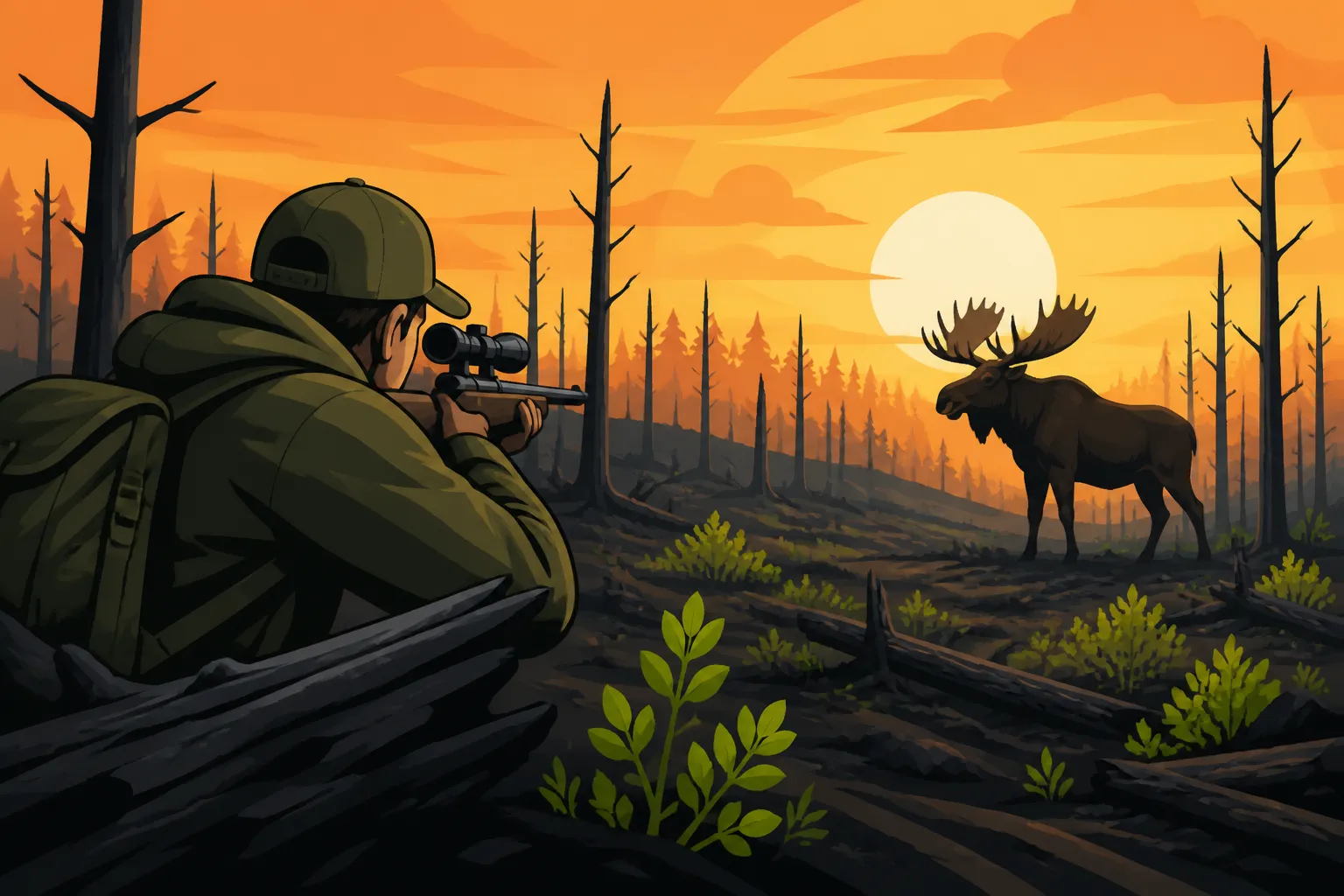
When a major wildfire sweeps through, especially a crown fire that consumes the canopy, it leaves behind a stark, almost lunar landscape. The dense spruce and pine stands are reduced to skeletal remains, blackened trunks standing like ghosts. The forest floor, once a thick carpet of moss and needles, might be exposed mineral soil or covered in a layer of ash. Swamps can dry up, and small creeks might vanish temporarily. This radical transformation changes everything for wildlife. Animals that relied on the dense cover for protection might initially vacate the area, seeking refuge in untouched pockets of forest. The initial shock to the ecosystem is undeniable, and as a hunter, you might feel a pang of sadness seeing a place you once knew so well appear so different. It takes time, but nature is incredibly resilient, and a new, vibrant ecosystem begins to emerge surprisingly quickly. This resilience is what makes hunting these areas so fascinating and, ultimately, rewarding.
Recovery and Habitat Progression
The recovery of a burned area isn't a single event; it's a progression, a series of stages that each offer unique opportunities for wildlife and, by extension, hunters. In the first year or two, the most immediate changes are the flush of pioneer plants. Fireweed, various grasses, and early successional shrubs explode with growth, fueled by the nutrients released from the ash and the sudden abundance of sunlight reaching the forest floor. This immediate forage draw herbivores back into the burn.
As the years pass, deciduous trees like aspen and birch, along with various berry bushes, begin to colonize the landscape. These fast-growing species provide both food and new pockets of cover. After five to ten years, you'll start to see a dense mosaic of young forest interspersed with open clearings, creating incredibly diverse and rich habitat. These areas, particularly where they border unburned forest, become magnets for game. Understanding this progression is key to hunting successfully in the Hunting the Whiteshell and Nopiming Country, as different species will utilize the burn differently depending on its age and the type of regeneration occurring.
Key Species and How They React to Burns
The fire doesn't just change the landscape; it reshapes the habits and distribution of game animals. Hunters need to adapt their understanding of animal behavior to these new conditions.
Whitetails and New Growth
For white-tailed deer, a burn can initially displace them, forcing them into adjacent unburned timber. However, once the initial flush of green growth begins—especially the grasses, forbs, and pioneering shrubs like willow and aspen suckers—the burn becomes a massive buffet. Deer are browse animals, and this new growth is often highly palatable and nutritious. You'll find deer, particularly in the later seasons, moving through these areas, especially where there's a mix of new forage and some standing cover for bedding or escape. The edges of the burn, where it meets mature timber, are always high-traffic zones. Think of it like a giant food plot created by nature. Early on, the lack of overhead cover might make them skittish, but the abundance of food often outweighs the risk, especially during periods of low pressure or at dawn and dusk. For more on where deer prefer to be, check out White-Tailed Deer, Manitoba's Most Hunted Animal.
Bears and Berry Patches
Black bears are opportunists, and burned areas often become prime feeding grounds for them, particularly during the fall hunting season. The same sunlight and nutrient-rich soil that drives the growth of deer browse also fuels an explosion of berries: blueberries, raspberries, saskatoons, and pin cherries. These often appear in incredible abundance in the years following a burn. Bears will focus heavily on these fruit-producing areas, gorging themselves to build up fat reserves for winter. Hunters can often find excellent bear sign—scat, tracks, and rubbed trees—in these berry patches. Keep an eye out for areas with dense berry growth, especially near remaining patches of cover or water sources. The Nopiming burn country is renowned for its Black Bears Across Manitoba's Bush Country, and a post-fire landscape only amplifies their presence in certain areas.
Moose and Regeneration
Moose, being primarily browsers, can also benefit significantly from burned areas, particularly once the aspen and willow start to regenerate. These species are preferred moose forage, and a burn creates vast tracts of young, palatable woody growth that is easily accessible. While initial fires might push moose out, especially if their preferred browse is destroyed, they will often return within a few years as regeneration takes hold. They'll frequent areas where the young forest is coming back thick and tall, offering both food and some visual cover. Look for them in low-lying areas that retain moisture, and along the edges where the burn meets untouched swamp or mature timber. The mosaic of new growth and pockets of older forest creates ideal habitat for Moose Across Manitoba's Boreal Forest.
Upland Birds and Habitat Diversity
Don't forget the small game! Upland birds, particularly ruffed grouse and sharp-tailed grouse, can thrive in burned landscapes. Ruffed grouse benefit from the thick regeneration of young aspen and birch, which provides excellent cover and food. Sharp-tailed grouse will utilize the more open, grassy areas with scattered shrubs that often emerge in burns, especially if there are unburned patches nearby for roosting. The increased diversity of vegetation, from open areas to dense young thickets, caters to different stages of their life cycle. A hunter walking through these areas, especially in the early fall, might find explosive flushes of birds that are attracted to the new habitat. Manitoba's Upland Birds and Where They Live highlights how diverse habitats are crucial for these species.
Strategies for Hunting in Burned Areas
Hunting a burn requires a different mindset and different tactics than hunting mature timber. It's about adapting to the new patterns of the animals and using the unique features of the landscape to your advantage.
Scouting Burned Edges and Islands
The edges of the burn are almost always hot spots. This is where animals transition between the abundant food of the regenerating burn and the security cover of the untouched forest. Deer, moose, and bear will often move along these interfaces, especially at dawn and dusk. Pay close attention to any fingers or peninsulas of unburned timber that jut into the burn, or "islands" of untouched forest within the burn itself. These spots become critical refuge areas and travel corridors.
Use satellite imagery, like that offered by onX Hunt, to identify these transition zones and isolated patches of timber before you even set foot in the field. You can often see the distinct lines where the fire stopped, or where patches were skipped. Mark these on your map and make them priority scouting areas. These overlooked havens can concentrate game, providing both bedding cover and security. Often, these unburned islands have thicker, older trees that provide thermal cover, especially once the cold sets in later in the season. Animals will seek these out for resting and protection from the elements.
Using Topography and Remaining Cover
Even in a seemingly barren burn, topography still plays a huge role. Ridges, draws, and low-lying areas will funnel animal movement. Animals will often stick to the lowest points of a draw for concealment, or use a ridge top to travel efficiently while observing their surroundings. Similarly, any remaining patches of cover, no matter how small, become important. This could be a cluster of unburned spruce, a stand of alders along a creek, or even a dense thicket of fire-resistant willows. These spots act as mini-sanctuaries within the larger, more open burn. You can often find well-used game trails leading directly to and from these pockets of cover. When walking a burn, always have your head on a swivel, scanning these features. Consider studying maps that show elevation changes, as this will inform where animals might move or hold up. Services like GoHunt provide valuable mapping resources that can help pinpoint these crucial topographical elements, helping you predict game movement.
Patience and Persistence
Hunting a burn can be visually challenging. With less dense canopy, animals might spot you before you spot them. This means moving slowly, stopping frequently, and using your optics to pick apart the landscape. Glassing vast expanses of open burn from a high vantage point can be incredibly effective, allowing you to spot animals moving at a distance. Then, you can plan your stalk using any available cover. Early morning and late evening are often the best times, as animals feel more secure moving in lower light.
Persistence is key. The first few times you hunt a burn, it might feel a bit alien, but with each trip, you'll start to recognize patterns and understand how the animals are utilizing the recovering habitat. Remember, wildlife adapts quickly, and so must we as hunters. This strategy is also important when you're specifically Hunting a Burned-Over Boreal Block – the more time you spend, the more you learn.
Navigating and Safety in Burned Terrain
Burned country, while exciting, presents its own set of navigational and safety challenges. Being prepared is paramount.
Foot Travel and Trail Selection
Walking through a burn can be treacherous. The ground can be uneven, littered with fallen logs, hidden stumps, and soft ash pits. You'll encounter areas where the soil is extremely loose, and other spots where the fire baked the ground hard. Trees that were killed by the fire, known as "snags" or "widowmakers," can fall without warning, especially on windy days. Always be aware of your surroundings and look up.
When planning your approach, prioritize routes that minimize walking through the densest concentrations of fallen timber. Old logging trails, seismic lines, or even existing game trails that have been cleared by animal traffic can be your best friends. Wear sturdy, ankle-supporting boots to prevent twists and falls. A good GPS unit or a mapping app like onX Hunt is absolutely essential. The landscape can look very uniform in a burn, making it easy to lose your bearings. Always know your location and have a plan for how you'll get back. Many hunters who venture deep into Manitoba's Crown Land Access rely on these tools.
Essential Gear for Burn Country
Beyond your weapon and basic hunting gear, there are a few items that become even more critical when hunting the Nopiming burn country:
- Reliable Navigation: As mentioned, a GPS device or a robust phone app with downloaded offline maps (like onX Hunt) is non-negotiable. Don't rely solely on cell service, as it can be spotty at best in remote parts of Nopiming.
- Durable Clothing: Your outerwear should be tough. The blackened trunks and fallen timber will leave charcoal stains on everything, and snags can rip lighter fabrics. Blaze orange is still required and should be highly visible.
- First-Aid Kit: A comprehensive first-aid kit is always a good idea, but especially when navigating potentially hazardous terrain where help might be a long time coming. Include supplies for cuts, scrapes, and sprains.
- Water and Snacks: Physical exertion in challenging terrain means you'll burn more calories and need more hydration. Carry more water than you think you'll need.
- Headlamp: Even if you plan to be back before dark, things can go wrong. A reliable headlamp with spare batteries is a must.
- Saw or Hatchet: Clearing a path or processing game in tangled blowdowns can be made much easier with a small hand saw or hatchet.
- Game Cart or Pack Frame: If you're successful, getting an animal out of a burn can be incredibly difficult. A game cart or a sturdy pack frame can be a lifesaver, especially if you're navigating around obstacles.
Always let someone know your hunting plan, including your exact location and expected return time. Hunting alone in burn country carries higher risks. Being mindful of these details will ensure a safer and more enjoyable experience in Nopiming's unique burn country.
| Burn Age (Years Post-Fire) | Dominant Habitat Features | Key Game Species Benefiting | Hunting Strategy Focus |
|---|---|---|---|
| 1-2 Years | Exposed soil, fireweed, grasses, early pioneer shrubs | Deer, Upland Birds | Scouting edges, open glassing, early season |
| 3-5 Years | Dense small shrubs (willow, aspen suckers), berry bushes | Deer, Bear, Moose, Upland Birds | Focus on thickets, berry patches, transition zones |
| 5-10+ Years | Young regenerating forest (aspen, birch, pine), mature berry patches | Deer, Moose, Bear, Upland Birds | Hunting travel corridors, bedding cover, food sources |
Disclaimer
This article is for general informational purposes only and does not constitute professional advice. Laws, prices and regulations vary by location and change over time. Consult a qualified professional for guidance on your specific situation.