Whether Manitoba Has Wild Boar
It's a question I hear more often these days from fellow hunters, often whispered with a mix of curiosity and concern: "Do we actually have wild boar here in Manitoba?" For many, the idea of these resilient, destructive animals roaming our landscapes feels like something out of a far-off problem, but the truth is, they're increasingly a reality. This guide dives deep into the presence of wild boar in our province, what makes them such a challenge, and what every hunter needs to understand about encountering them in the bush or on the farm.
The Reality of Wild Boar in Manitoba
For a long time, the notion of true wild boar in Manitoba felt like an urban legend or a problem belonging to our neighbors to the south. However, the situation has quietly but steadily changed. We now know that wild boar, often referred to as "feral hogs" in other regions, are indeed present and establishing populations within our province. They aren't a native species, and their presence raises significant concerns for both our ecosystems and agricultural communities.
A Brief History of Their Arrival
The wild boar you might encounter in Manitoba are not indigenous animals. Their story here largely begins with the importation of Eurasian wild boar for agricultural diversification in the late 1980s and early 1990s. Farmers hoped to tap into niche markets for wild boar meat. However, as is often the case with non-native species, some animals escaped from their enclosures. These escapees, highly adaptable and remarkably hardy, quickly reverted to a wild state. They bred with domestic pigs that also escaped or were abandoned, creating a hybrid known as "feral swine" or, more commonly, "wild boar." These animals possess the survival instincts and robust characteristics of their wild ancestors combined with the rapid breeding cycles of domestic pigs, making them incredibly successful at establishing themselves in new environments. They are a classic example of an Invasive Species Manitoba Hunters Should Report.
Where They Tend to Roam
Wild boar are incredibly versatile creatures, able to adapt to a wide range of habitats. In Manitoba, we've seen evidence of them in various parts of the province, though some areas are more prone to sightings than others. They often favor areas with dense cover, such as bush pockets, treed river valleys, and slough bottoms, which provide concealment and shelter. Agricultural lands, particularly those with standing crops like corn or peas, are also highly attractive to them due to the abundant food source. Think of those rich, mixed landscapes where the bush meets the farm field, offering both refuge and sustenance. Their secretive nature means they can be present in an area for quite some time before their activity becomes obvious. Hunters who spend time in the field, especially those walking up Sharp-Tailed Grouse Season and Limits on grassland edges or Hunting a Shelterbelt Row in Open Prairie, might be the first to spot signs of their presence.
Why Wild Boar Are a Serious Problem Here
It’s easy to hear about wild boar and think, "Another animal to hunt, maybe?" But the reality is far more grim. These animals are considered a major threat, not just a nuisance, due to their destructive habits and incredible reproductive capabilities. Their presence imposes significant ecological and economic burdens on Manitoba.
Ecological Damage to Our Lands
Wild boar are ecological bulldozers. Their rooting behavior – digging up soil with their powerful snouts in search of tubers, roots, and invertebrates – causes extensive damage to natural habitats. This rooting disturbs sensitive ecosystems, destroys native vegetation, and can lead to soil erosion, especially along waterways. They also compete directly with native wildlife for food resources, impacting species like white-tailed deer, elk, and moose. They'll readily consume acorns, berries, and other forage that our native animals rely on, especially during lean winter months. Beyond competing for food, they're also known to prey on ground-nesting birds' eggs and even fawns, acting as opportunistic predators. Their presence can disrupt delicate food webs and fundamentally alter the biodiversity of an area.
Agricultural Destruction and Disease Risks
The impact on agriculture is perhaps where wild boar hit closest to home for many Manitobans. Farmers bear the brunt of their destructive tendencies. A sounder (a group of wild boar) can decimate a field of standing corn, potatoes, or other crops in a single night. Their rooting flattens crops, contaminates feed, and makes fields incredibly difficult to harvest. The financial losses for individual farmers can be staggering. Beyond physical damage, wild boar are notorious carriers of diseases that can be transmitted to domestic livestock, including porcine epidemic diarrhea virus (PEDv) and even more seriously, potentially Chronic Wasting Disease (CWD) if they interact with infected deer, though this link is still being understood. The risk of disease transmission poses a serious threat to Manitoba's hog industry, which is a significant part of our provincial economy. This is why vigilance regarding Manitoba's CWD Sampling Requirements extends to understanding all potential vectors.
A Challenge to Manage and Control
Because wild boar are intelligent, adaptable, and breed at an astonishing rate, controlling their populations is an immense challenge. A single sow can have multiple litters in a year, with each litter consisting of several piglets. This exponential growth makes eradication incredibly difficult once they establish a foothold. Traditional hunting methods often prove ineffective for population control, as these animals quickly become wary and nocturnal when pressured. Large-scale trapping and coordinated removal efforts are generally considered the most effective strategies, but they require significant resources and ongoing commitment. The challenge highlights the importance of programs like Manitoba's Wild Boar Control Effort and understanding strategies for Hunting Coyotes Over a Winter Bait, as some methods of predator control can incidentally impact boar.
What Hunters Need to Know About Wild Boar
As hunters, we are often the eyes and ears of the land. Our time in the field gives us a unique perspective, and when it comes to wild boar, our role shifts from potential harvester to critical observer and reporter. It's crucial to understand the rules and responsibilities here.
Hunting Regulations and What Is Allowed
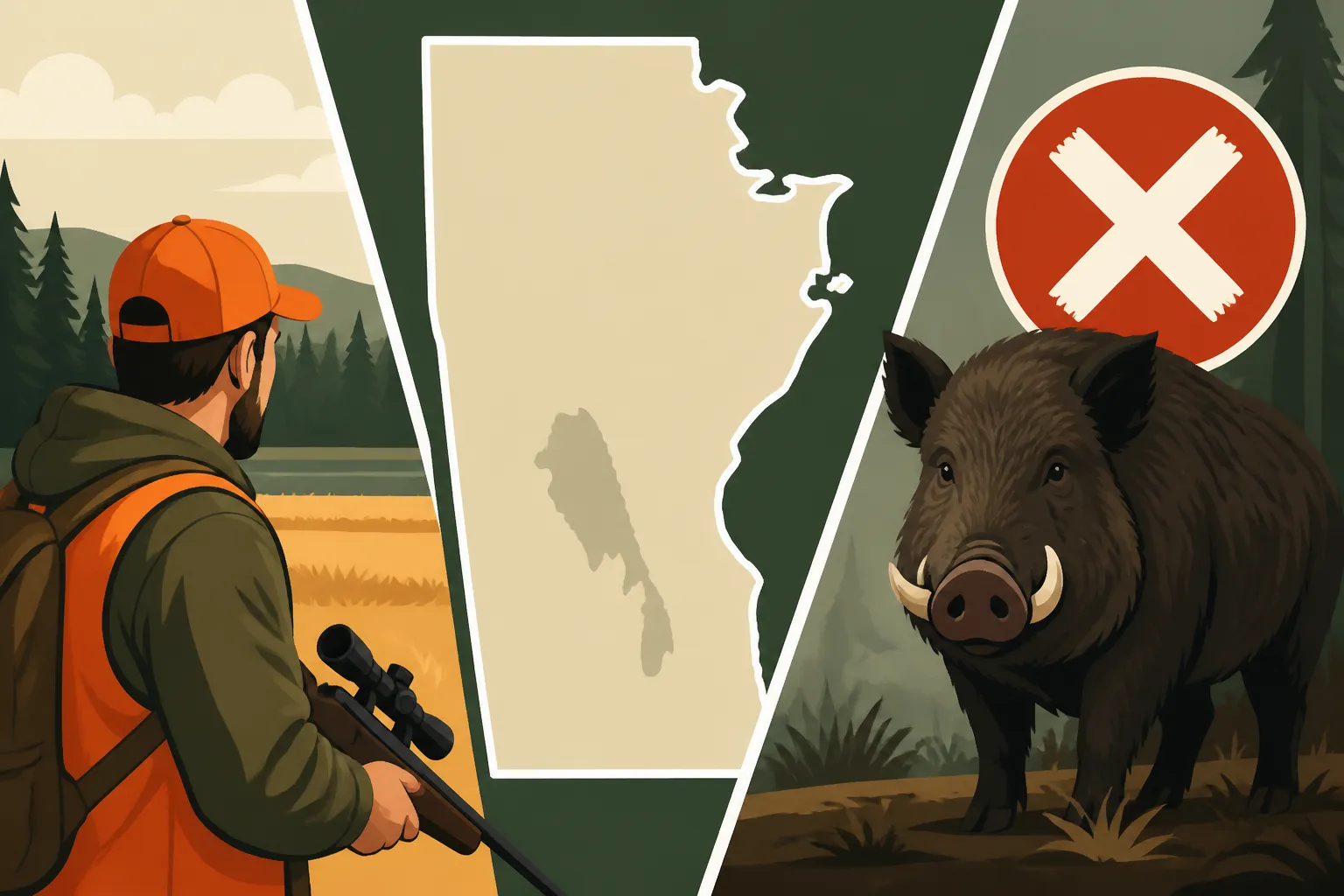
Here's the critical point: there is no open season or regulated hunting season for wild boar in Manitoba as you would have for deer or bear. Because they are an invasive species, the province's focus is on control and eradication, not on establishing them as a game animal. This means you cannot simply go out and hunt wild boar with a regular hunting licence and tag. Any actions related to wild boar removal are generally part of specific control programs or require explicit permission and adherence to very specific guidelines, often managed by agricultural or wildlife authorities. It's not a free-for-all. Hunters cannot hunt wild boar on Crown Land without express authorization, and even on private land, while landowners might have more latitude to protect their property, it's not a standard hunting activity.
Reporting Sightings and Activity
Your most important role as a hunter regarding wild boar is to report any sightings or signs of their activity. This includes visual sightings of the animals themselves, but also evidence of their destructive rooting, tracks, or wallows. The provincial authorities rely heavily on public reporting to track the spread of these animals and implement targeted control measures. Don't assume someone else will report it; if you see something, say something. There are dedicated channels for reporting invasive species, and a quick search on the provincial website or through resources like GoHunt can direct you to the right contact. Accurate location data, photos if safe to obtain, and a description of the animals or damage are incredibly helpful. This is part of being a responsible steward of the land, helping to protect our native White-Tailed Deer, Manitoba's Most Hunted Animal and other species.
Distinguishing Wild Boar from Other Wildlife
It's vital to be able to correctly identify a wild boar, especially if you're accustomed to seeing other dark, large animals in the bush. Misidentification could lead to serious issues.
| Feature | Wild Boar / Feral Swine | Domestic Pig (Escaped/Feral) | Black Bear (Juvenile/Sow) |
|---|---|---|---|
| Snout | Long, straight, often coarse hair on bridge, prominent disc | Shorter, often upturned, less prominent disc | Small, pointed, wet nose, not a disc |
| Ears | Relatively small, often pointed, sometimes tufted | Larger, floppy, or upright | Round, prominent, set high on head |
| Coat | Typically coarse, dark brown/black, often bristly, striped young | Varies wildly (pink, spotted, black, etc.), often less coarse | Uniformly black or brown, smooth (unless wet/muddy) |
| Tail | Thin, often straight with a tuft, usually not curled | Often curled or straight | Short, stubby, usually hidden in fur |
| Body Shape | Lean, muscular, higher at the shoulder, sloped back | More barrel-shaped, evenly proportioned | Stocky, rounded, often looks heavy-set |
| Behavior | Nocturnal, secretive, runs quickly, roots extensively | Might be less wary, often seen grazing, less rooting | Can be active day/night, more ambling gate, climbs trees |
| Tracks | Split hoof, often narrow and pointed, clear dewclaws | Split hoof, often wider, less defined dewclaws | Distinct paw print with five toes and claw marks |
Wild boar have a distinctive appearance: thick, bristly coats that are typically dark brown or black, a straight tail (not curly like most domestic pigs), and a relatively long, straight snout with a prominent disc at the end. Their bodies are lean and muscular, with a higher front shoulder that slopes down to the rear. They often have very small, keen eyes. In contrast, a juvenile black bear, while also dark, will have a more rounded head, distinct ears, and a shuffling gait; its snout is more pointed and dog-like, not disc-shaped. It's important to remember that if you are uncertain, err on the side of caution. If you're using a digital mapping tool like GoHunt, you can mark the location of uncertain sightings to review later.
Safety Considerations in the Field
While wild boar are not typically aggressive towards humans unless provoked or cornered, they are powerful, wild animals. A sow with piglets can be particularly protective. If you encounter wild boar in the field:
- Maintain distance: Give them plenty of space.
- Do not approach or corner them: This is when they are most likely to charge.
- Be aware of your surroundings: They can move quickly through dense cover.
- If charged: Your best defense is often to climb a tree or get to higher ground. They are not built for climbing.
Always remember that these animals are not like the deer or elk you're accustomed to; they require a different level of respect and caution. Being prepared and aware, as you would when Hunting Safely in Deep Winter Cold or encountering a Black Bear Hunting in Manitoba, is key.
Participating in Control Efforts and Future Outlook
The fight against wild boar in Manitoba is a collective effort, and hunters can play a significant role by being informed, vigilant, and cooperative with official control initiatives.
Landowner Permission and Collaboration
If you are a landowner, or a hunter seeking Manitoba Landowner Permission Law to access private property, understanding the landowner's concerns about wild boar is paramount. Many landowners are actively looking for solutions to mitigate damage. In some cases, landowners may be working directly with provincial programs to remove wild boar from their property. Hunters with strong landowner relationships might be asked to assist in these authorized removal efforts, but always under strict guidance and within legal frameworks. Never assume you have permission to hunt wild boar without explicit, documented consent from the landowner and a clear understanding of any provincial directives or permits required. This is not about casual hunting; it's about targeted control.
The Provincial Control Strategy
Manitoba has an ongoing strategy to monitor and control wild boar populations. This often involves a multi-pronged approach, including public education, encouraging reporting, and implementing targeted trapping and removal programs. These programs are typically science-based, aiming to remove entire sounders to be most effective. Passive hunting by individuals is rarely effective in controlling populations due to the boar's rapid reproduction and learned wariness. The goal is not to establish a "huntable" population but to reduce and ideally eliminate them to protect our native species and agricultural resources. Understanding Manitoba's Wild Boar Control Effort means recognizing that it's a marathon, not a sprint, and requires consistent effort.
What the Future Holds
The future of wild boar in Manitoba largely depends on the success of ongoing control efforts and public cooperation. There is no simple solution, and it's a challenge that will likely persist for years to come. Hunters, by acting as informed citizens and reporting any signs of these invasive animals, are vital partners in protecting Manitoba's natural heritage and agricultural prosperity. Our vigilance and willingness to adapt our understanding of these animals from a "game species" mentality to a "control and eradication" mindset is perhaps the most important tool we have in this battle.
Disclaimer
This article is for general informational purposes only and does not constitute professional advice. Laws, prices and regulations vary by location and change over time. Consult a qualified professional for guidance on your specific situation.