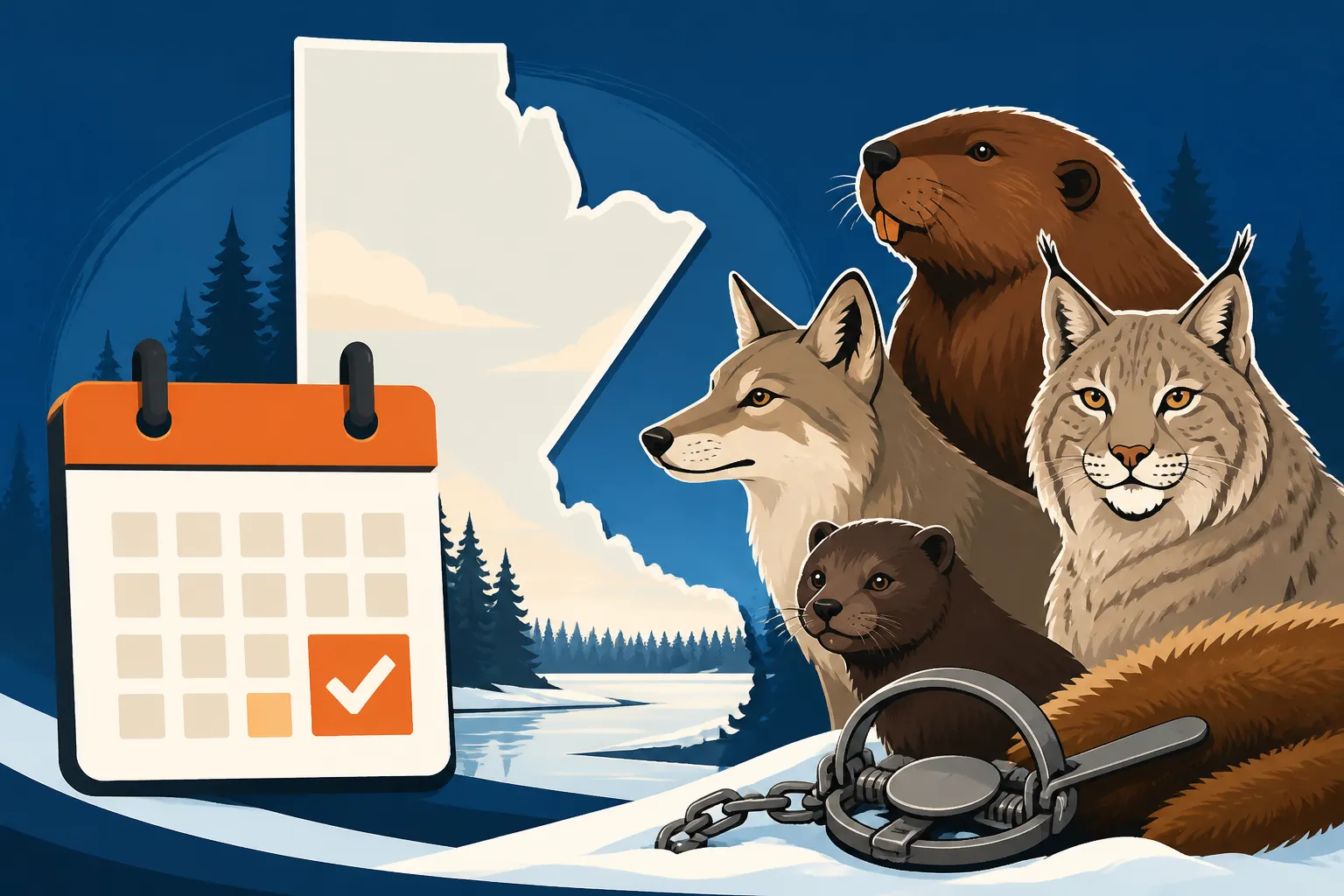
Trapping Season Dates by Species
Trying to navigate the maze of Manitoba's trapping season dates can feel incredibly overwhelming, especially when you're trying to figure out the specific windows for each furbearer species, not to mention the different zones across our vast province. It’s easy to get lost in the details and worry about accidentally running afoul of regulations. This guide is here to untangle that complexity, providing clear, detailed information on trapping season dates by species, ensuring you're well-prepared and compliant for your next season on the line.
Understanding Manitoba's Trapping Landscape and Regulations
Manitoba's rich and diverse landscapes, from the southern farmlands to the northern boreal forest and even the tundra transition, provide habitat for a wide array of furbearers. This means trapping is a vital part of wildlife management and a tradition deeply rooted in the province's history. However, with this diversity comes a robust set of regulations designed to ensure sustainable populations and ethical practices. Ignoring these rules isn't just a risk to your licence; it's a risk to the health of the furbearer populations we all cherish.
The main challenge for many trappers, whether you're a seasoned veteran or just starting, is keeping up with the nuances. Seasons aren't a simple "open-and-close" across the board. They vary significantly depending on the species you're targeting and the Game Hunting Area (GHA) or Registered Trapline Area (RTA) you're operating in. This is largely due to biological factors – when a furbearer's pelt is prime, their breeding cycles, and local population dynamics. Environmental factors like early snow or late thaws can also play a role in how these regulations are structured annually, often resulting in small but crucial adjustments year to year. It’s not just about knowing when you can trap, but where you can do it legally and ethically. Many trappers, much like hunters, utilize digital mapping tools to understand their territory. While primarily a hunting tool, platforms like GoHunt can be incredibly useful for visualizing GHA boundaries and topography, helping trappers identify prime habitat and potential access routes.
The Importance of Official Resources
Before you even think about setting a trap, you absolutely must consult the latest edition of the Manitoba Hunting Guide and any supplementary trapping regulation summaries provided by the provincial government. While this guide offers comprehensive information, regulations can change, and there’s no substitute for the official word. These documents are your bible for the trapping season, outlining not just dates, but also legal trap types, reporting requirements, and other critical details.
Beyond just the dates, understanding the 'why' behind the regulations is crucial. For instance, species like marten and fisher, common in the boreal forest, have seasons timed to when their pelts are at their thickest and most valuable, usually in the colder months. Contrast this with species like beaver, which might have longer seasons or even specific management strategies due to their impact on waterways and forestry. Every regulation has a purpose, often rooted in conservation science and years of observed furbearer behavior and population trends. It also helps to be familiar with broader discussions around "Manitoba's Predators and Furbearers" to understand the ecological context of your trapping activities.
Navigating Trapping Zones and Permits
Manitoba operates a system of Registered Trapline Areas (RTAs) in many parts of the province, particularly in the forested north. If you plan to trap in an RTA, you'll need to hold the specific RTA licence for that area. This system helps manage pressure on furbearer populations and provides security of tenure for trappers, allowing them to invest time and effort into their lines. Outside of RTAs, primarily in agricultural and settled areas, trapping is often allowed on Crown Land or private land with permission, under general trapping licences.
Understanding "Manitoba Trapping and Furbearer Licences" is paramount. There are different licence types for residents, non-residents, and those trapping on registered traplines versus general trapping areas. Each comes with its own set of rules and costs. Furthermore, reporting your harvest is a mandatory part of sustainable trapping. This data is invaluable to wildlife managers for monitoring populations and adjusting future regulations. Failure to report can jeopardize your licence and the long-term health of our furbearer resources. This meticulous record-keeping is part of being a responsible steward of Manitoba's wildlife.
Detailed Trapping Season Dates for Key Furbearer Species
Getting down to the nitty-gritty, the specific dates for trapping various furbearer species in Manitoba are influenced by a combination of factors, including pelt primeness, breeding cycles, and regional variations that reflect different climates and population densities. It's not a one-size-fits-all situation, and different regions of the province (Northern vs. Southern) often have distinct opening and closing dates.
Let's break down the general season dates for some of the most commonly trapped furbearer species in Manitoba. Remember, these are typical windows, and consulting the official guide is always the final step.
| Species | Typical Northern Zone Season (approx.) | Typical Southern Zone Season (approx.) | Notes |
|---|---|---|---|
| Beaver | Late October – Late May | Early November – Late May | Long season due to management needs; varies by GHA. |
| Muskrat | Late October – Mid June | Early November – Mid June | Often trapped in conjunction with beaver. |
| Mink | Late October – Late March | Early November – Late March | Pelts prime in colder months. |
| Marten (Pine) | Late October – Late March | Mid November – Mid March | Primarily a northern species, highly valued pelts. |
| Fisher | Late October – Late March | Mid November – Mid March | Strong northern presence, specific to traplines. |
| Red Fox | Late October – Late March | Early November – Late March | Widely distributed, valuable winter pelts. |
| Arctic Fox | Early November – Late March | Not applicable | Exclusive to far northern Manitoba. |
| Coyote | Late October – Late March | Early November – Late March | Year-round hunting in some areas; specific trapping season. |
| Wolf | Late October – Late March | Early November – Late March | Often taken incidentally; specific trapping seasons. |
| Lynx | Late October – Late March | Mid November – Mid March | Known for "Lynx and the Snowshoe Hare Cycle". |
| Weasel (Ermine) | Late October – Late March | Early November – Late March | Common across the province. |
| Raccoon | Late October – Late March | Early November – Late March | Primarily southern, can be nuisance. |
| Otter | Late October – Late March | Early November – Late March | Valued furbearer, often near water bodies. |
| Wolverine | Mid November – Mid March (limited) | Not applicable | Very rare, highly regulated, specific quotas. |
| Skunk | Late October – Late March | Early November – Late March | Can be trapped for nuisance control, specific rules. |
| Badger | Mid November – Mid March | Mid November – Mid March | Mostly prairie and parkland areas. |
Breaking Down Northern vs. Southern Zones
The distinction between Northern and Southern zones is critical for trappers. Generally, Northern Zones (often above the 53rd parallel or specific GHAs like those in the boreal forest) tend to have slightly earlier opening dates and sometimes later closing dates for furbearers whose pelts become prime with the onset of deep cold. This allows trappers to capitalize on the peak quality of furs. Species like marten, fisher, and arctic fox are predominantly found and trapped in these colder, more remote regions. You can find more detail on populations in these areas by looking into resources like "Beaver and Muskrat Numbers Up North" or "Marten and Fisher in the Boreal".
In contrast, Southern Zones, which encompass much of Manitoba's agricultural belt and aspen parkland, might have seasons that start a bit later. This is often to ensure furbearers like coyotes and red fox have fully prime pelts, as these areas experience milder early winter conditions compared to the far north. You'll find a lot of information on "Coyotes Across the Farmland Belt" and how their populations are managed in these regions. For those venturing into the North, understanding "Winter Road Access in Northern Manitoba" is also key for planning your trapping routes and ensuring safe travel.
Specific Species Considerations
- Beaver and Muskrat: These semi-aquatic furbearers often have longer seasons than others due to their prolific nature and potential to cause damage to infrastructure and timber. Their pelts are valued, but their management also plays a role in water control and habitat.
- Canids (Coyote, Wolf, Fox): Coyote and red fox seasons are quite extensive, reflecting their widespread populations. Wolves, especially in the North, are often part of trapping lines, and their pelts can be highly prized. For more on these animals, check out "Hunting Wolves in Manitoba's North".
- Mustelids (Marten, Fisher, Mink, Weasel, Otter, Wolverine): These species are primarily trapped for their valuable pelts. Marten and fisher are forest dwellers, highly sought after by trappers in the boreal regions. Wolverine seasons are extremely restricted due to low populations and conservation efforts, often requiring special permits or quotas.
- Felines (Lynx, Bobcat): Lynx populations often fluctuate with snowshoe hare numbers, their primary food source. Their season dates are set to capture peak pelt quality during winter. Bobcat numbers are much lower in Manitoba compared to some other jurisdictions, and trapping opportunities are limited.
Always be aware that special conditions, such as quotas for certain species like wolverine or specific GHAs, might apply. The official Manitoba Hunting Guide will detail these exceptions and any other unique rules you need to follow.
Essential Gear, Scouting, and Preparation for Trapping Success
Effective trapping isn't just about knowing the dates; it's about preparation, ethics, and having the right tools for the job. A successful trapline is built on thorough scouting, appropriate gear, and a deep understanding of furbearer behaviour. Cutting corners here can lead to inefficiency, frustration, and even ethical dilemmas.
One of the biggest frustrations for new trappers is investing time and effort only to come up empty-handed. This usually boils down to poor scouting or incorrect trap placement. Furbearers, like all wild animals, leave sign. Learning to read these clues – tracks, scat, chewed branches, dens, or active beaver runs – is an art form developed over seasons. It's about finding pinch points, travel corridors, and preferred feeding or denning areas. Many trappers are adopting technology to aid their efforts. While GoHunt is predominantly a hunting app, its detailed mapping features, including satellite imagery and topographical overlays, can be incredibly useful for trappers to plan their routes, mark potential trap locations, and identify key habitat features from the comfort of their home. This digital scouting can significantly reduce wasted time in the field.
Scouting for Success
Scouting should begin long before the season opens. In late summer and early fall, you can identify active beaver lodges, muskrat push-ups, or prime areas for canine travel. Look for recent activity, not just old signs. For beaver, active food caches or freshly cut trees are tell-tale signs. For fox and coyote, look for areas with high rodent populations or game trails where they might be traveling. Understanding how to read "Reading Whitetail Sign in Manitoba Aspen" can also give you insight into where predators might be hunting.
Consider access. How will you reach your traps, especially when snow gets deep? Think about "Hunting Safely in Deep Winter Cold" and how that applies to checking traps daily. Will you need a snowmobile, a quad, or will you be on foot? Planning your access points and considering the winter conditions in advance will save you a lot of headaches when the snow flies. Mapping tools are invaluable here, helping you plot your lines and identify the easiest and safest ways to check your traps.
Essential Trapping Gear
Your gear list will vary depending on the species you target and the conditions you expect, but some items are universally critical:
- Traps: Ensure you have the correct types and sizes for the target species, and that they comply with Manitoba regulations. Conibears, foot-holds, and snares all have specific legal uses and requirements. Make sure they are well-maintained and functioning properly.
- Setting Tools: Trap setters, gloves, and a hatchet or axe are essential for safely deploying and retrieving traps, especially in frozen ground or woody areas.
- Packs and Sleds: A good backpack for walking lines, or a sled/toboggan for snowmobiling, will help transport traps, baits, and your catch.
- Safety Gear: First aid kit, knife, fire starter, navigation tools (GPS/compass and map – even if you use GoHunt, a physical backup is wise), communication device (satellite phone or inReach for remote areas), and appropriate cold-weather clothing. For northern ventures, a winter truck kit is a must, as discussed in "Winter Truck Kit for a Manitoba Hunt".
- Baits and Lures: Research what works best for your target species. Natural baits (fish, meat scraps) and commercial lures can both be effective.
- Processing Tools: Skinning knife, stretcher boards, and proper storage for pelts are vital for maximizing the value of your harvest.
Ethical Trapping Practices
Being an ethical trapper means minimizing suffering for trapped animals, targeting specific species efficiently, and respecting the environment. This includes:
- Daily Checks: Traps must be checked regularly, ideally daily, to prevent prolonged suffering.
- Humane Dispatch: Knowing how to quickly and humanely dispatch a trapped animal is a non-negotiable skill.
- Responsible Set Placement: Avoid placing traps where non-target species (including pets) are likely to encounter them. Adhere to setback distances from public trails and residences.
- Respect for Private Land: Always obtain permission before trapping on private land. This is not just a courtesy, it's the law. For advice on this, refer to "Asking a Manitoba Landowner for Permission".
- Respect for Fellow Trappers/Hunters: Avoid interfering with other trappers' lines or hunters' areas.
By focusing on responsible scouting, being equipped with the right gear, and adhering to strict ethical principles, you can ensure a productive and rewarding trapping season in Manitoba.
Planning Your Trapping Season and Beyond
A successful trapping season in Manitoba isn't just about showing up with a few traps; it requires careful planning, adherence to regulations, and a commitment to responsible wildlife management. From pre-season scouting to post-season reporting, every step contributes to a rewarding and ethical experience.
One of the biggest pitfalls for trappers is assuming that regulations remain static year after year. This is a common mistake that can lead to significant problems. Furbearer populations fluctuate, environmental conditions change, and management strategies evolve. This is why staying current with the "Manitoba Hunting Guide" and other official government publications is absolutely essential. These documents will detail any changes to season dates, bag limits, legal trap types, or specific GHA restrictions. Missing a crucial update can result in fines, licence suspension, or worse, negatively impacting furbearer populations.
Pre-Season Planning and Logistics
As mentioned earlier, scouting is paramount. Use tools like the GoHunt app to map out potential trap lines and identify key furbearer habitat. But don't stop there. Consider the logistics of your entire season:
- Access: Will you need to gain "Manitoba's Crown Land Access"? If so, how will you get there, and what are the vehicle rules? For remote northern lines, are float plane charters or winter roads your only option?
- Weather Preparedness: Manitoba winters can be brutal. Ensure you have appropriate clothing, shelter options, and emergency supplies. Know how to recognize and treat frostbite and hypothermia. Understand what to do "What to Do If You Get Stuck in the Bush".
- Emergency Plan: Always inform someone of your route and expected return time. Carry a reliable communication device, especially if venturing into areas with no cell service.
- Equipment Maintenance: Inspect all your traps, snares, and tools for damage. Sharpen knives, repair stretchers, and organize your baits and lures. A well-maintained kit ensures efficiency and safety on the line.
Post-Harvest Responsibilities
Your responsibilities don't end once you've made a catch. Proper handling and reporting are crucial:
- Pelt Care: Learn proper skinning and fleshing techniques. Quality pelt preparation directly impacts the value of your furs. Properly drying and stretching pelts are vital steps.
- Reporting: All furbearer harvests must be reported according to provincial regulations. This data is critical for wildlife managers to assess population health and adjust future seasons and quotas. Ensure you understand "Manitoba Tag Validation Rules" and any other specific reporting deadlines.
- Sales and Marketing: If you plan to sell your furs, understand the market. Attend local fur sales or contact fur buyers to get the best price for your well-prepared pelts.
Trapping is more than just a pastime; it's a connection to the land, a practice of patience, and a commitment to conservation. By staying informed, planning meticulously, and acting ethically, trappers play a vital role in managing Manitoba's diverse furbearer populations for generations to come.
Disclaimer
The information provided in this guide is for general informational purposes only and is not a substitute for the official Manitoba Hunting Guide or current provincial regulations. Hunting and trapping regulations can change annually. Always consult the latest official documents from the Manitoba government before participating in any hunting or trapping activities. It is the responsibility of each individual to know and adhere to all applicable laws and regulations.