Practicing Before a Guided Deer Hunt
There's a unique blend of excitement and apprehension that washes over you when you've finally booked that Manitoba guided deer hunt. You've invested time, money, and dreams into this experience. The last thing you want is for the moment of truth to arrive, only for a missed opportunity or, worse, a poor shot, to haunt you. This isn't just about tagging an animal; it's about honouring the animal, your guide, and yourself by being as prepared as humanly possible. This guide will walk you through how to practice effectively, ensuring you arrive at camp with the confidence and skills to make the most of your incredible Manitoba hunting adventure.
Why Practice is Crucial for Your Manitoba Guided Hunt
Booking a guided hunt, especially for a magnificent whitetail in Manitoba, is a significant commitment. It's not just a casual stroll in the woods; it's an investment of your hard-earned money and precious vacation time. When you consider What a Manitoba Guided Whitetail Hunt Costs, you quickly realize that every single moment in the field carries weight. Without adequate practice, you're essentially walking onto the field with an expensive ticket but no game plan, leaving too much to chance.
The Investment and the Ethical Obligation
Let's be frank: a guided hunt is often a once-in-a-lifetime or, at best, a once-every-few-years experience for many. You've chosen a reputable outfitter, perhaps found through platforms like BookYourHunt, because you trust their knowledge of the land and their ability to put you on game. They are putting in the work, scouting, setting stands, and pouring their energy into giving you the best chance. It would be a disservice to them, and certainly to the animal you pursue, if you haven't done your part to be proficient with your chosen weapon.
The ethical obligation of a hunter is paramount. Our goal is always a clean, humane kill. This isn't just a preference; it's a moral imperative. An animal that is wounded and lost due to poor marksmanship reflects poorly on all hunters and causes unnecessary suffering. Practicing diligently ensures that when that deer steps out, you can place your shot precisely where it needs to be, leading to a quick, clean harvest. This isn't just about being good; it's about being responsible.
Maximizing Your Opportunity
Think about the sheer excitement when your guide whispers, "Big buck at 150 yards, take him when you're ready." Your heart is pounding, adrenaline is surging, and the buck of a lifetime is right there. This intense moment is where your practice truly pays off. If you've only shot a few times a year at a static target from a comfortable bench, you're going to struggle under pressure.
Effective practice builds muscle memory and mental resilience. It allows you to focus on the target, execute your shot process, and minimize the impact of "buck fever." You want to maximize the opportunity that your outfitter and the Manitoba wilderness have provided. A skilled What a Licensed Manitoba Guide Provides goes above and beyond to set you up for success, but ultimately, pulling the trigger or releasing the arrow is on you. The more confident and proficient you are, the higher your chances of converting that opportunity into a successful harvest, bringing home that venison, and having an incredible story to tell.
Essential Aspects of Your Pre-Hunt Practice Regimen
Just heading to the range and slinging some lead or launching a few arrows isn't enough. Your practice needs to be intentional, mimicking the conditions and demands of an actual hunt as closely as possible. This means going beyond just flat-range shooting.
Mastering Your Weapon System
Knowing your weapon inside and out is non-negotiable. It's not just about hitting the target; it's about consistency, precision, and understanding its capabilities and limitations.
Rifle Hunters
For those heading out with a rifle, mastering your shooting fundamentals is key. This includes trigger control, breath hold, and maintaining a natural point of aim. You should be intimately familiar with how your rifle performs at various distances. What's your bullet drop at 100, 200, or even 300 yards? What about wind drift? Many outfitters will tell you that Shooting Distances on a Manitoba Hunt can vary wildly, from close-range bush encounters to longer shots across open fields.
Don't just shoot from a bench rest. Practice shooting from the prone position, kneeling, sitting, and even off-hand. Use improvised rests like a backpack, a tree limb, or shooting sticks – whatever you might realistically find in the field. A good drill is to set up a target, then move to a different shooting position (e.g., from prone to kneeling), take a shot, and repeat. This simulates real hunting scenarios where you might need to quickly adapt. Ensure your rifle meets Legal Rifle Calibres for Big Game requirements for the province.
Bowhunters
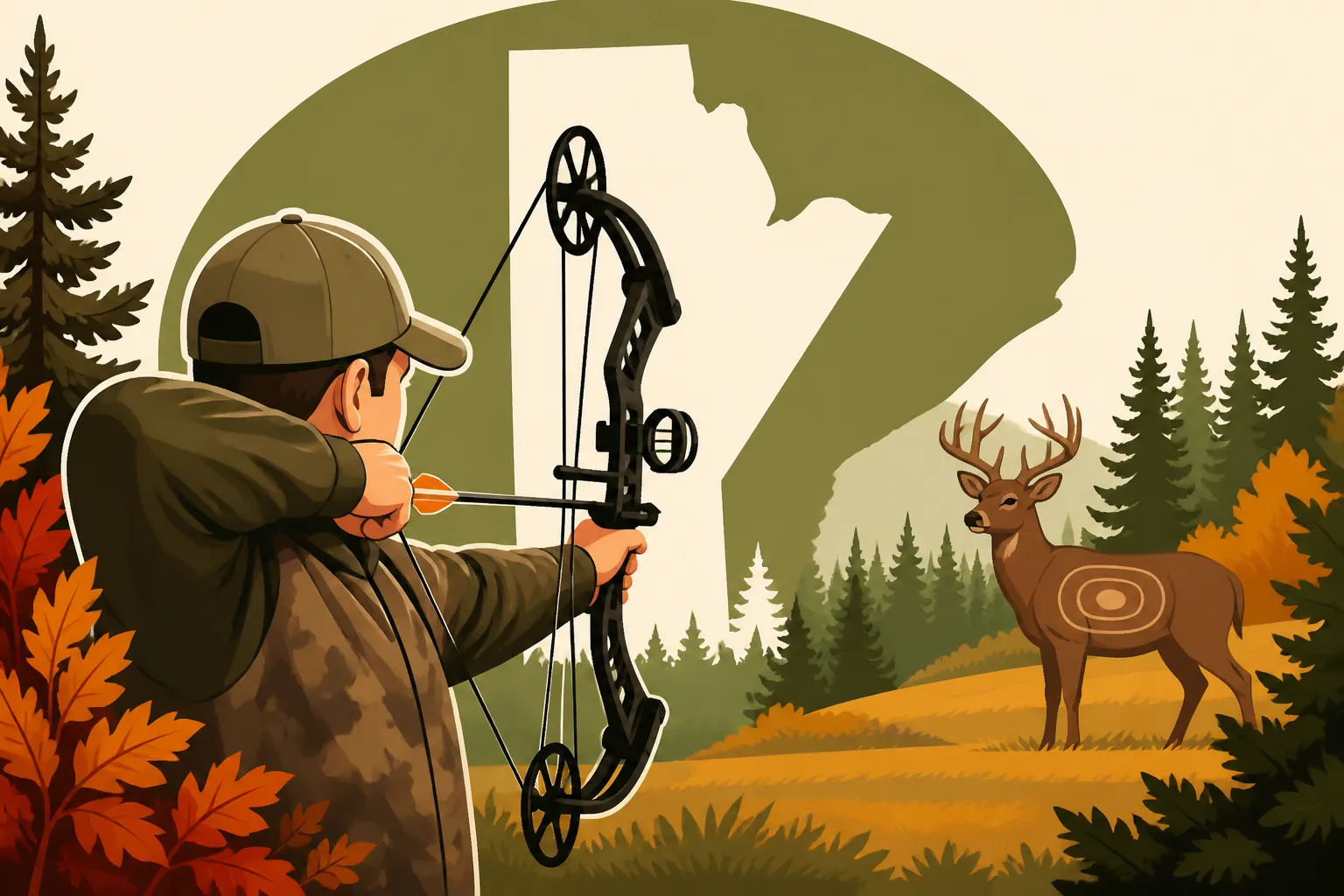
Bowhunting demands an even higher level of precision and consistency, often at much closer ranges. Focus on maintaining a consistent draw cycle, solid anchor points, and a clean, surprise release followed by good follow-through. Practice with your actual hunting broadheads, not just field points, as they can sometimes fly differently. Broadhead tuning is critical to ensure perfect flight.
One often-overlooked aspect for bowhunters is shooting with your hunting attire on. Don that bulky winter jacket, your heavy gloves, and whatever else you'll be wearing. Does your bowstring clear your sleeve? Can you draw smoothly without interference? These small details can drastically affect a shot. Check your draw weight to ensure it adheres to Bow Draw Weight Rules in Manitoba.
Scenario-Based Training
Hunting isn't a static event. Deer don't stand still at a perfectly measured distance in ideal conditions. Your practice should reflect this variability.
Cold Weather Shooting
Manitoba hunts, particularly during the late fall and early winter seasons, can be notoriously cold. If you're planning on Hunting the Rut in Early to Mid November or even deeper into the season, you'll be bundled up. Practicing with cold hands, bulky gloves, and multiple layers of clothing is essential. Can you still operate your rifle's safety, manipulate your bow, or range a target effectively? Your dexterity will be reduced, so practice getting into a shooting position and making your shot despite the chill. Knowing how to adapt your gear and technique in freezing temperatures is key to Staying Warm in a Manitoba Stand and making accurate shots.
Quick Shots and Moving Targets
While we always strive for a broadside, standing shot, game animals rarely cooperate perfectly. You might get a brief window as a deer walks through an opening, or pauses for just a second. Practice acquiring your target quickly and making a decisive shot. This doesn't mean practicing running shots, which are generally unethical, but rather being able to present your weapon and take a good shot rapidly when the opportunity arises. Practice transitioning from a relaxed carry position to a firing position smoothly and quietly.
Elevated Stand and Awkward Angles
If your outfitter typically uses treestands or elevated ground blinds, practice shooting from those heights. The angles change, and what seems like a simple shot on flat ground can become surprisingly difficult from above. Pay close attention to shot placement, especially on deer that are close and directly below your stand. Understand where the vitals are when shooting down. Setting up a simulated treestand at home or finding a high vantage point at the range can be incredibly beneficial. Learning the nuances of Hanging a Stand on a Manitoba Bush Edge will also give you insights into the angles you might encounter.
Building a Smart and Consistent Practice Schedule
Rome wasn't built in a day, and neither is hunting proficiency. A consistent, structured practice plan will yield far better results than last-minute cram sessions.
Developing a Progressive Practice Plan
Start early. Don't wait until two weeks before your hunt to dust off your rifle or bow. Begin several months out, gradually increasing the intensity and complexity of your practice. Start with fundamentals at closer ranges, then progressively extend your distances and introduce more challenging scenarios. For example, if you typically shoot at 50 yards, gradually move to 75, then 100, then beyond, verifying your zero at each step.
A good schedule might look like this:
| Month Before Hunt | Focus Area | Rifle Hunters | Bowhunters |
|---|---|---|---|
| 3-4 Months | Fundamentals & Consistency | Bench rest, trigger control, sight picture, zeroing | Form, anchor points, release, broadhead tuning |
| 2 Months | Field Positions & Distances | Prone, kneeling, sitting, using rests at various ranges | Standing, kneeling, from simulated stand, varying ranges |
| 1 Month | Scenario Integration | Wearing full gear, quick acquisition, low light practice | Wearing full gear, quick shots, awkward angles |
| 2 Weeks | Final Checks & Confidence Builders | Confirm zero, clean shots at various ranges | Confirm broadhead flight, close-range groupings |
This progressive approach allows you to build a solid foundation before adding layers of complexity. It's like building a house – you need a strong foundation before you can add the walls and roof.
Quality Over Quantity
It's tempting to just blaze through a box of ammunition or a quiver of arrows, but mindlessly shooting doesn't necessarily make you better. Focus on deliberate practice. After each shot, analyze what happened. Was your form good? Did you flinch? Where did the shot impact, and why? Adjust, breathe, and then execute the next shot with full intention.
Consider using online resources or hunting communities, such as those found on sites like GoHunt, to find new drills or techniques. There are countless videos and articles that can provide insights into improving your marksmanship and fieldcraft. It's about making every shot count, not just putting lead or carbon downrange.
Equipment Familiarity and Maintenance
Your practice time should also be dedicated to becoming completely familiar with every piece of equipment you'll use. Can you operate your scope's turrets blindly? Do you know the exact yardages for your bow pins? How quickly can you range a target and then acquire it in your scope or sight? Practice quick reloads if you're a rifle hunter. Ensure your rangefinder is always charged and easily accessible.
Beyond just familiarity, ensure everything is in perfect working order. Clean your rifle, check your scope mounts, tighten all bolts on your bow, and inspect your arrows and broadheads for any damage. The last thing you want is an equipment malfunction to ruin your hunt.
Final Preparations and Mental Edge for Your Hunt
As the hunt draws near, shifting your focus to fine-tuning your skills and mental preparation can make a significant difference.
Communicating with Your Outfitter
Before you even step foot in camp, have a conversation with your outfitter. Ask them about the typical shot distances they expect, the type of terrain you'll be hunting, and if they primarily hunt from ground blinds or treestands. Are there any unique challenges for that particular GHA or time of year? For instance, they might tell you that in certain areas, deer are typically shot at closer ranges in thick bush, which might emphasize quick, close-range shooting practice. This information helps you tailor your final practice sessions to the specific realities of your upcoming hunt. A good guide will appreciate you taking this proactive step, as it shows you're serious about your preparation.
Mental Toughness and Confidence
Hunting, especially for big game, is as much a mental game as it is a physical one. "Buck fever" is real, and it can cause even experienced hunters to make mistakes. Visualization is a powerful tool: spend time imagining the moment of the shot, running through your entire process calmly and confidently. Deep breathing exercises can help regulate your heart rate and calm your nerves when adrenaline spikes. Positive self-talk can reinforce your skills and preparation.
Remember, you've put in the work. You've practiced diligently. Trust your preparation. Confidence in your abilities is one of the most significant assets you can bring into the field. Knowing you've met Manitoba Hunter Education Requirements and then gone above and beyond with personal practice boosts that confidence immensely.
Last-Minute Checks
In the final days before you leave, resist the urge to tinker too much with your setup. Instead, confirm your zero one last time under typical hunting conditions. Ensure your optics are clear and secure. Check your ammunition or arrows. Lay out all your hunting clothing and make sure everything fits comfortably and allows for a full range of motion. Pay attention to how your clothing might rustle or interfere with your shot.
It's also a good idea to think through the post-shot process. What's the plan for Meat Care in Manitoba's Cold Snaps or Getting a Deer Out on a Frozen Trail if you're successful? Discussing this with your guide beforehand can further reduce anxiety and allow you to focus on the hunt itself.
| Practice Area | Rifle Hunter Focus | Bowhunter Focus | Importance |
|---|---|---|---|
| Fundamentals | Trigger control, breath, sight picture, follow-through | Consistent draw, anchor, release, follow-through | Forms the base of all accurate shooting |
| Positions | Prone, kneeling, sitting, off-hand, improvised rests | Standing, kneeling, sitting, from a blind/stand | Mimics real-world hunting scenarios |
| Distances | Known distances up to ethical limit (e.g., 200-300yds) | Known distances up to ethical limit (e.g., 20-60yds) | Critical for accurate shot placement at varying ranges |
| Scenarios | Cold weather gear, quick shots, low light, awkward angles | Cold weather gear, quick shots, awkward angles, low light | Prepares for unpredictable field conditions |
| Equipment Familiarity | Scope adjustments, rangefinder, quick reload, safety use | Pin gaps, broadhead tuning, quiver management, sight adjustments | Ensures seamless operation under pressure |
| Physical/Mental | Heart rate control, visualization, focus | Strength, endurance for draw, shot routine under pressure | Manages buck fever and maintains composure |
Your guided deer hunt in Manitoba is an incredible experience waiting to happen. By dedicating yourself to thorough, realistic practice, you're not just improving your chances of success; you're elevating the entire hunting experience. You'll step into the field with a profound sense of readiness, confidence, and respect for the tradition and the animals you pursue. Good luck, and may your aim be true!
Disclaimer
This article is for general informational purposes only and does not constitute professional advice. Laws, prices and regulations vary by location and change over time. Consult a qualified professional for guidance on your specific situation.