Reporting a Poacher in Manitoba
Encountering illegal hunting activity in the wilderness or even near populated areas can be incredibly frustrating and disheartening. It feels like a betrayal of the land, the wildlife, and every ethical hunter who plays by the rules. You see something that just doesn't sit right – maybe it's someone hunting out of season, taking more than their limit, or shooting from a road – and a knot forms in your stomach because you know it's wrong, but you might not know exactly what to do. This guide is here to empower you with the knowledge and steps needed to confidently report a poacher in Manitoba, ensuring that illegal activities don't go unnoticed and unaddressed.
Why Reporting Poaching is Crucial for Conservation
It’s easy to feel like one person’s report won’t make a difference, especially when you’re just one set of eyes in a vast landscape. But that couldn't be further from the truth. Poaching isn't just a minor infraction; it's a serious crime that undermines all the hard work put into wildlife management and conservation efforts in Manitoba. Every report, no matter how small it seems, contributes to a larger picture and helps our dedicated conservation officers protect the resources we all cherish.
Protecting Manitoba's Wildlife Populations
When individuals engage in illegal hunting, they often disregard bag limits, season dates, and ethical hunting practices. This can have devastating long-term impacts on specific wildlife populations, especially vulnerable ones. For instance, taking an antlerless deer illegally in a GHA specifically managed for buck retention or shooting a moose in an area under a conservation closure can directly hinder recovery efforts. These aren't just numbers; these are living animals, and their populations are carefully monitored to ensure sustainability. Poaching can undo years of careful planning and management, leading to local declines or even extirpation of species in certain areas. It's about protecting the future of hunting and the health of our ecosystems.
Think about the work that goes into setting seasons and limits. Wildlife biologists spend countless hours on aerial surveys and data analysis to determine healthy harvest levels. When poachers operate outside these bounds, they essentially steal from the collective resource, diminishing opportunities for legal hunters and threatening the ecological balance. It's a direct assault on the very fabric of our outdoor heritage.
Upholding Ethical Hunting Standards
For legal hunters, seeing a poacher is like watching someone cheat at a game you love and respect. We invest time, money, and effort into understanding game laws, securing our licenses, and learning the ethics of fair chase. We respect the animals we pursue and the land they inhabit. Poachers, on the other hand, show a blatant disregard for these principles. Their actions cast a shadow over all hunters, feeding negative stereotypes and making it harder for the public to understand and support legal hunting.
Reporting these individuals is a way to self-police our community and demonstrate our commitment to responsible hunting. It sends a clear message that illegal activity will not be tolerated by those who truly care about wildlife and the future of hunting. It reinforces that hunting is a privilege, not a right, and it comes with profound responsibilities. When we report, we are essentially standing up for the integrity of our sport and ensuring that the actions of a few bad actors don't spoil it for the many.
Immediate Steps to Report a Poacher in Manitoba
When you witness or suspect poaching, your immediate actions can make all the difference. It's natural to feel a rush of adrenaline, but staying calm and acting deliberately will yield the best results for law enforcement. The goal is to gather as much reliable information as possible without putting yourself in harm's way. Remember, your safety is always paramount.
Contacting Manitoba Conservation Officers
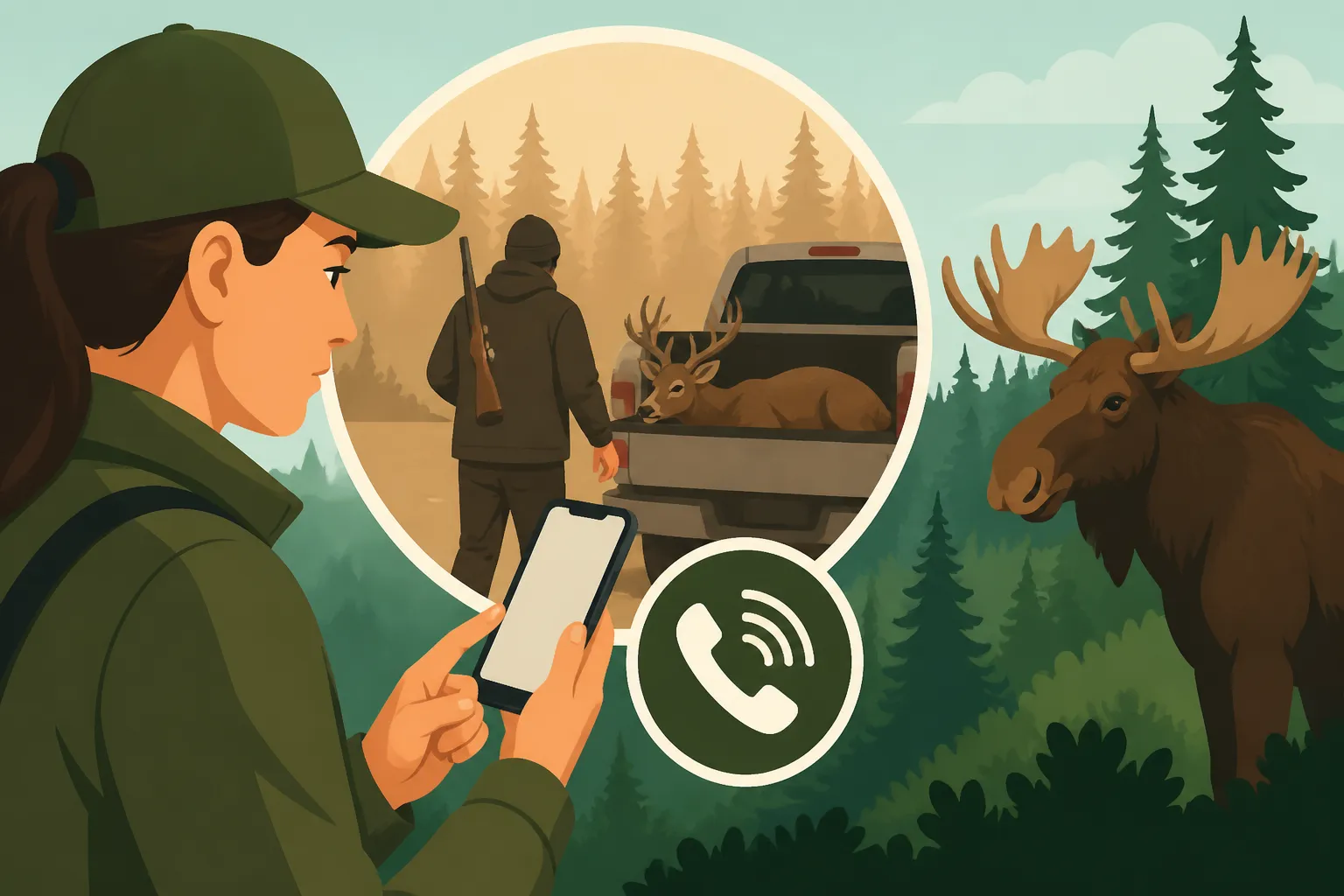
The primary method for reporting poaching in Manitoba is through the Turn In Poachers (TIP) line. This service operates 24/7 and is specifically designed for reporting illegal hunting, fishing, and trapping activities. You can reach them by calling toll-free at 1-800-782-0076. This is the fastest and most direct way to get information into the hands of a Conservation Officer who can respond.
When you call, you'll speak with a dispatcher who will ask you for details. Be prepared to provide the location, time, nature of the incident, and any descriptions you have of individuals, vehicles, or the animals involved. It’s important to give as much specific information as possible to help officers narrow down their search and respond effectively. Don't worry if you don't have all the answers; any piece of information can be helpful.
It's crucial not to confront suspected poachers yourself. They may be armed, unpredictable, or dangerous. Your role is to be a good witness, not an enforcer. Let the trained professionals handle the intervention. If you encounter an immediate danger or a situation that feels unsafe, contact the RCMP or local police by calling 911 first, and then follow up with the TIP line.
Using Digital Tools for Gathering Information
In today's connected world, our smartphones can be powerful tools for documenting illegal activities. Taking photos or videos of the incident, individuals, vehicles, or even the general area can be incredibly valuable evidence. Just remember to do so discreetly and safely. If you’re using an app like GoHunt or similar mapping tools, you can often drop a pin on your exact location, which provides precise coordinates for officers. This level of detail is a game-changer when reporting.
Beyond visual evidence, many hunting apps or even standard mapping apps allow you to mark specific locations and add notes. If you observe someone hunting in a "no hunting" zone, an app like GoHunt can clearly show these boundaries, helping you confirm your suspicions before reporting. Understanding the various Manitoba's Game Hunting Areas is key, and using digital maps can prevent false alarms and ensure your report is accurate. Even noting timestamps and specific geographic features can significantly assist officers in their investigation.
What Information to Collect When Reporting
The more specific and detailed your report, the better the chances of a successful investigation and potential apprehension. Conservation Officers rely heavily on accurate information from witnesses to piece together what happened and identify those responsible. Think of yourself as an investigative reporter in the field, gathering facts without influencing the situation.
Essential Details About the Incident
When you call the TIP line, they’ll want to know the basics. Start with what you saw, where it happened, and when. This seems obvious, but getting these details clear in your head before you call will make the conversation much smoother. For instance, instead of saying "south of town," try to give a road name, a specific intersection, or even a civic address if you're near one. If you're deep in the bush, refer to prominent landmarks like a creek crossing, a distinct rock outcropping, or a specific cutline. Using a GPS or a mapping app can provide exact coordinates, which are incredibly helpful. Knowing Where Manitoba Posts Land Closures can also help confirm if a specific area is indeed off-limits.
Think about the nature of the violation. Was it someone actively shooting an animal out of season? Were they attempting to hunt at night without a permit, violating Manitoba's Night Hunting Rules? Were they baiting big game outside of legal parameters? The more accurately you can describe the specific offense, the better. Officers need to know what they're looking for and what legal infractions might be at play.
Descriptions of Individuals and Vehicles
This is often where the most critical details lie. If you can safely observe, try to get a clear description of the people involved.
- Number of individuals: How many people were there?
- Physical description: Gender, approximate age, height, build, hair color, any distinguishing features (glasses, facial hair, tattoos, scars).
- Clothing: What were they wearing? Colors, types of clothing (e.g., camouflage, bright jackets, hats).
- Actions: What were they doing specifically? Shooting, dressing an animal, loading something into a vehicle, shining a light?
For vehicles, every detail counts:
- Make and model: Is it a Ford truck, a Chevy SUV, an older sedan?
- Color: Be as specific as possible (e.g., dark blue, forest green, rusty white).
- License plate number: This is often the most important piece of information. Try to get the full plate, including the province. If you can only get a partial plate, note down what you have.
- Distinguishing features: Dents, stickers, roof racks, specific tires, accessories (e.g., a toolbox in the truck bed, a gun rack in the back window).
- Direction of travel: Which way did they come from and which way did they go?
Even if you only get a few of these details, every bit helps. Don't risk your safety to get more; just gather what you can safely observe and recall accurately.
Evidence and Animal Details
If an animal has been killed or is present, try to note:
- Species: Was it a deer, a moose, an elk, a bear? If possible, specify male or female, and if it's a deer, whether it had antlers.
- Size: Is it a mature animal or a young one?
- Condition: Was it freshly killed? Partially field dressed? How many animals?
- Location of carcass: Is it still visible? Where?
Any evidence left behind, such as spent shell casings, tire tracks, or discarded items, can also be helpful. If you’ve taken photos or video, ensure they are time-stamped if possible. Digital tools can also help you understand Manitoba Big Game Season Dates for a specific GHA, confirming if an animal legally could have been harvested. It might also be useful to review Legal Firearms and Bows for Big Game to identify any discrepancies in the equipment used compared to legal requirements.
Here’s a helpful table to keep in mind when gathering information:
| Information Category | Specific Details to Collect | Importance |
|---|---|---|
| Location | GPS coordinates, road names, landmarks, GHA | Pinpoints the exact area for officer response |
| Time/Date | Exact time of observation, date | Establishes timeline, links to season dates |
| Incident Type | Shooting out of season, excess limits, baiting, trespass | Identifies specific violation(s) |
| Individuals | Number, gender, approx. age, clothing, unique features | Helps identify suspects |
| Vehicles | Make, model, color, license plate, unique features | Key for tracking and identifying suspects |
| Animals | Species, sex, number, condition, location of carcass | Confirms illegal take, aids investigation |
| Other Evidence | Photos, videos, spent casings, tire tracks, discarded items | Provides tangible proof, supports witness testimony |
What Happens After You Report a Poacher
Reporting a poacher can feel like a one-way street; you make the call, and then it's silence. But rest assured, your report initiates a process, even if you don't hear back immediately. Conservation Officers take every tip seriously and allocate resources based on the information provided, urgency, and available personnel.
The Investigation Process
Once you make a report to the TIP line, the information is immediately relayed to the Conservation Officer responsible for that particular Game Hunting Area (GHA). Officers will assess the information, prioritizing based on the severity and immediacy of the threat to wildlife. For example, an active shooting incident will typically take precedence over a historical report of discarded game meat.
Officers might respond to the scene to look for evidence, interview potential witnesses, or try to intercept the suspected poachers. They may use the vehicle description and license plate information to trace the owner. If you provided contact information, an officer might follow up with you for more details, especially if they need clarification or additional context. This process can sometimes be lengthy and complex, requiring careful evidence collection and adherence to legal protocols. It’s also worth noting that officers have specific Manitoba Conservation Officer Powers that allow them to conduct these investigations effectively.
Sometimes, the evidence gathered from your report might not lead to an immediate arrest. However, it can still contribute to ongoing investigations or help officers build a profile of suspicious activity in a particular area. Every piece of information helps to connect the dots and protect our wildlife. This is why even if you don't see immediate action, your report is never a waste of time.
The Role of Citizen Reports in Enforcement
Citizen reports are truly the backbone of wildlife enforcement. Conservation Officers cannot be everywhere at once, especially in a province as vast and wild as Manitoba. They rely heavily on the eyes and ears of responsible citizens and hunters to be their partners in the field. Without these reports, many illegal activities would simply go undetected.
Your report could be the crucial piece of a puzzle that leads to a significant bust. Perhaps another hunter saw a similar vehicle in a different GHA, or a landowner reported suspicious activity on their property. When multiple reports come in, it helps officers build a stronger case. This collective effort is what strengthens the conservation movement and holds accountable those who disrespect our wildlife resources. It demonstrates the power of community in protecting our natural heritage.
Understanding Manitoba Penalties for Hunting Violations might also reinforce the importance of reporting. These penalties can range from significant fines to license suspensions and even imprisonment, showing that these aren't trivial offenses. Your report helps bring these offenders to justice and sends a strong message that poaching will not be tolerated.
Manitoba's Turn In Poachers Line: A Resource for Everyone
The Turn In Poachers (TIP) line isn't just for hunters; it's a vital resource for anyone who cares about wildlife and wants to see game laws upheld. Whether you're a hiker, a cottager, a landowner, or just someone who enjoys nature, if you suspect illegal activity, you have a responsibility to report it.
Beyond Big Game: Other Violations to Report
While big game poaching often grabs the headlines, the TIP line is also the correct channel for reporting a wide range of other illegal activities. This includes:
- Waterfowl violations: Exceeding bag limits, hunting outside of legal shooting hours, or using illegal methods for Waterfowl Hunting Manitoba's Grain Fields.
- Upland bird poaching: Taking more than the limit of grouse or partridge, or hunting in closed areas.
- Fishing violations: Exceeding limits, using illegal gear, fishing in closed waters.
- Trapping violations: Unlicensed trapping, trapping out of season, or using illegal traps.
- Littering and environmental damage: Although not directly poaching, significant environmental harm often goes hand-in-hand with illegal activities.
- Damage to Crown Land: Unapproved trails, dumping, or destruction of natural habitat.
Even if you’re unsure if an activity is illegal, it’s always better to call the TIP line and let the professionals decide. They can quickly assess the situation and determine if an investigation is warranted. For example, if you see someone driving off-road in an area where Quad and Side-by-Side Rules on Crown Land prohibit it, that's worth reporting. It's about protecting the overall health and integrity of Manitoba's wild spaces.
Anonymity and Follow-Up
Many people hesitate to report because they fear retaliation or simply don't want to get involved. The good news is that when you call the TIP line, you can choose to remain completely anonymous. You don't have to give your name or any identifying information if you don't wish to. Conservation Officers are trained to handle anonymous tips and will not disclose your identity. This anonymity is crucial for encouraging people to come forward without fear.
If you do choose to provide your contact information, it's typically for follow-up questions from an officer. You won't be called to testify in court or dragged into a lengthy legal process unless you explicitly agree to do so and the circumstances absolutely require it. Your primary role is to provide the initial tip. The burden of investigation and prosecution falls on the Conservation Officers and the justice system. The focus is on gathering information to ensure that Manitoba's Turn In Poachers Line remains an effective tool for everyone committed to wildlife protection.
So, next time you’re out enjoying Manitoba's incredible outdoors and you spot something suspicious, remember the TIP line. You are not just a bystander; you are a vital part of the solution, helping to preserve our wildlife for generations to come.
Disclaimer
The information provided in this article is for general guidance and informational purposes only. While every effort has been made to ensure accuracy, hunting regulations and laws in Manitoba can change. Always consult the official Manitoba Hunting Guide and relevant provincial legislation or contact Manitoba Natural Resources and Northern Development for the most current and specific information before engaging in or reporting any hunting-related activities.