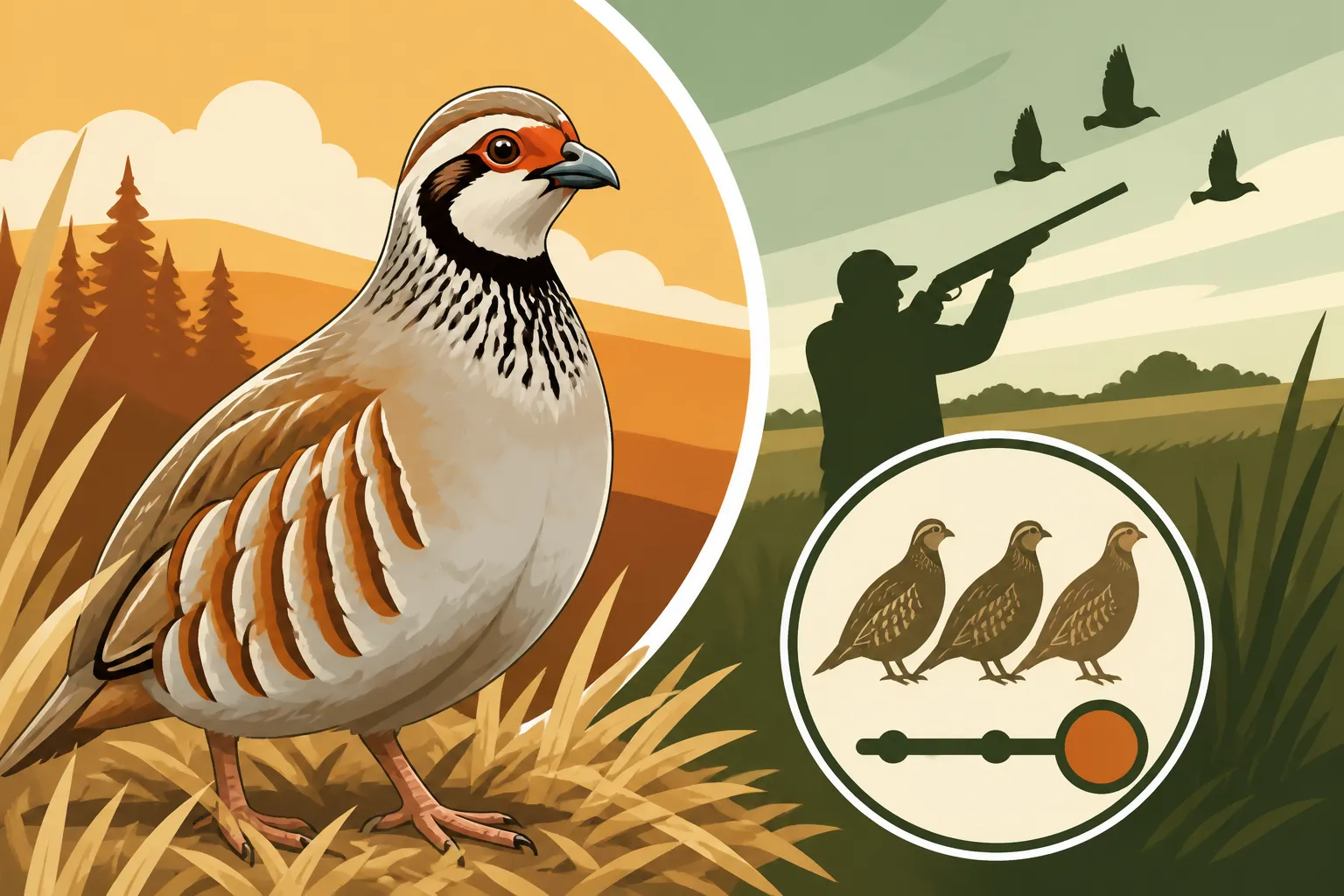
Hungarian Partridge Season and Limits
There's a unique thrill that comes with chasing upland birds in Manitoba, but often, the sheer volume of information needed to plan a successful hunt can feel overwhelming. Trying to pinpoint the exact season dates and bag limits for a specific species like the Hungarian Partridge, while also sifting through general hunting regulations, can leave any hunter scratching their head. This comprehensive guide is here to untangle those complexities, offering clear, detailed insights into hunting Hungarian Partridge in Manitoba, so you can spend less time researching and more time in the field.
Understanding Hungarian Partridge in Manitoba
Hunting Hungarian Partridge, often affectionately called "Huns," is a cherished tradition for many upland bird enthusiasts in Manitoba. These feisty birds offer a fast-paced challenge that's distinct from other game birds, making them a truly rewarding pursuit.
Why Huns are a Coveted Upland Bird
Huns are not just any bird; they're known for their explosive flush and incredibly fast, erratic flight patterns, which demand quick reflexes and accurate shooting. Unlike some more predictable game birds, a covey of Huns can appear seemingly out of nowhere, bursting from cover with a whirring of wings that can startle even the most seasoned hunter. This sudden eruption is part of their charm and why hunters find them so captivating.
Their elusive nature and tendency to hold tight in cover until almost stepped upon add another layer of excitement. When they do flush, they often scatter in multiple directions, creating a chaotic, thrilling shooting scenario. It's a true test of a hunter's skill, requiring patience, keen observation, and precise execution. The reward for connecting with a Hun in flight is immense, a testament to overcoming their challenging defense mechanisms.
Where to Find Hungarian Partridge in Manitoba
Hungarian Partridge thrive in agricultural landscapes, making Manitoba's vast farmland regions prime territory for these birds. You'll typically find them in areas with a mix of cultivated fields, stubble, hay lands, and crucial escape cover. Think about those shelterbelts – rows of trees planted as windbreaks – that crisscross the prairie; these are absolute magnets for Huns, offering both protection and a travel corridor.
Look for them around the edges of standing or recently harvested grain fields, especially those with wheat, barley, or canola. They feed on waste grain, seeds, and insects, so areas rich in these resources will draw them in. The transition zones between fields and thickets, grassy ditches, and even brushy fence lines are also key spots. Southwestern Manitoba, with its extensive agricultural operations and rolling terrain, is particularly well-regarded for its Hun populations. The Interlake region, too, offers pockets of excellent habitat where you can find these birds. When you're Hunting Hungarian Partridge on Manitoba Farms, always remember these birds are creatures of habit and often stick to the same general areas.
Manitoba's Hungarian Partridge Season Dates
Knowing precisely when you can hunt Hungarian Partridge is paramount for planning your trips. While the seasons are generally consistent, slight variations can occur year to year, so always confirm the latest regulations before heading out.
General Season Overview
In Manitoba, the Hungarian Partridge season typically opens in late September and generally runs through to mid-December. This provides a generous window for hunters to pursue these challenging birds. The early part of the season in September and October often brings milder weather, making for comfortable walking and excellent dog work. As the season progresses into November and December, cooler temperatures and early snowfalls can change bird behavior, often concentrating coveys in thicker cover or around reliable food sources.
It's crucial to check the current Manitoba hunting guide, which is updated annually. While the general dates often stay put, there might be specific Game Hunting Area (GHA) regulations or minor adjustments that you don't want to miss. For instance, a particularly harsh winter or a disease outbreak could lead to localized closures or shortened seasons, though this is less common for species like Huns compared to big game. Always consult the official provincial resources; platforms like GoHunt can also provide excellent supplementary information, often integrating GHA maps and regulations to help you visualize your hunting grounds and season dates.
Regional Variations and Exceptions
For Hungarian Partridge, regional variations in season dates are typically minimal, with a largely uniform season across much of the province where they are found. However, it's always good practice to understand that Manitoba's hunting regulations are structured by Game Hunting Areas (GHAs), and while Huns usually fall under broad upland bird regulations, there's always a possibility of specific GHA rules. For example, certain Wildlife Management Areas (WMAs) might have slightly different opening or closing dates, or even specific restrictions on hunting methods.
Always double-check the detailed regulations for your chosen hunting locale. There are also opportunities for youth hunters, sometimes with mentored youth hunting rules that might allow for earlier access or special provisions under specific conditions. These are important details that can expand opportunities for new hunters.
Here's a general overview of the typical season and limits, but remember, always verify with the most current Manitoba Hunting Guide:
| Species | Season Opening Date (Approx.) | Season Closing Date (Approx.) | Daily Bag Limit | Possession Limit |
|---|---|---|---|---|
| Hungarian Partridge | September 25 | December 15 | 8 | 16 |
Note: Dates and limits are illustrative and subject to change annually. Always refer to the current Manitoba Hunting Guide for precise and up-to-date regulations.
Daily Bag and Possession Limits for Hungarian Partridge
Understanding the difference between daily bag and possession limits is fundamental to legal and ethical hunting, ensuring sustainable populations for future generations.
Understanding Bag Limits
The daily bag limit for Hungarian Partridge in Manitoba is typically eight birds per day. This means that in any single day of hunting, an individual licensed hunter cannot harvest more than eight Hungarian Partridge. This limit is in place to manage the take of game birds, preventing overharvesting and allowing populations to remain healthy and robust.
It's a straightforward rule, but one that sometimes trips up new hunters. For example, if you're out with a friend and you both have licences, each of you can theoretically take eight birds, for a total of sixteen for the pair, assuming you reach your individual limits. However, once you've shot your eight, your hunting for Huns is done for that particular day. It encourages responsible harvesting and ensures that the thrill of the hunt remains a challenge rather than a simple collection exercise.
Possession Limits Explained
The possession limit, which is usually double the daily bag limit at 16 Hungarian Partridge, refers to the total number of birds an individual can have in their possession at any given time, regardless of when they were harvested. This includes birds stored at home, in camp, or in your vehicle. It's a cumulative limit, not a daily one.
Let's say you hunt on a Saturday and get your limit of 8 Huns. You bring them home. If you go out again on Sunday and bag another 8, you now have 16 birds in your possession. At this point, you've reached your possession limit. To legally harvest more, you would need to consume or give away some of the birds, reducing your total possession below 16, before going out to hunt again. This rule is particularly important for hunters on multi-day trips or those who freeze birds for later consumption. Maintaining accurate records of your harvest and knowing your limits is key to avoiding unintentional violations. Many hunters use apps or digital platforms, and GoHunt can be a great resource for managing this information alongside regulation checks.
GoHunt and Other Tools for Regulations
In the digital age, keeping track of hunting regulations has become significantly easier, but also requires careful cross-referencing. While the official Manitoba Hunting Guide remains the definitive source, supplementary tools can be invaluable. Digital mapping applications and hunting apps like GoHunt are fantastic for quickly referencing season dates, GHA boundaries, and possession limits right in the field. These tools often integrate GIS data, showing public lands, wildlife management areas, and sometimes even recent game activity.
Beyond specific apps, the Manitoba government's official website is the primary place to download the latest hunting guide. Always refer to this guide first. You might also find valuable insights and updates from local Manitoba Wildlife Federation chapters, which often have a finger on the pulse of regional hunting conditions and any emerging regulation changes. Checking these resources before each season, and even during a multi-week hunt, can save you a lot of headaches and ensure you're always hunting within the letter of the law. You'll also want to familiarize yourself with the overall Manitoba Hunting Licences and What They Cost so you're prepared.
Practical Tips for Hunting Hungarian Partridge
Hunting Hungarian Partridge is an active pursuit that often involves a lot of walking and strategic thinking. Being prepared with the right gear and an understanding of bird behavior can make all the difference.
Essential Gear and Hunting Dogs
When it comes to gear for Hungarian Partridge, simplicity and durability are key. A lightweight, reliable shotgun, such as a 20-gauge or 12-gauge, is ideal. For shot size, most hunters opt for 7.5 or 6, as these provide a good pattern for quick-flushing birds without over-penetrating. Always carry enough shells, as covey flushes can offer multiple shooting opportunities in rapid succession. Dressing in layers is crucial for Manitoba's variable fall and early winter weather, and good, comfortable walking boots are non-negotiable for covering miles of farmland. Remember your blaze orange, as it's a safety requirement for big game hunters, and generally a wise choice for upland bird hunters to ensure visibility in the field. Find out How Much Blaze Orange Manitoba Requires before you head out.
Perhaps the most valuable piece of "gear" for Hun hunting is a well-trained hunting dog. A good pointing dog, like a German Shorthaired Pointer, English Setter, or Brittany, can pinpoint coveys hidden in thick cover, holding them until you arrive for the flush. Flushing dogs, such as various Spaniel breeds or Labradors, excel at pushing birds out of dense areas. These dogs not only locate birds more efficiently than a lone hunter but also drastically improve retrieval rates, minimizing lost game. Having a dog that instinctively knows how to work cover and retrieve quickly after a shot is truly a game-changer for Hun hunting. Understanding Using a Pointing Dog on Manitoba Prairie or Using a Flushing Dog in Thick Cover is invaluable.
Strategy for Locating and Flushing Huns
Hunting Huns is largely a game of methodical walking and keen observation. Start your hunt by identifying promising habitat – those shelterbelts, fencelines, and field edges we talked about. Begin walking into the wind, if possible, as it helps your dog scent birds and allows you to approach a covey more stealthily. Walk at a steady, moderate pace, covering ground systematically. Huns are notorious for running ahead of dogs or holding incredibly tight, so don't rush.
When your dog goes on point or shows "birdy" behavior, approach cautiously and be ready for an immediate flush. Huns often flush in a burst, flying low and fast before gaining altitude. Anticipate their flight path, swing smoothly, and follow through. If the covey scatters, mark where individual birds land. Often, single birds will hold even tighter than the covey did, offering another chance for a dog to go on point. Repeatedly working the same patches of good cover throughout the day can also pay off, as Huns might return to favored spots, especially during later parts of the season or in colder weather when they seek refuge.
Respecting Landowner Rights
Manitoba is a province with abundant private land, much of which offers excellent Hungarian Partridge hunting. However, accessing private land always requires explicit permission from the landowner. This isn't just a matter of courtesy; it's a legal requirement under Manitoba's trespass laws. Failure to obtain permission can result in fines and the loss of hunting privileges.
Before you even consider hunting a piece of private property, do your homework. Use online mapping tools or consult local maps to identify property boundaries and landowner information. Then, make the effort to personally ask for permission. A polite, respectful approach, clearly stating your intentions, and offering to share any harvested game can go a long way. Building positive relationships with landowners is vital for maintaining access to hunting grounds for all. If granted permission, always respect their property, close gates, avoid driving on crops, and leave no trace. Many hunters find success by getting to know local farmers and developing long-term relationships for hunting access. If you're unsure, consult resources like Manitoba Landowner Permission Law or What Manitoba Trespass Law Requires to be fully informed.
Disclaimer
The information provided in this guide is for general informational purposes only and is not intended to be legal advice. Hunting regulations in Manitoba can change, and it is the responsibility of every hunter to consult the official Manitoba Hunting Guide and relevant government resources for the most current and accurate regulations before engaging in any hunting activities. Always prioritize safety, ethical hunting practices, and respect for wildlife and private property.