Cell Service at a Manitoba Camp
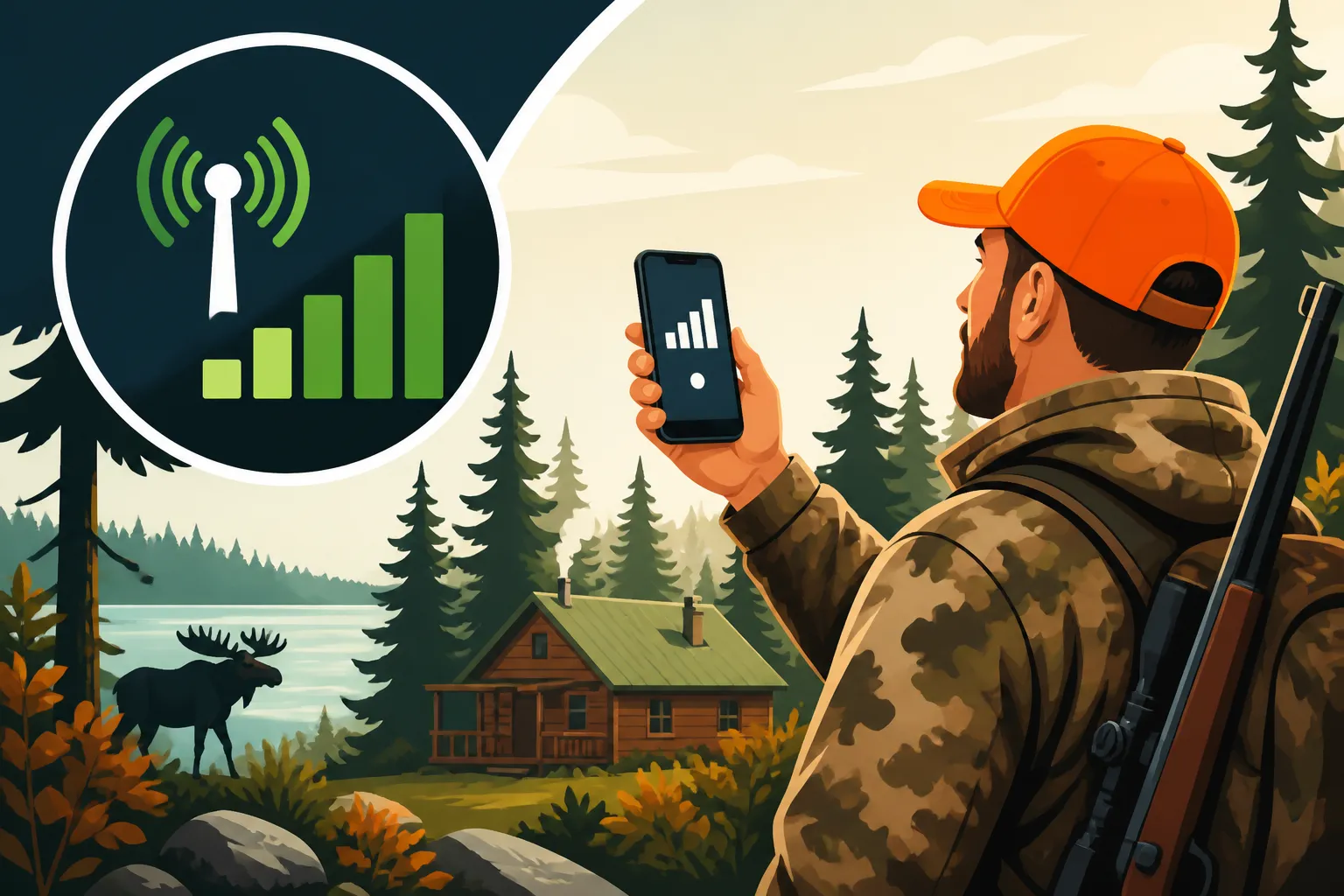
One of the biggest anxieties many hunters face when planning a trip into Manitoba's vast wilderness, especially if they're used to constant connectivity, is the looming question of cell service. We live in an age where our phones are practically extensions of ourselves, and the thought of being completely disconnected can be daunting, not just for us, but for the loved ones waiting back home. This guide is here to shed some light on the reality of cell service in Manitoba's hunting camps and offer practical advice on how to stay connected, or at least how to prepare for when you can't be.
The Reality of Cell Service in Manitoba's Outdoors
Let's be real: Manitoba is a massive province, and a significant portion of it is wild, untamed country. While our cities and major highways generally boast reliable cell coverage, the moment you venture off the beaten path, into the dense boreal forest, the vast parklands, or the rugged Canadian Shield, that familiar "LTE" or "5G" icon on your phone screen can quickly vanish, replaced by "SOS Only" or worse, nothing at all. It’s not a failing of your phone or provider; it's simply the nature of the terrain and the sheer distance from infrastructure.
Where Coverage Tends to Drop Off
Think about the geography of Manitoba. You have the wide-open prairies transitioning into aspen parkland, then into vast expanses of boreal forest and the rocky, lake-studded Canadian Shield to the east and north. Each of these unique landscapes presents its own challenges for cell signal propagation.
In the deep bush, particularly in areas like the Interlake or the forested regions near The Pas, heavy timber acts like a natural signal blocker. Trees, especially when they're thick and wet, can significantly attenuate cell signals, even if a tower isn't miles away. Then there are the rolling hills and deep river valleys found in places like the Pembina Valley or along the Assiniboine River; these topographical features create signal shadows where service simply can't reach. The further north you go, into the true boreal forest and towards the tundra transition, cell towers become incredibly sparse. You're entering a world where infrastructure is minimal, and the expectation of consistent cell service is, frankly, unrealistic. It's often Where Manitoba Cell Coverage Ends becomes a harsh reality for hunters.
The "Bubble" Effect Around Communities
You might notice a strange phenomenon when hunting in more remote areas: you can drive for hours with no signal, then suddenly, as you approach a small town or even a major highway, your phone springs to life. This is what I call the "bubble" effect. Cell towers are strategically placed to serve population centers and major transportation routes. While these towers might cast a wide net, their effective range for reliable data and calls often doesn't extend far into truly wild country, especially if there's significant terrain or dense forest.
This means a hunting camp might be a mere 20-minute drive from a tiny settlement with a single cell tower, but the camp itself could be in a dead zone due to a rise in elevation, a cluster of hills, or a particularly thick stand of timber. It's a frustrating experience to know that civilization is "just over there" but remain entirely disconnected. Don't assume that just because you passed a town an hour ago, your camp will have service. Always check with your outfitter or do your own research on specific locations, perhaps using satellite imagery tools available on platforms like GoHunt that can give you a better lay of the land, though they won't predict cell signal.
Planning for Communication Blackouts
Given the unpredictable nature of cell service in Manitoba's wild places, it's not a matter of if you'll lose signal, but when and for how long. Planning for communication blackouts is crucial for both your safety and your peace of mind, as well as for those back home who might be worrying. You need to approach this with a mindset of self-reliance, understanding that your phone might just be an expensive paperweight for the duration of your trip.
Essential Communication Alternatives
When your cell phone becomes an unreliable companion, other devices step up to the plate. These aren't just for emergencies, though that's their primary function; they can also be used for routine check-ins, provided you manage expectations for speed and message length.
- Satellite Phones: These are the gold standard for reliable communication from anywhere on Earth, provided you have a clear view of the sky. While an investment, they offer voice communication, which can be invaluable for detailed conversations or emergencies. Many outfitters will have one in camp for their own use, or for client emergencies.
- Satellite Messengers (e.g., Garmin inReach, Zoleo): These devices are more affordable than sat phones and offer two-way text messaging, GPS tracking, and an SOS button for emergencies. They operate on satellite networks, so they work where cell phones don't. You can send predefined messages to contacts (e.g., "I'm okay, checking in") or custom texts. Some even allow for weather forecasts. For many hunters, this is the perfect balance of connectivity, safety, and cost. It's an absolute game-changer for peace of mind when you're Emergency Plans in Manitoba's Bush.
- Two-Way Radios (VHF/UHF): While not satellite-based, these can be incredibly useful for short-range communication within your hunting party or between a guide and camp. They're great for coordinating movements, calling out game sightings, or simply staying in touch when you're split up but still within a few miles of each other. Just remember their range is line-of-sight dependent and often limited by terrain.
- Offline Maps and GPS Devices: While not communication devices in themselves, having reliable offline maps on your phone (downloaded beforehand!) or a dedicated GPS unit is absolutely critical. Knowing where you are and how to navigate back to camp is paramount when you can't rely on your phone's online mapping services.
| Device Type | Primary Function | Coverage Area | Pros | Cons | Best Use Case |
|---|---|---|---|---|---|
| Cell Phone | Voice, Text, Data | Near towers, populated areas | Convenient, multi-functional | Unreliable in remote areas, battery drain | Urban/highway use, pre-downloaded offline maps |
| Satellite Phone | Voice, limited data | Global (with sky view) | Full voice communication, reliable | Expensive, bulky, call costs add up | Critical emergency comms, remote expedition leader |
| Sat Messenger | Two-way text, GPS | Global (with sky view) | Affordable, compact, SOS feature, tracking | Text-only, slower than cell, subscription needed | Personal safety, routine check-ins, emergency signaling |
| Two-Way Radio | Voice (short range) | Line-of-sight, local | Instant comms with party, no subscription | Limited range, terrain dependent | Group coordination, camp-to-field communication |
Informing Loved Ones of Your Plans
This step is arguably as important as bringing alternative communication devices. Before you head out, have a detailed conversation with your family or a trusted friend. Tell them:
- Your exact itinerary: Where you're going, which GHA you'll be in, where your camp is located (GPS coordinates if possible).
- Your expected communication schedule: "I'll try to check in every other day via satellite messenger at roughly 6 PM," or "Don't expect to hear from me until I'm back in town on Saturday." Setting these expectations prevents unnecessary worry.
- What to do if they don't hear from you: Outline a clear protocol. "If you don't hear from me by Sunday evening, and I was due to check in on Saturday, contact [person's name] and then consider alerting local authorities."
- Contact information for your outfitter: Make sure they have the outfitter's main office number, emergency contact, or lodge phone.
- A "point person": Designate one individual who will be your primary contact and can relay messages to others. This prevents multiple people from trying to reach you or getting anxious simultaneously.
Many hunters use platforms like BookYourHunt to find and research outfitters. When you're making arrangements, it's a good time to bring up communication expectations with the outfitter directly. A good outfitter will be transparent about the connectivity, or lack thereof, at their camp.
Outfitters and Their Connectivity Solutions
When you're booking a guided hunt in Manitoba, particularly for a species like Moose Hunting Manitoba's Boreal Country or Black Bear Hunting in Manitoba, the outfitter's camp is often your base of operations. Their approach to client communication and camp connectivity can vary wildly, so it's vital to clarify this before you commit to a trip. Don't just assume anything, because a lack of communication can quickly turn a dream hunt into a stressful experience for both you and your family.
What to Ask Your Outfitter About Communication
Before you put down a deposit or even start packing, have a direct conversation with your potential outfitter about cell service and emergency communication. Here are some key questions to ask:
- "What is the cell service like at your main camp?" Be specific. Ask if it's "no service," "intermittent," or "reliable for calls/texts/data." Don't just accept a vague "it's spotty."
- "Do you have Wi-Fi available for guests, and if so, is there a charge or a data limit?" Some remote lodges might have satellite internet for guest use, but it's often slow, expensive for them to run, and might be reserved for specific times or emergency use only.
- "What are your camp's emergency communication protocols?" Do they have a satellite phone? A landline? A two-way radio system connected to a larger network? How do they handle external emergencies needing to reach a client in camp, or internal emergencies involving a hunter? This is vital for Manitoba Hunting Lodges and Camps operating in truly remote areas.
- "If my family needs to reach me for an urgent matter, what's the best way for them to contact the camp, and how quickly can a message be relayed?" Understand the realistic turnaround time. A message might go from your family to the outfitter's office in town, then via satellite phone to camp, which could take hours.
- "Do you provide or rent any satellite communication devices for client use in the field?" Some outfitters might have Garmin inReach devices available for guides or even for clients to carry for an added layer of safety.
- "What's the closest point where I could reliably get cell service if I needed it?" Knowing if it's a 10-minute drive or a two-hour ATV ride can change your entire outlook on the trip.
Good outfitters, especially those reviewed positively on platforms like BookYourHunt, will usually be very upfront about their camp's connectivity. They understand it's a significant concern for many clients and will often detail their communication policies and available equipment in their booking information or FAQs.
Camp-Provided Solutions (or Lack Thereof)
The solutions offered by Manitoba hunting camps can range from surprisingly robust to utterly non-existent.
Some high-end lodges, especially those catering to a more diverse clientele, might invest in satellite internet systems to provide Wi-Fi access. However, this is typically a luxury and not the norm for many dedicated hunting camps focused on putting you on game in remote locations. Even if Wi-Fi is available, expect it to be slower than what you're used to, and often throttled to prioritize essential camp communications. It's usually adequate for sending quick emails or text messages, but forget about streaming movies or video calls.
More commonly, camps will have a single satellite phone or a radio system for emergency use and daily operational communication with guides in the field. This phone is usually for camp use only, and you might be charged a fee for personal calls, or it may be strictly reserved for emergencies. It's not a personal communication device. Understanding these limitations is key. If you're expecting to call home every evening, and the camp only has an emergency sat phone, you're going to be disappointed.
Ultimately, the best approach is to assume you will have no cell service and prepare accordingly. Invest in your own satellite messenger, communicate clearly with your loved ones, and ask all the right questions when planning your Planning a Manitoba Hunting Trip. This way, any unexpected cell signal is a bonus, not a requirement, and you can truly immerse yourself in the Manitoba hunting experience without constantly worrying about being out of touch.
Disclaimer
This article is for general informational purposes only and does not constitute professional advice. Laws, prices and regulations vary by location and change over time. Consult a qualified professional for guidance on your specific situation.