Telling a Whitetail From a Mule Deer
One of the most common dilemmas for new hunters, or even seasoned veterans visiting a new area, is accurately identifying the species of deer they’re looking at. In Manitoba, while whitetails reign supreme, the rare appearance of a mule deer can throw even the most experienced hunter for a loop. This guide aims to clear up that confusion, helping you confidently tell the difference between these two magnificent creatures, especially when you're out in the field and need to make a quick, accurate identification.
The Tale of Two Tails: Why Distinguishing Matters in Manitoba
It might seem like a simple matter of identification, but correctly telling a whitetail from a mule deer isn't just about showing off your nature knowledge. For hunters, it has real, practical, and legal implications. Each species often has its own set of regulations, season dates, and even specific tags you need to possess to legally harvest them. Misidentifying a deer could lead to a violation, and nobody wants that when they're simply trying to enjoy their time in Manitoba's stunning outdoors.
Legal and Ethical Hunting Practices
Hunting isn't just about the harvest; it's deeply rooted in responsibility and adherence to regulations. In Manitoba, while whitetails are abundant and widely hunted, mule deer are a different story. Their numbers here are extremely low, primarily hugging the western border, and they are not a regularly hunted species in most of the province. This means understanding exactly what you're seeing through your binoculars is paramount. You wouldn't want to mistakenly harvest a mule deer with a whitetail tag, or vice-versa, as the consequences could be serious. Being able to distinguish between them ensures you're upholding ethical hunting standards and respecting wildlife management efforts.
Beyond the regulations, there's an inherent ethical responsibility. Each species plays a unique role in the ecosystem, and responsible hunting contributes to their sustainable management. Knowing the difference means you're a more informed and respectful participant in the natural world. This level of diligence elevates the entire hunting experience, transforming it from a simple pursuit into a thoughtful interaction with nature. Many experienced hunters will tell you that the more you understand about the animals you pursue, the richer your hunting journey becomes.
Regional Considerations for Manitoba Hunters
Manitoba is predominantly whitetail country. From the sprawling farmlands of the southwest to the dense boreal forests up north, white-tailed deer are the most common large game animal you'll encounter. However, the far western edge of the province, particularly in areas bordering Saskatchewan, might occasionally see a mule deer venture across. These sightings are rare, but they do happen, especially in specific Game Hunting Areas (GHAs) where the habitat might offer a slight crossover. This makes it crucial for hunters operating in these fringe areas to be extra vigilant.
If you're hunting in the eastern Interlake region or the Whiteshell, for example, the chances of encountering a mule deer are practically zero. You're almost exclusively looking at whitetails. But if your hunting grounds are further west, perhaps near the Saskatchewan border in areas like the Duck Mountain or even the southwestern farmland belt, the possibility, however slim, exists. This regional awareness, often aided by tools like GoHunt when scouting, helps set your expectations and keeps you prepared for those rare instances. Being aware of potential range overlaps is just another layer of preparedness that a good hunter considers before heading out.
Key Physical Features: What to Look For
When you're trying to quickly identify a deer in the field, certain physical characteristics stand out more than others. Learning to focus on these key markers can help you make a confident identification, even when conditions aren't ideal or the deer is partially obscured. Forget trying to judge antler size first; focus on the fundamentals.
Tail Differences: The Ultimate Giveaway
This is often the most obvious giveaway and where the whitetail gets its name. When a whitetail feels spooked or is fleeing, it will often "flag" its tail, holding it high and waving it back and forth like a bright white signal. This tail is broad, typically reddish-brown on top, and pure white underneath. It acts like a clear, visible flag as the deer bounds away. It’s an iconic sight for any hunter who has spent time in the bush, particularly in Manitoba's aspen parkland or bush country. Imagine a deer bursting from a willow run, and that flash of white is the last thing you see as it disappears into the aspen, a memory etched in your mind.
Mule deer, on the other hand, have a much narrower, rope-like tail. This tail is usually white with a distinctive black tip, resembling a small paintbrush. They do not "flag" it high in the air when running. Instead, they typically hold it down, sometimes swishing it from side to side, or flicking it open only at the very tip. This difference is so pronounced that even at a distance, a quick glance at the tail movement can often tell you what species you're looking at. This feature alone makes the "tail" aspect of their names incredibly descriptive and useful for identification. It's often the first thing experienced hunters look for.
Ear Size and Shape
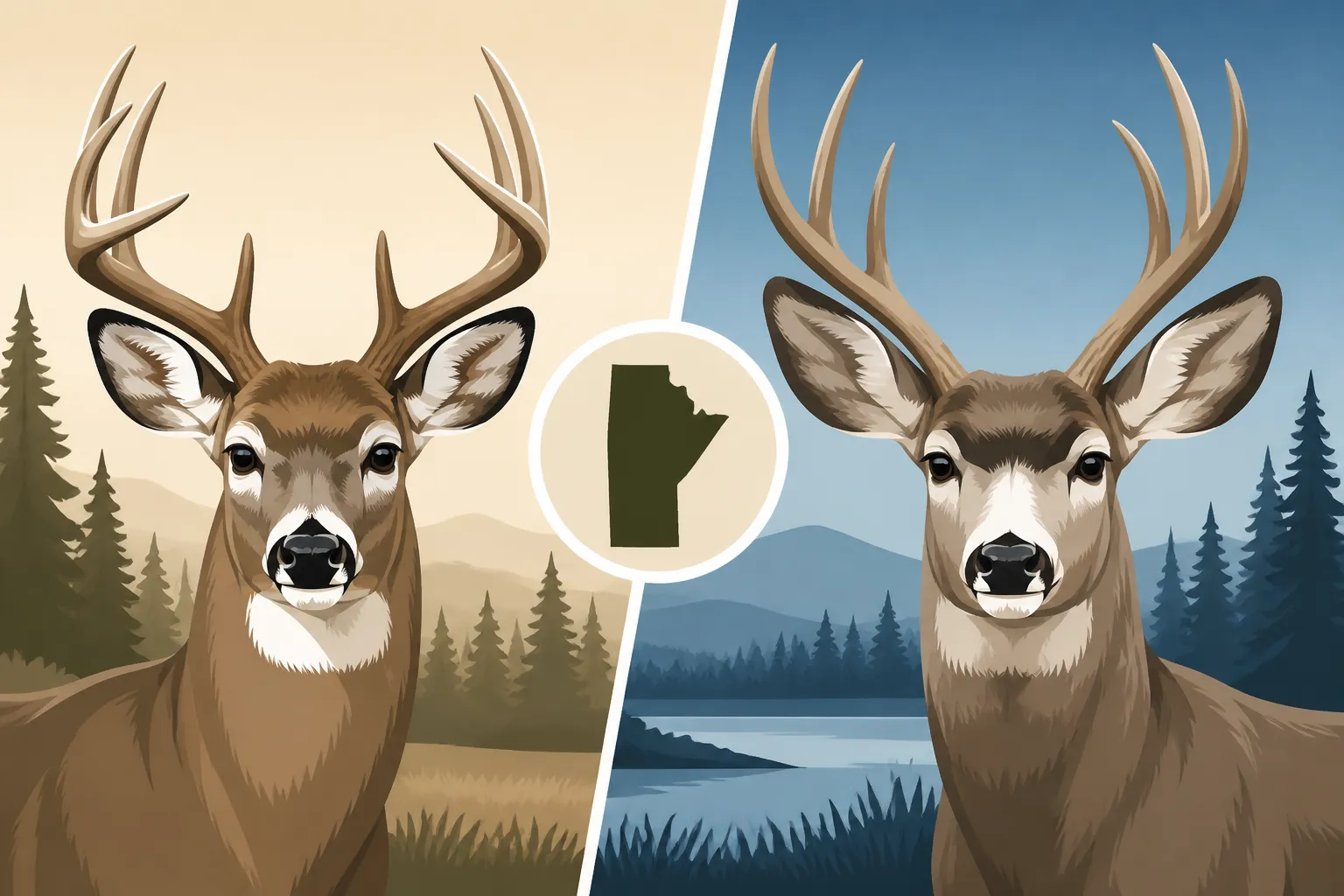
Another major differentiator lies in their ears. Mule deer are aptly named for their large, prominent ears, which are significantly larger than a whitetail's. Their ears can be 6-9 inches long and are constantly rotating, independently, to pick up sounds from all directions. Think of a mule deer's ears as resembling those of a donkey – long, broad, and very noticeable, especially when silhouetted against the sky. This larger ear size gives them an excellent sense of hearing, a key adaptation for their more open, western habitats.
Whitetail deer have much smaller, more proportional ears relative to their head size. They are typically pointed and about 4-6 inches long. While still very good at hearing, their ears don't have the same exaggerated size and constant swiveling motion you'd observe in a mule deer. When you see a deer and those ears immediately catch your eye due to their sheer size, you're likely looking at a mule deer. This difference is quite striking once you've seen both animals side-by-side or have experience with each.
Antler Configuration
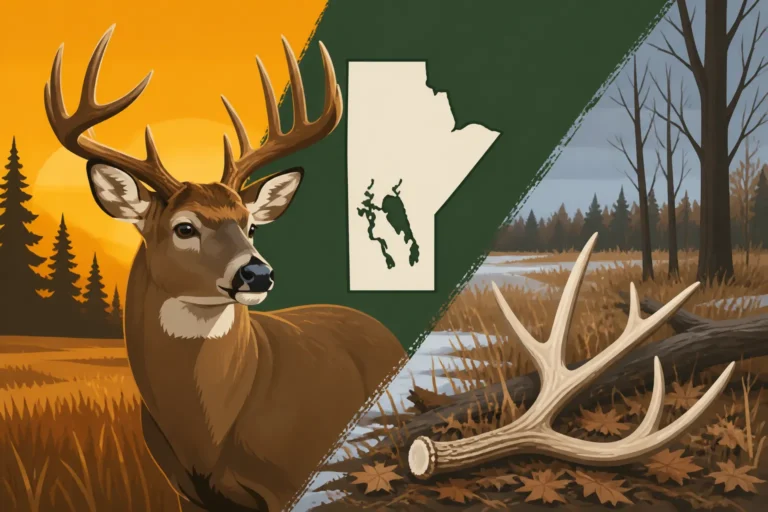
The antlers are a classic way to tell deer apart, though it's not always foolproof, especially with young deer or non-typical racks. However, for mature bucks, there's a general pattern. Whitetail antlers typically grow from a single main beam, with individual tines (points) growing upwards and often slightly forwards from this main beam. Think of it like a hand, where the main beam is the wrist and the tines are the fingers extending upwards. You might hear hunters talk about a "forked G2" or "brow tines" all coming off that central beam.
Mule deer antlers, conversely, tend to "fork" or "dichotomize." The main beam splits, and then each of those splits splits again, creating a more branching, symmetrical appearance. It's less common to see a long, unbroken main beam with singular tines shooting off it. While non-typical racks exist for both species, making things complicated, this "forking" characteristic is a strong indicator of a mule deer. This is something often studied using resources like those found on GoHunt when preparing for an out-of-province hunt. Remember, antler characteristics can be variable, so don't rely solely on them if other identifiers are ambiguous.
Body Shape and Size
While there can be overlap, mule deer generally appear stockier and more robust than whitetails. They often have a blockier body and a deeper chest. Whitetails tend to look more slender and agile, with a more streamlined appearance. The shoulder height can also differ, with mule deer often standing a bit taller. These are subtle differences that become more apparent with experience. For instance, a big Manitoba whitetail can weigh a lot, particularly northern bucks which often carry more body mass, sometimes making them look quite imposing. However, their overall build still leans towards that agile, elegant whitetail form.
Another subtle cue can be the facial markings. Whitetails often have a more defined white band around their nose and mouth, and white patches around their eyes. Mule deer tend to have more uniform greyish-brown faces, though some white around the nose and chin isn't uncommon. These are secondary indicators, but when combined with the primary identifiers like tail and ears, they can solidify your identification.
Here's a quick comparison table:
| Feature | White-tailed Deer | Mule Deer |
|---|---|---|
| Tail | Broad, brownish on top, pure white underneath; flags high when running. | Narrow, rope-like, white with a black tip; held down, does not flag. |
| Ears | Relatively smaller, pointed (4-6 inches). | Very large, prominent, mule-like (6-9 inches); constantly swiveling. |
| Antlers (Bucks) | Main beam with tines growing upwards. | Typically fork or dichotomous, splitting repeatedly. |
| Color | Reddish-brown in summer, greyish-brown in winter; distinct white throat patch. | More uniformly greyish-brown; lighter face. |
| Rump Patch | Small, indistinct or absent; tail is the main white feature. | Large, distinct white or buff rump patch extending down to the hocks. |
| Gait | Bounds, often with all four feet hitting the ground at different times. | "Stotting" or pronking – all four feet hit the ground simultaneously in a stiff-legged jump. |
Behavioral Clues in the Field
Beyond their physical appearance, the way these deer move and act can give you critical clues as to their identity. Observing their gait and typical reactions to perceived threats can often be just as telling as their physical features.
The Distinctive Gait
One of the most defining behavioral differences is how they run. When startled or fleeing, a whitetail will typically run with a fluid, bounding motion. They run fast, often in a series of powerful bounds, pushing off with their hind legs and extending their body, usually with their tail held high and flagging. It’s a very dynamic and agile sprint, often weaving through cover with incredible speed.
Mule deer, on the other hand, have a very distinctive gait known as "stotting" or "pronking." When they run, especially when startled, all four feet will often leave the ground and land simultaneously in a stiff-legged, bouncy jump. It looks almost like they are bouncing on springs. This allows them to quickly gain elevation to see over obstacles in more open terrain. If you see a deer bouncing along, high off the ground with all four feet moving together, you're almost certainly looking at a mule deer. This movement is a clear and unmistakable identifier that helps differentiate them, even from a distance.
Reaction to Hunters and Pressure
Whitetails are often more secretive and wary, particularly in heavily hunted areas or dense cover. They tend to stick to thick brush, creek bottoms, and dense forest edges, utilizing cover to evade predators. When startled, their first instinct is often to make a dash for the nearest dense cover, flagging their tail as they go. They are masters of using topography and vegetation to their advantage, often disappearing into seemingly impenetrable tangles of bush with remarkable ease. This makes Hunting Whitetails in Manitoba's Bush Country a challenging but rewarding experience.
Mule deer, having evolved in more open and mountainous terrain, often rely more on their superior vision and hearing. While they are certainly wary, their first reaction when alarmed might be to "stott" to a higher vantage point or a safe distance, then stop and look back, assessing the threat. They might not immediately plunge into the thickest cover in the same way a whitetail would. This behavior is a direct reflection of their natural habitat, where seeing and hearing distant threats is paramount, and cover can be scarce. However, a heavily pressured mule deer will also seek cover, so this isn't a hard and fast rule but a general tendency.
Habitat and Range: Where You're Most Likely to See Them
Understanding the preferred habitats of each species can greatly narrow down your identification, especially in a province like Manitoba where their ranges barely overlap. It's often said that "habitat dictates habits," and this is certainly true for deer.
Whitetail Strongholds in Manitoba
White-tailed deer are incredibly adaptable and thrive across a vast array of habitats in Manitoba. You'll find them almost everywhere, from the agricultural fields of the south to the aspen parklands, and deep into the boreal forest regions. They prefer areas with a mosaic of cover and food sources: dense bush for bedding and protection, coupled with open fields or clearings for browsing and grazing. This is why you'll often find them along Hunting a Manitoba Bush Edge or in the transition zones between forest and farmland.
Manitoba's landscape, with its rich agricultural lands providing abundant food and numerous shelterbelts, river valleys, and bush pockets offering cover, is ideal for whitetails. They are the dominant deer species throughout the entire province, making up the vast majority of deer sightings. If you're hunting within Manitoba, especially anywhere east of the western agricultural belt, it's almost a certainty that the deer you encounter will be a whitetail. Their numbers here are robust, though they do experience natural fluctuations due to harsh winters or disease. To learn more about their population trends and distribution, consider delving into articles like How Many Whitetails the Province Holds.
The Scarce Presence of Mule Deer
Mule deer are primarily a species of western North America, preferring more arid, open, and mountainous terrain, like the badlands and prairies of Alberta and Saskatchewan. They are typically found in rugged, broken country, open forests, and sagebrush flats. Their range extends eastward, but it thins out dramatically as you approach and cross into Manitoba.
In Manitoba, mule deer sightings are extremely rare and almost exclusively confined to the extreme western edge of the province, primarily along the Saskatchewan border. These are often transient animals that have wandered across from more established populations further west. You might hear of a mule deer being spotted in certain GHAs that bump right up against the provincial boundary, especially in the southwestern corner or around the Duck Mountain region. However, these sightings are not common enough to warrant dedicated hunting seasons or specific management efforts for mule deer within Manitoba's borders. The question Whether Manitoba Has Many Mule Deer is often met with a resounding "very few." For all practical hunting purposes in Manitoba, you'll be focused on whitetails.
Practical Considerations for the Manitoba Hunter
Knowing the difference isn't just an academic exercise; it has real-world implications for your hunting trip, from the tags you carry to the strategies you employ. Being well-informed is a hallmark of a responsible and successful hunter.
Tagging and Licencing Rules
This is where accurate identification becomes critically important. In Manitoba, hunters typically obtain a general deer licence, which is specifically for white-tailed deer. While there isn't a separate, widely available mule deer tag, the regulations surrounding what constitutes a legal harvest are clear. Harvesting a mule deer by mistake with a whitetail tag could lead to serious legal consequences, including fines and potential loss of hunting privileges. It's crucial to consult the current Manitoba Hunting Guide or check the province's official resources every season, as rules can change.
Before you head into the field, especially if you're near those western fringe areas, take the time to review the specific regulations for your Game Hunting Area. If you happen to encounter a deer that you suspect might be a mule deer, and you're unsure, it's always best to err on the side of caution. As a general rule, if you only have a whitetail tag, you must be 100% certain it's a whitetail before you take a shot. This diligence is part of being a responsible hunter and helps maintain the integrity of Manitoba's wildlife management programs. You can find detailed information on Manitoba's Game Hunting Areas and licence requirements to ensure you're compliant.
Scouting and Research
Understanding the primary differences between whitetails and mule deer, and their preferred habitats, can significantly influence your scouting efforts. If you're specifically targeting whitetails, you'll focus on traditional whitetail haunts – the bush edges, river bottoms, dense bluffs, and agricultural fields they frequent. You'll be looking for classic whitetail sign, such as rubs and scrapes in the timber or trails leading to standing corn. Tools like GoHunt can be invaluable here for researching specific GHAs, understanding terrain, and identifying potential habitat features.
For example, when you're Reading Whitetail Sign in Manitoba Aspen, you're looking for specific patterns of movement and feeding indicative of whitetail behavior. You wouldn't typically expect to find mule deer in such environments. Conversely, if you were hunting in an area where mule deer were more prevalent, your scouting might involve glassing larger, more open areas, looking for the tell-tale stotting gait or the larger ears. In Manitoba, however, your scouting will almost exclusively focus on what whitetails prefer, given their widespread presence and the extreme rarity of mule deer. This tailored approach makes your hunting efforts more efficient and targeted.
Hunter Education and Awareness
Every hunter, regardless of experience level, benefits from continuous education. Being able to confidently distinguish between species is a fundamental skill that hunter education courses often emphasize. This knowledge contributes not only to compliance with regulations but also to a deeper appreciation for the animals and their ecosystems. Many hunter education programs, including the Manitoba Hunter Education Requirements, cover species identification as a core component.
Beyond formal courses, actively engaging with the hunting community, reading up on wildlife biology, and simply spending more time in the field observing animals can sharpen your identification skills. The more familiar you become with the nuances of each species – from their physical traits to their behaviors – the more accurate your judgments will be. Remember, the goal is always a safe, ethical, and legal hunt, and a thorough understanding of the game animals you pursue is central to achieving that. Stay curious, keep learning, and your time in Manitoba's wild places will be all the more rewarding.
Disclaimer
This article is for general informational purposes only and does not constitute professional advice. Laws, prices and regulations vary by location and change over time. Consult a qualified professional for guidance on your specific situation.