Elk Damage on Manitoba Grain Farms
For many folks making their living off the land here in Manitoba, the sight of a majestic elk herd can be breathtaking. But that awe quickly fades when those beautiful animals decide your meticulously cultivated grain fields are their personal buffet. The frustration of seeing weeks, even months, of hard work trampled and devoured is a burden too many farmers carry, and it's a problem that seems to be growing. This guide is here to unpack the complex issue of elk damage on our grain farms, offering insights into why it happens and what strategies can help mitigate the impact.
The Growing Challenge of Elk on Agricultural Land
It's a delicate balance, isn't it? We want healthy wildlife populations, but not at the expense of our livelihoods. Elk, particularly the larger herds, can inflict significant damage on crops, turning promising yields into significant losses. This isn't just a minor annoyance; it’s a genuine economic threat for many producers, especially in areas where elk populations are robust and expanding. Understanding why elk are drawn to these agricultural oases is the first step in finding ways to coexist.
Why Elk Are Drawn to Manitoba Grain Fields
The truth is, Manitoba's grain fields offer an irresistible smorgasbord for elk. After a long winter, or even during the lean times of fall and early spring, a field of lush, green winter wheat or a vast expanse of corn stalks heavy with cobs is simply too good to pass up. These fields provide high-energy forage that's often more accessible and abundant than natural browse, particularly in areas where traditional forested habitats might be fragmented or under pressure. It's not just about the food, though. These agricultural landscapes often sit adjacent to prime cover – think dense bush lines, shelterbelts, or even bluffs and river valleys – offering ideal bedding sites and escape routes.
Consider a mature cornfield in late summer, just as the kernels are sweet and full. For an elk, it’s a five-star restaurant. They can walk in, feed at their leisure, and then melt back into the nearby bush line for safety, often undetected until the damage is done. The sheer volume of palatable forage available in a typical Manitoba grain field can support a large herd for extended periods, drawing them away from more natural, less calorie-dense food sources. The promise of easy calories with nearby sanctuary is a powerful draw, often overriding any innate fear of human activity or potential hunting pressure that they might typically experience in more open or wilder landscapes.
Recognizing the Signs of Elk Damage
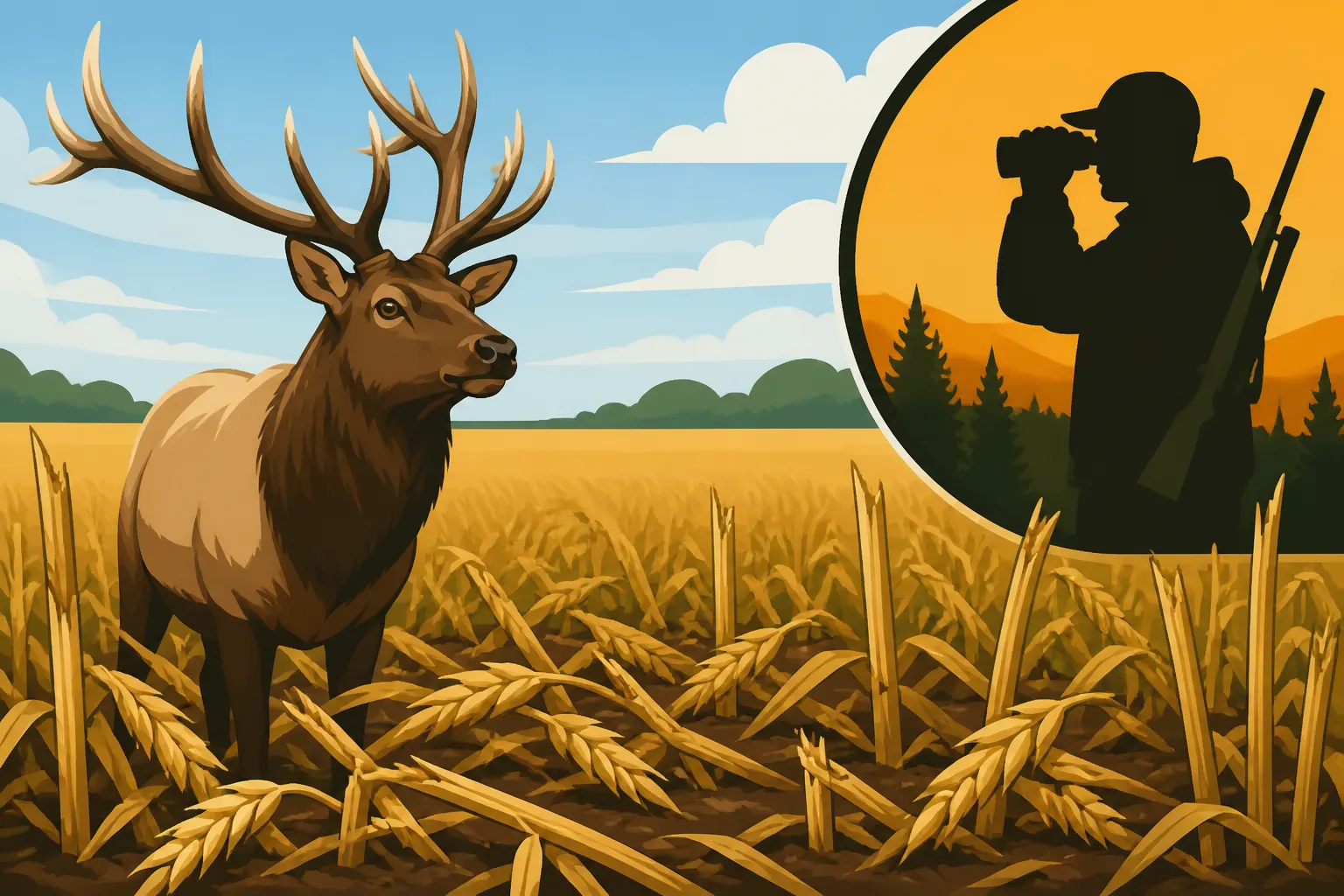
Identifying elk damage specifically can sometimes be tricky, especially if you also have deer or moose in the area. However, elk leave distinct clues. When a herd moves through a field, particularly mature corn or swathed canola, the trampling can be extensive. You'll see wide, well-worn paths and large areas where crops are flattened to the ground, not just browsed. Unlike deer, which tend to nip off shoots cleanly, elk are bulk grazers and their feeding often appears more destructive, with plants being torn or ripped rather than cleanly bitten.
Look for larger tracks – elk hoofprints are considerably bigger than whitetail deer tracks, often measuring 4-5 inches long, and their droppings are typically larger and more elongated. In cornfields, they'll often break stalks to get at the ears, leaving a tell-tale pattern of bent or broken plants at various heights, not just at ground level. Swathed canola fields are particularly vulnerable to trampling, with large sections flattened, making harvest difficult or impossible. If you’re seeing widespread flattening of crops, especially near a treeline or a bluff, and larger tracks, it’s highly probable you’re dealing with elk. They are notorious for creating "elk beds" within fields, especially in standing corn, where they will flatten an area to bed down after a night of feeding, causing further localized damage.
Understanding Elk Behavior and Movement Patterns
Dealing with elk damage means understanding elk. They're not just random visitors; their movements and habits are driven by predictable patterns related to food availability, seasonal changes, and their need for safety. Knowing these patterns can give you a significant advantage in anticipating when and where damage is most likely to occur, allowing for more targeted mitigation efforts.
Seasonal Movement and Feeding Habits
Elk movements are highly seasonal, dictated largely by food availability and security. In spring, as the snow recedes and new growth emerges, elk are often drawn to fields of winter wheat, greening up and offering a fresh, nutritious meal after a long winter. They’ll also hit early hay fields and pastures. As summer progresses, cornfields become increasingly attractive, especially when the corn reaches its milk stage – a sweet and highly digestible energy source. This period often coincides with elk seeking out the cooler, denser cover that cornfields provide during hot days.
The peak of crop damage often occurs in the fall, particularly during the late summer and early autumn when grain crops like corn and canola are maturing and being harvested. This is when elk can inflict the most significant economic losses. They are voracious eaters, and the abundance of high-calorie grains provides them with the energy reserves they need to prepare for the rut and the upcoming winter. You'll often find them working fields adjacent to their preferred forest habitats, such as those found in Elk in Manitoba's Parkland and Mountains. Once the main harvest is complete, elk will continue to glean dropped grain or graze on stubble, sometimes forgoing their natural browse for these easily accessible remnants. Even into winter, if snow isn't too deep, they'll target fields with standing corn or hay bales, concentrating near shelterbelts or bluffs that offer protection from the elements.
Herd Dynamics and Preferred Habitat Edges
The social structure of elk herds also plays a significant role in the extent and pattern of crop damage. Large cow/calf groups, driven by the need to feed their young and maintain high energy levels, can cause widespread, sustained damage. These groups often stick together, making their impact more concentrated. Bull groups, particularly outside the rut, might be smaller and more nomadic, but a single large bull can still cause considerable damage through feeding and antler rubbing on trees and structures along field edges.
Elk consistently gravitate towards the edges where agricultural land meets dense cover. This might be a river bottom, a large provincial forest block like Hunting the Duck Mountain Country or Hunting the Porcupine Provincial Forest, or even a thick shelterbelt. These transitional zones offer security, easy access to feed, and thermal cover. Elk often move into fields under the cover of darkness, feeding through the night and retreating to these secure areas at dawn. Understanding these preferred habitat edges is crucial for hunters and landowners alike, as it dictates where hunting pressure can be most effective and where deterrents should be concentrated. For example, knowing that elk frequently move between the vast agricultural fields and the wooded fringes of areas like Elk Around Riding Mountain National Park can inform where to focus your scouting and mitigation efforts.
| Deterrent Type | Description | Effectiveness | Pros | Cons |
|---|---|---|---|---|
| Electric Fence | Multi-strand, high-tensile wire delivering a shock. | High (if properly maintained) | Long-term solution, effective for persistent herds. | High initial cost, requires maintenance, power source. |
| Propane Cannons | Timed blasts to scare animals. | Moderate (short-term) | Relatively low operating cost, can be moved. | Elk habituate quickly, noise can annoy neighbours. |
| Scarecrows/Flagging | Visual deterrents like effigies, reflective tape, or bright flags. | Low to Moderate (very short-term) | Very low cost, easy to deploy. | Elk quickly habituate, limited effectiveness, only visual. |
| Hazing/Human Presence | Regularly driving elk from fields using vehicles or on foot. | Moderate (requires consistency) | No cost other than time/fuel, can be effective in combination. | Very time-consuming, only works when someone is present, can stress animals. |
| Exclusion Fencing | Permanent tall fences (e.g., woven wire, 8 ft+ high). | Very High | Permanent solution, effectively blocks access. | Extremely high cost, difficult to install, impedes other wildlife. |
Proactive Mitigation Strategies for Farmers
When you’re facing consistent crop damage, sitting back and hoping the elk move on isn't a viable strategy. Proactive measures are essential to protect your investment and reduce your losses. These strategies range from physical barriers to making your fields less appealing, all aimed at convincing the elk to find their meals elsewhere.
Physical Deterrents and Fencing Solutions
One of the most effective ways to prevent elk damage is to make it physically difficult for them to access your crops. High-tensile electric fencing, when installed correctly with multiple strands and maintained regularly, can be a formidable deterrent. Elk are intelligent animals, but a good shock tends to educate them quickly. The key is ensuring the fence is always hot, especially during peak feeding times like dusk and dawn, and that the ground around it is clear of vegetation that could short out the current. While the initial cost of electric fencing can be substantial, especially for large perimeters, it often pays for itself over time by protecting valuable crops.
Other physical deterrents, like propane cannons or various types of scarecrows and flagging, can offer temporary relief. However, elk are incredibly adaptable. They learn quickly that a loud bang from a cannon isn't followed by a real threat, and they will simply ignore it after a few days or weeks. To maintain their effectiveness, these tools need constant relocation and variation – something few busy farmers have time to do. Permanent exclusion fencing, like an 8-foot-tall woven wire fence, is the gold standard for prevention but is generally cost-prohibitive for large agricultural fields, typically only feasible for smaller, high-value plots or around farmyards.
Habitat Modification and Crop Choices
Sometimes, prevention isn't just about keeping elk out but also about making your land less appealing to them in the first place, or offering them an alternative. One strategy is to plant "decoy" crops, like alfalfa or clover, in areas away from your cash crops, preferably in a location that offers good cover and is less economically sensitive. The idea is to draw elk to these sacrificial plots, giving them a preferred feeding area that doesn't impact your main income. This approach requires careful planning and a willingness to dedicate some land to wildlife.
Another tactic involves timing your harvest. While not always feasible due to weather and market conditions, harvesting vulnerable crops like corn or canola as early as possible can reduce the window of opportunity for elk to cause damage. Leaving unharvested buffer strips of less desirable forage or cover crops along field edges can also sometimes discourage elk from venturing further into your cash crops. Thinking about crop rotation, not just for soil health but also for wildlife management, might involve rotating out highly attractive crops in particular fields for a season or two to break established elk patterns. These subtle changes in habitat and agricultural practice can sometimes be enough to shift elk feeding patterns, encouraging them to move to areas where their impact is less severe, or where hunters have an easier time accessing them, which is vital for management in areas known for Manitoba's Elk Herds and Their Range.
Working with Wildlife Management and Hunting
While individual farmers can implement many strategies, the broader issue of elk damage often requires a collaborative approach with wildlife management agencies and the hunting community. Hunting plays a critical role in managing elk populations and distributing them more evenly across the landscape, reducing pressure on specific agricultural hotspots.
Special Elk Hunting Seasons and Crop Damage Permits
Manitoba Sustainable Development plays a crucial role in managing elk populations, including responding to agricultural damage. When elk are causing significant, ongoing crop damage, farmers can apply for Crop Damage Permits (CDPs). These permits allow the landowner or an authorized hunter to harvest elk outside of regular hunting seasons, specifically to address the damage. The process usually involves documenting the damage, contacting a local conservation officer, and following specific guidelines on harvest limits and reporting. It's not a silver bullet, but it provides a critical tool for immediate relief in acute situations.
Beyond CDPs, specific Game Hunting Areas (GHAs) might have extended elk seasons or increased tag allocations, particularly in zones known for high elk populations and agricultural conflict. Hunters are often keen to participate in these opportunities, as elk tags can be hard to come by in Manitoba, especially for species like elk. This is where building strong relationships with local hunters becomes invaluable. Information on current elk seasons and rules is regularly updated in the hunting guides, providing details for hunters interested in Elk Hunting in Manitoba. These seasons are designed to manage herd numbers, which directly benefits farmers by reducing the overall pressure on crops.
Engaging Hunters as Part of the Solution
Hunters are arguably one of the most effective tools in a farmer's arsenal against chronic elk damage. Ethical, responsible hunters can help reduce local elk numbers, push herds off agricultural land, and make them warier of spending time in open fields. This requires farmers to be willing to grant Getting Private Land Permission in Manitoba, and for hunters to respect the land and the farmer's property. Establishing clear communication and expectations is key. Many farmers, fed up with losses, are more than happy to allow access to trusted hunters who are focused on ethical harvesting and game recovery.
For farmers with significant, persistent problems, partnering with a local outfitter can be a game-changer. Outfitters, often working with their own network of guides and clients, can provide a more structured and consistent hunting pressure. Services like GoHunt provide resources for hunters to find reliable outfitters and guides, connecting them with opportunities where elk populations are strong and hunting can make a real difference. These professional services can manage multiple hunters, ensuring that pressure is applied strategically throughout the season, helping to push elk away from sensitive areas. A well-managed hunting program can make elk feel less secure on agricultural land, encouraging them to spend more time in more natural habitats, ultimately reducing crop losses. Hunters who understand Bugling Elk in Manitoba's Parkland and other tactics can be highly effective in drawing elk out of cover and away from damaged areas.
Financial and Policy Considerations for Affected Farmers
Beyond the immediate frustration and effort of deterring elk, farmers face the very real financial burden of crop loss. Navigating the available support and understanding the broader policy landscape is essential for long-term resilience against wildlife damage. It's not just about managing elk; it's about managing the economic fallout.
Assessing and Documenting Damage for Compensation
When elk damage occurs, thorough documentation is paramount if you hope to seek compensation. This isn't just a casual glance; it requires detailed records. Take clear, dated photographs and videos of the damaged areas, showing the extent of the destruction. Measure the affected acreage precisely using GPS tools or field maps. Collect evidence like tracks, droppings, and specific browse patterns to clearly identify elk as the culprit. These meticulous records are vital when filing a claim or seeking assistance from agricultural support programs.
In Manitoba, the Manitoba Agricultural Services Corporation (MASC) typically handles crop insurance and related programs, which may include components for wildlife damage, although specific coverage for elk damage on grain farms can vary and might require specific endorsements or conditions. It's crucial to contact MASC as soon as damage is discovered to understand their reporting requirements and deadlines. Missing a deadline or failing to provide sufficient evidence can result in a denied claim, adding insult to injury. The goal is to present an undeniable case for the financial impact on your operation, quantifying not just the lost yield but also potential replanting costs or reduced harvest efficiency. Understanding the rules for Crop Damage Permits for Farmers is also crucial, as these often go hand-in-hand with compensation discussions.
Government Support Programs and Future Outlook
While existing programs like those through MASC offer some recourse, many farmers feel that current government support for wildlife damage doesn't fully cover their losses or adequately address the growing problem. There's a constant need for advocacy to improve and expand these programs. This often involves agricultural associations and individual farmers working with provincial wildlife and agricultural departments to highlight the economic realities of coexisting with expanding elk populations.
The long-term outlook for managing Manitoba's Elk Herds and Their Range in agricultural zones involves a blend of population management, habitat initiatives, and improved compensation frameworks. This collaborative effort between landowners, hunters, and government agencies is critical. For instance, sometimes a strategic land-use plan or even encouraging certain types of forestry practices near agricultural land can help create more appealing natural habitat for elk, potentially drawing them away from vulnerable crops. While the sight of a magnificent elk herd remains a cherished part of our natural heritage, ensuring that their presence doesn't undermine the hard work of our farming communities is a challenge that requires ongoing dialogue, innovative solutions, and a commitment to shared management.
Disclaimer
The information provided in this article is for general guidance only and does not constitute legal or professional advice. Hunting regulations, landowner rights, and agricultural policies in Manitoba are subject to change. Always consult the most current Manitoba Hunting Guide, relevant government resources, and qualified professionals for specific advice related to your situation.