Rules on Wasting Game Meat
There's nothing quite like the satisfaction of a successful hunt, but that joy can quickly turn to anxiety when you start to second-guess whether you've done absolutely everything right to honour the animal and comply with regulations. The rules around wasting game meat in Manitoba can sometimes feel like a grey area, leaving many hunters wondering exactly what's expected. This guide aims to clear up that confusion, diving deep into Manitoba's regulations to ensure you're confident in your ethical and legal responsibilities, from the moment of harvest to the freezer.
The Deep Roots of "No Waste" Regulations in Hunting
Before we even get into the specifics of what constitutes "waste" in Manitoba, it’s important to understand the philosophy behind these rules. For many of us, hunting isn't just about filling the freezer or tagging a trophy; it's a deep connection to nature, a test of skill, and a way to provide for our families. The concept of not wasting game meat is central to this ethos, reflecting a profound respect for the animal harvested and the resources it represents.
Beyond personal ethics, these regulations serve crucial conservation purposes. They discourage wanton killing and ensure that every animal taken contributes meaningfully, rather than being a casual pursuit. In an era where hunting faces increasing scrutiny, demonstrating our commitment to responsible harvesting is more important than ever. Public perception often hinges on how hunters treat their quarry, and adherence to meat waste rules reinforces the image of ethical, responsible outdoorspeople who value wildlife. It also helps preserve our hunting heritage by showing that we are stewards, not just consumers, of the land's bounty.
Deciphering Manitoba's "Waste of Game" Regulations
So, what exactly does the province of Manitoba consider "wasting" game meat? It's more specific than you might think, and understanding these definitions is key to staying on the right side of the law. Generally, Manitoba’s regulations, like those in many other jurisdictions, focus on the "edible portions" of an animal. This doesn't mean you have to eat the hooves and hide, but it does mean taking reasonable steps to salvage all the prime meat.
The legal text typically states that a person commits an offence if they kill a game animal and fail to remove from the field "all of the edible parts" within a specified timeframe, or if they allow those parts to spoil. This includes the major muscle groups – the backstraps, hindquarters, shoulders, and often the neck meat. The liver, heart, and sometimes the tongue are also considered edible by many hunters, and while not always strictly mandated as "edible portions" by law, it's good practice to take them if you can and will use them. You're expected to make a diligent effort to recover and preserve these parts. Using tools like GoHunt for planning and understanding the areas you'll be in can sometimes highlight access challenges, which brings us to the next point about exemptions.
What Constitutes "Edible Portions"
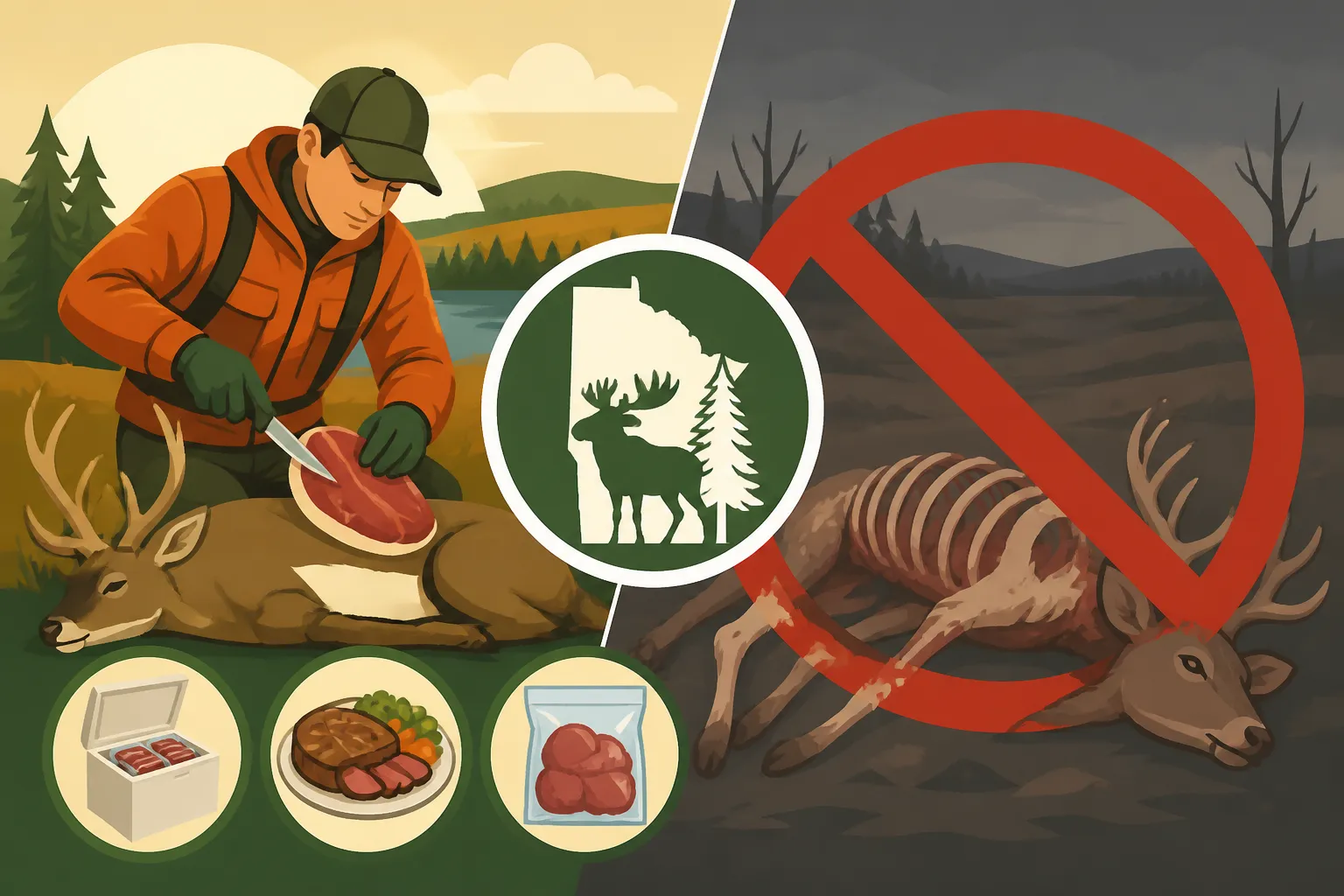
Defining "edible portions" can sometimes feel like a grey area, but let's break down the general understanding and best practices. When Manitoba Conservation Officers talk about edible portions, they're primarily referring to the large skeletal muscles that provide the bulk of the meat. This means the two backstraps (loins), the four quarters (shoulders and hind legs), and substantial neck meat. Think of it as anything that you would reasonably process into steaks, roasts, or ground meat.
Leaving these primary meat sections to spoil or be consumed by scavengers after a kill, without a legitimate reason, is a clear violation. This is why immediate and proper field dressing is so critical. If you've ever had a long drag out of the bush, the temptation to lighten the load by leaving a shoulder might cross your mind, but you absolutely cannot do that without legal repercussions. The goal is to ensure that the animal's life was taken for sustenance, not merely for a trophy or a casual hunt.
Exemptions and Challenges in the Field
There are, of course, practical realities in the field that the law attempts to address. What if your animal is severely gut-shot, or a bear gets to it before you do? While the general rule is "no waste," there can be exemptions for meat that is genuinely rendered inedible. For instance, if an animal is so severely damaged by the shot that a significant portion of the meat is destroyed, or if it's found already significantly spoiled by natural processes or scavengers (like wolves, bears, or coyotes) before you could reach it, you might be excused from recovering those specific, truly inedible parts. However, this is not a blanket excuse to leave meat behind. The onus is on the hunter to prove that the meat was indeed inedible or unreachable due to circumstances beyond their control. This is why proper shot placement and tracking are paramount.
Weather can also play a huge role. If you harvest an animal on a warm, sunny day, meat spoilage happens much faster than during a cold snap. Leaving an animal to "cool down" for too long in mild temperatures can quickly lead to spoilage, which would then be considered a waste. This is where knowing how to perform proper Field Dressing in Manitoba's Deep Cold or handling Meat Care in Manitoba's Cold Snaps becomes invaluable. These rules exist to encourage responsible recovery and processing, not to penalize unavoidable events.
Maximizing Recovery: Practical Steps to Prevent Spoilage
Preventing waste isn't just about following the law; it's about respecting the animal and maximizing the bounty of your hunt. From the moment the animal hits the ground, every minute counts, especially in Manitoba's often unpredictable weather. Being prepared for quick and efficient processing is your best defence against spoilage and waste.
This preparation starts long before you pull the trigger. Having the right gear, knowing the fastest way to get to your downed animal, and understanding the steps for rapid cooling are all part of the equation. No one wants to be caught flat-footed after a successful hunt, fumbling for a knife or realizing they forgot their game bags. Such oversights can quickly lead to problems, turning an ethical harvest into a potential waste situation.
Prompt Field Dressing and Cooling
The absolute first step to preventing waste is swift and thorough field dressing. As soon as you confirm your animal is down and safe to approach, get to work. Remove the entrails immediately. This is the single most important action you can take to cool the carcass and halt bacterial growth. Warm gut piles act like an internal furnace, cooking the meat from the inside out and accelerating spoilage.
Once the guts are out, consider skinning the animal, at least partially, to expose more surface area to the air. If the temperatures are warm, quartering the animal and placing the quarters in breathable game bags can help them cool down even faster. Hang the quarters if possible, allowing air to circulate around them. Even in cold weather, proper airflow is important to prevent moisture build-up that can also lead to spoilage. For detailed guidance, learn about Field Dressing in Manitoba's Deep Cold to ensure you're ready for any temperature.
Overcoming Field Challenges
Manitoba's hunting terrain can present its own unique challenges. You might be deep in the bush, facing difficult terrain, or a long way from your vehicle. These aren't excuses for leaving meat, but they do require forethought and planning. If you anticipate a long drag or carry, consider quartering the animal right where it falls. This breaks the carcass into manageable pieces, making extraction much easier and often quicker.
Having a sturdy game cart, a good quality backpack frame, or even a system for Getting a Deer Out on a Frozen Trail can be a game-changer. If you're Sitting All Day in a Manitoba Blind and a big buck finally steps out at last light, you need to have a plan for recovery, knowing you might be working in the dark. Always carry extra game bags, sharp knives, a sharpening steel, and a headlamp. A good quality first-aid kit and communication device are also essential, especially if you get into a situation where you might be What to Do If You Get Stuck in the Bush and need to preserve your meat while waiting for help.
Transportation and Storage
Once you've field-dressed and potentially quartered your animal, the next crucial step is transportation. Get the meat out of the field and into a cool, clean environment as quickly as possible. This might mean an insulated cooler with ice, or simply into the back of your truck if the weather is cold enough. Always protect the meat from dirt, dust, and insects. Breathable game bags are far superior to tarps or plastic, which can trap heat and moisture, again leading to spoilage.
When you get home, proper storage is paramount. If you're not processing it immediately, hang the quarters in a cool, dry, clean place (like a garage or shed) with good airflow. Ideally, temperatures should be between 0-4 degrees Celsius (32-40 degrees Fahrenheit) for aging. If you can't maintain these temperatures, get the meat processed or into a refrigerator promptly. For more tips on keeping your meat in top condition, refer to Meat Care in Manitoba's Cold Snaps. Remember, the journey from field to freezer is a continuous effort in preventing waste.
Here's a quick look at common scenarios and how Manitoba's waste regulations typically apply:
| Scenario | Likely Interpretation of Waste | Explanation |
|---|---|---|
| Leaving entrails (gut pile) in the field | Not typically waste | Entrails are generally not considered edible portions under the regulation, but must be left off public view and a reasonable distance from roads and trails. |
| Taking only antlers or a cape | Yes, clear waste | Unless specific and rare exemptions apply (e.g., finding a naturally deceased animal and only taking antlers without a hunting licence for that species), deliberately leaving prime meat behind is a serious violation. |
| Leaving a hindquarter due to a long drag | Yes, clear waste | While challenging, difficult terrain or distance does not excuse failing to recover edible portions. Hunters are expected to plan for and execute full recovery. |
| Meat spoils due to warm weather exposure | Yes, considered waste | Failure to field dress, cool, and transport meat promptly in warm conditions, leading to spoilage of edible portions, is often viewed as negligent waste. |
| Meat heavily damaged by shot or scavengers | Potentially exempt | If significant portions are genuinely rendered inedible by natural processes (e.g., bear damage before recovery) or extreme shot damage, those specific portions may be exempted. Hunters must still salvage all other edible parts. Documentation (photos) is advisable. |
| Removing all major muscle groups (quarters, backstraps, neck meat), but not organs | Not typically waste | While many hunters take liver/heart, they are not universally classified as "edible portions" by law; however, best ethical practice encourages their use. |
Consequences and Enforcement of Meat Waste Rules
Ignorance of the law is never an excuse, and the consequences for wasting game meat in Manitoba can be significant. Conservation Officers take these regulations seriously because they underpin ethical hunting and public trust. If you're found to be in violation, you could be facing hefty fines, seizure of your hunting equipment, and even suspension of your hunting privileges. These aren't minor infractions; they are viewed as a serious breach of hunting ethics and conservation principles.
Beyond the legal penalties, there's the moral cost. No hunter wants to be associated with wasteful practices. It reflects poorly on the individual and the entire hunting community. Staying informed about regulations, using resources like GoHunt to understand game zones, and preparing adequately for every hunt are your best ways to ensure you uphold your responsibilities.
Penalties and Fines
The financial penalties for wasting game meat can vary, but they are generally substantial. You could be looking at fines running into the thousands of dollars, depending on the species and the severity of the waste. For instance, leaving a large portion of a moose carcass might incur a much higher fine than a smaller deer. In addition to monetary penalties, Conservation Officers have the authority to seize any game meat, firearms, vehicles, or other equipment involved in the offence. This seizure can be temporary or permanent, depending on the judgment.
Furthermore, a conviction for wasting game can lead to a suspension of your hunting licence for a period of time, effectively preventing you from hunting in Manitoba, and potentially across Canada, for years. This is a severe consequence, highlighting how seriously Manitoba Parks and Wildlife takes these violations. To avoid these dire outcomes, ensure you understand Manitoba Hunting Licences and What They Cost and all associated regulations thoroughly before you head out.
Reporting Violations and Conservation Officer Discretion
If you witness someone wasting game meat, it's your ethical responsibility as a hunter to report it. Manitoba has a dedicated Turn In Poachers (TIP) line, which allows you to confidentially report violations. This isn't about snitching on fellow hunters; it's about protecting the integrity of our sport and ensuring that those who disrespect wildlife face accountability. For information on how to do this, see Reporting a Poacher in Manitoba.
While the law is clear, Conservation Officers do exercise discretion in evaluating each situation. They understand that accidents happen and that unforeseen circumstances can arise. However, their assessment will hinge on whether you made a reasonable effort to recover and preserve all edible portions. This means demonstrating diligence, planning, and ethical intent. Simply claiming it was "too hard" or "too far" will likely not hold up. Your best defence is always to be prepared, act responsibly, and make every effort to minimize waste. Ultimately, these rules, and their enforcement, are there to protect the resource and ensure our hunting heritage for future generations. For more general details on penalties, you can review Manitoba Penalties for Hunting Violations.
Disclaimer
This guide is intended for informational purposes only and does not constitute legal advice. Hunters are responsible for consulting the official Manitoba Hunting Guide and relevant provincial statutes and regulations to ensure full compliance with all current laws. Regulations can change, and it is crucial to stay updated.