Rules for Hunting With Dogs
For many of us who love the outdoors, our hunting dogs aren't just pets; they're integral members of the hunting party, often our most trusted companions in the field. But navigating the specific rules and regulations around hunting with dogs in Manitoba can feel a bit like trying to find a needle in a haystack, especially when you want to ensure you're always on the right side of the law. This guide aims to clear up that confusion, offering a deep dive into what's allowed, what's not, and the important considerations for hunting responsibly with your canine partner in our beautiful province.
Understanding the General Framework for Hunting Dogs
Manitoba's hunting regulations are designed to ensure ethical hunting practices, conserve wildlife, and maintain public safety. When it comes to using dogs, these regulations generally differentiate between species and the specific role the dog plays. It’s not a free-for-all, and understanding the nuances is crucial to avoid infractions. The provincial government's guidelines, often updated annually, are the ultimate authority, and it's always a good practice to consult the current year's hunting guide.
General Control and Safety Requirements
No matter what you're hunting, your dog needs to be under control at all times. This isn't just a courtesy; it's often a legal requirement. "Under control" typically means that your dog responds immediately to your commands, whether by voice, whistle, or hand signals. This is paramount for safety, preventing your dog from disturbing non-target wildlife, wandering onto private property where you don't have permission, or becoming a nuisance to other hunters or outdoor enthusiasts. A dog running wild can easily spook game you're trying to pursue, ruin another hunter's setup, or even endanger itself by running onto a road or encountering dangerous wildlife.
Furthermore, consider the temperament of your dog. Not all dogs are suited for all hunting environments. A highly energetic retriever might do wonderfully in a marsh but could struggle with the quiet discipline required for, say, still-hunting deer if it’s not specifically trained for it. Hunter education courses often touch on these aspects of responsible dog handling, emphasizing that the handler is always accountable for their dog's actions. Being equipped with a reliable GPS collar can also be a game-changer, especially in thick cover or when your dog ranges far, helping you keep tabs on their location and recall them if necessary. Many hunters find tools like those offered by GoHunt invaluable for staying connected with their dogs in the field.
Prohibited Uses and Species
It’s just as important to know what you cannot do with a dog as what you can. In Manitoba, the use of dogs to actively hunt big game species like white-tailed deer, moose, or elk is generally prohibited. This means you can't release a pack of hounds to chase a deer or use a dog to actively track and corner a bear for a shot. The intent behind these rules is to prevent undue stress on big game animals and to maintain fair chase principles. While some jurisdictions might allow tracking wounded big game with a leashed dog, Manitoba's regulations are quite strict in this regard, largely disallowing any direct participation in the pursuit or taking of big game by dogs.
This also extends to other species where the practice is deemed unethical or creates an unfair advantage. For instance, using dogs to hunt furbearers like lynx or bobcats (where they occur) in a way that essentially traps them by exhaustion or cornering for an easy kill is typically not allowed. Always verify the specific rules for the species you intend to hunt, as regulations can sometimes change or have very precise definitions.
Hunting Migratory and Upland Game Birds with Dogs
This is where your canine companion truly shines and where Manitoba's regulations are most accommodating. Dogs, particularly retrievers and pointers, are not just allowed but are often considered essential for effective and ethical bird hunting.
Waterfowl Hunting
If you've ever spent a cold morning waiting for ducks or geese to decoy, you know the absolute necessity of a good retriever. Manitoba is a waterfowl hunter's paradise, situated right in the Central Flyway, and having a dog to retrieve birds from icy water or thick cattails is not just helpful, it's a conservation imperative to prevent lost birds. Your dog is a critical tool for minimizing waste and ensuring that every bird shot is recovered.
Specific rules for waterfowl hunting with dogs are generally quite simple: your dog must be under your control. There are no restrictions on using dogs to flush or retrieve ducks, geese, or even Sandhill Cranes. Many hunters utilize specialized blinds or dog stands to keep their retrievers concealed and comfortable, protecting them from the elements and allowing them to focus on the task at hand. Training is key here; a well-trained retriever knows when to stay still and when to make the retrieve, often on command, to avoid flaring incoming birds. This level of discipline takes countless hours of practice, often beginning in puppyhood. When considering gear for your retriever, especially for early season goose hunts in stubble fields, look for durable, high-visibility vests. Companies that partner with platforms like GoHunt often showcase gear designed for these conditions.
Upland Bird Hunting
For those who enjoy pursuing Sharp-Tailed Grouse on Manitoba Grassland, Ruffed Grouse, or Hungarian Partridge, a bird dog is an invaluable asset. Pointers, setters, and flushers each bring unique skills to the field, enhancing the hunting experience and increasing success rates.
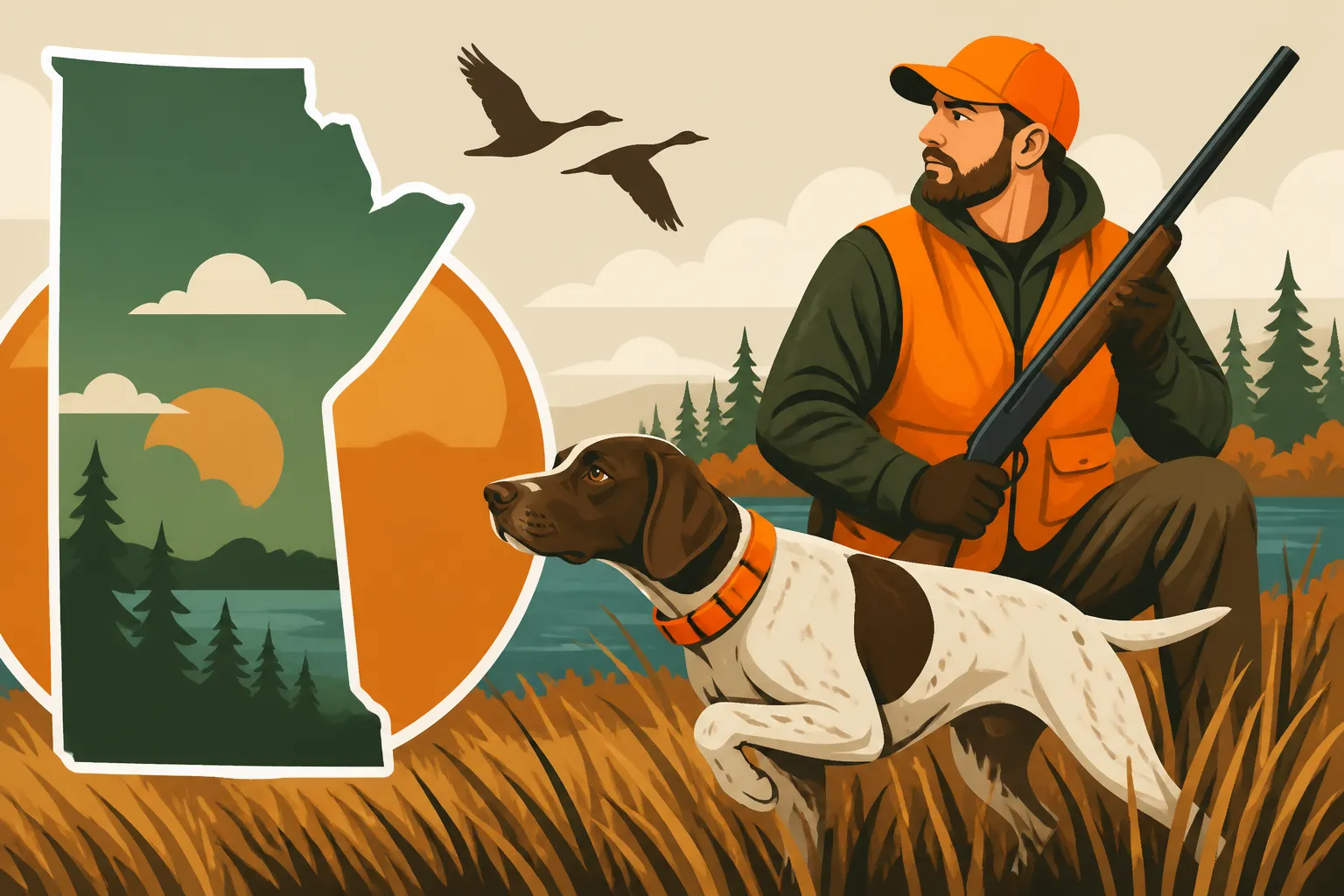
- Pointers: Breeds like German Shorthaired Pointers or English Setters are fantastic for ranging out ahead, locating birds, and then "pointing" to indicate their presence. This allows the hunter to move in for a flush and a shot. Using a pointing dog on Manitoba prairie can be incredibly effective, especially in open country where birds might hold tight. The dog holds the bird, giving you time to prepare, walk in, and enjoy the explosion of wings.
- Flushers: Spaniels and Labrador Retrievers, while excellent retrievers, also excel as flushers. They work closer to the hunter, pushing through thick cover to get birds airborne. This is particularly useful in dense bush for species like Ruffed Grouse Hunting Manitoba's Bush Trails where birds are often found in heavy cover. The dog's movement encourages birds to fly, creating shooting opportunities.
Again, the emphasis is on control and ethical hunting. Your dog should work with you, not just chase birds aimlessly. Proper training ensures they don't harass non-game birds or stray out of your hunting area. For hunters looking to refine their dog's skills, specialized training programs and gear are available, many of which can be found through communities supported by GoHunt.
Hunting Predators and Small Game with Dogs
While big game hunting with dogs is largely off-limits, there are specific scenarios where dogs can be used for predators and some small game in Manitoba.
Coyote and Wolf Hunting
For predator hunters targeting coyotes, a well-trained dog can sometimes be used in conjunction with calling. Some hunters use specific breeds, often lurchers or sighthounds, to course coyotes in open country, provided the local regulations allow this specific method. More commonly, dogs might be used to track wounded coyotes or to retrieve them after a successful shot. It's crucial to distinguish between using a dog to track a shot animal and using it to pursue a healthy one. Always check the specific rules for Coyote Hunting Rules Year-Round in your chosen Game Hunting Area (GHA), as they can vary.
For wolves, which are also considered predators, similar restrictions apply. While dogs can be effective in calling and decoying wolves, using them for an active chase is typically not permitted. The focus should always be on ethical take and minimizing stress on the animal.
Small Game and Furbearers
For small game like Hunting Snowshoe Hare in Manitoba's Bush, dogs are sometimes used to flush them from thick cover, similar to upland bird hunting. Beagles, for example, are famous for their ability to follow rabbit scent. For furbearers, trapping regulations often dictate methods, and using dogs to actively run down animals for a harvest is generally not a permitted trapping method, though dogs may assist in finding trapped animals.
It's vital to remember that these are general guidelines. The Manitoba hunting regulations outline specific details, and some GHAs or wildlife management areas might have additional restrictions on dog use. Always verify the rules for the specific area you plan to hunt by consulting the latest Manitoba Hunting Guide or online resources.
| Species Category | Dog Use Generally Permitted? | Common Dog Roles | Key Considerations |
|---|---|---|---|
| Waterfowl | Yes | Retrieving, flushing (minor) | Prevent lost birds, dog comfort, concealment |
| Upland Birds | Yes | Pointing, flushing, retrieving | Dog control, working with hunter, avoiding non-game |
| Coyotes/Wolves | Limited | Tracking wounded, decoying | Specific GHA rules, ethical pursuit, no active chase |
| Small Game (Hare) | Yes | Flushing, tracking | Dog control, ethical take |
| Big Game (Deer, Moose, Elk, Bear) | No | N/A (generally prohibited) | No active pursuit, no cornering, highly restricted |
Ethical Considerations and Responsible Dog Ownership
Beyond the black-and-white rules, there are significant ethical considerations when bringing your dog into the field. As responsible hunters, we owe it to our dogs, the wildlife, and the hunting community to uphold the highest standards.
Training and Obedience
A well-trained dog is a joy to hunt with; an unruly one is a liability. Your dog should have a solid foundation in obedience, including reliable recall, "sit-stay," and "heel." For bird dogs, specific training for pointing, flushing, and retrieving is essential. This training should be ongoing, even in the off-season. Not only does it make for a more successful hunt, but it also ensures your dog's safety and prevents it from interfering with other hunters or non-hunting recreational users of the land. Consider getting involved in local hunt test clubs or professional training programs to hone your dog's skills.
Having a dog that understands boundaries is crucial when you're hunting different types of terrain. For example, if you're Hunting a Manitoba Bush Edge, you want your dog to work the cover, but not disappear into the next quarter section without your command. Similarly, when hunting a Field Hunting Geese in Manitoba Stubble, your retriever needs to stay put in the blind until directed to retrieve.
Dog Health and Safety
Hunting can be physically demanding, especially for dogs. Ensure your dog is in good physical condition, up-to-date on vaccinations, and protected from parasites like ticks and fleas. Carry a basic first-aid kit for your dog, including wraps, antiseptic, and any necessary medications. Be mindful of extreme weather conditions; heatstroke in early fall or hypothermia in late season can be serious risks. Provide plenty of water and rest breaks. Always monitor your dog for signs of fatigue or injury. In remote areas, knowing basic canine first aid could be a lifesaver.
Furthermore, recognize your dog's limitations. Not every dog is built for endless hours of retrieving in freezing water, nor for busting through heavy cover all day. Knowing when to call it a day, or when to give your dog a rest, is part of being a responsible owner.
Respect for Other Land Users
Manitoba's vast landscapes are shared by many. Hikers, photographers, birdwatchers, and other recreational users may be in the same areas where you hunt. An uncontrolled dog can quickly create a negative impression of hunters. Always keep your dog close and under voice control when encountering others. Be prepared to leash your dog if necessary, especially in areas with high public traffic or where livestock might be present. Good etiquette helps maintain positive relationships between hunters and the broader public, which is vital for the future of our hunting heritage. When securing permission for hunting private land, discussing dog use with the landowner beforehand is always a good idea.
Navigating Regulations and Resources
Staying informed about Manitoba's hunting regulations is an ongoing process. Laws and specific rules can be updated annually, so relying on outdated information is a recipe for trouble.
The Manitoba Hunting Guide
Your primary resource should always be the current year's Manitoba Hunting Guide. This comprehensive document outlines all the legal requirements for hunting specific species, in specific areas, and with specific methods – including the use of dogs. It’s available both online and in print at licence vendors. Pay close attention to sections on general hunting regulations, species-specific rules, and any GHA-specific restrictions.
Online Resources and Tools
The provincial government's website is another excellent source of up-to-date information. Beyond that, many online hunting communities and forums specific to Manitoba offer valuable insights from experienced hunters. However, always cross-reference anecdotal information with official sources. Digital mapping tools, some of which are integrated with platforms like GoHunt, can also help you understand public vs. private land boundaries and special management areas where dog rules might differ. These tools are incredibly helpful for Scouting a Manitoba Game Hunting Area and knowing exactly where you and your dog can legally operate.
In summary, hunting with dogs in Manitoba is a cherished tradition for many, particularly for bird hunters. It's an effective, ethical, and highly rewarding way to enjoy the outdoors with a beloved companion. By understanding and adhering to the specific regulations, maintaining strict control over your dog, and prioritizing their welfare, you can ensure that your hunting adventures are safe, successful, and respectful of Manitoba's incredible wildlife resources.
Disclaimer
Please remember that hunting regulations can change. Always consult the most current Manitoba Hunting Guide and official provincial resources before heading out. This article is intended for informational purposes only and does not constitute legal advice.