Reading Whitetail Sign in Manitoba Aspen
Hunting whitetails in Manitoba's aspen forests can feel like searching for a needle in a haystack, especially when the leaves are thick or fresh snow hasn't fallen. It’s a vast, dense landscape, and without understanding the subtle clues deer leave behind, you're essentially just wandering. This guide is all about giving you the tools to read the whitetail's secret language etched into the aspen woods, turning confusing chaos into clear navigation.
Understanding the Aspen Environment for Whitetails
The aspen stands across Manitoba are more than just pretty trees; they are vibrant, dynamic ecosystems that whitetail deer absolutely thrive in. If you want to find deer consistently, you first need to appreciate why they call these areas home. It’s not just a place to hide; it’s a full-service deer resort.
Why Aspen is a Whitetail Magnet
Aspen, particularly in its various growth stages, provides an unparalleled buffet and sanctuary for whitetail deer. The tender shoots and leaves of young aspen are highly nutritious browse, especially important in winter when other food sources are scarce. Beyond the aspen itself, these forest environments support a rich understory of forbs, grasses, and fungi that deer readily consume throughout the warmer months. Come fall, some aspen stands mix with oak or hazelnut, adding highly desirable hard mast to the menu, providing critical energy reserves before the cold truly sets in.
But it's not just about food. Aspen forests are typically characterized by dense thickets and varying canopy cover, offering incredible security. Deer need places to feel safe from predators, and the intertwined branches of mature aspen groves, or the dense regrowth in areas after a disturbance like a fire or logging, provide exactly that. These areas are also fantastic for thermal regulation. In summer, the shade keeps them cool, and in winter, the thick stands offer a reprieve from biting winds and heavy snow, conserving vital body heat. You’ll often find deer bedding in the thickest pockets of aspen during a cold snap.
Access to water is another critical factor, and aspen-dominated landscapes frequently have sloughs, small creeks, or low-lying areas that collect water, making it readily available. When you consider the combination of abundant food, secure cover, and easy water, it's clear why whitetails are so drawn to Manitoba's aspen. This transitional zone, often referred to as the Parkland region, offers a perfect blend of forest and open country, allowing deer to utilize farm fields for evening feeding while retreating to the safety of the bush by day.
Seasonal Changes and Their Impact on Sign
The visibility and type of whitetail sign you’ll encounter in aspen change dramatically with the seasons, making it crucial to know what to look for and when. What's obvious in November might be completely hidden in July. Being aware of these shifts will significantly improve your scouting efficiency.
In the lush growth of spring and summer, actual deer sign can be much harder to spot. Trails might be overgrown with new vegetation, and tracks quickly disappear on soft, moist ground. Your focus during these months should shift towards identifying primary travel corridors that lead to known water sources or specific feeding areas. Look for well-worn paths through persistent low-lying areas or along creek banks that consistently show use, even if the individual tracks aren't clear. This is when understanding the topography and natural funnels becomes paramount, rather than relying solely on fresh tracks.
As fall approaches and the leaves begin to drop, the aspen woods open up, and deer activity ramps up towards the rut. This is prime time for spotting fresh rubs and scrapes. Bucks become far more visible in their efforts to communicate and establish dominance, making these signs incredibly valuable indicators of where they are moving and when. The ground often becomes firmer, preserving tracks for longer, and the reduction in understory growth makes spotting bedding areas and well-used trails much easier. Pay close attention to these clues as they directly reflect pre-rut and rut behavior.
Winter, particularly after a fresh snowfall, is arguably the easiest time to read whitetail sign in aspen. Every track, every disturbed patch of snow, tells a story. Deep snow often forces deer into specific patterns, creating distinct "yards" where they congregate in the densest cover for protection and ease of movement. You'll see clear browse lines where they've nipped off twigs and branches. Snow depth itself is a huge factor; light snow might show individual tracks, while heavy snow will reveal drag marks from their legs, indicating the effort they're putting into moving. Hunting Safely in Deep Winter Cold involves not just keeping yourself warm, but also knowing how cold and snow influence deer movement and where to find them.
Deciphering Fresh Whitetail Tracks and Trails
Tracks and trails are the most fundamental signs whitetail deer leave behind. They tell you where deer have been, where they're going, and sometimes even how recently they passed through. Learning to differentiate these subtle markings is critical for successful scouting and hunting in Manitoba’s aspen.
Reading Tracks in Varying Terrain
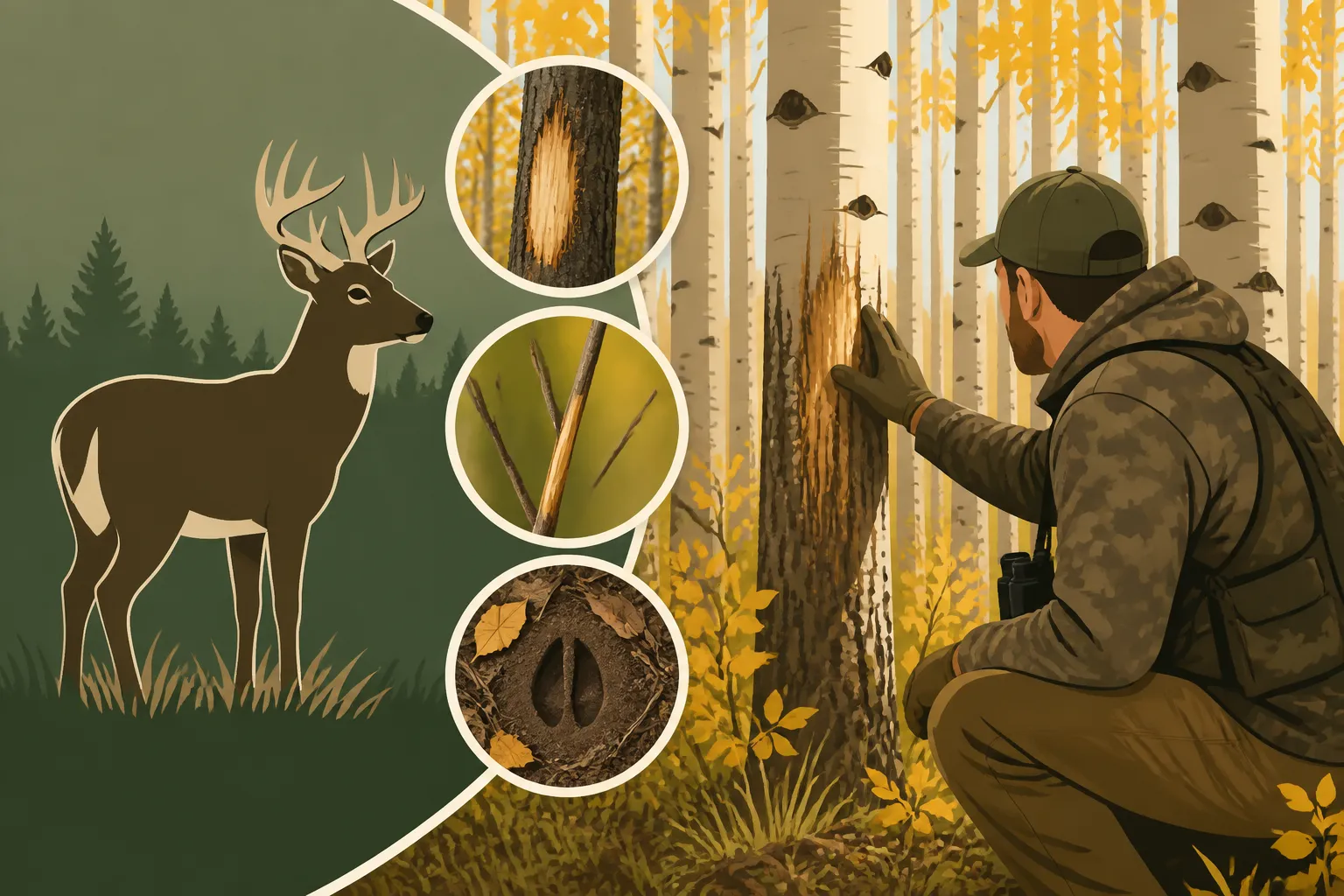
The first step in reading tracks is ensuring you're actually looking at deer tracks. In Manitoba, you might also encounter tracks from moose, elk, or even coyotes, so distinguishing them is essential. Whitetail tracks are typically heart-shaped, with two pointed toes. An adult whitetail track generally measures 2-3 inches long, though bigger bucks will have longer, wider tracks. Moose tracks are much larger and more rounded, while elk tracks are similar to deer but significantly larger and broader. Coyote tracks will show claw marks and usually a more oval shape.
The age of a track is incredibly important. Fresh tracks will have sharp, defined edges, especially in soft soil or fresh snow. If you see tiny dirt or snow particles still clinging to the edges, or if the bottom of the track looks damp in mud, it's very recent. Older tracks will have rounded or melted edges, may be filled with debris, or, in the case of snow, might have a crust of ice forming on the surface. Pay attention to whether the track is frozen solid; if it is, the deer passed through when the ground was still soft. GoHunt and other mapping apps can be invaluable here, allowing you to mark exactly where you find fresh tracks, building a picture of deer movement over time.
Beyond age, observe the deer's gait. A deer walking normally will have distinct tracks, with the hind foot often stepping into or just behind the front foot's impression. If the tracks are spread farther apart with signs of deeper pushes, the deer might be trotting. A deer bounding or running will show a much wider, more erratic pattern, often with all four hoof prints clustered or staggered as it leaps. In snow, look for drag marks. A deer walking slowly through deep snow will often drag its hooves, leaving a faint line between tracks. This can tell you not only about the depth of the snow but also the deer's pace and, potentially, its level of alertness.
Following Deer Trails and Funnels
Tracks lead to trails, and trails reveal patterns. In aspen country, deer create a network of trails, some heavily used and others more subtle. Your goal is to identify the primary thoroughfares and understand what makes them important to deer. Well-worn primary trails are like deer highways, showing consistent, repeated use over time. These often connect core bedding areas to feeding grounds, or feeding grounds to reliable water sources. Look for trails that have been packed down, where vegetation is noticeably bent or broken, and where you can see multiple sets of older tracks.
Secondary trails branch off from these main routes, leading to specific browse areas, secluded bedding spots, or individual rubs and scrapes. These are often fainter but can indicate where a deer has veered off the main path for a particular purpose. As you follow trails, think about where they're going and why. Are they leading from a dense aspen thicket (potential bedding) towards a cut grain field (feeding)? Or from a willow bottom (cover and water) to a higher aspen ridge? Hunting a Willow Run for Whitetails is a great example of how deer use distinct landscape features as travel corridors.
Natural funnels and pinch points are crucial features to identify when scouting trails. These are areas where the landscape naturally constricts deer movement, forcing them into predictable pathways. This could be a narrow strip of timber between two open fields, a brushy creek bottom winding through clearings, or a dense thicket bordered by impassable terrain. A "bush edge" where the aspen meets open farmland is an incredibly common funnel in Manitoba. You might find a single, heavily used trail running parallel to this edge. Hunting a Manitoba Bush Edge highlights the importance of these transition zones. Learning to spot these areas on maps, and then confirming them on the ground, will drastically improve your chances of intercepting deer.
Interpreting Rubs and Scrapes – The Language of Bucks
Rubs and scrapes are perhaps the most exciting and informative signs a whitetail buck leaves, especially during the fall. They are direct evidence of a buck's presence and intentions, offering a glimpse into his movements, size, and activity level.
Understanding Rubs and What They Reveal
Rubs are trees or saplings that a buck has scraped with his antlers, usually to remove velvet, mark territory, or express aggression. They are essentially a buck's calling card, communicating his presence to other deer in the area. The purpose behind a rub varies. Early season rubs often serve to strip velvet, but as the rut approaches, rubs become more about territorial marking and showing dominance. Bucks will also rub to strengthen their neck muscles and condition their antlers.
When you find a rub, pay close attention to its characteristics. The height of the rub on the tree can indicate the size of the buck that made it; a rub high up on a substantial trunk suggests a mature, tall-racked buck. The diameter of the rubbed tree can also be a clue – bigger bucks tend to rub bigger trees. Freshness is key: look for fresh sap on the exposed wood of deciduous trees like aspen, or bright, freshly peeled bark. If the wood is discolored or weathered, the rub is older. A cluster of rubs, or a "rub line," where multiple trees are rubbed in a row, indicates a preferred travel corridor.
In aspen country, rubs are particularly visible because of the smooth, light bark of young aspen trees. A fresh rub stands out starkly against the light trunk. These rub lines often lead from bedding areas to feeding zones or to areas of concentrated doe activity. Following a rub line can lead you directly to a buck's preferred route. When you're in the woods, always be scanning for these peeled trunks; they're like directional arrows pointing the way to a buck's core area.
Scrapes: The Buck's Message Board
If rubs are a buck's calling card, scrapes are his personal message board. A scrape is a patch of bare earth, typically about 1 to 3 feet in diameter, pawed clean by a buck, often underneath an overhanging branch (the "licking branch"). Bucks will urinate into the pawed earth, depositing scent from their tarsal glands, and they'll rub and chew on the licking branch, leaving scent from their preorbital glands. It's a multi-sensory communication hub.
You’ll typically find two types of scrapes: primary and secondary. Primary scrapes are larger, heavily worked, and often revisited, usually found in consistent travel corridors or near bedding areas. They serve as central communication points. Secondary scrapes are smaller, less maintained, and often found off main trails, indicating less intense but still present buck activity. The location of a scrape is important; many are found along edges, trails, or breaks in cover, where bucks feel secure enough to stop and communicate.
The freshness of a scrape is paramount. A fresh scrape will have moist, recently disturbed earth, and if you kneel down, you might be able to detect a strong musky scent. The licking branch above should show signs of recent chewing or rubbing. During the peak of the rut, bucks will visit and refresh scrapes frequently. Finding a fresh scrape tells you that a buck is actively using that area and is likely to return. Combining this knowledge with information about Hunting the Rut in Early to Mid November can help you time your hunts effectively. If you're seeing a lot of fresh scrapes, you know you're in a hot spot.
Droppings, Beds, and Other Subtle Clues
While tracks, rubs, and scrapes are often the easiest signs to spot, a truly skilled woodsman knows how to interpret the more subtle clues. Droppings and bedding areas provide invaluable insights into a whitetail’s diet, health, and daily routines in the aspen.
Droppings and Their Importance
Deer droppings, or scat, might not be glamorous, but they are a goldmine of information if you know how to read them. The shape and consistency of pellets can tell you a lot about a deer's diet and how recently it passed through. In general, deer eating a diet rich in browse (twigs, leaves) will produce firmer, more distinct pellets, often oval or cylindrical. Deer consuming softer mast, like apples or lush greens, might have looser, clumped droppings. The color can also indicate diet; darker pellets suggest consumption of woody browse.
The freshness of droppings is also a crucial indicator. Fresh pellets will be moist, shiny, and dark in color. As they age, they become drier, duller, and might develop a white film if exposed to moisture and fungus. How quickly this happens depends heavily on environmental conditions like humidity and temperature. If you find a pile of fresh, dark, moist pellets, you know a deer was very recently in that exact spot.
The location of droppings can also offer clues. Scattered pellets along a trail suggest a deer on the move, likely feeding as it walks. A large, concentrated pile of droppings often indicates a bedding area, where a deer has spent a significant amount of time. You might also find more droppings in a feeding area. The volume of droppings can signal consistent use by multiple deer or a single deer regularly visiting the spot. Combining droppings with other signs, like tracks, really starts to paint a complete picture of deer activity.
Identifying Bedding Areas and Feeding Sign
Finding a whitetail’s bed is like finding their living room. These are the places where deer spend a significant portion of their day, resting and feeling secure. In aspen forests, bedding areas often consist of flattened patches of grass or snow, depressions in the leaves, or matted-down vegetation. They are typically sheltered from prevailing winds and offer good visibility for the deer to detect danger.
Look for bedding areas on the leeward side of ridges (protected from the wind), in dense thickets of young aspen or willow, or on south-facing slopes during winter where they can soak up the sun’s warmth. You might find several beds clustered together, indicating a small group of deer or a doe with her fawns. During the rut, bucks will often bed in strategic locations that allow them to scent check does moving through. Where Manitoba Whitetails Bed in Deep Snow is a perfect example of how deer adapt their bedding strategies to harsh winter conditions.
Beyond beds, recognizing feeding sign is essential. Whitetails are browsers, meaning they prefer to eat the tender shoots, twigs, and leaves of woody plants. Look for "browse lines" on aspen and other vegetation, where deer have nipped off branches, especially in winter. The way the twig is broken or nipped can sometimes even tell you it was a deer, as opposed to a rabbit or moose. Stripped bark on aspen saplings, particularly lower down, is also a sign of deer feeding, especially during times of scarcity. Being able to identify the preferred food sources within an aspen stand – be it red osier dogwood, saskatoon berries, or young aspen sprouts – will help you pinpoint potential feeding zones.
Integrating Technology and Local Knowledge
While traditional woodsmanship is irreplaceable, modern technology can greatly enhance your ability to read whitetail sign in Manitoba's aspen. Combining digital tools with boots-on-the-ground experience and local insights creates a powerful scouting strategy.
Using Mapping Tools for Sign Reading
Today's hunters have access to incredible mapping applications like GoHunt and onX Hunt. These tools allow you to view satellite imagery of your hunting area, providing an aerial perspective that reveals details you might never see from the ground. Use them to identify potential funnels, pinch points, dense bedding cover, and open feeding areas. Look for changes in vegetation density, creek bottoms, and subtle elevation changes that could influence deer movement.
As you scout, use these apps to mark every rub, scrape, bed, and fresh track line you find. Over time, you’ll build a comprehensive map of deer activity, revealing consistent patterns and preferred travel routes. You can track how these patterns shift with the seasons or in response to hunting pressure. For instance, if you mark a series of rubs along a particular aspen ridge year after year, it clearly indicates a consistent buck travel corridor. Scouting With Satellite Imagery in Manitoba provides even more detail on how to leverage these tools. The ability to visualize the entire landscape and overlay your findings is a game-changer, helping you understand how different pieces of sign connect across the larger habitat.
Furthermore, mapping apps can help you understand the boundaries of public and private land, ensuring you're always hunting legally. They can also show you areas of dense canopy cover that provide winter thermal protection, or open areas that might be hot feeding spots. The more data points you log, the more accurate your understanding of the deer in that specific aspen block becomes. This allows you to plan your stand locations and approach routes with much greater precision, rather than just guessing.
The Value of On-the-Ground Scouting
No matter how advanced our technology becomes, nothing, and I mean nothing, can replace the value of having "boots on the ground." Satellite imagery might show you potential hotspots, but only by walking the terrain can you confirm sign freshness, understand wind swirls in a specific coulee, or truly feel the lay of the land. The subtle nuances of deer sign – the faint smell of a fresh scrape, the specific angle of a rubbed sapling, the texture of a bed in matted grass – can only be experienced firsthand.
It's crucial to visit your hunting areas at different times of the season. What looks like an impenetrable thicket in summer might become a prime bedding area in winter once the leaves fall and snow pushes deer into denser cover. Observe how deer movement changes with variations in weather, crop rotations, or even hunting pressure. Take note of prevailing wind directions and how they might dictate a buck's approach to a feeding area or his bedding location. This firsthand knowledge is what truly develops your hunter's intuition.
Patience and keen observation are your best allies. Don't just walk through the woods; actively read it. Stop frequently, scan for patterns, and look for those subtle clues we've discussed. Learn the local habits of the deer in your specific aspen block. Is there a particular food source that attracts them more than others? Do they consistently use a certain creek crossing? This deep understanding of hyper-local deer behavior, gleaned from diligent scouting, combined with the broader insights from tools like GoHunt and the overall knowledge of Whitetail Hunting in Manitoba, is what will ultimately lead to consistent success. The aspen woods of Manitoba hold incredible potential, but they demand respect and a willingness to learn their language.
Comparing Fresh and Old Whitetail Sign
Understanding the difference between fresh and old sign is paramount. A hunter needs to know if the deer activity they're seeing is current or from weeks ago. Here's a quick guide to help you differentiate:
| Sign Type | Fresh Sign | Old Sign |
|---|---|---|
| Tracks | Sharp, well-defined edges; often moist/damp; clear dewclaws in mud; fresh snow "fluff" | Rounded, faded edges; filled with debris; brittle/crusty in snow; weathered by rain/sun |
| Rubs | Bright, exposed wood; sap present (on deciduous); fresh bark shavings at base; strong scent of wood | Darkened, weathered wood; no sap; bark shavings decomposed; faint or no scent |
| Scrapes | Moist, recently disturbed earth; strong musky odor; fresh chewing/rubbing on licking branch | Dry, packed earth; faint or no odor; weathered licking branch; overgrown with weeds |
| Droppings | Moist, shiny, dark; distinct shape (pellets); soft to touch | Dry, dull, faded; crumbles easily; overgrown with moss/fungus |
| Beds | Flattened vegetation/snow still showing clear impression; fresh hair or faint body odor | Vegetation springing back; snow impression melted/filled; no hair or scent |
| Trails | Recently disturbed leaves/soil; fresh tracks present; distinct path through new growth | Overgrown; leaves settled back; no fresh tracks; indistinct path |
Disclaimer
Hunting involves inherent risks. Always prioritize safety, understand and follow all Manitoba hunting regulations, and respect private property. This guide is for informational purposes only and should not replace official government resources or professional instruction. Always ensure your equipment is in good working order and inform others of your hunting plans and location.