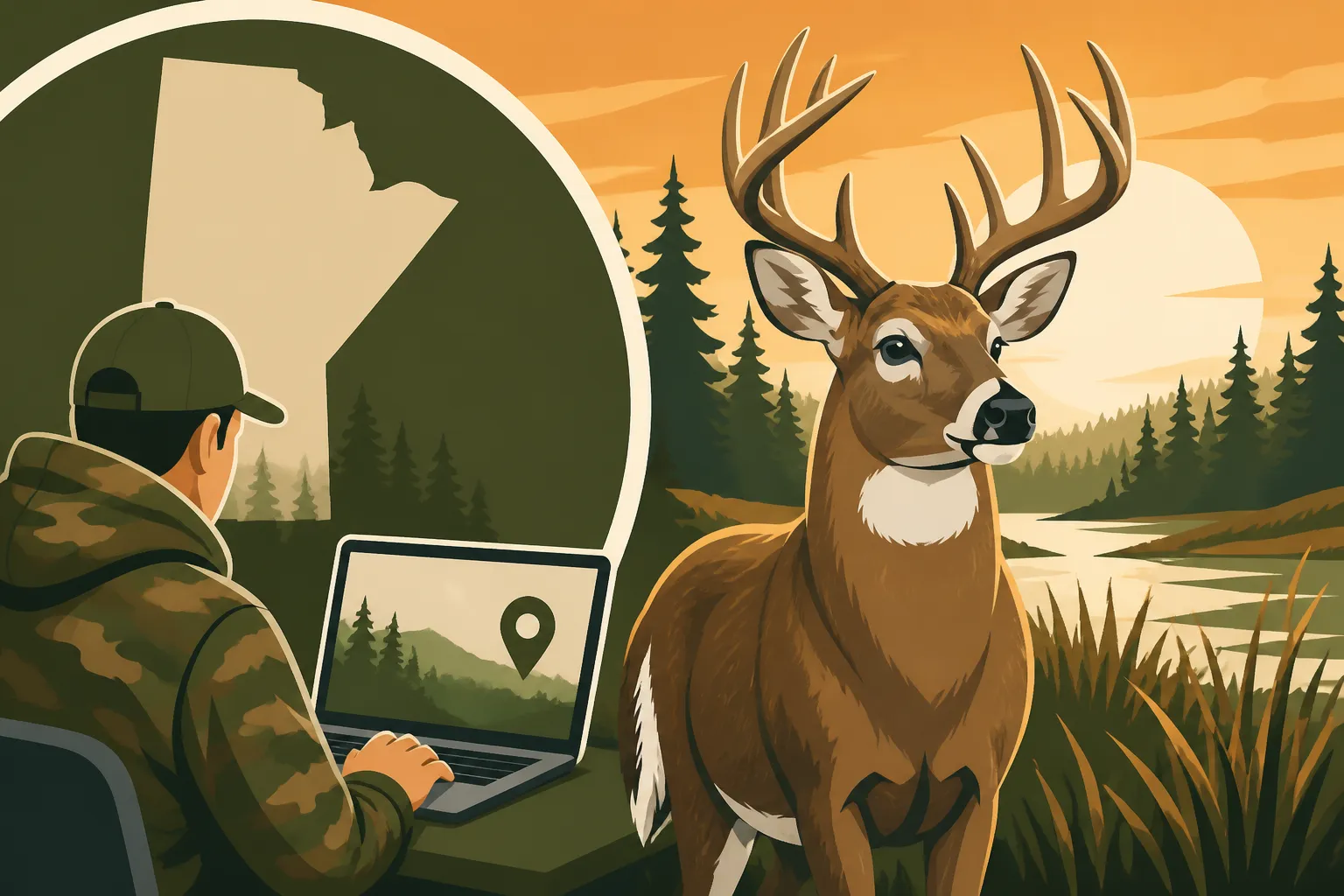
Booking a Manitoba Whitetail Hunt
The dream of chasing a big whitetail buck in Manitoba is real for so many hunters, but for those who aren't familiar with the province, the idea of planning a hunt can feel incredibly daunting. From navigating regulations to finding a reputable guide, it's easy to get lost in the details before you even pack your bags. This comprehensive guide is here to cut through the confusion and help you confidently book an unforgettable guided whitetail hunt in the heart of Canada.
Why Manitoba is a Whitetail Hunter's Dream
Manitoba often flies under the radar compared to some of the more "famous" whitetail destinations, but believe me, this province is a hidden gem for anyone serious about big deer. We've got the perfect blend of genetics, habitat, and just enough wildness to produce some truly remarkable animals. If you're looking for a place where a true giant is always a possibility, Manitoba should be high on your list.
The Reputation for Trophy Bucks
There's something about a Manitoba whitetail that just hits different. Our deer grow to impressive sizes, not just in antler mass, but in sheer body weight. These are heavy-bodied animals, often tipping the scales well over 200 pounds, with some of the biggest bucks pushing past 300 pounds live weight. This incredible size is a direct result of rich agricultural lands providing abundant nutrition, combined with the rugged bush country offering crucial cover and refuge. The deep cold of our winters also plays a role, ensuring only the strongest and most resilient deer survive, contributing to robust genetics that carry over year after year.
Many hunters come here specifically dreaming of a Pope and Young or Boone and Crockett entry, and while nothing is ever guaranteed in hunting, Manitoba certainly offers the potential. The combination of dense cover, rich food sources, and challenging hunting conditions means that many bucks reach maturity without encountering much human pressure, allowing them to express their full genetic potential. This pursuit of a true trophy animal is a huge draw, and it's why so many hunters return to Manitoba once they've experienced it.
Diverse Hunting Environments
One of the coolest things about hunting whitetails in Manitoba is the incredible diversity of terrain you'll encounter. This isn't just one type of hunting; it's a whole menu of experiences. You could be tucked into a ground blind on the edge of a vast stubble field, watching for a massive buck to step out at dusk, or you might find yourself perched high in a treestand deep in a poplar bluff, waiting for movement in the thick aspen and willow.
Our Parkland region, with its mix of rolling hills, aspen bluffs, and agricultural fields, offers classic whitetail habitat. Head further north or east, and you're in the dense Boreal forest, a truly wild environment where big woods bucks roam. Even the Interlake region, nestled between Lake Manitoba and Lake Winnipeg, presents its own unique challenges and opportunities with sloughs, willow runs, and vast stretches of bush. This variety ensures that every hunt, and every GHA, offers a slightly different adventure, appealing to hunters with different preferences and styles.
Seasons and Opportunities
Manitoba’s whitetail seasons are generally generous, offering opportunities from late summer through the early winter. Archery season kicks off first, typically in late August or early September, giving bowhunters a fantastic chance at velvet bucks or early-season patterns before the heavy pressure hits. This is a special time, allowing hunters to experience the transition from summer feeding habits to early fall movements.
As October rolls in, muzzleloader season begins, bridging the gap to the highly anticipated rifle season. Rifle season usually starts in early to mid-November, coinciding perfectly with the peak of the whitetail rut. This is when the big boys are on the move, chasing does and making themselves vulnerable. This prime rut window is a huge draw for guided hunts, as outfitters have often spent months scouting and patterning these deer. Beyond the main seasons, some GHAs offer extended deer seasons, allowing for late-season rifle hunting well into December, which can be an incredible challenge in the snow and cold.
Understanding Manitoba's Whitetail Seasons and Regulations
Before you even start dreaming about big antlers, you need to understand the nuts and bolts of hunting in Manitoba. Regulations can seem like a tangled mess, especially for non-residents, but breaking it down makes it much clearer. It’s all about knowing when and where you can hunt, and what paperwork you need to have in order.
Key Season Dates and Zones
Manitoba's whitetail seasons aren't a one-size-fits-all affair. They vary significantly depending on the specific Game Hunting Area (GHA) you plan to hunt in, and whether you're using a bow, muzzleloader, or rifle. Generally, archery season opens first, typically in late August or early September, often running through to the end of October. Muzzleloader season usually picks up in late October, leading into the much-anticipated rifle season, which usually starts in early to mid-November.
The precise opening and closing dates for each weapon type will differ across the province. For instance, a GHA in the Interlake might have slightly different dates than one in the Parkland or Eastern regions. It's absolutely critical to consult the current year's hunting guide put out by the province, or confirm with your chosen outfitter, to ensure you know the exact dates for your hunt area. Missing a season start or end date can turn an exciting trip into a frustrating one, so always double-check.
Licence and Tag Requirements
This is where it gets a little more involved, especially for non-residents. If you're a Manitoba resident, you'll purchase a general hunting licence and a whitetail deer tag. For Canadian non-residents, the process is similar but with different fee structures. However, for foreign non-residents (those from outside of Canada), it's a completely different ballgame: you must book your hunt through a licensed Manitoba outfitter. This isn't just a recommendation; it's a legal requirement designed to ensure proper management of our wildlife resources and to provide a consistent, quality experience.
Your outfitter will typically guide you through the process of obtaining your foreign non-resident hunting licence and deer tag, which they will help you purchase. It’s important to understand the costs involved for these, as they are separate from your outfitter package fee. You can generally find a breakdown of these costs by checking resources like Manitoba Hunting Licences and What They Cost. Having all your documentation in order before you arrive is paramount, so listen carefully to your outfitter’s instructions regarding permits and declarations.
Understanding Game Hunting Areas (GHAs)
Manitoba is divided into numerous Game Hunting Areas, or GHAs, each with its own set of specific regulations, season dates, and sometimes, even different bag limits or weapon restrictions. Think of GHAs as distinct management zones for wildlife. Your outfitter will be operating within a specific GHA (or multiple GHAs), and their hunting rights and your tags will be tied to that particular area.
It’s a good idea to familiarize yourself with the GHA your outfitter plans to hunt. You can often find detailed maps and descriptions of Manitoba's Game Hunting Areas online. Understanding the boundaries and characteristics of your GHA can give you a better sense of the terrain, potential deer populations, and local nuances. Your outfitter will be an expert on the specific GHA they hunt and can explain why they've chosen that area based on deer numbers, habitat quality, and access.
The Role of a Manitoba Outfitter for Whitetail Hunts
For many, especially non-residents, an outfitter is not just a convenience; it's an absolute necessity. Even if you're a Canadian resident who could hunt on your own, a good outfitter provides an invaluable service, turning a complex logistical challenge into a seamless hunting experience. They are the local experts, the logistics gurus, and often, the key to unlocking access to prime hunting ground.
When a Guide is Mandatory and Why
Let's get this straight right off the bat: if you are a foreign non-resident, meaning you're coming from outside of Canada, you are legally required to book your whitetail hunt through a licensed Manitoba outfitter. There are no exceptions to this rule. This regulation is in place for several important reasons. Firstly, it helps ensure that hunters are familiar with and adhere to Manitoba's sometimes unique hunting laws, promoting safe and ethical hunting practices. Secondly, it helps manage hunter numbers and maintain sustainable game populations by channeling foreign hunting pressure through established, regulated businesses.
Thirdly, outfitters possess intimate knowledge of specific hunting areas, private land access, and local deer movements, maximizing your chances of a successful and rewarding hunt. They operate under strict guidelines and contribute significantly to Manitoba's conservation efforts. For a complete understanding of these requirements, it's always wise to review Rules for Non-Residents Hunting Manitoba before making any plans. Don't risk a costly misunderstanding at the border or in the field; work with a legitimate outfitter.
Services a Reputable Outfitter Provides
A good Manitoba outfitter is much more than just someone who points you towards a deer. They orchestrate nearly every aspect of your hunting trip, from the moment you arrive until you head home. This typically includes comfortable accommodations, whether it's a rustic cabin deep in the bush or a more modern lodge on the edge of town. They’ll also provide hearty, home-cooked meals, ensuring you're well-fed and energized for long days in the field.
Beyond the basics, outfitters arrange transportation to and from your hunting spots, often using trucks, ATVs, or even snowmobiles depending on the terrain and time of year. Most importantly, they provide expert guiding services. This means extensively scouted hunting areas, strategically placed stands or blinds, and guides who understand deer behavior, local sign, and weather patterns. They handle the complex logistics of game recovery, field dressing, and initial meat care, taking a huge burden off your shoulders. Some may even assist with processing or arranging taxidermy services. Essentially, they allow you to focus purely on the hunt itself, minimizing stress and maximizing your chances of success.
Finding the Right Whitetail Outfitter
With so many outfitters out there, how do you pick the right one? It’s a bit like dating – you need to do your research! Start by considering what kind of hunt you're looking for. Are you after a specific weapon choice, like a bow hunt, or a specific time of year, like the peak rut? Once you have a general idea, begin searching for outfitters specializing in Manitoba whitetails. Websites like BookYourHunt and GoHunt can be excellent starting points for discovering reputable operations, as they often feature detailed profiles, hunt offerings, and reviews from past clients. These platforms can help you narrow down your choices based on location, species, and the type of experience you desire.
Don't be afraid to reach out to multiple outfitters. Ask them detailed questions about their success rates (and how they define success!), the typical size of bucks taken, the hunting methods they employ, and what a daily schedule looks like. Request references from previous clients and actually call them. Speaking to past hunters is perhaps the most valuable step in vetting an outfitter. You'll get firsthand accounts of what the camp is like, the quality of the guiding, and whether the experience matched the outfitter's promises. Look for clear communication and transparency throughout this process.
What to Expect on a Guided Manitoba Whitetail Hunt
So, you’ve booked your hunt! Now what? Knowing what to expect on a guided trip can help you prepare mentally and physically, allowing you to settle in faster and focus on the primary goal: hunting. It's an immersive experience, often a blend of intense hunting, camaraderie, and plenty of good food.
Typical Hunt Structure and Duration
Most guided whitetail hunts in Manitoba are structured around a 6-day hunting period, with arrivals and departures on either side, making for a 7-night stay. This allows for sufficient time in the field to adapt to the environment, learn deer patterns, and account for potential weather changes. Your typical day will often start well before dawn, with a quick breakfast, a drive or ATV ride to your stand or blind, and then settling in for the morning hunt. This could last until mid-morning or even past noon, depending on deer activity and outfitter strategy.
After the morning sit, you'll usually head back to camp for a hearty lunch, a chance to warm up, relax, and swap stories with other hunters. This mid-day break is also when guides might move stands, check trail cameras, or scout new areas. The afternoon hunt then commences, taking you back to your spot or a new one for the prime evening hours, often staying until well after legal shooting light. It’s a demanding schedule, but it's designed to maximize your time in the field during peak deer movement.
Accommodations, Food, and Camp Life
The type of accommodations can vary greatly depending on the outfitter and the remoteness of the hunting area. You might find yourself in a comfortable, modern lodge with private rooms and hot showers, or in a more rustic, but equally cozy, cabin deep in the bush. Regardless of the style, reputable outfitters ensure their camps are clean, warm, and provide a comfortable place to rest after a long day. Expect a mix of single and shared rooms, and always clarify sleeping arrangements beforehand if you have specific preferences or are hunting with a group.
The food is often a highlight of any guided hunt! Most Manitoba outfitters pride themselves on serving delicious, home-style meals that are both filling and satisfying. Think big breakfasts, substantial lunches (sometimes packed for the stand, sometimes back at camp), and delicious dinners that might include roast beef, chicken, or even wild game. Camp life is usually a friendly and sociable affair, with hunters sharing stories, tips, and experiences around a common table. In late season, many outfitters utilize heated blinds or enclosed box blinds to make those long, cold sits much more bearable.
Hunting Methods and Terrain
Manitoba offers a wide array of hunting methods for whitetails, and your outfitter will choose the strategies best suited to their specific terrain and the deer's behavior during your hunt. The most common methods involve hunting from elevated treestands or enclosed ground blinds, strategically placed along pinch points, food sources, or travel corridors. Many outfitters excel at enticing bucks during the rut using calls and rattling. If you're hunting in the Parkland fringe, you might find yourself in a box blind overlooking a vast field, perfect for glassing a big buck coming out of the bush. In contrast, if you're deep in the bush country, treestands in thick aspen might be the norm.
Guides will often employ various tactics like rattling antlers to simulate a buck fight or using grunt calls to lure in curious deer, especially during the peak rut. Rattling and Calling Parkland Whitetails is a common strategy here. Some outfitters might also utilize spot-and-stalk tactics in more open or agricultural areas, while others will focus on patience and stand hunting in dense cover. For those interested in Hunting Whitetails in Manitoba's Bush Country, expect a more rugged and immersive experience compared to hunting farmland edges. Be prepared for whatever method your outfitter deems most effective for the conditions and the specific GHA.
Budgeting Your Manitoba Whitetail Hunt
One of the biggest questions on every hunter's mind is, "How much is this going to cost?" A guided whitetail hunt in Manitoba is an investment, but understanding all the components of that investment upfront will help you plan wisely and avoid any unwelcome surprises. Beyond the outfitter's package fee, there are several other costs you need to factor in.
Outfitter Package Costs
The core of your budget will be the outfitter's package fee. This fee typically covers the guiding services, accommodation at their lodge or camp, and all meals for the duration of your hunt. The cost can vary quite a bit, depending on the outfitter's reputation, the amenities they offer, the duration of the hunt, and the time of year (prime rut dates are often more expensive). Generally, you can expect to pay a certain amount for a 6-day guided whitetail hunt.
It's crucial to get a detailed breakdown of what's included and what's not before you book. For a general idea of pricing and what contributes to the overall cost, checking resources like What a Manitoba Guided Whitetail Hunt Costs can be very helpful. Remember, these package fees cover the vast majority of your in-camp expenses and services, but they don't cover everything required for the trip.
Hidden Costs and Extras
This is where many hunters get caught off guard. Beyond the outfitter's fee, there are several "hidden" or extra costs you absolutely must budget for:
- Licences and Tags: As a non-resident, you'll need to purchase your Manitoba hunting licence and whitetail deer tag. These are typically separate from the outfitter's package fee and can add a significant amount to your total.
- Travel Expenses: This includes your flights or fuel if you're driving, as well as any hotels before or after your hunt if your travel schedule requires it. Don't forget airport transfers if the outfitter doesn't provide them, or if your flight schedule doesn't align with their pickup times.
- Meat Processing & Taxidermy: After a successful hunt, you'll need to decide what to do with your meat and trophy. Processing fees can add up quickly, and if you plan on a shoulder mount or full rug, taxidermy costs and shipping fees will be substantial.
- Gratuities/Tips: It is customary to tip your guide, and often the camp staff (cook, camp hand), for their hard work and service. This is a significant expense that should be factored into your budget. Generally, tips are a percentage of your hunt cost, and your outfitter can advise on local norms.
- Personal Gear: While not strictly an "extra" on the hunt itself, investing in quality clothing, optics, and other gear suitable for Manitoba's conditions is essential. Things like thermal underwear, a good layering system, and high-quality boots (especially for Dressing for Manitoba's November Cold or Hunting Safely in Deep Winter Cold) are critical.
Deposit, Payment, and Cancellation Policies
Outfitters typically require a non-refundable deposit to secure your booking, often a percentage of the total hunt cost. The remaining balance is usually due several months before the hunt, or sometimes upon arrival at camp. Always clarify the payment schedule and accepted payment methods.
It is absolutely crucial to understand the outfitter's cancellation and refund policy before you put down any money. Life happens – illnesses, emergencies, or unforeseen circumstances can arise. Know what happens to your deposit and any payments made if you have to cancel. This is also where travel insurance and hunt cancellation insurance become very valuable. While not always cheap, they can protect your significant investment in case you can't make the trip. Read every line of the contract or booking agreement carefully, and don't hesitate to ask for clarification on anything you don't understand.
Preparing for Your Manitoba Whitetail Adventure
Booking the hunt is just the first step; the real work begins with preparing yourself for the challenge. Manitoba whitetail hunting, especially during the colder months, can be physically demanding. The more prepared you are, the more you'll enjoy the experience and increase your chances of success.
Physical and Shooting Preparation
While many guided hunts involve less strenuous hiking than a mountain hunt, you still need to be in reasonable physical condition. You might be climbing into treestands, navigating uneven bush trails, or helping with game recovery in deep snow. A few months before your hunt, incorporate regular walking, light cardio, and perhaps some strength training into your routine. This isn't about running a marathon, but ensuring you can comfortably handle the activity and cold.
Equally important is your shooting preparation. You've invested heavily in this hunt, so don't let a missed shot be the reason for disappointment. Practice shooting from various positions you might encounter in the field – from a seated position in a blind, from an elevated stand, or even from your knees. Confirm your rifle or bow is sighted in perfectly, and practice at different distances relevant to typical whitetail shots (often 50-200 yards for rifle, 20-40 yards for bow). Your outfitter will appreciate a hunter who is confident and proficient with their weapon.
Essential Gear and Clothing
Manitoba weather, particularly in November, can be notoriously unpredictable and cold. Layering is not just a suggestion; it's a necessity. Start with good quality moisture-wicking base layers, add insulating mid-layers (fleece, down, or synthetic puffies), and top it off with a waterproof and windproof outer shell. Bring multiple sets of gloves, warm hats, and neck gaiters. Footwear is paramount: invest in insulated, waterproof boots rated for extreme cold, and bring several pairs of wool socks. Nothing ruins a hunt faster than cold feet.
Don't forget quality optics – binoculars are essential for spotting deer in low light or thick cover, and a rangefinder is a must-have for accurate shot placement. Pack a headlamp with extra batteries, a small daypack, personal first-aid items, and any medications. Your outfitter will provide a more specific packing list, but be prepared for cold, snow, and potentially mud. For a deep dive into staying warm, check out Dressing for Manitoba's November Cold and Hunting Safely in Deep Winter Cold.
Travel and Firearm Logistics
Traveling to Manitoba with a firearm requires specific attention to detail. If you are a foreign non-resident, you must complete a Non-Resident Firearm Declaration Form (RCMP 5589) in triplicate. This form acts as a temporary licence and registration for your firearm. You will present this form to a Canada Border Services Agency (CBSA) officer upon entry, along with your firearm. There is a fee for this declaration, and it's valid for up to 60 days. You cannot bring prohibited firearms into Canada, so ensure your weapon is legal for import.
Ammunition limits also apply, usually a maximum of 200 rounds per person. Ammunition must be stored separately from the firearm, and both must be stored in secure, locked containers. If flying, declare your firearm to the airline when checking in, and follow all TSA and airline regulations for transport. Your outfitter can often provide detailed guidance on Bringing Firearms Into Manitoba and navigating the border crossing. Always be honest and upfront with border officials; any misrepresentation can lead to serious consequences.
After the Shot: Game Handling and Trophy Care
The shot is made, the buck is down – now the real work, and careful planning, begins. How you handle your game and trophy in the field will directly impact the quality of your meat and the preservation of your antlers and hide. Your outfitter will be instrumental in this process, but knowing what to expect is key.
Field Dressing and Meat Care
Upon harvesting your whitetail, your outfitter and guide will swiftly move into action. Their primary goal is to ensure the meat is properly field dressed and cooled as quickly as possible. In Manitoba's often cold November weather, this natural refrigeration works to your advantage. Your guide will typically handle the field dressing, removing the internal organs to allow the carcass to cool down and prevent spoilage. You might be asked to assist, and it's always a good learning experience if you're willing.
Once field dressed, the deer will be transported back to camp. Outfitters usually have dedicated game storage facilities – often a cool room or a meat pole – where the animal can hang and properly age. Proper ventilation and temperature control are crucial. Your outfitter will then discuss your options for meat processing. Some camps may offer basic butchering services, while others will transport the carcass to a local meat processor. Understanding Meat Care in Manitoba's Cold Snaps is vital to ensuring you take home quality venison.
Taxidermy and Trophy Shipping
If you've harvested a trophy buck, the next step is preserving the cape and antlers. Your guide will expertly cape the animal in the field, ensuring enough hide is taken for a quality shoulder mount or rug. They'll also carefully remove the skull plate with the antlers. Many outfitters have relationships with local taxidermists and can arrange for your trophy to be dropped off directly. This can simplify logistics, as the taxidermist can handle the long-term preservation and shipping once the work is complete.
However, you might prefer to use your own taxidermist back home. In this case, your outfitter will prepare the cape and antlers for transport. This usually involves salting the hide and ensuring it's properly dried, and cleaning the skull plate. Shipping antlers and capes across international borders, especially into the United States, involves specific paperwork and inspection requirements. Your outfitter should be knowledgeable about these regulations and assist you. Don't underestimate the cost of shipping a cape and antlers; it can be substantial. For detailed information on border crossing for trophies, refer to Taking a Trophy Across the Border.
CWD Testing Requirements
Chronic Wasting Disease (CWD) is a serious concern for deer populations across North America, including in parts of Manitoba. The province has implemented mandatory CWD sampling requirements in specific Game Hunting Areas (GHAs) to monitor and control the spread of the disease. If you harvest a whitetail in one of these designated CWD surveillance zones, your deer will be required to be tested.
Your outfitter will be fully aware of these requirements and will facilitate the sampling process. Typically, this involves taking specific lymph nodes from the harvested animal. The outfitter will ensure the sample is collected correctly, labelled, and submitted to the provincial authorities for testing. They will inform you of the process, the timeline for results, and any implications should a positive result occur (though this is rare). This is a vital step in responsible wildlife management, and your cooperation is essential. For more information on this important topic, check out Manitoba's CWD Sampling Requirements.
Making Your Booking Decision
Choosing the right outfitter is arguably the most critical step in planning your Manitoba whitetail hunt. It can be the difference between a once-in-a-lifetime adventure and a disappointing experience. Taking the time to do your due diligence will pay dividends and ensure your investment leads to a memorable and successful trip.
Vetting Potential Outfitters
Once you've narrowed down a few potential outfitters, it's time to dig deeper. Don't be shy about asking questions – this is your hard-earned money and valuable vacation time you're investing. Ask about their experience, how long they've been operating, and specifically how many whitetail hunts they guide each year. Inquire about their typical client success rates; a good outfitter will be transparent about this, explaining the difference between "opportunity rates" (seeing a shooter buck) and "harvest rates" (killing a buck).
Crucially, always ask for references. A reputable outfitter will gladly provide contact information for past clients, preferably recent ones. Make those calls! Ask the references about the quality of the guiding, the accommodations, the food, how transparent the outfitter was, and if they would book with them again. These firsthand accounts are invaluable. You can also search online forums and reviews, but always cross-reference information and be wary of overly glowing or excessively negative, unsubstantiated reviews.
Clarifying Expectations and Contract Details
Before you sign anything or send a deposit, ensure every detail of your hunt is clear and in writing. This includes the exact dates of your hunt, what's included in the package fee (guiding, lodging, meals, transportation in the field), and what's not included (licences, tags, processing, taxidermy, tips). Discuss the type of stands or blinds used, typical hunting distances, and the outfitter's policy on wounded game.
A clear, written contract or booking agreement should outline all these terms, as well as the payment schedule, cancellation policy, and any liability waivers. Read every single clause. If something isn isn't clear, ask for clarification. Don't assume anything. Having everything in writing protects both you and the outfitter and prevents misunderstandings down the road. This also ensures that the outfitter's definition of "success" aligns with yours, whether it's the size of the buck, the hunting experience, or simply the opportunity to participate.
Best Time to Book
Manitoba whitetail hunts, especially during the prime rut weeks of mid-November, are incredibly popular and tend to book up quickly. Many hunters book their trips a year or even two years in advance to secure their preferred dates. If you have specific dates in mind, particularly for the rifle rut, it's advisable to inquire and book as early as possible.
While the rut is the most sought-after period, don't overlook other seasons. Early archery season in September can offer a unique experience with bucks still in velvet or predictable summer patterns. Late-season hunts in December, despite the intense cold, can be very productive as deer congregate around food sources. However, for maximum flexibility and choice, especially for the high-demand rut weeks, aim to book well in advance. For more insights on peak booking times, check out When Manitoba Outfitters Book Up.
| Aspect | Considerations for Booking |
|---|---|
| Outfitter Type | Research specialization (e.g., archery vs. rifle, specific GHAs). Check their track record and reputation. |
| Season Dates | Align your travel dates with Manitoba's specific archery, muzzleloader, or rifle seasons and your preferred hunting style. |
| Location (GHA) | Understand which GHA the outfitter hunts in and its specific regulations. |
| Included Services | Verify what the package covers: guiding, lodging, meals, transportation. Exclusions: licences, tags, processing, tips, travel. |
| Costs | Factor in licence/tag fees, travel, meat/trophy processing, and gratuities in addition to the outfitter package. |
| References | Always contact past clients to get honest feedback on the outfitter's service and camp experience. |
| Contract | Ensure all terms, conditions, payment schedules, and cancellation policies are clearly outlined in writing. |
| Preparation | Plan for physical fitness, shooting practice, and appropriate gear for Manitoba's cold and diverse terrain. |
Disclaimer
This article is for general informational purposes only and does not constitute professional advice. Laws, prices and regulations vary by location and change over time. Consult a qualified professional for guidance on your specific situation.