Hunting a Native Grassland Pasture
The vast, rolling expanses of native grassland pastures in Manitoba can look deceptively barren to the uninitiated hunter. You might drive past them, thinking they hold little game compared to the dense bush or the timbered bluffs. But beneath that sweeping sky and seemingly endless grass lies a vibrant ecosystem teeming with wildlife. The real challenge, and the real reward, comes from learning how to read these subtle landscapes, understand the game that thrives there, and employ specialized tactics to turn what looks like an impossible hunt into a truly memorable experience. This guide will walk you through the nuances of hunting Manitoba's native grassland pastures, helping you unlock their incredible potential.
Understanding Native Grassland Pastures in Manitoba
Before you can effectively hunt these areas, it's crucial to understand what makes them unique. These aren't just empty fields; they are complex environments with their own rules and rhythms.
What Defines a Native Grassland Pasture?
When we talk about native grassland pastures in Manitoba, we're referring to land that has largely retained its original prairie characteristics, even if it's currently used for cattle grazing. Unlike cultivated hay fields or tame pastures seeded with non-native species, these areas are dominated by indigenous grasses like big bluestem, switchgrass, and various fescues, interspersed with a rich diversity of wildflowers and other native plants. This underlying complexity creates a much more robust and resilient habitat. You'll often find that the terrain isn't flat, but rather features subtle rolling hills, shallow depressions, and pronounced coulees. On the fringes or in low-lying areas, you might discover pockets of willow thickets, small aspen bluffs, or oak clumps that offer critical cover and moisture.
The presence of livestock, particularly cattle, is a common feature of these pastures. While some hunters might see this as a deterrent, it can actually contribute to the ecological richness. Grazing patterns create varied grass heights and densities, which in turn foster diverse forage opportunities and create pockets of cover for wild game. Furthermore, cattle require water, meaning these pastures often have established water sources like dugouts, creeks, or natural springs. These become crucial congregation points for all wildlife, especially during drier periods. The key is to look beyond the cattle and recognize the intricate ecosystem that supports an abundance of wild species. It's a landscape of subtle variations, where every slight rise or dip in the land can be significant.
Because dense forest cover is scarce, any small stand of trees, a robust shelterbelt, or a deep, brushy coulee becomes disproportionately important. These features act as vital travel corridors, secure bedding areas, and staging points for animals moving between feeding grounds. Even a slight elevation can provide a strategic vantage point for a buck or an elk to survey its surroundings, while a low-lying swale can offer crucial thermal cover against the biting prairie winds. What might appear as a monotonous stretch of grass is, in fact, a mosaic of microhabitats waiting to be understood.
The Wildlife Drawn to These Ecosystems
Native grassland pastures are true magnets for a variety of game species in Manitoba, offering crucial food and cover resources. White-tailed deer are among the most prominent residents, and the abundant forage often contributes to impressive body weights and antler growth. These deer are masters of concealment, often bedding down in sparse treelines, the thickest willow pockets within coulees, or simply in areas of tall, dense grass, seemingly disappearing into thin air. A skilled hunter knows that even seemingly minimal cover can hide a mature buck. While Reading Whitetail Sign in Manitoba Aspen might focus on different clues, here you'll be looking for less obvious rubs on isolated saplings, distinct tracks along cattle paths, and well-used beds pressed into the thicker vegetation.
Elk also thrive in these open-to-timber transition zones, particularly in regions like the Duck Mountains or Turtle Mountains. They use the grasslands for extensive grazing, often moving between these open feeding areas and the security of adjacent forested blocks. Their presence is usually unmistakable, marked by large tracks, significant droppings, and sometimes wallows in wetter areas. You might also find evidence of Elk Damage on Manitoba Grain Farms bordering these pastures, a clear sign of their nocturnal foraging habits. The rich nutrient base of these grasslands contributes to healthy, robust elk populations.
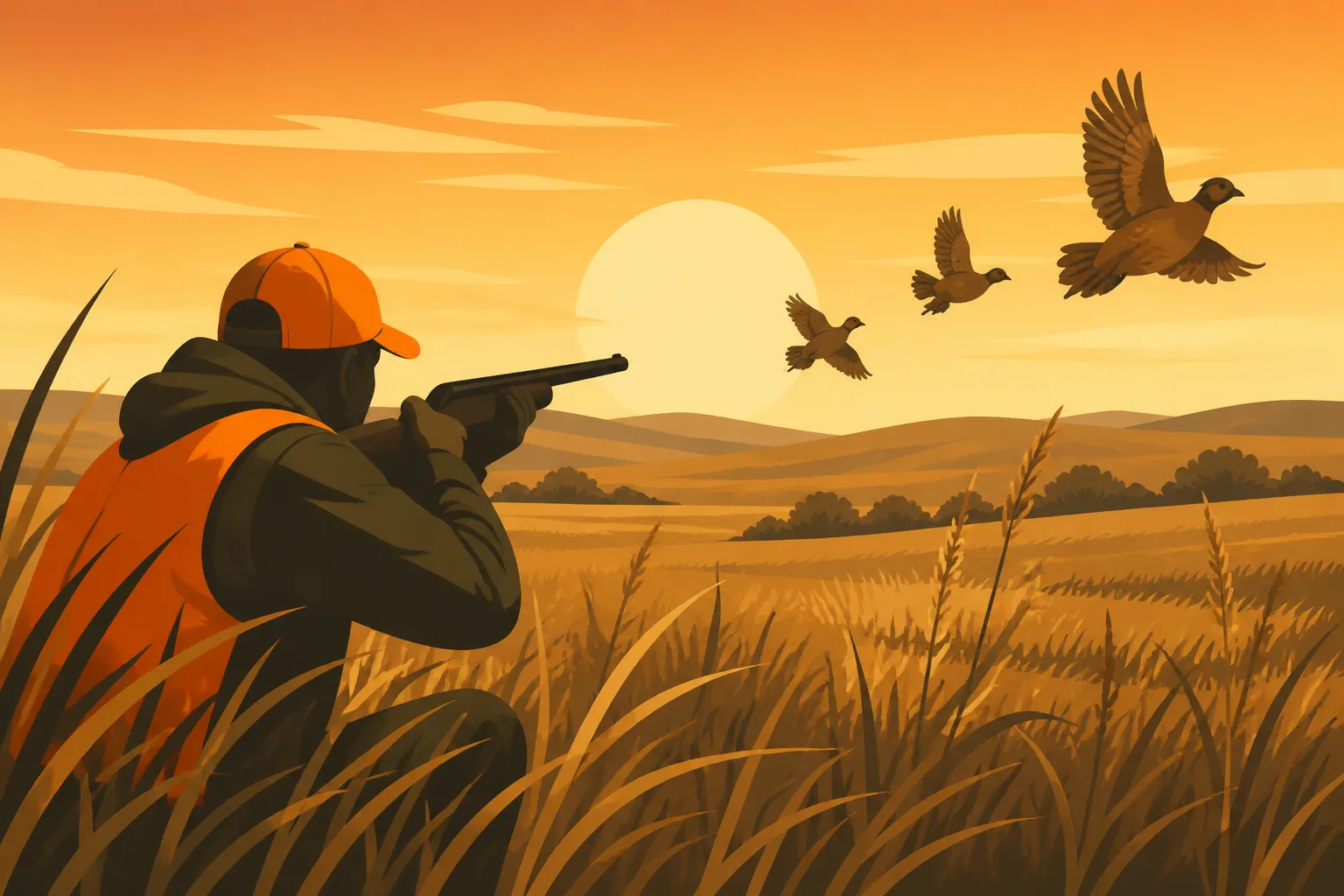
Beyond the big game, these pastures are a haven for upland birds. Sharp-tailed grouse are iconic grassland inhabitants, frequently found near the interface of grass and agricultural fields or sparse brush. Hungarian partridge, while often associated with shelterbelts and field edges, will also venture deep into pastures to feed and loaf. The abundant insects and seeds in native grasses provide a critical food source, and the varied cover offers protection from aerial predators. Walking Up Sharp-Tailed Grouse in Manitoba is a quintessential grassland hunting experience, demanding a keen eye for subtle movements and a good understanding of their flush points. These areas are also prime territory for predators like coyotes, drawn by the plentiful rodents, rabbits, and deer fawns, making them excellent locations for Calling Coyotes at First Light.
Scouting Strategies for Native Grassland Pastures
Scouting vast grasslands requires a methodical approach that combines modern technology with traditional boots-on-the-ground techniques. You can't just wander aimlessly; you need a plan.
Digital Reconnaissance with Mapping Tools
Before you even consider stepping foot on a native grassland pasture, your initial scouting efforts should begin with a high-quality mapping application like onX Hunt or GoHunt. These tools are indispensable for analyzing overwhelming landscapes from the comfort of your home. Start by meticulously examining the topography for subtle changes in elevation. Even a slight rise can serve as a bedding advantage for an animal seeking a vantage point, while a low-lying draw can act as a natural funnel for movement. Pinpoint any pockets of thicker cover – willow bogs, small aspen bluffs, or even areas of exceptionally tall, dense grass – as these are your primary points of interest. Mark potential water sources, such as dugouts, natural springs, or seasonal seepages, which are critical attractants for all wildlife. Also, identify any linear features like fence lines, old trails, or faint cattle paths that animals might be using as travel corridors. Effective Scouting With Satellite Imagery in Manitoba is paramount here, as what appears flat on a traditional contour map can reveal vital, subtle undulations from an aerial perspective.
Another critical function of digital scouting is accurately identifying property boundaries. Given that many native grasslands are privately owned or managed as community pastures, it's absolutely essential to know where public land ends and private property begins. Mapping applications often provide property line overlays with landowner information, which can prevent accidental trespassing and save you significant time and frustration. You'll also want to mark all potential access points, whether they are gravel roads, faint two-track trails, or designated parking areas. Planning your entry and exit routes meticulously is vital for both efficiency and safety, especially when navigating the sheer scale of these areas. Don't forget to cross-reference your findings with designated Manitoba's Game Hunting Areas and any specific regulations that might apply to your chosen area, as rules can vary from zone to zone.
| Feature Type | Importance to Wildlife | How to Spot on Map (onX Hunt/GoHunt) | Notes for Hunter |
|---|---|---|---|
| Elevation Changes | Bedding, vantage points, wind breaks | Contour lines, shaded relief | Deer/elk often bed on leeward side of rises. |
| Thick Cover Pockets | Primary bedding, security, thermal regulation | Darker green patches, high-res aerials | Focus ground scouting and stand placement here. |
| Water Sources | Essential for all wildlife daily | Blue dots/areas, historical aerials | Observe edges for fresh tracks and sign. |
| Travel Corridors | Predictable movement between food/cover | Faint lines in vegetation, breaks | Good for ambushing animals on the move. |
| Fence Lines/Edges | Natural barriers, travel routes, rubbing posts | Clear linear features | Animals often follow these boundaries for travel. |
| Agricultural Edges | Food sources (crop damage), transition zones | Contrasting field types | Prime areas for early morning/late evening feeding. |
| Coulees/Draws | Concealed travel, bedding, wind protection | Distinct depressions in contour lines | Excellent for stalking and finding sheltered beds. |
Boots-on-the-Ground Scouting Techniques
After your digital deep dive, it’s time to put boots on the ground. Scouting native grasslands on foot means covering a lot of territory, often far more than in timbered areas. While a quad or side-by-side might be permissible for accessing certain areas on Crown land or with explicit landowner permission (always check Quad and Side-by-Side Rules on Crown Land), the most effective scouting happens on foot. Concentrate your efforts around those key points of interest identified on your maps: cover pockets, water sources, and any noticeable terrain breaks. Look for actual game trails, which might not be as deeply worn as in the forest but will still show as flattened paths through the grass. This is where you'll find the most concentrated sign: fresh tracks, droppings, rubs on any isolated saplings or fence posts, and distinct bedding areas.
Timing is crucial for ground scouting. Early mornings or late evenings are often the most productive, not just for potentially spotting game, but also for finding fresher sign. Dew can highlight tracks that would be invisible later in the day, and you'll get a clearer understanding of how animals are using the area during their active periods. Pay close attention to wind direction and how even subtle topographical features can influence it; a slight rise can create a windbreak, while a draw can funnel air currents. If you identify a promising spot, don't just move on. Take the time to sit quietly and observe. Watch for animals entering or exiting cover, note their precise travel routes, and try to discern any patterns. This "silent scouting" can reveal more about game movement than hours of simply walking.
Remember that animals in open grassland environments are incredibly alert and possess superior eyesight. Your ground scouting efforts must be as stealthy as your hunting approach. Utilize high-quality binoculars or a spotting scope extensively from elevated positions to scan vast areas before moving in. This allows you to identify game or fresh sign from a distance without disturbing the area. If you find tracks leading into a particularly thick patch of grass, resist the urge to bust straight in; instead, circle downwind and try to observe from a distance without entering their core bedding area. The overarching goal is to gather maximum information with minimum disturbance, preserving the integrity of the area for your hunt.
Hunting Techniques for Manitoba's Grassland Pastures
Hunting in native grasslands demands a unique blend of patience, precise execution, and a deep understanding of how animals navigate and utilize open terrain.
Still-Hunting and Spot-and-Stalk Approaches
Still-hunting in native grasslands is a refined art, less about moving silently through dense undergrowth and more about meticulously using the subtle contours of the land to your advantage. It’s a deliberate, slow process of walking a few steps, stopping, and intensely glassing your surroundings. You'll need to use every available piece of cover to break up your silhouette – slight folds in the land, small rises, or even patches of exceptionally tall grass. Always move into the wind, allowing it to carry your scent away and to muffle any slight sounds you might make. The sheer scale of these areas means you often won't spot game until they are a considerable distance away, making a quality pair of binoculars an absolute necessity, not an option. Spend significantly more time looking than walking, constantly sweeping for the tell-tale twitch of an ear, a glint of an antler, or the subtle flick of a tail against the vast, muted backdrop of the grass.
Spot-and-stalk is arguably the most effective and exhilarating technique for pursuing big game in these wide-open environments. This strategy begins by locating a high vantage point – be it a natural bluff, a small hill, or even the legally parked roof of your truck (provided you are not hunting from the vehicle). From this elevated position, systematically glass large areas, focusing particularly during prime feeding times at dawn and dusk. Once you spot an animal, the true challenge begins. Carefully plan your approach, leveraging every dip, rise, and patch of cover to conceal your movement. Wind direction is critically important; a sudden change can instantly betray your presence. Be prepared for extensive crawls, often on your belly, through tough, thorny ground and tall grass. It's physically demanding but immensely rewarding when executed successfully. Patience is your most valuable asset here; attempting to rush a stalk in open country almost inevitably leads to disaster. This is precisely where strategies like Hunting a Bluff Between Two Fields become crucial, demanding a master's touch in reading the land and the wind.
Using Blinds and Ambush Points
While the thrill of the spot-and-stalk is undeniable, employing static hunting methods from blinds or pre-selected ambush points can be incredibly effective, especially for specific species or in areas with predictable animal movements. Ground blinds, whether portable pop-ups or meticulously brushed-in natural hides, can be excellent choices when positioned along known game trails, near vital water sources, or on the edges of those important cover pockets. The ideal scenario is to set these blinds up well in advance of the season, allowing animals ample time to become accustomed to their presence and lose any initial wariness. If you're targeting specific game, such as deer during the rut, consider placing a blind in areas where you’ve observed significant activity or along natural funnels created by topography or fencing. While Hanging a Stand on a Manitoba Bush Edge is a common strategy in timber, the fundamental principle of intersecting cover with food sources remains identical.
Another highly effective ambush strategy involves targeting the critical transition zones between native grassland and adjacent agricultural fields. Deer and elk frequently utilize the security of tall grass or dense cover during daylight hours, moving into crop fields at dusk to feed. Setting up a blind or an ambush point on a field edge or along a shelterbelt is an excellent way to intercept these predictable movements. For upland birds, understanding their dusting areas, preferred loafing cover, and feeding routes is paramount. A well-placed blind near a sharp-tailed grouse dancing ground (lek) or a communal watering hole could provide shot opportunities, although walking them up remains a popular and traditional approach. Always ensure you adhere to local regulations regarding blind placement and usage on both public and private land. For waterfowl, particularly geese, hunting native grasslands bordering stubble fields where birds are actively feeding is a classic Manitoba strategy. These hunts, as described in Field Hunting Geese in Manitoba Stubble, often involve elaborate decoy spreads to pull birds into shooting range over these expansive areas.
Overcoming Challenges and Maximizing Success
Hunting native grassland pastures comes with its own set of unique challenges, but with the right preparation and mindset, these can be transformed into opportunities for success.
Dealing with Open Terrain and Wind
The inherent openness of native grassland pastures is a defining characteristic, presenting both incredible advantages and significant hurdles. While it offers unparalleled visibility for spotting game from vast distances, it also means there's precious little cover to conceal your approach. Animals accustomed to these environments are often more wary and possess exceptionally keen eyesight. This demands that every movement you make be deliberate, slow, and calculated. Wear camouflage patterns that effectively blend with the muted browns, tans, and subtle greens of the prairie grasses, rather than the deep, contrasting patterns designed for dense forest. Breaking up your silhouette is absolutely paramount. When still-hunting or stalking, consistently use the terrain to your advantage: stay low in depressions, utilize the backside of rises, or move through the shadow of any sparse vegetation.
Wind is an almost constant companion in Manitoba's grasslands, often relentless and prone to swirling unpredictably. It can make scent control incredibly difficult and even significantly affect shot placement. Always strive to hunt into the wind, or at the very least, with a strong crosswind that carries your scent away from where you anticipate game to be. Pay close attention to how even subtle topographical features can alter wind direction; a deep draw might create a funnel, while a significant bluff could create an eddy. Crucially, practice shooting in windy conditions at the range. Strong, sustained gusts can drastically impact both bullet and arrow trajectory, especially at the longer ranges often encountered in open country. Dress in multiple layers to combat the biting wind and cold, which can penetrate even the warmest clothing when you're exposed for extended periods. This focus on staying warm is not just about comfort but is a vital part of Hunting Safely in Deep Winter Cold, ensuring your physical endurance and mental focus remain sharp.
Navigating Access and Landowner Relations
The reality is that most native grassland pastures in Manitoba are privately owned, frequently by ranchers or farmers. Consequently, gaining access is an absolutely critical first step and often the most significant hurdle for many hunters. You must never assume that any land is public. Always seek explicit, verbal permission directly from the landowner before you ever set foot on their property. This often means actively Knocking on Doors in Manitoba Farm Country or making phone calls well in advance of the hunting season. Approach these interactions with politeness, respect, and be prepared to demonstrate your responsibility as a hunter. Consider offering to share a portion of your harvest, or if you have relevant skills, perhaps offer to assist with a chore on the farm. Building a positive, trusting relationship with landowners is not merely good etiquette; it's fundamental for securing and maintaining long-term access to these valuable hunting grounds.
Once you obtain permission, ensure you thoroughly understand the precise boundaries of where you are allowed to hunt, any specific rules the landowner might have (e.g., no vehicles off designated trails, avoid certain sensitive areas, always close gates), and if they expect you to report back after your hunt. Demonstrating unwavering respect for their land, livestock, and property is non-negotiable. If you happen to be hunting on Crown land, it's equally important to clearly understand where that public land is located and what the specific regulations are for that particular Manitoba's Game Hunting Areas. Manitoba's Manitoba Landowner Permission Law unequivocally states that explicit permission is required for hunting on private land. Even on community pastures, which might appear public, there are frequently specific rules regarding hunting and access that must be diligently followed. Thorough preparation and respectful interaction are the non-negotiable keys to unlocking the incredible hunting potential of these vast and productive native grassland pastures.
Disclaimer
This article is for general informational purposes only and does not constitute professional advice. Laws, prices and regulations vary by location and change over time. Consult a qualified professional for guidance on your specific situation.