When Manitoba’s Archery Deer Season Runs
Trying to pin down the exact dates for Manitoba's archery deer season can feel like a frustrating game of hide-and-seek with the hunting regulations. It's easy to get lost in the various Game Hunting Areas (GHAs) and their specific opening and closing times, leading to confusion and missed opportunities. This comprehensive guide is here to untangle all that, providing a clear breakdown of when and where you can pursue whitetails with your bow in Manitoba, helping you plan your season with confidence.
The Core of Manitoba's Archery Deer Season
Manitoba offers a fantastic archery deer season that kicks off well before the rifle hunters even consider heading afield. This early start provides archers with a unique chance to hunt whitetails in warmer weather, often before the deer become heavily pressured. Understanding the general framework of these seasons is your first step toward a successful hunt.
General Season Openings and Closings
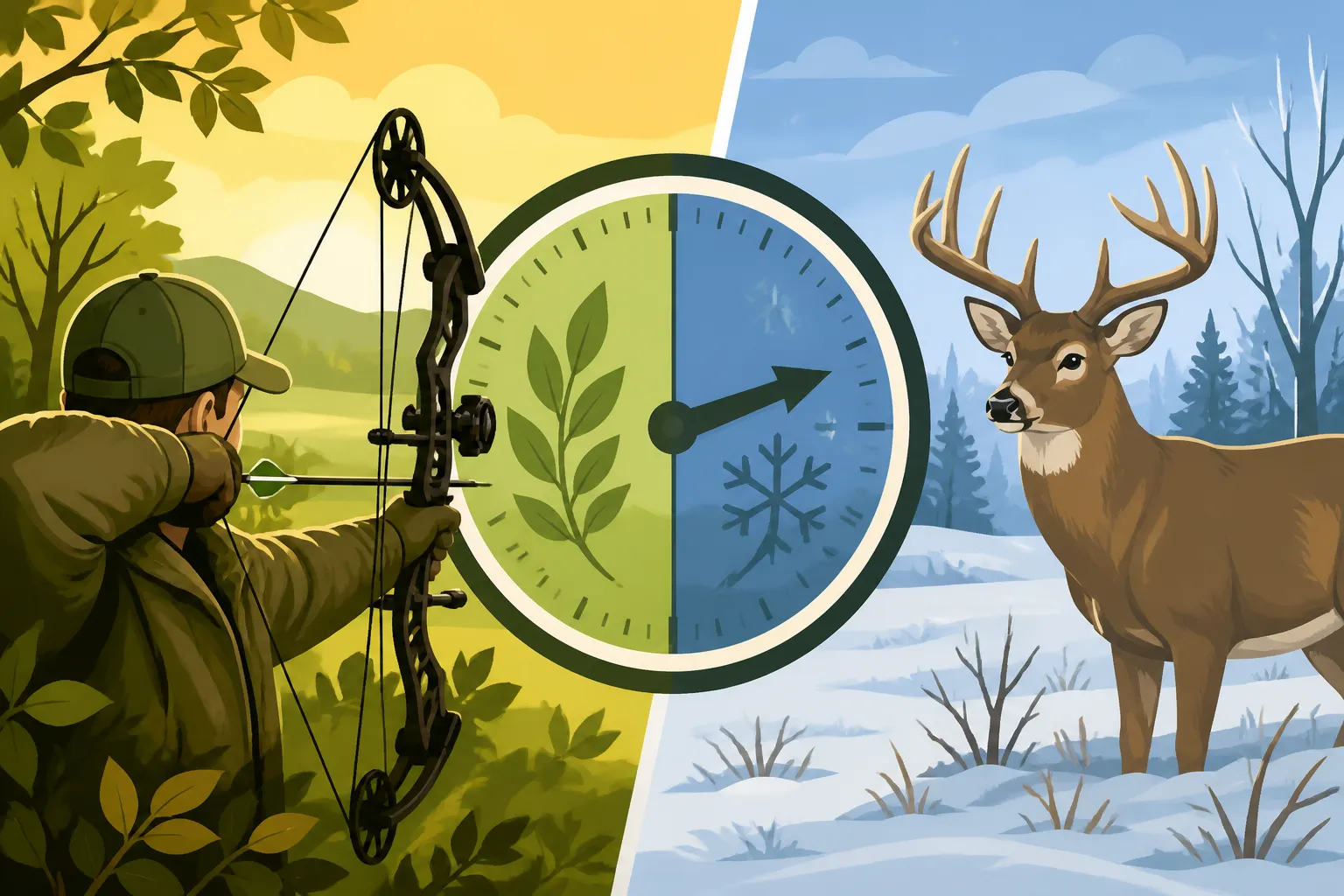
Typically, Manitoba's archery deer season across much of the province opens in late August or early September and often extends right through to late fall, sometimes even into December, depending on the specific Game Hunting Area (GHA). This long season is a real blessing for archers, allowing for diverse hunting strategies, from early-season patterns to the frantic chaos of the rut, and even into the colder, late-season crunch. The exact calendar dates are crucial, and they do shift slightly year to year, so always confirm with the official Manitoba Hunting Guide. For instance, many popular GHAs in the Parkland and Interlake regions often see an archery opener in the last week of August or the first week of September, running continuously until the general rifle season opens, and then sometimes continuing concurrently or even exclusively as an archery-only extension. This overlap is key for archers who might want to chase deer during the rifle season in areas where archery is permitted.
Early Archery Opportunities and Challenges
The early archery season, generally from late August through September, presents a unique set of opportunities and challenges. Deer are often still on predictable summer patterns, hitting agricultural fields in the evenings or moving through lush green cover to water sources. This can be an excellent time to pattern bucks that are still in velvet or just shedding it, feeding heavily and less wary than they will become later in the fall. You might find yourself setting up near alfalfa fields, soybean plots, or even small berry patches that deer are frequenting. However, this early period also brings its own set of trials. The weather can still be quite warm, meaning scent control is paramount, and insects like mosquitoes and deer flies are still out in force, making those long sits uncomfortable if you're not prepared. Another significant challenge is meat care. With warmer temperatures, quickly getting your harvested deer cooled down and processed is absolutely critical to prevent spoilage. Think about where you’ll take your deer after the shot, and have a plan for rapid field dressing and cooling. You might also want to read up on Hunting Manitoba's September Archery Opener for more detailed strategies specific to this time.
Extending Your Season into Late Fall
As the leaves change and temperatures drop, Manitoba's archery season often continues, presenting different dynamics. Many GHAs allow archery hunting right through November, encompassing the peak whitetail rut. This is arguably the most exciting time for bowhunters, as bucks are far more active during daylight hours, cruising for does, making scrapes, and engaging in sparring matches. The cooler weather means scent control is a bit easier, and meat spoilage is less of a concern. However, deer also become more elusive and responsive to hunting pressure. As the rifle seasons open in various GHAs, some areas might even offer an extended archery-only season past the general close, or permit archers to continue hunting alongside rifle hunters. This extended period can lead to opportunities for hunters who are willing to brave the colder temperatures, often encountering deer in their winter feeding patterns or as they transition to heavy cover. Planning for these later hunts requires appropriate cold-weather gear, and understanding how deer behave in deeper snow is essential. You'll want to be prepared for Hunting Safely in Deep Winter Cold if you plan to hunt those late seasons.
Navigating Game Hunting Areas (GHAs) for Archery
Manitoba's hunting regulations are structured around Game Hunting Areas, or GHAs, and understanding these zones is critical for any hunter, especially bowhunters, as season dates can vary significantly. Trying to figure out which GHA you're in, and what the rules are for that specific area, can be genuinely daunting, but it’s a necessary step to ensure you’re hunting legally and effectively.
GHA-Specific Date Variations
It's not enough to know the general provincial archery dates; you absolutely must consult the GHA-specific regulations. While a broad archery season might span from late August to early December, individual GHAs will have their own precise opening and closing dates. Some GHAs might have an archery-only segment before the general firearm season, then allow archery concurrently with firearms, and in some cases, offer an exclusive archery extension after the firearm season closes. For example, a GHA in the southwestern farmland might have a different archery schedule than one in the northern boreal forest, reflecting population management goals and hunting pressure in those distinct ecological zones. These variations can be subtle but important. Missing a crucial detail could mean hunting out of season or in an area where your chosen weapon isn't permitted at that time. Always double-check the current year's hunting guide for the specific GHA you intend to hunt. This level of detail is why hunters often feel overwhelmed, but tools like GoHunt's mapping features can be incredibly helpful for visualizing these GHA boundaries and overlaying regulations.
Resources for Pinpointing Your Hunting Zone
Finding accurate and up-to-date information for your chosen GHA is non-negotiable. The primary resource is always the official Manitoba Hunting Guide, published annually by the provincial government. This guide will contain detailed maps and tables outlining all season dates, bag limits, and specific regulations for each GHA. Beyond that, many hunters find digital mapping tools invaluable. Platforms like GoHunt often allow you to overlay GHA boundaries with satellite imagery and property lines, giving you a clear visual of where you are and what rules apply. These tools can save you countless hours of confusion and help prevent accidental trespass. Government websites also frequently provide downloadable GHA maps or interactive online versions. Don't be shy about calling the local Manitoba Conservation and Climate office for clarification if you're unsure about a specific boundary or regulation. It’s always better to ask than to assume. A good starting point for detailed information is often found in specific articles like Manitoba Whitetail Season Dates by GHA.
Focusing on Productive Archery GHAs
Once you understand how GHAs work and how to find their specific regulations, the next step is to identify areas that offer the best archery opportunities. Productive GHAs for archery often share common characteristics: a healthy deer population, good access to public or permission-based private land, and habitat that lends itself well to bowhunting tactics. The Parkland region, with its mix of agriculture, bush, and river bottoms, is historically strong for whitetails and can offer excellent archery opportunities. Similarly, parts of the Interlake region, characterized by extensive bush and wetlands, hold good deer numbers. When scouting, look for areas with varied cover, food sources, and water. Archery success often hinges on close encounters, so thick cover, pinch points, and natural funnels are prime locations. Consider also the proximity to human activity; less pressured areas often yield better results for bowhunters seeking mature animals. Utilizing digital tools can help you identify these features remotely before you even step foot in the bush.
Here’s a simplified table outlining typical archery deer season date ranges for general reference, but always consult the official Manitoba Hunting Guide for specific GHA dates.
| Region (Typical GHAs) | General Archery Season Start (Approx.) | General Archery Season End (Approx.) | Notes |
|---|---|---|---|
| Southern Parkland | Late August / Early September | Mid-November / Early December | Often concurrent with firearm season in parts; some archery-only extensions. |
| Interlake | Late August / Early September | Mid-November / Early December | Strong early season; good rut opportunities. |
| Western Farmland | Late August / Early September | Mid-November | Focus on early season patterns near agricultural fields. |
| Eastern Shield | Early September | Mid-November | Lower deer density, but good wilderness experience. |
| Northern Boreal | Early September | Mid-November | Limited access, but potential for unpressured deer. |
Note: These are generalized ranges. Specific GHA dates can vary greatly and are subject to change annually. Always verify with current Manitoba regulations.
Essential Gear and Rules for Archery Hunters
Archery hunting isn't just about knowing when and where; it's also about adhering to specific rules regarding your equipment and practices. It's easy to overlook a small detail in the regulations, which could unfortunately turn a great hunt into a legal issue. Understanding these nuances is crucial for every bowhunter heading into the Manitoba wilderness.
Legal Equipment and Setup Requirements
Manitoba has clear regulations regarding what constitutes a legal bow for big game hunting. Generally, this means a recurve, longbow, or compound bow with a minimum draw weight. For example, the minimum draw weight for big game in Manitoba is often set at 40 pounds. While many modern bows easily exceed this, it’s vital to confirm yours meets the criteria. Crossbows are also legal, but they typically have specific draw weight or kinetic energy requirements as well. Arrow requirements are equally important; broadheads must be of a certain type and width, designed for clean, humane kills. Expandable broadheads are usually permitted, but again, check the specifics regarding minimum cutting diameter. It's not enough for your gear to be effective; it must be legal. Many new bowhunters make the mistake of assuming their setup is fine without reading the fine print. This is where resources like Bow Draw Weight Rules in Manitoba can be incredibly helpful, providing clarity on the specific numbers and types of equipment allowed. Ensure your bow is properly tuned, your arrows are matched, and your broadheads are razor-sharp.
Licensing, Tags, and Validation
Before you even step into the field with your bow, you need the correct licenses and tags. For residents, this typically means a valid Manitoba Resident Hunting Licence. Non-residents, whether Canadian or foreign, will have different requirements, often needing to book with an outfitter for certain species, though Canadian non-residents may be able to hunt without a guide for deer. You'll need to purchase a specific deer tag for the season, which allows you to harvest one deer. Once you've successfully harvested an animal, promptly validating your tag is a critical legal requirement. This usually involves notching or marking the tag immediately after the kill, indicating the date and time of harvest. Failure to properly validate your tag can result in serious penalties. It's your responsibility to know these rules inside and out. Always carry your valid license and tag with you while hunting. You can find more detailed information on acquiring your licence in posts like Manitoba Resident Hunting Licence Cost. Ensure you understand the specific tagging rules for deer, as they can sometimes differ slightly from other species.
Ethical Shooting and Recovery Practices
Ethical hunting goes hand-in-hand with legal hunting, especially in archery. As bowhunters, we strive for a quick, humane kill, and that starts with knowing your effective range. Unlike a rifle, where longer shots are often feasible, archery demands close proximity and a precise shot placement. Practice extensively at various distances and from different positions (e.g., from a treestand if that's how you'll hunt). Only take a shot when you are confident in your ability to make a clean kill. After the shot, responsible recovery is paramount. Deer often don't drop on the spot with an arrow, and tracking can be challenging. Take your time, mark the last spot you saw the deer, and carefully follow the blood trail. If darkness approaches or the weather turns, sometimes backing out and returning in the morning (if temperatures allow for meat preservation) is the most ethical choice. Losing an animal is a devastating experience, and every effort should be made to avoid it. Understanding deer anatomy and reaction to an arrow strike will increase your chances of a successful recovery.
Preparing for a Successful Archery Deer Hunt
A successful archery deer hunt in Manitoba is rarely a matter of luck; it's almost always the result of meticulous preparation, adaptability, and respect for the land and its wildlife. From pre-season legwork to understanding the fickle nature of Manitoba weather, every detail contributes to your overall success.
Pre-Season Scouting and Stand Placement
The work for a successful archery hunt often begins long before the season opens. Pre-season scouting is absolutely essential. This involves getting out into your chosen hunting area, whether it's Crown land or private property you've secured permission for, and looking for signs of deer activity. What kind of signs? Think about established trails, rub lines, scrapes, bedding areas, and food sources. Understanding how deer use the landscape is key. Digital tools and satellite imagery can kickstart your scouting from home, helping you identify potential travel corridors, pinch points, and funnels. Then, boots on the ground confirm these observations. Once you've identified key areas, strategic stand placement becomes critical. For archery, you need to be within a comfortable shooting distance, typically 20-40 yards for most bowhunters. Consider prevailing wind directions, sun angles, and entry/exit routes to your stand to minimize disturbance. Placing your stand in a location that forces deer to offer a quartering-away shot is ideal for a clean pass-through. If you're planning on Hanging a Stand on a Manitoba Bush Edge, remember to consider cover for concealment and the deer's natural travel patterns.
Weather Acclimation and Cold Weather Hunting
Manitoba's weather can be notoriously unpredictable, especially during the long archery season. An early September hunt might see you sweating in a treestand, while a late November hunt could have you battling sub-zero temperatures and biting winds. Being prepared for both extremes is non-negotiable. For early season, lightweight, breathable camouflage and robust insect repellent are your friends. Investing in quality scent-control products and practicing good scent hygiene will also be critical when it's warm. As the season progresses, layering becomes key. You’ll need insulated base layers, mid-layers, and a quiet, waterproof outer shell. Warm boots, gloves, and a hat are essential for sitting still for extended periods in colder weather. Nothing ruins a hunt faster than being uncomfortably cold. Many hunters, myself included, have cut hunts short because they weren't properly dressed. Practice shooting your bow with your heavier cold-weather gear on to ensure you maintain your form and accuracy. It’s also wise to prepare a winter survival kit for your vehicle if you’re hunting later in the season, as Manitoba roads can become treacherous.
Securing Access and Respecting Landowners
For many Manitoba archery hunters, especially those targeting whitetails in the fertile southern regions, hunting on private land is a common and often highly productive option. However, securing permission from landowners is paramount. Manitoba has clear Manitoba Landowner Permission Law rules, and hunting without explicit permission is trespassing, which can lead to fines and loss of hunting privileges. Start by knocking on doors well in advance of the season. Introduce yourself, explain your intentions clearly, and offer to share some of your harvest or help with chores. Building a relationship of trust and respect with landowners is invaluable. Always leave gates as you found them, avoid driving on wet fields, and pack out everything you pack in. If you're hunting Crown land, you generally have legal access, but it's still good practice to understand who manages adjacent private lands and to be mindful of boundaries. Utilize tools like GoHunt to clearly see property lines and ensure you’re always on legal ground. Showing respect for the land and those who own it ensures hunting opportunities remain open for everyone in the future.
Disclaimer
This guide is intended for informational purposes only and does not supersede the official Manitoba Hunting Guide or any provincial regulations. Hunting laws and season dates are subject to change. It is every hunter's responsibility to review and comply with the most current regulations published by Manitoba Sustainable Development before heading afield.