Reading Antler Growth After a Wet Year
We've all stood there, leaning against a truck, scanning the horizon after a particularly rainy spring or summer, wondering what kind of year it's going to be for antlers. It's a natural thought for any hunter in Manitoba, especially when the weather has been anything but typical. A wet year can completely change the landscape, and with it, the potential for our whitetails to grow impressive headgear. This guide will help you understand the intricate relationship between moisture, nutrition, and antler development, giving you a clearer picture of what to expect after a wet season in the Manitoba bush.
The Critical Link Between Moisture and Deer Nutrition
When we talk about antler growth, most hunters immediately think about age and genetics, and rightfully so – those are huge components. But what often gets overlooked, or perhaps misunderstood, is the profound influence of a deer's diet, which is directly impacted by the weather patterns of the year. A wet year, especially one with consistent, timely rains, can be a game-changer for the deer herd.
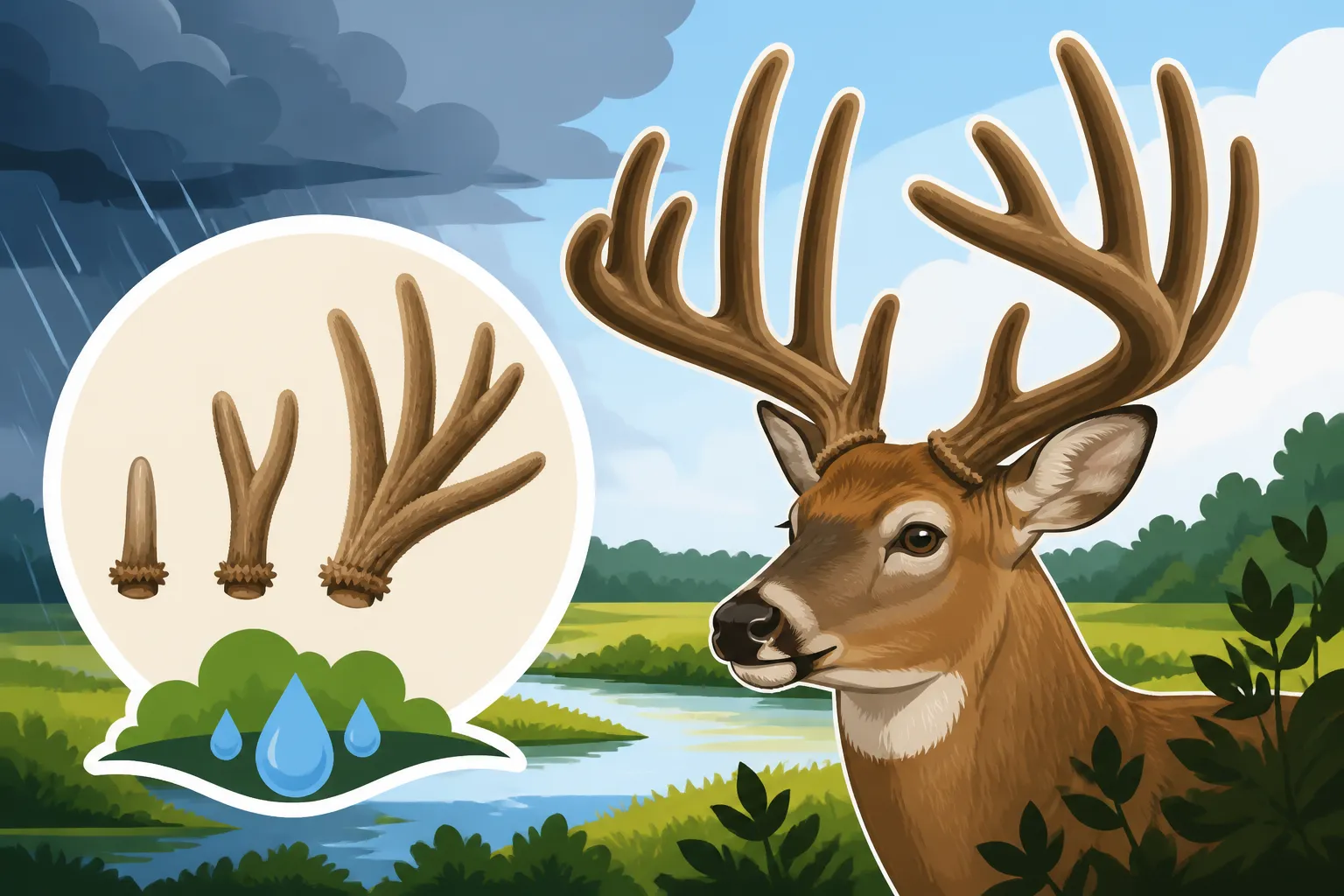
Think about it: what does consistent moisture do for the plant life around us? It makes it explode. Lush, green growth covers the landscape, from the smallest forbs and clover in the clearings to the tender shoots and leaves in the aspens and willow thickets. This isn't just about more food; it's about better food. These plants, invigorated by ample water, are often more succulent, digestible, and packed with the critical proteins, vitamins, and minerals that a deer needs. This surge in high-quality forage allows bucks to quickly replenish their body reserves after the long, hard Manitoba winter, and then divert surplus energy towards growing bone.
This abundant, nutrient-dense vegetation is like rocket fuel for a buck's body. Instead of just scraping by, trying to maintain weight, they can thrive. When a buck is healthy and its nutritional needs are met, its body has the luxury of allocating resources to "non-essential" functions, like growing antlers. In drought years, when forage is sparse and tough, a buck's body is in survival mode. It prioritizes maintaining core bodily functions, often at the expense of antler growth, leading to smaller, less impressive racks even on older deer. A wet year, however, tips the scales in the deer's favour, setting the stage for bigger, stronger antlers.
Specific Impacts on Antler Development Throughout the Year
Antler growth isn't a single event; it's a dynamic process that unfolds over several months, with different stages being influenced by various factors, moisture being a primary one.
Early-Season Growth: Spring and Early Summer Nutrition
The foundation for a buck's antlers is laid even before the old set is shed. The buck's body condition coming out of winter is paramount. If Manitoba experienced a mild winter and then a wet spring, the deer are off to an incredible head start. A wet spring means early green-up. Tender, protein-rich forbs and grasses emerge sooner and grow more vigorously. This allows bucks to recover quickly from winter stress, putting on vital body weight and condition.
As soon as velvet antlers begin to sprout, usually in April or May, a buck's body demands a massive intake of nutrients. This is when rapid bone growth is initiated, and the antler pedicles become incredibly active. If early spring is wet, with consistent rain and moderate temperatures, the forage remains palatable and nutrient-dense. This sustained nutritional input during the critical initial growth phase means the antlers can expand rapidly, establishing a larger base and potentially more beam length and tines right from the get-go. Deer that are forced to scrounge for food in a dry spring will start with a handicap, and it’s hard to make up for that lost ground later.
Peak Growth Periods: Late Summer Sustenance
While the early season sets the stage, the late summer months, typically July and August, are often when antlers really explode in mass and length. This is the period of peak nutrient demand for antler growth, with some estimates suggesting bucks need to consume nearly 10-15 pounds of forage daily. A wet year that continues to provide consistent moisture through these months ensures that the lush forage remains available and highly nutritious.
Imagine walking through a Manitoba forest or field in late summer. In a dry year, the grasses are often yellow and brittle, leaves on trees might be drooping, and many plants have gone to seed early. The nutrient content has plummeted. But in a wet year, you see vibrant green everywhere. Clover patches are still thriving, young aspen shoots are abundant, and agricultural fields (if available and accessible to deer) are flourishing. This sustained supply of high-quality feed allows bucks to continue pouring energy into antler growth without having to deplete their body reserves. They can maximize their genetic potential, resulting in thicker beams, longer points, and greater overall mass by the time velvet begins to harden in late August or early September. This sustained period of strong nutrition is what often separates an "okay" rack from a truly impressive one.
Mineral Uptake and Antler Density
Beyond just protein and energy, minerals like calcium, phosphorus, and trace elements such as zinc and copper are absolutely essential for antler development. These minerals are absorbed by deer primarily through the plants they eat. This is where moisture plays another vital, often overlooked, role.
Soil moisture is critical for making these minerals available for plant uptake. When the soil is adequately moist, it facilitates the transport of dissolved minerals from the soil particles into the plant roots. If the ground is parched, plants struggle to absorb water, and consequently, struggle to absorb these crucial minerals, even if they are present in the soil. A wet year ensures that plants can effectively "mine" the soil for these building blocks of bone. This translates to not just larger antlers, but potentially denser, harder antlers. This might not directly mean "more points" but could contribute to thicker bases, better palmation, and a stronger, more robust overall appearance of the rack. Good mineral uptake also contributes to the rich, dark colour often seen in healthy, well-nourished bucks, as opposed to the pale, chalky look sometimes associated with nutritionally stressed animals.
What to Look For: Field Signs and Indicators After a Wet Year
As hunters, we're constantly trying to read the signs the land provides. After a wet year, there are specific things you can look for that will give you clues about the antler potential in your hunting area.
Forage Abundance and Quality
This is perhaps the most obvious indicator. When you're scouting, pay close attention to the general health and density of the vegetation. Are the fields lush with clover, alfalfa, or even the remnants of a good grain crop? Are the woody browse species like willow, dogwood, and aspen showing vibrant, tender new growth? Take a closer look at the understory in the bush: is it thick with forbs and native grasses, or is it sparse and dry?
In a truly wet year, you'll see a noticeable difference. The deer will have a smorgasbord of options, allowing them to be more selective in what they eat, opting for the most nutritious choices. You might also notice less browsing pressure on less palatable species, indicating they have plenty of preferred food. This abundance and quality of forage is a strong indicator that bucks had the resources they needed to fuel antler growth. If you're using digital mapping tools like GoHunt, you can even scout potential feeding areas from above, looking for those rich, green pockets that show up well on satellite imagery. Remember, it's not just about what they could eat, but what was actually available and highly palatable throughout the crucial antler growth period.
Body Condition of Bucks
A quick visual assessment of the deer you see, even does and fawns, can tell you a lot about the health of the herd and, by extension, the antler potential of the bucks. Healthy deer have a sleek, filled-out appearance, not gaunt or bony. Does should look well-nourished, and fawns should appear robust and active. If the does are healthy, it's a good bet the bucks are too.
Specifically for bucks, look for solid, deep bodies. A buck that is putting all its energy into growing antlers at the expense of its overall body condition is a stressed animal. But if you see bucks with deep chests, full bellies, and a general air of robustness, it suggests they had enough nutrition to both maintain excellent body condition and allocate significant resources to their headgear. Their coats should look shiny and healthy, not dull or patchy. This overall vigor is a testament to the abundant, high-quality nutrition available through the growing season. You'll often notice a much more significant difference in average body weight on deer from areas with fantastic forage, as opposed to those where resources are scarce.
Historical Patterns and Local Knowledge
Every GHA (Game Hunting Area) in Manitoba has its own nuances when it comes to weather patterns and soil types. What constitutes a "wet year" for one area might be average for another. Talk to local farmers, long-time residents, and other hunters. They can offer invaluable insights into how specific areas respond to different weather conditions. Have they noticed historically better antler growth after certain types of years? Do certain fields or bush pockets respond exceptionally well to moisture?
Comparing your current observations to past wet years can help you temper your expectations. Perhaps one particular GHA in the Parkland region consistently produces better antlers after a wet spring, or maybe the Interlake region shows a boost in mass when summer rains are plentiful. Using platforms like GoHunt can help you consolidate your scouting notes and observations over multiple seasons, allowing you to build your own historical database of how different weather patterns affect deer in your hunting spots. This local knowledge, combined with your own astute observations, can provide a more accurate prediction of antler quality. Scouting a Manitoba Game Hunting Area is a great resource to learn more about localized scouting techniques.
Beyond Moisture: Other Factors Influencing Antler Size
While a wet year can certainly swing the pendulum towards larger antlers, it's crucial to remember that moisture is just one piece of a complex puzzle. Several other factors play equally, if not more, significant roles in determining a buck's antler size.
Age: The Undeniable Primary Factor
This is perhaps the most critical factor, often overshadowing all others. A buck typically doesn't reach its full antler potential until it's in its prime, usually between 4.5 and 7.5 years old. Younger bucks, even in the best nutritional years, simply don't have the physiological maturity to grow truly massive antlers. Their bodies are still prioritizing growth, development, and basic survival.
Think of it this way: a 2.5-year-old buck in a fantastically wet year might grow an impressive 8-point rack for his age class, perhaps even better than an average 3.5-year-old in a dry year. But that same 2.5-year-old, if he makes it to 5.5, would likely grow a significantly larger, more mature rack, even in an average year. A wet year simply allows a buck to express its genetic potential more fully at whatever age it happens to be. It can boost growth, but it won't magically turn a 2.5-year-old into a 5.5-year-old. Reading Whitetail Sign in Manitoba Aspen can help you learn to age deer on the hoof.
Genetics: The Blueprint for Growth
Every buck carries a genetic blueprint that determines its potential for antler growth. This genetic potential dictates characteristics like the number of points, beam circumference, tine length, and even overall symmetry. Some bucks are simply predisposed to grow bigger racks than others, regardless of how much protein or calcium they consume.
A wet year provides the optimal conditions for a buck to express its genetic potential. If a buck has the genes for a massive 10-point rack, and it lives in an area with abundant, high-quality forage due to ample moisture, then it has the best chance to realize that genetic potential. Conversely, a buck with excellent genetics will still grow smaller antlers in a drought year compared to its potential, and a buck with poor genetics won't suddenly grow a Boone & Crockett contender, even if the year is exceptionally wet. Genetics set the ceiling; nutrition and age help determine how close a buck gets to hitting that ceiling. Why Manitoba Bucks Grow Heavy Bodies often links back to good genetics and nutrition.
Population Density: Competition for Resources
The number of deer in a particular area can significantly influence the availability of resources, even in a wet year. If a GHA is overpopulated, even abundant forage can be quickly depleted due to intense browsing pressure. More mouths to feed means less for each individual deer.
In areas with healthy, balanced deer populations, where the number of deer is in equilibrium with the carrying capacity of the habitat, bucks have access to more resources. This is particularly noticeable in a wet year, as the flush of growth isn't immediately stripped clean by an excessive number of deer. Lower population densities allow individual deer, especially bucks, to maximize their nutritional intake, leading to better body condition and enhanced antler growth. Conversely, even in a wet year, an area with too many deer might still see stunted antler growth because the competition for even abundant forage remains high.
Winter Severity: Impact on Recovery and Subsequent Growth
The preceding winter can have a lasting impact on antler growth, even if the following spring and summer are wet. A harsh Manitoba winter, characterized by deep snow, prolonged cold, and limited access to food, can take a heavy toll on the deer herd. Deer emerge from these winters in poor body condition, having burned through much of their fat reserves just to survive.
Even if a wet spring and summer follow, these bucks might spend a significant portion of the early growing season simply trying to recover their body weight and condition. Their bodies will prioritize survival and recovery over antler growth. While they will undoubtedly benefit from the abundant forage and likely still show improved antler growth compared to a dry year, they may not reach their absolute maximum potential because of the initial deficit. A mild winter followed by a wet growing season is truly the best-case scenario for maximum antler expression. What a Hard Manitoba Winter Culls can show the devastating effects of severe winters.
Hunting Strategies in a Post-Wet Year
Understanding how a wet year influences antler growth can subtly shift your hunting strategies, primarily in how and where you scout and what you expect to see. It’s not about finding magical antlers, but about refining your search to capitalize on the conditions.
First off, a wet year means you should really double down on scouting areas known for good, diverse forage. Think about those low-lying areas that might typically dry out but are now lush, or bush edges adjacent to thriving agricultural fields. Deer will concentrate where the best food is, and in a wet year, that food is going to be plentiful and widely distributed. This might mean deer are less concentrated than in a dry year where they might be forced to specific water sources or remaining green patches. Using mapping tools like GoHunt can help you identify these rich pockets of vegetation that received ample moisture. You might even find Hunting a Shelterbelt Between Two Fields or Hunting a Standing Canola Field Edge to be particularly productive.
Secondly, pay close attention to fresh sign and current deer activity. Even if the forage is widely available, deer will still gravitate to the best and most convenient food sources, especially as the season progresses. Look for heavy trails leading to and from these prime feeding grounds. The lush growth might make trails harder to spot, but fresh tracks, droppings, and rubs will tell the tale. Given the potentially better nutrition, you might find bucks spending more time feeding in open areas before the rut fully kicks in, offering better opportunities for observation.
Finally, patience and persistence are always key, but a strong nutritional year can sometimes mean bucks are less pressured early on. They don't have to work as hard to find food, allowing them to remain more secluded until the rut. Don't assume that just because there's plenty of food, every buck will be a monster. Remember, age and genetics are still the foundation. Your goal is to identify those mature bucks that truly capitalized on the year's bounty. By focusing your efforts on areas with superior forage and observing deer body condition, you stack the odds in your favour. Scouting With Satellite Imagery in Manitoba can further enhance your strategic planning.
Here's a quick comparison of what you might observe in wet vs. dry years:
| Feature | Wet Year Observations | Dry Year Observations |
|---|---|---|
| Forage Abundance | Lush, dense, widespread vegetation | Sparse, dry, stressed vegetation |
| Forage Quality | High protein, digestible, nutrient-rich | Low nutritional value, tough, early senescence |
| Deer Body Condition | Robust, full-bodied, healthy appearance | Lean, gaunt, signs of stress |
| Antler Size Potential | Higher potential for beam length, mass, and number of points | Lower potential, often shorter beams, less mass, fewer points |
| Mineral Availability | Enhanced uptake by plants, strong bone development | Reduced uptake, potentially weaker antler structure |
| Deer Activity | More relaxed feeding, wider distribution of food | Concentrated feeding in limited green patches |
Disclaimer
This article is for general informational purposes only and does not constitute professional advice. Laws, prices and regulations vary by location and change over time. Consult a qualified professional for guidance on your specific situation.