What Drought Does to Prairie Game
There's nothing quite as disheartening for a prairie hunter as watching the landscape wither under the relentless sun of a drought year. The vibrant greens turn to crispy browns, water sources disappear, and the familiar rhythm of wildlife seems to falter. This guide is all about shedding light on the very real and often severe impacts that drought conditions have on Manitoba's prairie game species, helping you understand what changes to expect and how wildlife adapts.
The Immediate Crisis: Scarcity of Water and Forage
When drought sets in across Manitoba's prairies, the most immediate and undeniable impacts are felt directly in the availability of life's two essentials: water and food. It's not just an inconvenience; it's a profound shift that rattles the foundation of every animal's existence.
Vanishing Water Sources
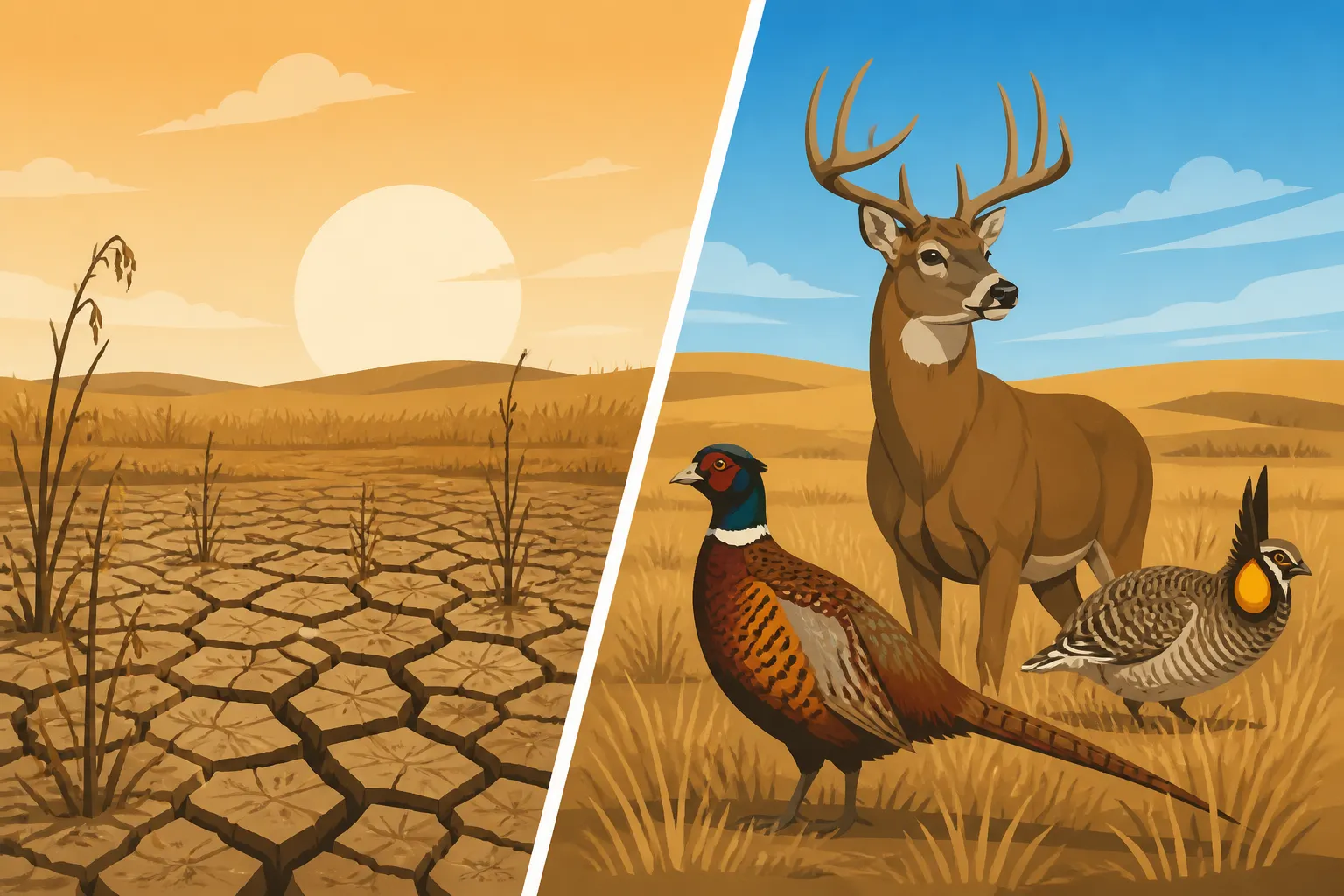
Picture those countless prairie potholes and sloughs that normally dot the landscape, teeming with ducks and providing critical watering holes for deer, elk, and upland birds. In a drought year, many of these simply vanish. What was once a vibrant wetland becomes a cracked mud flat, sometimes as early as mid-summer. This disappearance of standing water forces animals to concentrate around the few remaining permanent sources, like deeper dugouts, larger rivers, or persistent springs.
This concentration can be a double-edged sword. While it might make certain areas hotspots for scouting, it also puts immense pressure on these limited resources. Waterfowl, for instance, might forgo nesting entirely if local potholes dry up before chicks can fledge, or they'll be forced to move significantly earlier in the season. Whitetail deer and elk, usually able to find water in myriad places, suddenly have fewer options, leading to increased travel and competition. It's a tough situation, and understanding where these crucial water sources are, even in dry conditions, becomes paramount for any hunter. Tools like satellite imagery, often available through platforms like GoHunt, can be incredibly useful to identify persistent water. You might find yourself Hunting a Dugout in Dry Country more often than usual.
Stunted and Scarce Forage
Beyond water, drought utterly devastates the food supply for prairie game. Grasses, normally lush and nutritious in spring, brown out and go dormant early, offering little sustenance. Broadleaf plants that deer and elk browse on become tough and unpalatable, if they grow at all. Farmers might cut hay earlier or silage might be short, impacting available protein for grazers.
Forage quality and quantity directly translate to animal health and productivity. Bucks might grow smaller antlers because their bodies are putting all their energy into survival rather than luxurious bone growth. Does might struggle to lactate, impacting fawn survival rates. Upland birds, which rely heavily on seeds and insects found in healthy vegetation, will find both in short supply. Insects, a critical protein source for growing bird chicks, also suffer dramatically in dry conditions, meaning fewer healthy broods make it to maturity. The overall body condition of animals can decline significantly, making them more susceptible to disease and the rigours of winter.
Cascading Effects: Habitat Shifts, Health Risks, and Movement Patterns
Drought isn't just about thirst and hunger; it creates a cascade of effects that alter entire ecosystems and impact wildlife populations in complex ways. These changes aren't always immediately obvious, but they profoundly influence where and how prairie game lives and moves.
Habitat Degradation and Relocation
When the moisture disappears, so does much of the crucial habitat that prairie game relies on. Nesting cover for upland birds can thin out, leaving eggs and chicks vulnerable. The dense, protective vegetation along slough edges that whitetails often bed in becomes sparse, forcing them to seek cover elsewhere, often in more exposed areas or deeper into bush pockets if available.
This habitat degradation often leads to a mass relocation of animals. If their preferred food and water sources, along with essential cover, are no longer viable, game will move to find better conditions. This might mean concentrating in river valleys where deeper soil retains moisture, or moving closer to human settlements where irrigated lawns or garden ponds offer a reprieve. Hunters might find that traditional hotspots are eerily empty, while areas previously overlooked suddenly hold more animals. It highlights the importance of adaptive Scouting With Satellite Imagery in Manitoba to locate these changed patterns. Understanding How Drought Moves Manitoba Game is crucial for predicting where animals might concentrate.
Increased Vulnerability to Disease and Predation
The stress of drought takes a toll on an animal's immune system, making them more vulnerable to diseases. When game animals are forced to congregate around limited water sources, the risk of disease transmission skyrockates. For example, conditions like CWD (Chronic Wasting Disease) could potentially spread more easily if animals are in closer contact more frequently. Parasites can also become a bigger issue as animals weaken.
Moreover, weakened animals are easier targets for predators. Coyotes, for instance, can capitalize on deer and elk that are suffering from poor nutrition or dehydration. Fawn survival rates can plummet not just from lack of food, but from increased predation on weakened youngsters. This can create a significant imbalance in the predator-prey dynamic, especially in years where game populations are already under stress. Why Manitoba Has So Many Coyotes becomes even more relevant as these opportunistic hunters thrive in such conditions.
Altered Movement and Behaviour
Drought conditions significantly alter the daily and seasonal movements of prairie game. Animals will travel further for water and forage, burning precious energy that they can ill afford to lose. This can mean more nocturnal activity to conserve moisture and avoid the heat of the day, making them harder to pattern. During the hunting season, you might find game moving less during daylight hours, making traditional morning and evening hunts challenging.
The rut for deer and elk might also be impacted. While the hormonal drive is strong, the physical stress of drought can reduce the intensity of rutting activity, or push it to different times of day. Hunters might need to adapt their strategies, focusing on early morning or late evening movements, or paying closer attention to travel corridors between scarce resources rather than relying on historical patterns. Reading Whitetail Sign in Manitoba Aspen might still be key, but the location of that sign could shift dramatically.
Species-Specific Impacts on Manitoba's Prairie Game
Different species respond to drought in varying ways, depending on their specific needs and adaptability. What might be a minor inconvenience for one species could be catastrophic for another.
White-Tailed Deer and Elk
For our iconic prairie whitetails and elk, drought can have profound consequences. Reduced forage means less energy for antler growth, impacting the size and quality of racks. While Manitoba is known for producing Why Manitoba Bucks Grow Heavy Bodies, a severe drought can mean that impressive body mass and antler potential are simply not realized. Does, especially those raising fawns, suffer from poor nutrition, leading to lower birth weights and reduced fawn survival into the critical first winter.
The movement patterns of deer and elk will also shift dramatically. They'll abandon drier, open areas in favour of river bottoms, creek drainages, and areas with more persistent cover and moisture, even if it's less than ideal. Hunters targeting these animals will need to adjust their scouting, focusing on these linear corridors or isolated pockets of green that remain. You might find concentrations of deer seeking refuge in Hunting a Shelterbelt Row in Open Prairie that otherwise wouldn't hold as many animals.
Waterfowl and Upland Birds
Drought is perhaps most devastating for Manitoba's waterfowl. The prairie pothole region is a critical breeding ground, and when these ephemeral wetlands dry up, nesting success plummets. Hens may not even attempt to nest if water is scarce, or clutches may be abandoned if potholes dry up too quickly after hatching. This directly impacts populations of ducks and geese that rely on Manitoba as part of the Why Manitoba Sits on the Central Flyway.
Upland birds like Sharp-tailed Grouse and Hungarian Partridge also face significant challenges. Nesting cover might be too sparse, making nests vulnerable to predators. Insect populations, vital for protein-rich chick diets, can crash in dry conditions, leading to poor chick survival. As a result, bird numbers can drop significantly in the following years. This directly affects Why Sharptail Numbers Rise and Fall and can make for tough upland hunting seasons. Birds might concentrate around irrigated fields or homesteads where some moisture-retaining vegetation persists.
| Species Affected | Immediate Drought Impact | Long-Term Consequences | Hunter Adaptation |
|---|---|---|---|
| White-Tailed Deer | Water scarcity, poor forage quality | Reduced antler growth, lower fawn survival, poorer body condition | Focus on water sources, river valleys, thick cover |
| Elk | Water scarcity, reduced browse | Smaller herds, increased travel, Elk Damage on Manitoba Grain Farms (seeking irrigated crops) | Scout for green pockets, crop edges, persistent water |
| Waterfowl | Pothole/slough drying, reduced invertebrate food | Plummeting nesting success, reduced brood size, early migration | Focus on larger, permanent wetlands, field edges |
| Upland Birds | Loss of nesting cover, insect scarcity | Lower chick survival, reduced populations, concentration near human activity | Seek out areas with residual moisture, shelterbelts, edge habitat |
| Coyotes | Increased access to weakened prey | Higher local populations, increased predation pressure on game | May be more visible as they follow stressed prey |
Adapting Your Hunting Strategy in Drought Years
So, what's a dedicated Manitoba hunter to do when drought rears its ugly head? The key is adaptation, increased scouting, and a deeper understanding of animal behavior under stress.
Intensive Scouting and Observation
More than ever, a drought year demands diligent scouting. Those tried-and-true spots might not produce. Instead, you'll need to focus on identifying the few remaining resources: water, persistent green forage, and heavy cover. Use mapping apps with satellite imagery like GoHunt to pinpoint linear features like creek beds, river systems, and drainages that might hold moisture when everything else is dry. Look for areas where farmers have irrigated, or where natural springs might be holding on.
Pay close attention to fresh sign around these areas. Animals will concentrate, so if you find good sign, chances are they're still in the vicinity. Look for fresh tracks around a Hunting a Slough Ring in Open Country that still holds water, or browse lines in a surviving patch of bush. Even subtle changes in vegetation can indicate where game might be holding on. This deeper dive into scouting becomes your most valuable tool.
Targeting Key Resource Areas
With animals concentrating around scarce resources, your hunting efforts should focus squarely on these critical areas. This means hunting travel corridors leading to and from persistent water sources, or the edges of lush feed fields that might be receiving irrigation. Animals will be on the move, often during low-light hours, to access these necessities.
Consider hunting slower and more deliberately. Animals might be more skittish due to increased pressure on fewer resources. Setting up on pinch points, funnels, or strategic ambush sites between bedding cover and the remaining food/water can be highly effective. Patience is paramount, as animals might be moving less frequently or with greater caution. In areas where larger water bodies persist, like the permanent lakes or major rivers, waterfowl hunters might find more birds staging there than in typical smaller potholes.
Ethical Considerations and Conservation
A drought year is also a time for heightened ethical awareness and conservation mindset. Animals are under immense stress. While a tag is a tag, consider the impact of your harvest. If a buck or bull looks particularly stressed and unhealthy, taking it might not be the best long-term strategy for herd health, though in some cases, culling unhealthy animals can be beneficial.
It's also a time to appreciate the resilience of wildlife and the importance of habitat. Support conservation efforts that focus on restoring wetlands and improving habitat, as these efforts become even more critical during challenging drought cycles. Respecting land access and being a good ambassador for hunting is always important, but especially so when landowners might be struggling with their own drought impacts.
Remember, drought is a natural cycle on the prairies, and while it presents challenges, understanding its effects empowers us as hunters to adapt, learn, and continue our passion responsibly.
Disclaimer
This article is for general informational purposes only and does not constitute professional advice. Laws, prices and regulations vary by location and change over time. Consult a qualified professional for guidance on your specific situation.