Why Manitoba Sits on the Central Flyway
If you've ever looked at a map of North America and wondered why Manitoba seems to be a magnet for ducks and geese, or why so many hunters swear by its legendary waterfowl hunting, you've hit on one of the greatest secrets (or perhaps not-so-secret truths!) of the prairies. Our province isn't just on a flyway; it's a critical, undeniable cornerstone of the Central Flyway, funnelling millions of birds right over our fields and wetlands every fall. This guide will walk you through exactly why Manitoba holds this prestigious position, what it means for the birds, and, of course, for us hunters.
Understanding the Central Flyway: A Continental Superhighway for Birds
When we talk about "flyways," it's easy to imagine them as distinct, narrow lanes in the sky. But in reality, they're much more expansive, like vast, invisible superhighways that birds use to travel between their breeding grounds in the north and their wintering grounds in the south. These aren't just random paths; they've been carved by millennia of instinct, geography, and the availability of food and water. For waterfowl, these routes are literally a matter of life and death, guiding them to vital resources along their arduous journeys.
What is a Flyway, Really?
Think of a flyway as a traditional migration corridor. It's a broad geographical area that migratory birds, particularly waterfowl and shorebirds, use year after year. These corridors are influenced by major landforms like mountain ranges and coastlines, as well as critical habitat features like large river systems, immense lakes, and vast wetlands. Birds learn these routes from their parents and often return to the same breeding and wintering grounds, navigating by the sun, stars, and even the Earth's magnetic field. It's an incredible feat of nature, and to be a part of it as a hunter is truly special.
The Four North American Flyways
North America is home to four major waterfowl flyways: the Pacific, Mountain, Central, and Mississippi, with the Atlantic Flyway further east. Each one is a marvel, supporting unique populations of birds that adapt to the specific habitats and challenges of their routes. The Pacific Flyway, for example, hugs the western coast, while the Mississippi Flyway follows the mighty river system. But for those of us in the heartland, it's the Central Flyway that captures our attention and fuels our passion. This flyway stretches from the Arctic Circle down through Canada and the central United States, all the way to Central and South America. It's a massive artery of life, and Manitoba plays an outsized role in its success. You can really dive into the specifics of bird movements and habitat through detailed resources, and tools like GoHunt can help you visualize these vast migration paths, allowing you to track bird movements and better understand their preferred staging areas within our region.
Manitoba's Prime Real Estate on the Central Flyway
So, why Manitoba? Why does this particular piece of Canadian prairie and boreal transition zone become such a bottleneck for millions of birds? It comes down to a perfect storm of geographical features, abundant food sources, and critical wetland habitats that essentially act as a giant welcome mat and fueling station for weary travelers. It's not just a stopover; for many, it's a vital, prolonged staging area where they can rest, feed, and fatten up before continuing their epic journey south.
Geographic Advantage: The Funnel Effect
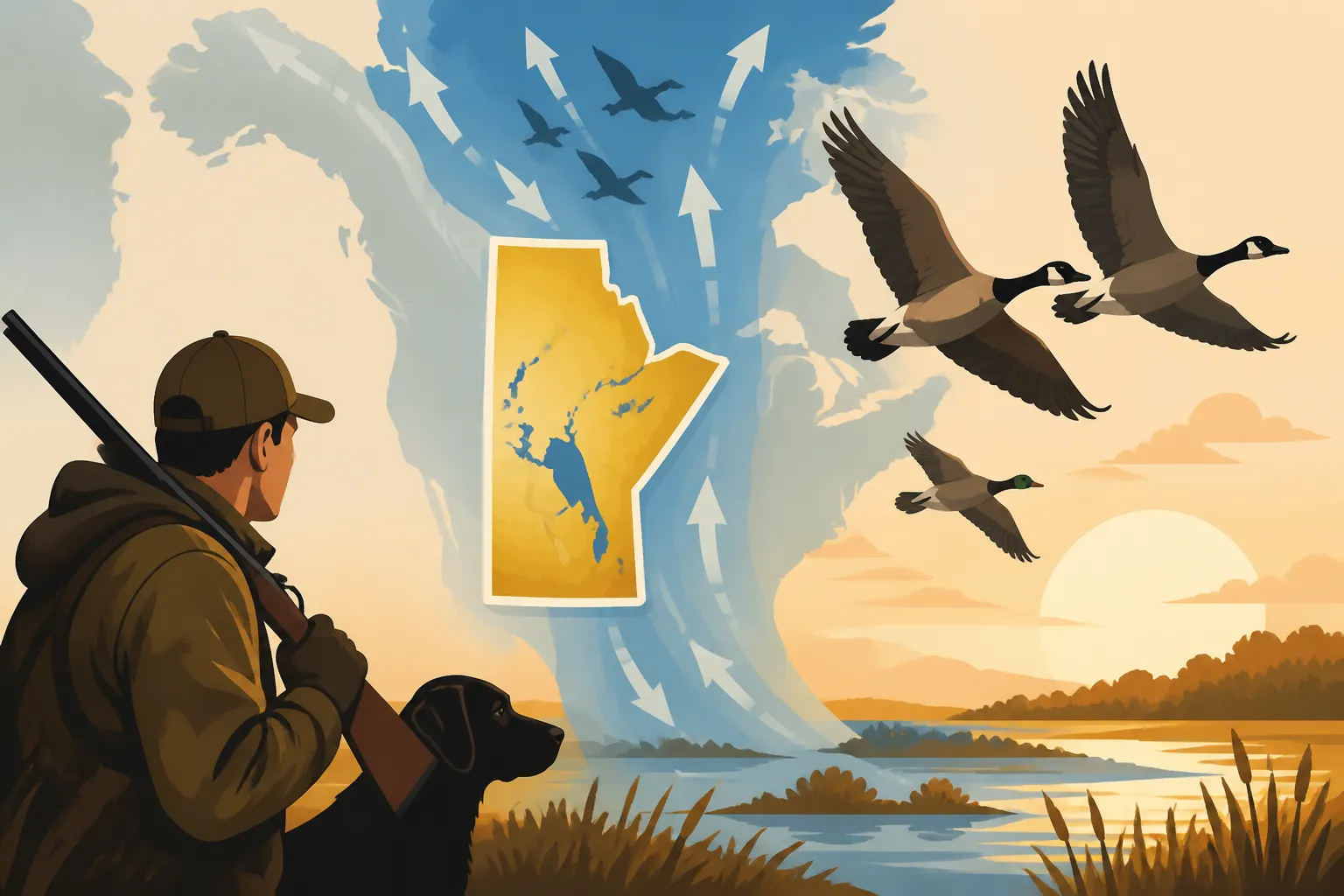
Manitoba's geographical location is simply unparalleled when it comes to migratory bird traffic. Imagine the immense breeding grounds of the Arctic tundra and the boreal forest to our north. As birds begin their southward migration, the vast expanses of the Canadian Shield and the western plains essentially funnel them into the relatively narrower corridor of Manitoba. It's like a giant inverted funnel, with the wide northern reaches guiding birds towards our province. This natural constriction means that a huge percentage of the waterfowl produced in the central and western Arctic, as well as northern Saskatchewan, Alberta, and even parts of the Northwest Territories, will inevitably pass through Manitoba. This is why when the birds start moving, they really move through our skies.
Abundant Food and Water: Fueling the Migration
Once these birds arrive, they find exactly what they need: an almost endless supply of high-energy food and vast, protected wetlands for roosting and loafing. Our agricultural heartland, with its immense fields of barley, wheat, canola, and peas, offers a veritable buffet of waste grain after harvest. Ducks and geese gorge themselves, building up the fat reserves necessary for the next leg of their journey. Combine this with the sheer volume of water—from thousands of prairie potholes and sloughs to the massive freshwater inland seas of Lake Winnipeg, Lake Manitoba, and Lake Winnipegosis—and you have an irresistible haven. These lakes and their surrounding marshes provide crucial resting sites, protection from predators, and additional aquatic food sources. Knowing how to effectively scout these areas is key, whether you're looking for Hunting a Swathed Grain Field at Dusk or the best spots for Hunting a Standing Canola Field Edge.
The Interlake's Special Role
Speaking of prime locations, the Interlake region, nestled between Lake Winnipeg and Lake Manitoba, is legendary for a reason. This unique geographical pocket, characterized by a mix of agricultural land, vast cattail marshes, and abundant shallow water bodies, creates a migratory super-hub. The birds follow the natural contours of the land and the pull of these massive lakes, often congregating in staggering numbers. Hunters who focus on this area understand that patience and careful scouting are rewarded with truly incredible experiences. It's not uncommon to see hundreds of thousands of birds utilizing the area at peak migration, making it a critical staging ground for species like Canada geese, mallards, and various diving ducks. To truly understand the pull of this region, you need to read about Why the Interlake Concentrates Birds. When I'm planning a hunt in the Interlake, I always use my GoHunt app's mapping features to mark potential feeding and loafing areas, especially around key marshes and sloughs.
Key Species and Hunting Opportunities in Manitoba's Central Flyway
Manitoba's position on the Central Flyway isn't just a fact of geography; it's a direct pipeline to some of the most diverse and abundant waterfowl hunting experiences in North America. From fast-flying teal to majestic Canada geese, our province offers a smorgasbord for the dedicated waterfowler. The sheer volume and variety of birds that pass through here each fall are astounding, offering different challenges and rewards throughout the season.
Ducks, Ducks Everywhere!
When it comes to ducks, Manitoba truly shines. We see a fantastic mix of dabbling ducks, which feed in shallow water by tipping up, and diving ducks, which plunge deep to find their food. Mallards are, of course, king, with their vibrant green heads and loud quacks, providing endless sporting opportunities. But you'll also find incredible numbers of northern pintails, American wigeon, gadwall, and various species of teal, especially early in the season. For those who love the challenge of diver hunting, the big lakes and deeper marshes are home to canvasbacks, redheads, scaup (bluebills), and ring-necked ducks. Understanding the daily bag limits for each of these species is crucial, and you can find that detailed information in Duck Daily Bag Limit by Species. Hunting these various species often requires different tactics, from setting large field spreads for dabblers to hunting over open water for divers, but the opportunities are boundless.
Geese Galore: Giants of the Sky
If ducks are plentiful, then geese are truly iconic in Manitoba. The sight and sound of thousands of Canada geese, snow geese, and white-fronted geese (specklebellies) filling the sky is something every hunter should experience. Our fields become temporary homes for these birds, offering rich feeding grounds. Canada geese are abundant throughout the province, providing consistent hunting opportunities. The spectacle of the snow goose migration is something else entirely – immense flocks that can literally darken the sky, offering fast-paced, high-volume hunting that many travel hundreds of miles for. And for those who appreciate fine table fare, the wary white-fronted geese are a highly prized trophy. Don't forget the sandhill cranes! While not waterfowl in the traditional sense, these majestic birds also utilize the Central Flyway and offer unique hunting experiences in our grain fields. Make sure you're up to date on Goose Season Dates by Zone and definitely check out strategies for Hunting Snow Geese Over a Big Spread or Hunting Manitoba's Sandhill Crane Fields to maximize your success. GoHunt often has detailed scouting reports that can give you a leg up on locating these large flocks.
Timing Your Hunt for Peak Migration
The timing of your hunt is paramount in Manitoba. The season kicks off in early September, often with resident birds and early migrants like blue-winged teal. As September progresses into October, the main wave of mallards, pintails, and Canada geese starts to arrive from the northern breeding grounds, bringing incredible numbers and fast action. Late October and November see the arrival of divers and the last pushes of geese, often coinciding with colder weather and fewer hunters. Each phase of the migration offers a different experience, from mild weather hunts in early fall to challenging, bundled-up hunts in late season cold. Understanding the nuances of these migration patterns and the species that are peaking at different times can drastically improve your hunt success. Manitoba's Ducks and Geese by Flyway provides a deeper look into these movements, and it's a fantastic resource for planning your trip.
Conservation and the Future of Manitoba's Waterfowl
While Manitoba's bounty is undeniable, it's also a stark reminder of the importance of conservation. The continued health of the Central Flyway and the incredible waterfowl populations it supports depends entirely on responsible management, habitat preservation, and the dedication of hunters and conservationists. We're not just taking from the land; we're integral to its stewardship.
Habitat Preservation Efforts
Organizations like Ducks Unlimited Canada play an absolutely vital role in maintaining the health of the Central Flyway. By conserving, restoring, and managing wetlands and associated habitats, they ensure that millions of acres remain productive for breeding, staging, and wintering waterfowl. These efforts directly impact the number of birds that arrive in Manitoba each fall. When we lose even a small prairie pothole to drainage, it affects the entire ecosystem, creating ripple effects up and down the flyway. It's a continuous battle, and hunters' contributions, through licence fees and stamps like the Habitat Conservation Stamp, are critical to these ongoing efforts. Even just scouting fields before a hunt, using tools like GoHunt, can make you more aware of habitat changes and the importance of healthy wetlands and agricultural practices.
Hunter's Role in Stewardship
As hunters, we are often the first line of defence for wildlife. Our licence fees directly fund conservation programs, and our ethical practices in the field ensure the sustainability of game populations. This includes everything from accurate shooting and proper game recovery to adhering strictly to bag limits and seasons. The use of non-toxic shot is a prime example of our commitment to the environment, preventing lead poisoning in waterfowl. Remember, Non-Toxic Shot Requirements for Waterfowl are not just rules; they are essential practices for the health of the flyway. Reporting banded birds provides invaluable data to wildlife managers, helping them track populations and make informed decisions. We have a profound responsibility to ensure that future generations can experience the same incredible opportunities we do when we hear the distant calls of geese on the wind, knowing they're making their way through our vital segment of the Central Flyway.
| Species | Primary Habitat in Manitoba | Typical Peak Migration Period |
|---|---|---|
| Mallard | Grain fields, prairie potholes, marshes | Mid-September to Mid-October |
| Northern Pintail | Shallow wetlands, flooded fields | Early September to Early October |
| Blue-winged Teal | Small potholes, shallow marshes | Late August to Mid-September |
| Canada Goose | Grain fields, large lakes, rivers | Late September to Mid-November |
| Snow Goose | Grain fields, large lake shores | Early October to Early November |
| Greater White-fronted Goose | Grain fields, stubble fields | Late September to Mid-October |
| Canvasback | Large, deep marshes, open lakes | Late October to Mid-November |
| Redhead | Deeper prairie potholes, larger marshes | Early October to Early November |
| Sandhill Crane | Grain fields, dry marshes | Mid-September to Mid-October |
Disclaimer
This article is for general informational purposes only and does not constitute professional advice. Laws, prices and regulations vary by location and change over time. Consult a qualified professional for guidance on your specific situation.