Red Fox and Arctic Fox in Manitoba
Manitoba's wild spaces are home to a fascinating array of wildlife, and few animals capture the imagination quite like the fox. But when we talk about foxes in our province, it's not a one-size-fits-all conversation. We have two very distinct species: the clever, ubiquitous red fox and the hardy, ghost-like arctic fox. Understanding these two beautiful creatures means appreciating their unique adaptations and the very different worlds they inhabit within Manitoba. This guide will walk you through what makes each species special, where you're likely to find them, and their vital roles in our diverse ecosystems.
The Red Fox: Manitoba's Widespread Canine Trickster
The red fox, with its iconic reddish coat and bushy tail, is a creature of legend and a common sight across much of Manitoba. They are incredibly adaptable, thriving in a variety of habitats, and their intelligence often makes them seem almost mischievous. They're not just beautiful; they're incredibly resourceful, carving out a living in environments that might surprise you.
Identifying the Red Fox in Manitoba
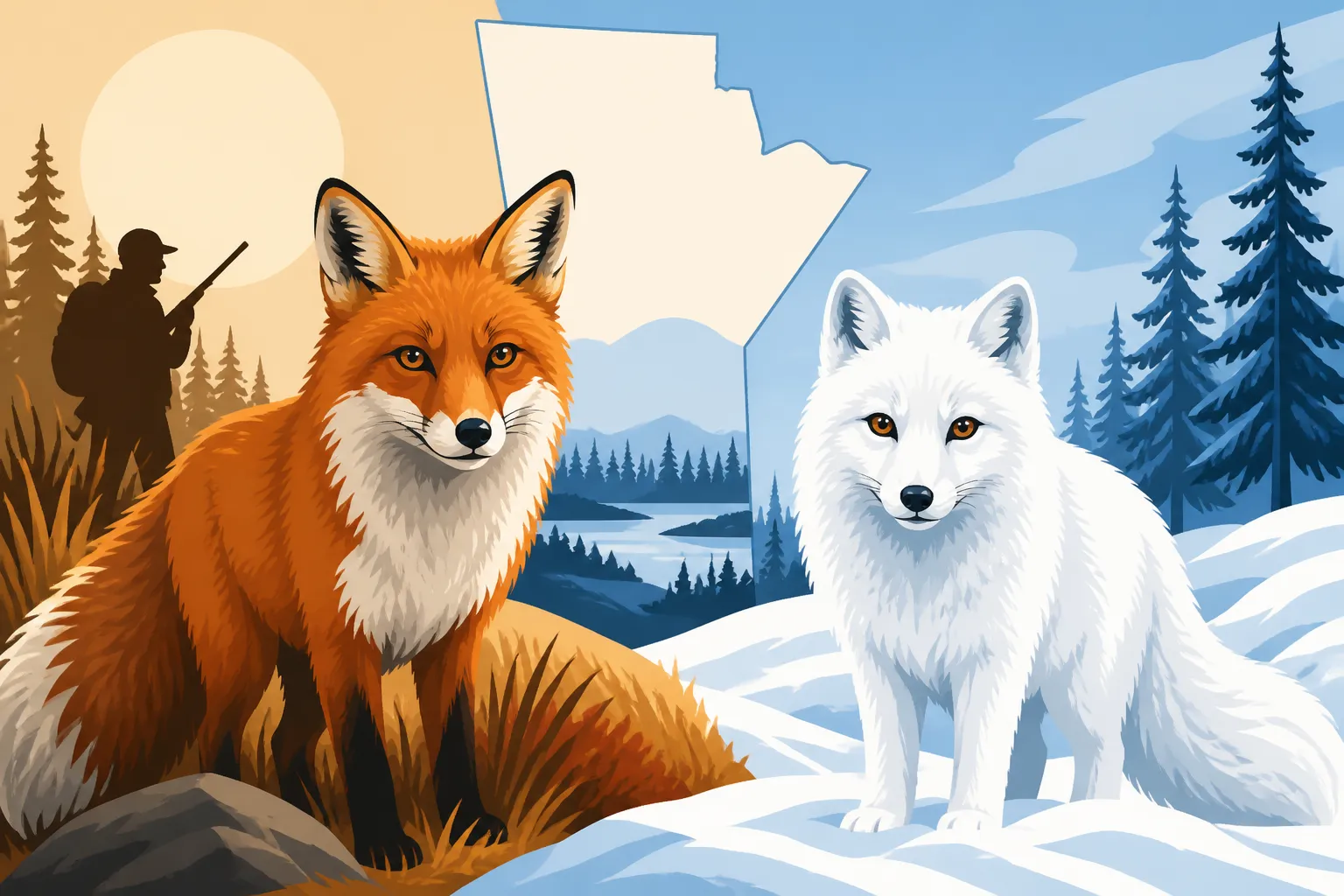
When you picture a fox, chances are you're imagining a red fox. Their most defining characteristic is, of course, that brilliant reddish-orange fur that covers their back and flanks. But there's more to their look than just red. You'll notice their pristine white throat and belly, stark black "stockings" on their legs, and those alert, pointed black-tipped ears. The tail is a real giveaway, too – long, incredibly bushy, and almost always tipped with white. This white tip is a consistent feature, regardless of other colour variations, and it's often the last thing you see as they vanish into the brush.
What many people don't realize is that red foxes aren't always red. Manitoba is home to several "colour phases" of the red fox, which can sometimes lead to confusion. The "cross fox" phase has a dark stripe running down its back and another across its shoulders, forming a cross shape, often with more black fur mixed in. Then there's the stunning "silver fox," which can range from mostly black with white-tipped guard hairs (giving it a frosted, silver appearance) to almost entirely black. Despite these variations, they are all still the same species, Vulpes vulpes, and that characteristic white tail tip usually remains. These colour variations are particularly sought after by trappers for their unique pelts, a testament to the beauty of Manitoba's furbearer diversity.
Where Red Foxes Roam in Our Province
One of the most remarkable things about the red fox is its adaptability, which allows it to thrive almost everywhere in Manitoba, from our southernmost borders right up to the edges of the boreal forest. They are truly at home in a mosaic of landscapes. You'll find them extensively throughout our agricultural belt, where farmlands provide a steady supply of rodents and birds. Here, they often utilize shelterbelts, brushy ditches, and small woodlots for cover, resting during the day before venturing out to hunt. If you've ever driven a gravel road at dawn or dusk in the Parkland region or the Interlake, you've likely seen one dart across the road or pounce gracefully on an unseen meal in a field.
Further north, as the open prairie gives way to more forested areas, red foxes still maintain a strong presence. They prefer the edges and transitional zones – places where the bush meets open ground, or where different forest types converge. These "edge habitats" provide both cover and access to a variety of prey. You might find them hunting along a hydro line right-of-way, through an old farmyard, or even on the fringes of some of our smaller towns. Their ability to adapt to human-modified landscapes is truly impressive, and it's why they're such a common and cherished sight for many Manitobans. Tools like GoHunt can be invaluable for hunters and trappers who want to identify prime habitat areas across these varied landscapes, helping them understand where these cunning predators are likely to be found.
The Adaptable Hunter and Scavenger
Red foxes are the epitome of an opportunistic predator. Their diet is incredibly varied, which is a major factor in their widespread success. Small mammals are their bread and butter: mice, voles, gophers, and rabbits make up a significant portion of their diet. They are renowned for their distinctive pouncing technique, leaping high into the air and driving down onto their prey with precision, especially when hunting rodents hidden beneath snow or tall grass. It's a marvel to watch, a display of pure predatory instinct and agility.
Beyond small mammals, red foxes will readily consume birds, eggs, insects, and even fruits and berries when available. In agricultural areas, they often take advantage of crop residues, sometimes finding dropped grain or gleaning fields after harvest. They are also adept scavengers, readily making use of carrion. This scavenging behaviour can bring them into contact with human activity, as they’ll investigate garbage, roadkill, or even discarded game from hunters. This dietary flexibility means they can adjust their hunting strategies to whatever is most abundant, ensuring their survival even when one food source is scarce. Their keen senses, particularly hearing and smell, are vital for locating prey, whether it's a mouse rustling under the snow or the faint scent of a carcass miles away.
The Arctic Fox: A White Ghost of the Northern Tundra
Venture into Manitoba's far north, beyond the tree line, and you enter a world utterly different from the south. Here, where the land is vast, barren, and unforgiving, lives the arctic fox. This small, incredibly hardy canid is a true specialist, perfectly adapted to survive the harshest conditions our province has to offer. They are less common sights for most Manitobans, residing in a truly wild and remote part of our province.
Spotting an Arctic Fox: Seasonal Coats and Northern Clues
The arctic fox (Vulpes lagopus) is a master of camouflage, a crucial adaptation for survival in its stark environment. Their most famous trait is their incredible seasonal coat change. In winter, they are covered in a dense, pristine white fur coat, making them almost invisible against the snow and ice. This isn't just for camouflage; it's also incredibly insulating, allowing them to withstand temperatures that would be fatal to other species. Come spring and summer, their fur changes to a much thinner, darker grayish-brown on the back, with lighter underparts, blending them into the rocky, mossy tundra.
Physically, arctic foxes are smaller and more compact than their red fox cousins. They have a rounder body shape, shorter legs, a short snout, and very small, rounded, heavily furred ears. These features are all about minimizing heat loss in the extreme cold. Their tail, while still long and bushy, is often used as a warm wrap around their face and paws when they curl up to sleep. Differentiating them from a red fox, especially a silver phase, comes down to size, ear shape, and geographical location. If you're above the tree line in deep winter and see a pure white fox, it's almost certainly an arctic fox.
The Arctic Fox's Far-North Territory
The arctic fox's territory in Manitoba is confined exclusively to the far northern reaches of the province, specifically the expansive tundra and the Hudson Bay lowlands. This is a treeless, windswept landscape of low-lying vegetation, rock, and permafrost. It's a rugged and beautiful place, but one that demands incredible resilience from its inhabitants. You won't find arctic foxes south of the boreal forest; they are true inhabitants of the Arctic and sub-Arctic.
Their movements can be extensive, particularly in search of food. While they have established home ranges, particularly around den sites, individuals might travel hundreds of kilometres during periods of prey scarcity. This nomadic tendency is a survival strategy in an environment where food resources can fluctuate dramatically. What Lives in Manitoba's Tundra Transition really highlights the unique wildlife that calls this northern expanse home, and the arctic fox is certainly one of its most iconic residents. For adventurous hunters or naturalists planning a trip to this remote region, perhaps as part of a Hunting Manitoba's Far North on a Fly-In expedition, spotting an arctic fox can be a truly unforgettable experience.
Surviving the Harsh Tundra Environment
Life on the tundra is a constant challenge, and the arctic fox is a master of survival. Their thick winter coat provides the best insulation of any mammal, allowing them to maintain a stable body temperature even when external temperatures plummet to extreme lows. They have a remarkable ability to store fat reserves during periods of plenty to help them through lean times.
Their diet is heavily dependent on the cycles of their primary prey: lemmings and voles. When lemming populations are high, arctic fox numbers often boom. When lemming numbers crash, the foxes must find alternative food sources. This might include birds, eggs, fish scavenged from shorelines, or even berries and insects in the brief summer. They are also notorious for following polar bears, scavenging the scraps left behind from a bear's seal kill. This symbiotic relationship helps them survive during times when smaller prey is scarce. They raise their pups in extensive underground dens, often dug into hillsides, which provide crucial protection from the elements and predators. This ingenuity and resilience are why the arctic fox continues to thrive in one of the planet's most challenging environments.
Red and Arctic Foxes: Interactions and Their Role in the Ecosystem
While both are magnificent canids, the red and arctic foxes occupy different niches in Manitoba. However, as environments shift, their paths sometimes cross, leading to interesting dynamics. Understanding these interactions, and their broader role, is key to appreciating our province's biodiversity.
Coexistence and Competition Between Species
For a long time, the treeline acted as a natural barrier, largely separating the ranges of the red fox and the arctic fox. Red foxes prefer more complex habitats with trees and varied cover, while arctic foxes are at home on the open tundra. However, with environmental changes and warming temperatures, there's increasing evidence that the red fox is expanding its range northward. This expansion creates an overlap zone where the two species meet, and unfortunately, it often puts the smaller arctic fox at a disadvantage.
Red foxes are generally larger and more aggressive, and they can outcompete arctic foxes for food resources or even prey on them, particularly on pups. This dynamic is a significant concern for arctic fox conservation in some areas, as their specialized adaptations for extreme cold might make them less competitive in a changing, warmer environment where red foxes can more easily establish themselves. It's a clear example of how climate can influence species distribution and inter-species competition, and it's a trend that wildlife managers are watching closely.
Tracking Populations and Management in Manitoba
Both red and arctic foxes are considered furbearers in Manitoba, and their populations are primarily managed through trapping seasons. While they aren't big game animals, their fur has historically been, and continues to be, valuable. The harvest numbers from regulated trapping seasons provide important data points for wildlife biologists, helping them gauge overall population health and trends. By tracking how many pelts are taken each year, combined with habitat assessments and other ecological studies, the province can ensure sustainable management practices.
For those interested in trapping, obtaining a Manitoba Trapping and Furbearer Licences is the first step, followed by understanding the specific Trapping Season Dates by Species for foxes. These regulations are designed to ensure that furbearer populations remain healthy and viable for future generations. While many trappers use traditional methods, modern tools can also play a role. For instance, trappers might consult resources or platforms like GoHunt to understand historical trapping pressure in specific Game Hunting Areas (GHAs) or to scout for prime furbearer habitat, optimizing their efforts while adhering to provincial guidelines.
How Hunters and Trappers Interact with Fox Species
For many hunters, a fox sighting is a welcome bonus, adding a touch of wild beauty to their outdoor experience. While foxes aren't typically the primary target for big game hunters, they can be taken during general predator hunting seasons, often incidentally while calling for coyotes or wolves. Predator Hunting Across Manitoba outlines the broader context for hunting these species, where quick reflexes and good camouflage are often key.
Trappers, on the other hand, actively pursue foxes for their pelts. Red fox fur, particularly the unique cross and silver phases, has always been prized. Arctic fox fur, known for its incredible density and pure white colour, is also highly valued. Trapping foxes requires a deep understanding of their behaviour, their travel patterns, and their habitat preferences. It's a skilled pursuit that demands respect for the animal and adherence to ethical trapping practices. Whether it's setting a strategic snare or calling a red fox into range, interacting with these species requires knowledge, patience, and a connection to the land.
Understanding Fox Behaviour and Responsible Observation
Whether you're a seasoned trapper, an avid hunter, or simply an admirer of wildlife, understanding fox behaviour can greatly enhance your time in Manitoba's wild. Knowing what to look for, and how to act, ensures respectful and rewarding encounters.
Decoding Fox Behaviour and Sign
Foxes are generally elusive, but they leave plenty of clues if you know how to read the landscape. One of the easiest ways to confirm their presence is by their tracks in snow or soft mud. Fox tracks are typically daintier and more oval than those of a domestic dog of similar size, and they often follow a remarkably straight line, as if the fox is walking on a tightrope. This efficient gait conserves energy. Scat can also be a tell-tale sign; it's usually twisted, pointed at one end, and often contains hair, bone fragments, or berries, reflecting their varied diet.
You might also stumble upon a den, often an abandoned badger hole or a burrow dug into a sandy bank, sometimes with multiple entrances. Look for worn paths leading to and from the den, and perhaps some prey remnants scattered nearby. While generally quiet, foxes do have a range of vocalizations, from short barks and yips to eerie screams, especially during breeding season. Most foxes are crepuscular, meaning they are most active at dawn and dusk, but it's not uncommon to see them during the day, particularly if food is plentiful or if they're raising young. A sudden flash of red or white, a quick movement through the long grass – these are often your best clues to a fox's presence.
Observing Foxes Safely and Ethically
Encountering a fox in the wild can be a magical moment, but it's important to do so responsibly. Always maintain a respectful distance to avoid disturbing the animal. Foxes are wild creatures, and like all wildlife, they can be unpredictable. Never attempt to approach or feed a fox. Feeding wild animals, even seemingly harmlessly, can lead to habituation, where they lose their natural fear of humans, putting both the animal and people at risk. Habituated animals can become dependent on human food sources, making them vulnerable and sometimes leading to conflict situations.
If you're keen on observing foxes, a good pair of binoculars or a spotting scope will allow you to get a close-up view without intrusion. If you're out hiking or hunting, be mindful of your surroundings. Pay attention to those subtle signs – the tracks, the scat, the rustle in the undergrowth – that tell you a fox might be nearby. Responsible outdoor etiquette is key to preserving these beautiful animals and their natural behaviours for everyone to enjoy. Understanding the landscape, perhaps by utilizing mapping apps like GoHunt to identify suitable habitat away from busy trails, can help you find more remote areas for observation, increasing your chances of a truly wild encounter.
| Feature | Red Fox (Vulpes vulpes) | Arctic Fox (Vulpes lagopus) |
|---|---|---|
| Size | Medium (larger of the two, more slender) | Small (compact, stout body) |
| Primary Colour | Reddish-orange, black 'stockings', white-tipped tail | White (winter), grayish-brown (summer) |
| Ears | Relatively large, pointed, prominent | Small, rounded, heavily furred, less prominent |
| Tail | Long, very bushy, white tip always visible | Long, incredibly bushy, often used for warmth |
| Habitat | Farmland, parkland, boreal forest fringes, urban areas | Northern tundra, Hudson Bay lowlands (above tree line) |
| Diet | Rodents, rabbits, birds, insects, fruit, carrion | Lemmings, voles, birds, eggs, fish, carrion |
| Distribution | Widespread across most of Manitoba | Far northern Manitoba (restricted to Arctic regions) |
| Adaptation | Highly adaptable, opportunistic hunter | Extreme cold tolerance, seasonal camouflage, specialized diet |
Disclaimer
This article is for general informational purposes only and does not constitute professional advice. Laws, prices and regulations vary by location and change over time. Consult a qualified professional for guidance on your specific situation.