When Bears Leave the Den in Spring
One of the most exciting times for a Manitoba bear hunter is that moment when spring finally breaks, and your mind turns to black bears emerging from their long winter slumber. But here in Manitoba, we know better than anyone that "spring" can be a pretty fluid concept! Knowing when bears actually decide to leave their dens is crucial for planning your spring hunt, setting up baits, and understanding their early-season movements. This guide will walk you through the typical timelines, the subtle cues, and the significant factors that dictate when bears stretch their legs after months of hibernation.
The General Timeline for Bear Emergence in Manitoba
So, when exactly do Manitoba's black bears decide it's time to shake off the snow and step back into the world? It's not an exact science, but there's definitely a general window, and it often hinges on where you are in our vast province.
Early Birds and Late Risers
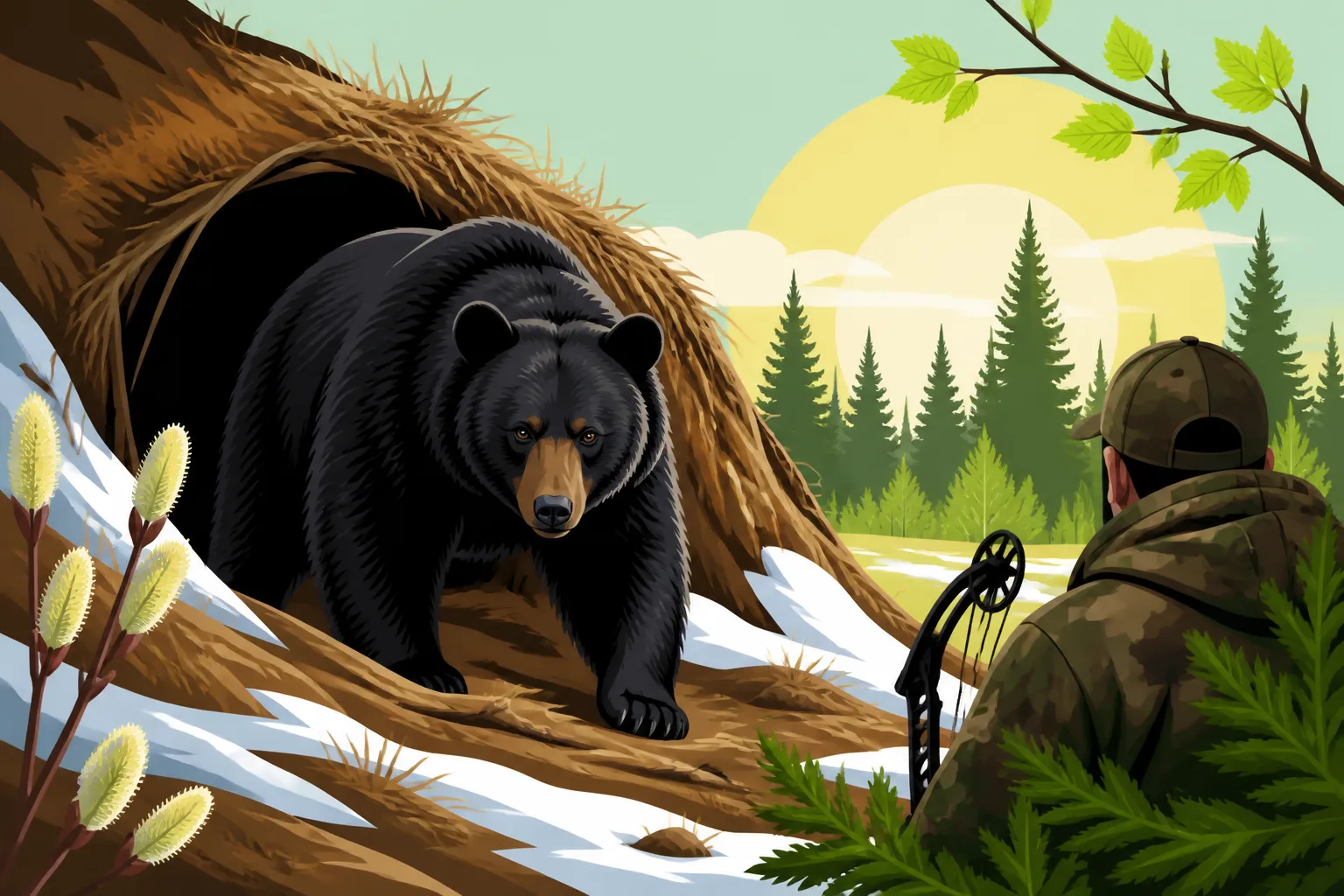
Typically, the first bears to emerge from their dens in Manitoba are the adult males – the big boars. They're often out and about by late March or early April, sometimes even earlier if we get a particularly mild winter and an early thaw. These older, larger bears don't have the same maternal responsibilities as sows, and they're usually the first to be driven by the need to replenish lost body mass. They're eager to find those initial food sources, often still scarce, and establish their territories. You might find yourself out Spring Bear Hunting in Manitoba and seeing fresh tracks long before you expected.
Then come the younger bears, the sub-adults, who don't have territories to defend or cubs to protect. They'll typically follow the boars out, sometimes a week or two later. These are often the bears that are still figuring things out, maybe ranging a bit wider in search of food before the landscape greens up fully. They're driven by hunger and a natural instinct to explore after being cooped up.
Sows and Cubs Take Their Time
The last to emerge, almost without fail, are the sows with newborn cubs. They have the most important job of all: protecting their vulnerable offspring. These mothers will typically stay in the den until mid to late April, sometimes even into early May, especially in the more northern parts of the province or after a prolonged cold snap. Their primary concern is ensuring the cubs are strong enough to withstand the elements and potential predators, and that there's enough nascent vegetation or other early food available to sustain them once they leave the safety of the den.
You can imagine the delicate balance a sow has to strike. Too early, and her cubs risk exposure to harsh weather or lack of food. Too late, and she misses out on critical early foraging opportunities. This is a big reason why, when you're considering Manitoba Spring Bear Season Dates, you'll notice the season often runs well into June, giving all bears ample time to emerge.
Factors Influencing Bear Emergence
While there's a general pattern, a bear's internal clock isn't set by a human calendar. Many environmental and biological factors play a significant role in exactly when a black bear decides it's time to vacate its winter home.
The Role of Weather and Snowpack
The most obvious factor is, of course, the weather. A prolonged cold spell with heavy, persistent snow cover will naturally delay emergence. Bears don't want to come out into a blizzard or a landscape where food is buried under several feet of snow. The melting snowpack is a crucial indicator for them. As the snow recedes, it exposes new green shoots and allows for easier travel, making it more appealing to venture out.
Conversely, a mild winter with an early thaw can see bears coming out significantly earlier than usual. We've certainly had those years in Manitoba where folks are seeing bear sign in March and scratching their heads. It's a testament to how adaptable these animals are, but also how much they're tied to the immediate environmental conditions. The ground temperature and the overall warming trend are powerful signals that help rouse them from their deep sleep.
Food Availability and Habitat
Beyond the immediate weather, the long-term outlook for food availability directly impacts emergence. While bears don't have a crystal ball, their physiology and instinct respond to the promise of nourishment. As the land begins to green up, providing new plant growth, or as winter-killed animals become accessible, the incentive to leave the den increases. In areas where early spring food sources are abundant, bears might be more inclined to emerge sooner.
Consider the diverse Manitoba's Game Hunting Areas we have. In the southern Parkland regions, where spring often arrives earlier, food sources like tender shoots and berries might become available sooner than in the dense, northern boreal forest. This difference in habitat and the resulting availability of sustenance means a bear in the Whiteshell might emerge before a bear near The Pas. Hunters who understand What Bears Eat in a Boreal Spring can better predict where bears will be once they emerge.
Age, Sex, and Reproductive Status
As we touched on earlier, a bear's personal circumstances within the population significantly influence its emergence time. Boars, being solitary and driven by breeding as well as hunger, have fewer constraints. Their primary goal is to establish territory and start cruising for sows when the time comes.
Sows, particularly those with cubs, have a much more complex calculation. The cubs are born in the den, typically in January or February, tiny and vulnerable. The mother must nurse them and keep them warm for weeks before they're ready to face the outside world. This is why they stay put longer. A sow without cubs, or one whose cubs from the previous year have left, might emerge closer to the timeline of a sub-adult or even an older boar. It's a fascinating biological rhythm that ensures the survival of the species.
Table: Typical Black Bear Den Emergence in Manitoba
| Bear Category | Typical Emergence Window | Key Influencing Factors | Early Spring Behavior |
|---|---|---|---|
| Adult Boars | Late March – Early April | Milder winters, early thaws, territorial instincts | Actively seeking food, covering ground, marking territory |
| Sub-Adult Bears | Early – Mid April | Moderate winters, general hunger | Exploring, often seen on fringes of established territories |
| Sows (no cubs) | Mid April | General spring thaw, individual condition | Similar to sub-adults, sometimes more cautious |
| Sows with Newborn Cubs | Late April – Early May | Persistent cold/snow, cub development, food availability | Very cautious, staying close to den, focusing on cub safety |
Signs of Bear Emergence and Early Season Behavior
Once bears start stirring, they don't immediately burst out into full activity. There's a period of adjustment, and knowing what to look for can give you a real edge.
Tracks, Scrapes, and Rubs
The most obvious sign that bears are out is fresh tracks in any remaining snow or soft ground. These early tracks can tell you a lot about the size of the bear and its direction of travel. You might find them along old logging roads, creek bottoms, or the edges of bush country where snow melts first. Keep an eye out for telltale claw marks that distinguish them from other wildlife. When Reading Sign After a Fresh Snow, bear tracks are unmistakable.
Beyond tracks, look for "rub" trees – trees where bears have rubbed their backs, often leaving hair, and sometimes bite marks or claw marks. Boars, especially, will do this to mark their territory. Scrapes on the ground, particularly near travel corridors or potential food sources, are another indicator of recent bear activity. These signs become more prevalent as more bears emerge and start moving with purpose. A dedicated hunter using a mapping tool like GoHunt can mark these signs and build a picture of local bear movement.
Cruising for Food and Setting Baits
Once out of the den, the primary motivator for bears is food. They're often lethargic at first, slowly working to get their digestive systems back up to speed. Early spring food sources are limited. They'll gravitate towards areas where winter-killed animals might be found, or where the first green shoots of vegetation are appearing. Think south-facing slopes, marsh edges, and creek bottoms where things green up earliest.
This early hunger is precisely why Baiting Black Bear in Manitoba is such an effective strategy for spring hunting. Bears are driven to find high-calorie food after months of fasting, and a well-placed bait can be incredibly attractive. If you're planning on Setting a Bear Bait Site in Manitoba, getting your baits out as soon as bears are emerging gives them time to find it and establish a pattern. Remember, early season bears might not hit baits as aggressively as later in the spring, but consistent offerings will eventually draw them in.
Regional Variations in Manitoba
Manitoba is a huge province with diverse ecosystems, and what's happening in the south might be weeks, or even a month, different from what's happening up north.
Southern and Central Manitoba
In areas like the Parkland region or the Interlake, spring usually arrives sooner. The snow melts earlier, and green-up begins in late March or early April. This means bears in these regions, which include prime Black Bear Hunting in Manitoba zones, will generally emerge on the earlier end of the spectrum. Farmers might report sightings of bears in fields or along bush lines in April, sometimes even late March during exceptionally warm years.
Hunting in these areas might mean dealing with slightly more variable weather earlier in the season, but also potentially getting a jump on bear activity. Understanding the specific GHA (Game Hunting Area) you're in, and how its typical spring weather unfolds, is a key part of Scouting a Manitoba Game Hunting Area for bears.
Northern and Boreal Regions
As you head into Hunting Manitoba's Northern Boreal or Hunting Manitoba's Eastern Shield Country, spring arrives later and often more abruptly. The snowpack can be considerably deeper and last well into May. This naturally pushes back the bear emergence timeline. Bears in these regions will often be later to den up in the fall, and later to emerge in the spring, adapting to the shorter warm season.
For hunters venturing into these more remote areas, patience is key. While the official Timing a Manitoba Spring Bear Hunt might start in April, the reality on the ground in the far north could mean bears aren't truly active until mid-May or even later. Outfitters operating in these northern zones are experts at understanding these nuanced timelines and can provide invaluable insights into the best weeks to book a hunt for optimal success.
Ultimately, while we can't control the weather, understanding the factors that influence when bears leave their dens gives us a powerful tool for planning a successful spring hunt here in Manitoba. Happy hunting, and may your spring woods be full of fresh bear sign!
Disclaimer
This article is for general informational purposes only and does not constitute professional advice. Laws, prices and regulations vary by location and change over time. Consult a qualified professional for guidance on your specific situation.