Bringing Firearms Into Manitoba
Dreaming of a Manitoba hunting adventure, picturing that trophy buck or a limit of waterfowl, only to feel a knot of anxiety tighten at the thought of bringing your firearms across the border? You're not alone. The process can seem daunting, riddled with regulations and potential pitfalls, making many hunters hesitant. This comprehensive guide will demystify the requirements and walk you through every essential step to ensure your firearms enter Manitoba smoothly and legally, letting you focus on the hunt itself.
Understanding Canadian Firearm Classifications for Hunters
One of the biggest hurdles for non-resident hunters bringing firearms into Canada is understanding how the Canadian legal system classifies them. It’s distinctly different from how firearms might be categorized in your home country, and a misunderstanding here can lead to serious consequences, including seizure of your firearms and refusal of entry. Knowing the rules beforehand is absolutely critical.
Non-Restricted, Restricted, and Prohibited Firearms
For hunting purposes in Manitoba, you’ll almost exclusively be dealing with what Canada classifies as non-restricted firearms. These are your typical hunting rifles and shotguns. Generally, a firearm is considered non-restricted if its barrel length is at least 470 mm (approximately 18.5 inches), and it’s not designed to be fired when folded or shortened below a certain length, among other criteria. This category includes most bolt-action rifles, lever-action rifles, pump-action shotguns, and many semi-automatic shotguns. These are the firearms you'll use for pursuing everything from big game like the whitetails featured in our guide on Whitetail Hunting in Manitoba to upland birds.
Restricted firearms are a different beast entirely. This category primarily includes handguns and certain semi-automatic centerfire rifles, often those with shorter barrels or specific designs. While a Canadian resident might be able to possess a restricted firearm with the appropriate licensing and authorization, non-residents generally cannot bring restricted firearms into Canada for hunting purposes. There are extremely limited circumstances for their import (such as for recognized international target shooting competitions), but for the average hunter, they are off-limits. Do not attempt to bring a handgun for your hunt.
Finally, prohibited firearms are exactly what they sound like – they are absolutely forbidden for import into Canada by non-residents. This category includes fully automatic firearms, certain types of modified firearms, and specific models that have been deemed prohibited by Canadian law. Bringing a prohibited firearm to the border will result in its seizure, potential fines, and criminal charges. Before you even think about packing, a crucial first step is to visit reliable resources, perhaps even checking out detailed discussions on platforms like GoHunt, to understand Canada's firearm classifications. It’s always best to err on the side of caution and ensure your firearm falls squarely into the non-restricted category.
Magazine and Ammunition Limitations
Beyond the firearm itself, Canadian law also places restrictions on magazine capacity, particularly for semi-automatic firearms. For a semi-automatic centerfire rifle, the magazine capacity is limited to five rounds. For handguns (which, as discussed, are generally not allowed for non-residents anyway), the limit is ten rounds. It’s important to note that these limits apply to the magazine itself, not how many rounds you load into it. If your semi-automatic hunting rifle came with a 10-round magazine, you’ll need to acquire a compliant 5-round magazine or ensure that the existing one is permanently altered to only accept five rounds. This restriction does not apply to tube-fed shotguns, lever-action rifles, or most bolt-action rifles, where the internal magazine capacity isn't typically restricted.
When it comes to ammunition, there isn't a strict legal limit on the quantity you can import for personal use, provided it's declared and intended for lawful hunting. However, generally, you are allowed to bring in up to 200 rounds duty-free. If you bring more, you might be subject to duties or taxes, but it's not prohibited. The key here is always to declare the exact quantity you are bringing. Trying to sneak in extra rounds or an undeclared box can quickly turn a routine border crossing into a frustrating interrogation. Ensure your ammunition is stored securely and separately from your firearms during transport, ideally in its original packaging or a dedicated ammo container. Preparing well in advance can help avoid issues, just like preparing for Hunting Safely in Deep Winter Cold requires foresight.
Navigating the Non-Resident Firearm Declaration Form
The cornerstone of legally bringing your hunting firearms into Manitoba as a non-resident is the Non-Resident Firearm Declaration form, officially known as Form CAFC 909. This document is not just a formality; it's a critical step that, once confirmed by a Canadian Border Services Agency (CBSA) officer, essentially acts as your temporary license to possess and transport your declared firearms in Canada for up to 60 days.
The Importance of Form CAFC 909
The Non-Resident Firearm Declaration form serves several vital purposes. First and foremost, it’s your formal declaration to the Canadian government that you are bringing specific firearms into the country. This transparency is key to a smooth process. Secondly, once the form is completed, verified, and confirmed by a CBSA officer, it essentially becomes your temporary possession license. This means you are legally allowed to have those specific firearms with you for the duration specified on the form, typically up to 60 days. This temporary license is invaluable and must be carried with you at all times when in possession of your firearms in Canada, much like you would carry your Manitoba Resident Hunting Licence Cost or other permits.
The process for Form CAFC 909 is fairly straightforward, but with one critical nuance: you must fill out the form before you arrive at the border, but do not sign it until you are in the presence of a CBSA officer. The officer needs to witness your signature as part of the confirmation process. You can download and print the form from the Royal Canadian Mounted Police (RCMP) website. It requires details such as your personal information, the make, model, caliber, serial number, and barrel length of each firearm you are importing. Be meticulous and accurate with this information; any discrepancies could cause delays or issues. There is a fee associated with processing this declaration, which is currently $25 CAD, payable at the border. While the form itself is straightforward, ensuring you have all supporting documentation is key. Many hunters use trip planning tools or forums on sites like GoHunt to create comprehensive checklists to prevent any oversight.
Essential Documentation You'll Need
Having all your ducks in a row with documentation will make your border crossing infinitely smoother. Beyond the pre-filled, unsigned CAFC 909 form, here’s a list of other critical documents you should have readily accessible:
- Valid Passport or Enhanced Driver’s License: This is your primary identification for crossing any international border. Ensure it's current and won't expire during your trip.
- Proof of Hunting Trip: This is crucial for demonstrating the legitimate purpose of your firearms. This could be an official letter from a Manitoba outfitter confirming your booking, confirmation of your purchased Manitoba hunting license (even if provisional), or an invitation from a Canadian resident with details of your hunting plans. This is particularly important for species like those discussed in Moose Hunting Manitoba's Boreal Country or Black Bear Hunting in Manitoba.
- Previous Hunting Licenses/Hunter Education Card: While not always strictly required if you have other proof of a legitimate hunting trip, carrying a previous hunting license from your home state/province or your hunter education card can serve as additional proof of your experience and intent.
- Firearm Registration Documents (if applicable in your home jurisdiction): While not universally required by Canadian law for non-restricted firearms, having any ownership or registration documents for your firearms can sometimes be helpful for identification.
- Customs Declaration Card: You'll fill this out for Canada Customs, declaring all goods you are bringing in, including your firearms.
Organize all these documents in a dedicated folder or binder so they are easy to present to the CBSA officer. Being prepared and organized shows respect for their process and helps expedite your entry. Our guide on Planning a Manitoba Hunting Trip also emphasizes the importance of meticulous preparation for all aspects of your journey.
Proper Transport and Border Protocols
Bringing a firearm across an international border isn't just about paperwork; it's also about physical safety and adherence to strict transport regulations. How you secure your firearms and how you conduct yourself at the border can significantly impact the ease of your entry into Manitoba.
Securing Your Firearms for Travel
Canadian law is very clear on how firearms must be transported. For non-restricted firearms, the rules are as follows:
- Unloaded: Your firearm must be completely unloaded. This means no ammunition in the chamber or magazine, and for shotguns, no shells in the magazine tube. Double-check this before you leave home.
- Trigger Locked: Each firearm must have a sturdy trigger lock or cable lock applied, rendering it inoperable. These are relatively inexpensive and widely available.
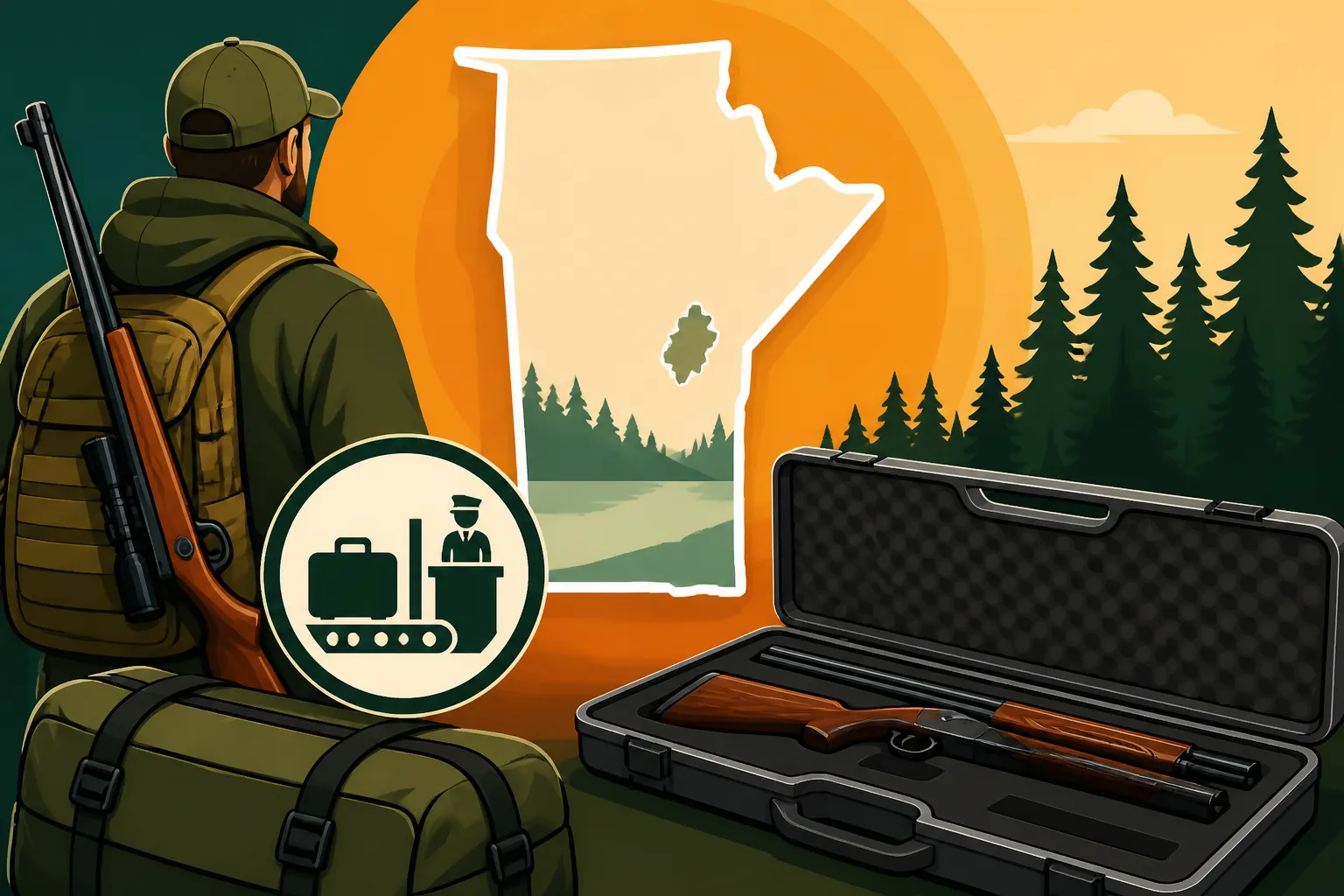
- Securely Cased: The firearm must be enclosed in a non-transparent (opaque) case. A hard-sided, locked case is highly recommended and offers the best protection against damage and tampering. While a soft case is technically permissible if opaque and locked, hard cases are generally preferred by border officials for security.
- Ammunition Separate: All ammunition must be stored separately from the firearms and also secured, ideally in its own locked container.
These rules are not mere suggestions; they are legal requirements designed to prevent accidental discharge and theft. Adhering to them strictly is non-negotiable. Imagine the frustration of an officer finding a loaded firearm or an unlocked case; it immediately raises red flags and can lead to severe consequences. For an added layer of preparation, many experienced hunters check GoHunt forums for recent border crossing experiences, gaining insights into wait times and specific officer questions at points like Emerson or Sprague. This kind of diligent preparation is just as crucial as understanding Manitoba Big Game Season Dates for your actual hunt.
What to Expect at the Border Crossing
When you arrive at a Canadian Port of Entry, such as Emerson, Sprague, or Boissevain, the procedure for non-residents bringing firearms is specific. Here's what you should do:
- Declare Immediately: As soon as you pull up to the CBSA booth, immediately declare that you have firearms and state the quantity. "Good morning, officer. I'm importing X number of non-restricted hunting firearms." This upfront honesty is paramount. Do not wait for the officer to ask; volunteer the information.
- Be Prepared for Inspection: The officer will direct you to a secondary inspection area. This is routine. They will likely ask you to exit your vehicle and present your documentation. They will then inspect your firearms to ensure they are unloaded, trigger-locked, and properly cased.
- Complete the CAFC 909 Form: Once satisfied with the physical inspection and your documentation, the officer will supervise you signing the CAFC 909 form. They will then process it, collect the $25 fee, and provide you with a confirmed copy. This confirmed copy is your temporary license.
- Answer Questions Honestly: Be polite, respectful, and answer all questions truthfully. Officers might ask about your hunting plans, your outfitter, where you're staying, and the specific game you're targeting. Having your Rules for Non-Residents Hunting Manitoba information handy can be beneficial.
The goal is a smooth and efficient process. Being cooperative and prepared will help significantly. Any evasiveness, dishonesty, or signs of frustration can lead to increased scrutiny and potential delays. Remember, the CBSA officers are there to ensure national security and enforce Canadian law.
Common Pitfalls and Helpful Tips
Even with the best intentions, it's easy to make a mistake when crossing an international border with firearms. Being aware of common pitfalls can help you avoid them, ensuring your trip to Manitoba is memorable for the right reasons.
Avoiding Costly Mistakes
Ignoring or misunderstanding firearm import regulations can have severe repercussions. Here are some of the most common and costly mistakes hunters make:
- Failure to Declare: This is arguably the biggest mistake. Not declaring your firearms immediately and clearly upon arrival is considered smuggling. Consequences can range from significant fines (thousands of dollars) and seizure of your firearms to refusal of entry into Canada and even criminal charges, making it impossible to visit again.
- Bringing Prohibited or Restricted Firearms: As discussed, attempting to bring a prohibited firearm (e.g., fully automatic weapons, certain military-style semi-automatics) or a restricted firearm (e.g., handguns) for hunting will result in immediate seizure and potential legal action. Don't risk it.
- Improper Storage and Transport: A loaded firearm, one without a trigger lock, or one not in a proper case will lead to immediate issues. Safety is paramount, and any lapse will be taken seriously.
- Incomplete or Inaccurate Documentation: Incorrect serial numbers, expired passports, or a lack of proof for your hunting trip can cause significant delays. While usually rectifiable, it can mean hours at the border or even refusal of entry if the officer deems your purpose suspicious.
- Dishonesty or Aggression: Attempting to hide information or arguing with a CBSA officer will not end well. They have the final say on your entry. Staying calm, polite, and truthful is always the best approach. Our article on Manitoba Penalties for Hunting Violations outlines the kind of serious consequences that can arise from such infractions.
Planning Ahead for a Smooth Entry
A little foresight goes a long way in ensuring your border crossing is as seamless as your hunting experience.
- Start Early: Don't wait until the last minute to fill out your forms or gather your documents. Download Form CAFC 909 well in advance.
- Verify Regulations: Before your trip, double-check the latest regulations on the official CBSA and RCMP websites. Laws can change, and what was valid last year might have been updated. Websites like GoHunt often have a wealth of user-submitted tips and updates on border procedures, which can be invaluable for last-minute checks.
- Practice Storage: Before you pack for good, practice locking and casing your firearms and separating your ammunition. Ensure everything fits securely and you can access it easily for inspection.
- Allow Extra Time: Border crossings can be unpredictable. Factor in extra time for potential delays, especially if you're traveling during peak hunting seasons or holidays. Don't rush your arrival; give yourself ample time to go through the process without stress.
- Consider a Guide: If you're particularly nervous or this is your first time, booking your hunt with a reputable outfitter can be a huge advantage. Many outfitters are experienced in guiding non-residents through the border process and can provide necessary documentation. A good outfitter, as highlighted in What a Licensed Manitoba Guide Provides, can be an invaluable resource.
- Know Your Route: Plan your route to a major border crossing that is well-staffed. While smaller crossings can be quicker, they might have fewer resources if an issue arises.
- Know the Rules for Your Destination: Beyond just bringing the firearms in, understand the rules for actually Hunting Whitetails on Manitoba Crown Land or Manitoba Rules on Baiting Big Game once you're here. The journey is just the start!
By taking these steps seriously and approaching the border with respect and preparedness, your focus will shift from the anxiety of regulations to the thrill of your Manitoba hunting adventure.
Important Disclaimer
The information provided in this article is intended for general guidance only and does not constitute legal advice. Firearm laws and border regulations are subject to change. It is your sole responsibility to consult the official websites of the Canada Border Services Agency (CBSA) and the Royal Canadian Mounted Police (RCMP), or to contact them directly, for the most current and accurate information before attempting to bring any firearms into Canada. Compliance with all applicable laws and regulations is mandatory.