The Non-Resident Firearm Declaration
Crossing an international border with a firearm for a hunting trip can feel like navigating a minefield of regulations, especially if you're a non-resident heading into Manitoba. The last thing any hunter wants is to arrive at the border, brimming with anticipation for their adventure, only to be turned away because of a misstep in paperwork. It's a frustrating, often confusing process, but it doesn't have to be. This comprehensive guide is designed to demystify the Non-Resident Firearm Declaration, ensuring your entry into Manitoba for the hunt of a lifetime is as smooth as possible.
Understanding the Canadian Non-Resident Firearm Declaration
The Canadian legal system for firearms is unique, and it's essential for non-residents to grasp the core differences before even packing a rifle. Many hunters from the United States, for example, are accustomed to different rules, and that's where the confusion often starts.
Why This Declaration Matters So Much
Let's be blunt: Canadian firearm laws are significantly stricter than in many other places, particularly the United States. For a non-resident, the Non-Resident Firearm Declaration (often referred to as an "import permit" by hunters, though technically it's a declaration) is your golden ticket. Without it, or if it's filled out incorrectly, you risk not only having your firearm seized but also being denied entry into Canada altogether. Imagine spending months planning your dream hunt for a monster whitetail or a big black bear, paying for an outfitter, booking travel, only to have it all crumble at the border. It's a devastating scenario, and one that can be entirely avoided with a bit of foresight and careful execution. The declaration isn't just a bureaucratic hurdle; it's a critical legal document that proves you're authorized to possess a firearm in Canada for a specific, temporary period. It’s what keeps you on the right side of the law while enjoying Manitoba's incredible hunting opportunities.
What Exactly is a Non-Resident Firearm Declaration?
The Non-Resident Firearm Declaration, officially known as RCMP form 5589, isn't a permit you apply for in advance and wait for approval. Instead, it's a form that you fill out (mostly) before you arrive, and then finalize and present to a Canada Border Services Agency (CBSA) officer when you cross into Canada. Once validated by the CBSA officer, it essentially acts as your temporary license to possess a non-restricted firearm in Canada for up to 60 days. This means you won't need to apply for a separate Canadian Possession and Acquisition Licence (PAL) or other long-term permits.
The form itself requires detailed information about you, the non-resident, and about each firearm you intend to bring. This includes the make, model, serial number, calibre or gauge, and type of action for every single firearm. It also asks for the purpose of your visit, which, for most of us, will clearly be "hunting." It's imperative that every piece of information on this form matches your firearm exactly. Any discrepancy, no matter how minor, can lead to significant delays or even refusal of entry.
Step-by-Step Guide to Completing Your Declaration
Navigating the border can be stressful, but breaking down the firearm declaration process into manageable steps can significantly reduce the anxiety. Preparation is truly your best friend here.
Before You Even Leave Home
This is where the real work begins, long before you start packing your bags. The key is to gather all the necessary information and complete as much of the form as possible in advance.
First, you'll need to locate and print the RCMP 5589 form. You can usually find this on the Royal Canadian Mounted Police (RCMP) website or via a quick search online. Don't worry about getting the exact version number right; the most current one will almost always be the correct one. Print multiple copies, just in case you make a mistake.
Next, collect all the pertinent details for each firearm you're bringing. This includes the full make, model, serial number, calibre or gauge, and action type (e.g., bolt-action, pump-action, semi-automatic). It's a good idea to physically check your firearms and write down this information directly from them to ensure accuracy. Mistakes, even small ones like transposing a number in the serial, can cause major headaches at the border.
Crucially, do not sign the form before you arrive at the border. The CBSA officer needs to witness your signature to validate the document. You can fill out all other sections, but leave the signature line blank.
It's also important to confirm that your firearms are legal for import into Canada and for hunting in Manitoba. Generally, most common hunting rifles and shotguns fall into the "non-restricted" category. However, certain firearms are prohibited or restricted, such as handguns (with very few exceptions for target shooting competitions, not hunting), most semi-automatic rifles with a capacity greater than 5 rounds, and certain short-barreled pump-action shotguns. If you're unsure, it's always best to check the RCMP website or contact the Canadian Firearms Program directly. Make sure you understand the regulations regarding Legal Firearms and Bows for Big Game in Manitoba before you even consider bringing a particular weapon.
The Border Crossing Process
This is the moment of truth, but with proper preparation, it should be a relatively smooth experience.
Upon arrival at the Canadian port of entry, your first and most important action is to declare all firearms to the CBSA officer. Do not wait for them to ask. Proactively state, "I am declaring firearms for hunting," or similar. This immediately sets the right tone and shows you are compliant.
You will then present your partially completed, unsigned RCMP 5589 form to the officer. They will review the form, inspect your firearms (which should be unloaded, securely cased, and preferably locked – we'll get into packing in more detail shortly), and verify that the information on the form matches your firearms precisely.
Once satisfied, the officer will witness your signature on the form. There's also a fee for the declaration, which is currently CAD $25 (but always subject to change, so have Canadian currency or a credit card ready). This fee covers all firearms listed on a single declaration, so you don't pay per gun. After payment, the officer will stamp and sign the form, officially validating it. They will give you two copies: one for your records and one to keep with your firearms. This official receipt is incredibly important.
It can be a bit nerve-wracking, but remember the CBSA officers are there to do a job, which includes ensuring public safety and compliance with Canadian law. Being polite, honest, and organized will go a long way in facilitating a quick and hassle-free entry. For more detailed information on specific rules about Bringing Firearms Into Manitoba, it's always good to check official sources.
Keeping Your Declaration Valid and Accessible
Once you have your validated declaration, the responsibility shifts to you to keep it safe and accessible throughout your hunt. The declaration is typically valid for 60 days from the date of validation. If your hunting trip extends beyond this period, you would need to visit a Canadian Firearms Program office to renew it, though most hunting trips won't require this.
It's absolutely critical to keep your original validated declaration with your firearms at all times. If you're transporting your rifle in a vehicle, the declaration should be easily accessible, perhaps in a glove compartment or with the firearm itself. When you're in the field, it's wise to carry a copy of the declaration on your person, alongside your hunting license and tags. This way, if a conservation officer or RCMP officer requests to see your documentation, you have it readily available.
Another crucial piece of advice is to bring proof of ownership for your firearms. While not strictly required by the declaration itself, having a firearms registration certificate, a bill of sale, or even a notarized letter if you are borrowing a firearm, can avoid potential complications or questions about legal ownership. Think of it as an extra layer of reassurance for both yourself and border officials.
Here’s a quick summary of the essential steps for your Non-Resident Firearm Declaration:
| Step | Action | Important Note |
|---|---|---|
| 1. Research & Print Form | Download and print RCMP 5589 from the official RCMP website. Print several copies. | Ensure you have the current form. |
| 2. Gather Firearm Info | Accurately record make, model, serial number, calibre/gauge, and action type for each firearm. | Double-check every detail against the actual firearm. |
| 3. Pre-fill the Form | Fill out all sections except the signature line. Indicate "Hunting" as your purpose. | DO NOT SIGN until you are in front of a CBSA officer. |
| 4. Prepare for the Border | Unload and securely case all firearms. Separate ammunition. Ensure firearms are non-restricted. | Research Legal Firearms and Bows for Big Game to confirm your firearms are permitted. |
| 5. Declare at the Border | Immediately inform the CBSA officer upon arrival that you are declaring firearms for hunting. | Honesty and transparency are key. Failure to declare is a serious offense. |
| 6. Present & Pay | Give the officer your unsigned form. They will inspect firearms, witness your signature, and collect the $25 CAD fee. | Be prepared for the fee (credit card or Canadian cash). Get your validated copies and official receipt. |
| 7. Keep Documents Handy | Carry the validated declaration with your firearms at all times, and a copy on your person in the field. | This acts as your temporary license. Also bring proof of ownership for added security. Carrying Your Licence in the Field |
Common Pitfalls and Expert Tips for a Smooth Entry
Even with the best intentions, it's easy to make mistakes that can turn a smooth border crossing into a frustrating ordeal. Knowing what to watch out for can save you a lot of grief.
Mistakes to Avoid at All Costs
- Not Declaring Your Firearms: This is the absolute worst mistake you can make. Attempting to enter Canada with undeclared firearms is a criminal offense, and it will almost certainly lead to the seizure of your firearms, potential fines, and refusal of entry. It's not worth the risk.
- Incorrect Information on the Form: As mentioned, serial numbers, makes, and models must be exact. A typo can be just as problematic as an intentional omission. Double-check, triple-check, then have someone else check it for you.
- Bringing Prohibited or Restricted Firearms: Unless you have very specific, pre-approved authorizations (which are exceptionally rare for non-resident hunters), do not attempt to bring handguns, most semi-automatic rifles, or certain types of shotguns into Canada. These are generally prohibited for hunting purposes and will be seized.
- Overlooking Ammunition Limits: You can bring up to 5,000 rounds of non-restricted ammunition into Canada. While most hunters won't need that much, it's a limit to be aware of. Ammunition must also be securely packed, separate from your firearms.
- Borrowing a Firearm Without Proper Documentation: If you are bringing a firearm that isn't legally registered to you, you must have a written, notarized letter of permission from the owner, including their full name, address, and contact information, as well as the firearm's details.
Packing Firearms for Travel
Proper packing isn't just about protecting your gear; it's a legal requirement that helps ensure a smooth border crossing and safe transport.
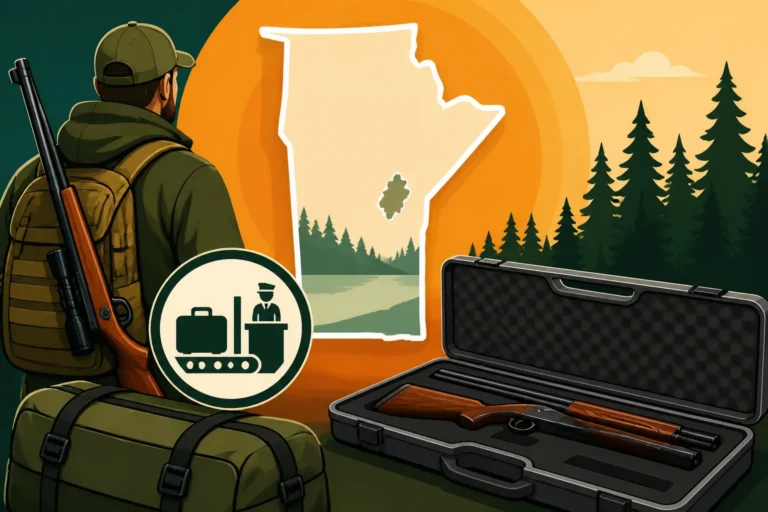
All firearms must be unloaded and transported in a secure, non-transparent case. The case should ideally be lockable, and many hunters choose hard-sided cases with TSA-approved locks for air travel or robust padlock compatibility for vehicle transport. Ammunition must be transported separately from the firearms, preferably in its own secured container.
If you're driving, firearms should be placed out of sight, ideally in the trunk of a car or secured in the back of an SUV or truck, away from immediate access. This isn't just for border compliance but also for general safety and theft prevention.
For those flying, the rules are even stricter. You must declare your firearms to the airline when checking in your luggage. They must be in a hard-sided, locked container, and typically only ammunition within a certain weight limit (usually 11 lbs or 5 kg) is allowed in checked baggage, also securely packed. Always check your specific airline's policies well in advance, as they can vary. Learning about Flying to Manitoba With a Rifle is crucial if you plan to travel by air.
Partnering with Outfitters for Guidance
One of the best resources for non-resident hunters is a reputable Manitoba outfitter. These professionals deal with international clients constantly and are well-versed in the nuances of Canadian firearm import regulations. Many outfitters provide detailed guidance on completing the RCMP 5589 form, often sending out blank copies or step-by-step instructions as part of their pre-hunt package. They understand the frustrations and confusion newcomers face and are excellent at breaking down the process.
Outfitters listed with organizations like the Manitoba Lodges and Outfitters Association, or found through platforms like GoHunt, often have specific protocols in place to help their clients. They can answer specific questions about which firearms are acceptable, what documentation is needed, and what to expect at various border crossings. Their guidance can be invaluable in ensuring a stress-free start to your hunt. When you're Planning a Manitoba Hunting Trip, don't hesitate to lean on your outfitter for these details. They want your trip to be successful and hassle-free as much as you do. They'll also provide insight into What a Licensed Manitoba Guide Provides in terms of preparation and support. From Booking a Manitoba Whitetail Hunt to helping you understand What Manitoba Guides Expect You to Shoot, they are a wealth of information. Even for specialized trips like those for Manitoba Outfitters Who Take Youth Hunters, the firearm declaration process remains the same, and their guidance is equally vital. Truly, understanding Hunting Guides and Outfitters in Manitoba and leveraging their expertise is a smart move.
Staying Compliant While Hunting in Manitoba
Once you've successfully entered Canada with your firearms and are ready to hunt, remember that compliance doesn't end at the border. You need to remain vigilant throughout your trip.
Carrying Your Declaration in the Field
Just like your hunting license and species tags, your validated Non-Resident Firearm Declaration is a critical document that you should have on you whenever you are hunting with your firearm. This might mean keeping a laminated copy in your hunting pack, alongside your wallet, or with your other essential permits.
Should you encounter a conservation officer or a member of the Royal Canadian Mounted Police (RCMP) in the field, they have the authority to ask for your documentation. Being able to readily present your hunting license, species tags, and your Non-Resident Firearm Declaration demonstrates your compliance and makes for a swift, positive interaction. Remember to be courteous and cooperative; these officers are simply ensuring everyone is following the rules that protect Manitoba's wildlife and maintain public safety. For general guidelines on Carrying Your Licence in the Field, this also applies to your firearm declaration.
Returning Home with Your Firearms
The process of exporting your firearms from Canada is much simpler than importing them. Canada does not require a specific export declaration for non-residents leaving the country with firearms they lawfully brought in. The expectation is that you will take your firearms with you.
However, you must be fully aware of and comply with your home country's regulations for re-importing firearms. For hunters returning to the United States, this often means having a U.S. Customs and Border Protection Form 4457 (Certificate of Registration for Personal Effects Taken Abroad) on hand. This form proves that you owned the firearm before leaving the U.S., which helps avoid duty charges or questions about illegal importation upon your return. This form is typically obtained before you leave the United States.
Just as you prepared meticulously for your entry into Manitoba, dedicate similar attention to your departure and re-entry into your home country. A smooth exit from Canada and re-entry into your home country completes a successful and stress-free hunting adventure.
Disclaimer
Please note that while this guide aims to provide comprehensive and up-to-date information, firearm regulations can change. It is always the hunter's responsibility to consult the most current official regulations from the Canadian Border Services Agency (CBSA) and the Royal Canadian Mounted Police (RCMP) before planning their trip. This article is for informational purposes only and does not constitute legal advice.