Transporting Game Meat in Manitoba
You’ve put in the time, faced the elements, and finally, you’ve harvested an animal. That rush of accomplishment is incredible, but now comes the equally crucial task: getting your hard-earned game meat home safely and legally. For many hunters, the rules around transporting game can feel like a confusing maze, especially when you’re tired and ready to get that meat on ice. No one wants to risk a fine or, worse, losing their harvest because of a technicality. This comprehensive guide is here to break down everything you need to know about Transporting Game Meat in Manitoba, ensuring your successful hunt culminates in delicious meals without any unexpected headaches.
Initial Field Preparation for Safe Transport
The journey of your game meat begins the moment your animal is down. Proper field dressing and initial cooling are absolutely critical, not just for quality, but also for meeting regulatory requirements. Skipping these steps, or doing them improperly, can not only spoil your meat but also create issues when you hit a checkpoint or need to prove compliance.
The Importance of Rapid Cooling and Cleanliness
Manitoba’s weather can be notoriously unpredictable. One day it’s mild, the next it’s surprisingly warm, or even freezing cold. Regardless of the temperature, getting that core body heat out of the animal as quickly as possible is paramount. Bacteria thrive in warm conditions, and an animal that isn't properly cooled is a ticking time bomb for spoilage.
After a successful harvest, your first priority should be to field dress the animal immediately. This involves removing the internal organs to allow air to circulate and body heat to escape. If you’re hunting larger game like a moose or elk, this can be a significant undertaking, often requiring multiple people and specialized tools. Even for a whitetail, the sooner you can get the guts out, the better. Consider the terrain – if you’re in a remote bush country, dragging a heavy animal back to a vehicle for field dressing might not be feasible, so be prepared to do it on the spot. For detailed guidance on preserving your meat in challenging conditions, check out our article on Meat Care in Manitoba's Cold Snaps. Maintaining cleanliness throughout this process is also vital. Use clean knives, avoid contaminating the meat with dirt or gut contents, and always wash your hands or wear gloves.
Quartering and Boning Out in the Field
Depending on the size of your animal and how far you are from your vehicle or camp, you might need to quarter or even bone out your animal in the field. This isn't just about making it lighter to carry; it's also a fantastic way to maximize cooling. By breaking the carcass down into smaller pieces, you expose more surface area to the air, accelerating the cooling process. This is especially true when hunting species like moose or large bears in remote areas, where extracting a whole carcass is simply impossible.
When quartering, aim for clean cuts, separating the major muscle groups. If you're boning out, remove as much meat from the bone as possible, trimming off excess fat, silver skin, and any bloodshot areas. Place the meat in breathable game bags immediately. Never use plastic bags at this stage, as they trap heat and moisture, promoting bacterial growth. Game bags, made of cotton or synthetic breathable material, protect the meat from flies, dirt, and debris while allowing it to cool and form a protective "rind." Some hunters even carry a small, portable meat scale to ensure even distribution of weight when packing out. Tools like the ones often featured on outdoor planning apps like GoHunt can provide invaluable assistance in navigating remote areas for easier extraction.
Understanding Manitoba's Game Transport Regulations
Once your game is field-dressed and cooled, the next hurdle is navigating the provincial regulations for transporting it. Manitoba has specific rules designed to ensure legal harvest, prevent the spread of disease, and deter poaching. Ignorance of these rules is not an excuse, so it’s essential to be thoroughly familiar with them before you even head out.
The Importance of Proper Tagging and Documentation
This is probably the most critical aspect of legal game transport. Every big game animal harvested in Manitoba must be immediately validated and tagged according to your license requirements. The tag is your proof of legal harvest and must remain with the animal until it reaches its final destination or is processed for consumption. The specific rules for Manitoba Hunting Licences and What They Cost outline these tagging procedures.
Here’s what you need to know:
- Immediately Validate: As soon as the animal is recovered, you must validate your tag by noting the date and time of kill.
- Attach the Tag: The tag must be securely attached to the animal. For deer, moose, and elk, this usually means attaching it to an antler, ear, or leg in a visible and tamper-proof manner. Make sure it won’t fall off during transport.
- Evidence of Sex: For most big game species, specific "evidence of sex" must remain attached to the carcass or portion of the carcass being transported. This allows conservation officers to verify that you harvested a legal animal (e.g., antlered vs. antlerless, male vs. female). For example, a whitetail buck needs to have its antlers naturally attached or, if removed for transport, the skull plate with antlers must accompany the meat. Our article on Evidence of Sex Requirements provides more specific details for each species.
- Personal Possession: Your valid hunting license and any required permits (like a CWD sample submission form) must always be in your personal possession while transporting game. This is where apps like GoHunt can be incredibly handy, as many allow you to store digital copies of your licenses and permits for easy access, though always carry physical copies too!
Transporting Carcasses Through CWD Management Zones
Chronic Wasting Disease (CWD) is a serious concern for Manitoba’s deer population, and regulations are in place to prevent its spread. If you hunt in a designated CWD Surveillance Area or a CWD Restricted Area, there are strict rules about how you can transport your carcass out of that zone.
These regulations typically restrict the transport of certain parts of the carcass that are known to carry CWD prions, such as the brain, spinal cord, eyes, and lymph nodes. Generally, you can transport:
- Deboned meat
- Quarters or other large cuts of meat with no part of the spinal column or head attached
- Skinned hides without the head
- Clean skull plates with antlers, if all brain material and soft tissue has been removed
- Cleaned antlers
- Upper canine teeth (ivories) from elk
- Finished taxidermy mounts
It's absolutely crucial to know if you're hunting in one of these zones. The provincial hunting guide and Manitoba Sustainable Development website provide up-to-date maps of CWD areas. If you harvest an animal in a CWD zone, you might be required to submit a CWD sample for testing. This usually involves removing the lymph nodes from the jaw area. The article on Manitoba's CWD Sampling Requirements offers a detailed walkthrough. Transporting an entire carcass out of a CWD restricted zone is often prohibited, or requires specific permits and is subject to strict rules. The goal is to leave potentially infected parts within the surveillance area. Failure to comply can result in significant penalties and contribute to the spread of this devastating disease. Be sure to check the specific rules regarding Moving a Carcass Out of a Sampling Area before you leave the field.
| Type of Game Product | Transport within Manitoba (General) | Transport from CWD Zone | Cross-Border Transport (Canada/US) |
|---|---|---|---|
| Whole Carcass | Legal with tag/evidence of sex | Often Prohibited/Restricted | Highly Restricted/Prohibited |
| Deboned Meat | Legal with tag/evidence of sex | Generally Allowed | Generally Allowed (check state/prov.) |
| Quarters (no spine/head) | Legal with tag/evidence of sex | Generally Allowed | Generally Allowed (check state/prov.) |
| Clean Skull Plate/Antlers | Legal (skull clean of tissue) | Generally Allowed | Legal (if properly cleaned) |
| Hides (no head) | Legal | Generally Allowed | Legal |
| Brain/Spinal Cord | Legal | PROHIBITED | PROHIBITED |
Navigating Cross-Border Transport of Game Meat
Taking your hard-earned game meat across international borders, particularly into the United States, adds another layer of complexity. Both Canadian and U.S. customs have strict rules, primarily focused on preventing the spread of diseases like CWD, but also addressing general food safety and wildlife trafficking. You absolutely cannot assume that what's legal in Manitoba is legal across the border.
Requirements for Exporting from Canada
When leaving Canada, your primary concern will be satisfying Canadian Border Services Agency (CBSA) requirements. The key here is proper documentation and adherence to CWD restrictions.
Firstly, you must have your validated hunting license and tags for the animal you harvested. This proves legal ownership and origin. If you were guided, your outfitter will likely help with this paperwork, ensuring you have everything in order. Secondly, regarding CWD, Canada generally prohibits the export of high-risk tissues (brain, spinal cord, eyes, lymph nodes) from cervids (deer, elk, moose) harvested in CWD-positive areas into the U.S. This means your meat should be deboned, or at least the spinal column and head removed, if it originated from a CWD risk zone. For non-resident hunters, understanding the regulations for Rules for Non-Residents Hunting Manitoba is essential, as some species may require specific permits or guide services. Any antlers or capes also need to be properly cleaned and documented. For more information on general border crossings with game, consult our guide on Taking Meat and Antlers Across the Border.
Rules for Importing into the United States
U.S. Customs and Border Protection (CBP), along with the U.S. Fish and Wildlife Service (USFWS), have specific import regulations. Again, CWD is a major driver of these rules. The U.S. Department of Agriculture (USDA) also has regulations concerning the import of animal products.
For cervid meat (deer, elk, moose):
- CWD Restrictions: The most important rule is that you cannot import high-risk CWD materials from any cervid harvested in Canada (or any CWD-affected region) into the U.S. This means no brain, spinal cord, eyes, spleen, or lymph nodes.
- Meat Preparation: You should only bring deboned meat, or quarters that have had the spinal column and head completely removed.
- Antlers and Hides: Cleaned skull plates with antlers (free of brain tissue) and cleaned hides (free of meat or tissue) are generally allowed.
- Proof of Legal Harvest: Always carry your valid Canadian hunting license, tags, and any necessary permits (e.g., export permits if required by either country, though typically not for deboned meat). A record of your Manitoba Big Game Season Dates can also be helpful to prove the timing of your hunt.
- Declaration: You must declare all game meat and animal products to U.S. Customs upon entry. Failure to declare can result in seizure of your meat, fines, and even future travel restrictions.
Always check the most current regulations from both the CBSA and CBP websites before your trip, as these rules can change. A simple oversight can turn a triumphant return into a logistical nightmare.
Practical Tips for Preserving Your Harvest on the Journey
Getting your meat from the field to your freezer is a race against time, temperature, and contamination. Proper planning and execution are essential to ensure the quality and safety of your hard-earned game.
Effective Cooling and Storage Techniques
After initial field dressing and quartering, the focus shifts to maintaining a consistently cool temperature. This is where good quality coolers and ice come into play.
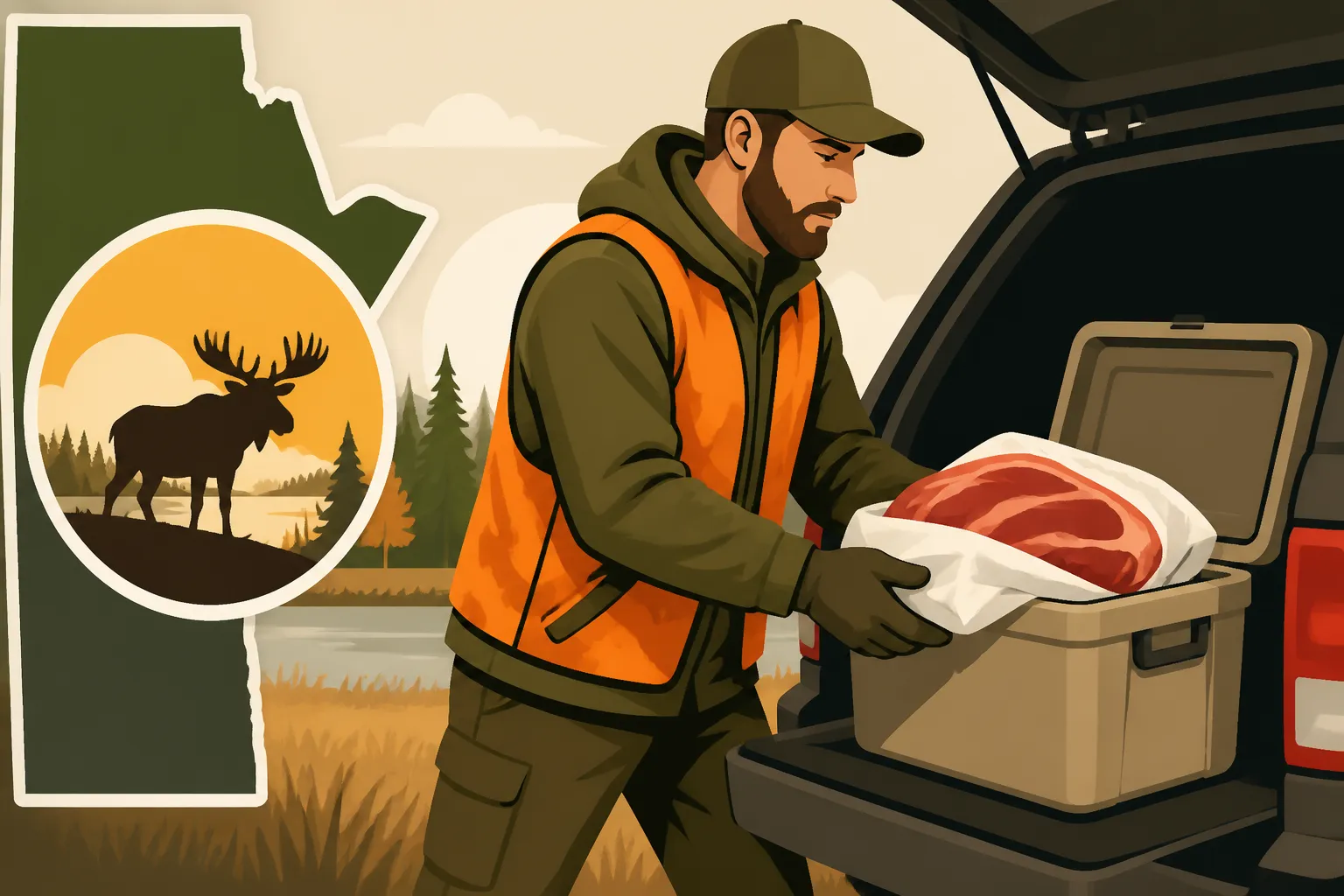
- Ice Management: Pack your meat loosely in breathable game bags, then place it into clean, high-quality coolers. Layer ice, preferably block ice which melts slower than cubed ice, around and on top of the meat. Drain meltwater regularly – you don't want your meat sitting in bloody water. Some hunters use frozen water bottles or milk jugs to avoid direct contact with melting ice, which can leach flavour and make the meat soggy. For truly cold conditions, our guide on Field Dressing in Manitoba's Deep Cold offers specific strategies.
- Airflow: If you're lucky enough to be hunting in consistently cold weather (below 4°C or 40°F), you might be able to hang your quarters in a shaded, well-ventilated area for a few days to age the meat. Ensure the hanging meat is protected from scavengers and flies with game bags. This is a common practice in the cooler parts of Manitoba, but always monitor temperatures closely.
- Freezing: For longer journeys or if you plan to keep the meat for extended periods, freezing is your best option. If possible, process and vacuum-seal your meat at a local butcher or processing facility before heading home. Otherwise, ensure it's well-chilled before freezing solid. A frozen carcass will stay safe for days, even weeks, in a good cooler, especially if wrapped in insulation. Hunters often use robust coolers like Yeti or Pelican for their superior insulation, which is invaluable on extended trips, especially after long days following hunting tips from GoHunt.
Preparing for the Long Haul
Whether you're driving a few hours or several days, planning for the journey is critical.
- Vehicle Prep: Ensure your vehicle has adequate space for coolers. Line the trunk or truck bed with a tarp to contain any leaks or condensation. Consider using ratchet straps to secure coolers, preventing shifting that could damage them or their contents.
- Checkpoints and Stops: Be prepared for potential stops by conservation officers, especially during hunting season. Have your license, tags, and evidence of sex readily accessible. If you're carrying a firearm, ensure it's unloaded, cased, and stored in compliance with provincial and federal laws. If you're using a digital platform like GoHunt to track your progress or review GHA boundaries, remember that physical documentation is always required at checkpoints.
- Processing Facilities: If you don't plan to process the animal yourself, research local meat processors near your hunting area before you leave for your trip. Call ahead to confirm their operating hours and ability to take your animal, especially if it’s large. Some processors get extremely busy during peak season. This ensures you have a solid plan from field to freezer, upholding the principle of Rules on Wasting Game Meat.
- Final Thoughts on Care: Ultimately, treating your game meat with respect from the moment of harvest ensures not only compliance but also the best possible table fare. Your efforts in the field and during transport directly translate to the quality of the meals you'll share with family and friends, celebrating a successful Manitoba hunt.
Disclaimer
The information provided in this guide is for general informational purposes only and does not constitute legal advice. Hunting regulations, including those for transporting game meat, can change frequently. Always consult the most current Manitoba hunting regulations guide and relevant federal (Canadian and U.S.) wildlife and customs regulations before planning your hunt and transport. It is the hunter's sole responsibility to understand and comply with all applicable laws and regulations.