Bow Draw Weight Rules in Manitoba
It’s easy to feel a bit lost when you’re trying to navigate the myriad of hunting regulations, especially when it comes to the specifics of your equipment. For bowhunters in Manitoba, understanding the legal draw weight for your bow isn't just about following the rules; it's fundamental to ensuring an ethical, humane harvest. This guide will walk you through Manitoba's official draw weight requirements, explain what these numbers really mean for your hunt, and help you ensure your gear is perfectly tuned for success and compliance.
Manitoba's Official Bow Draw Weight Requirements
When you’re gearing up for archery season, one of the first things on your checklist, after confirming When Manitoba's Archery Season Opens, should be ensuring your bow meets the province's legal draw weight minimums. This isn't just a bureaucratic hurdle; it's a vital regulation designed to promote humane hunting practices. The province wants to ensure that any arrow you send downrange has sufficient kinetic energy to achieve a quick, clean, and ethical kill on big game animals.
Minimum Draw Weights for Big Game Species
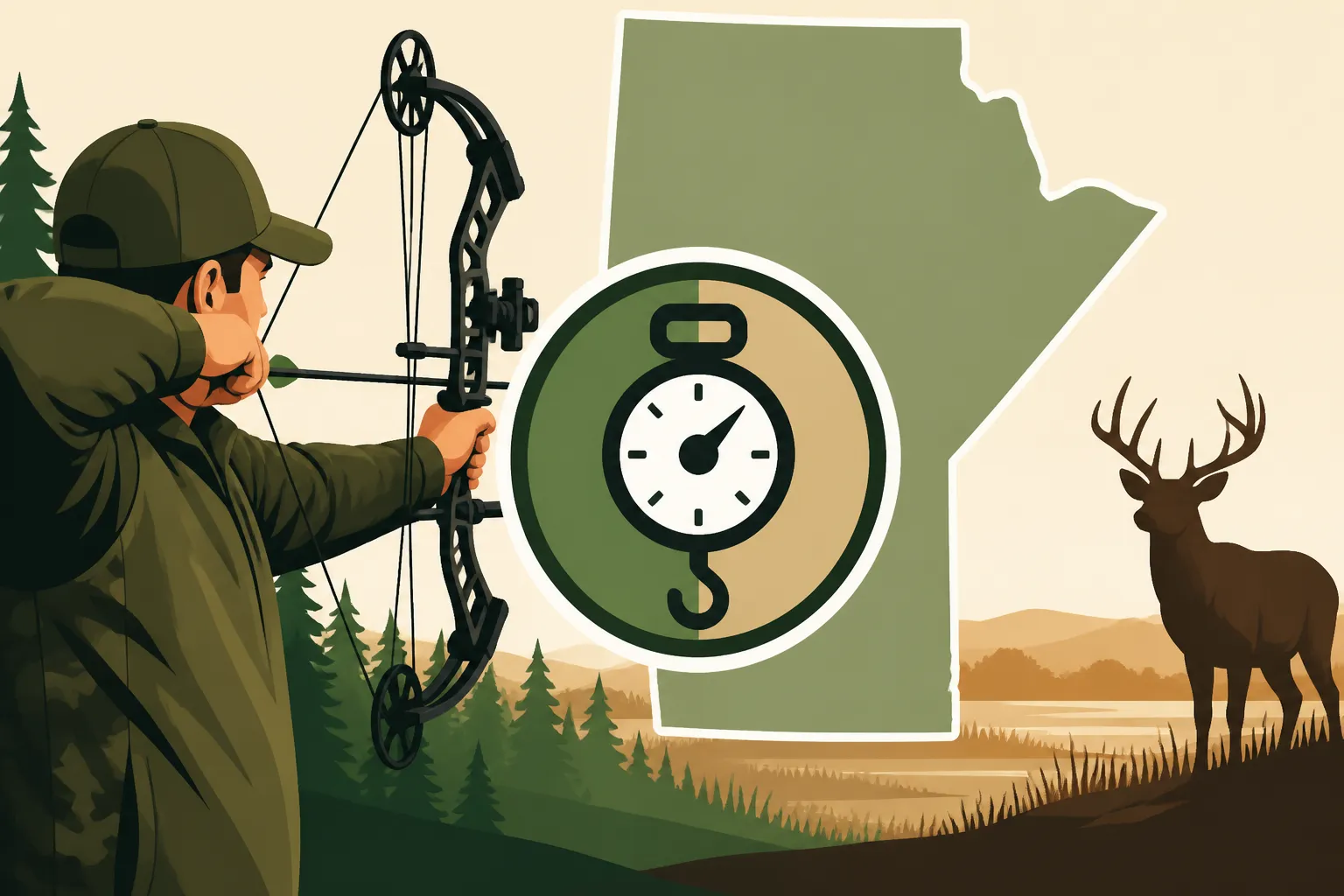
Currently, for hunting big game like white-tailed deer, moose, or bear in Manitoba with a vertical bow (that's your compound, recurve, or longbow), the minimum legal draw weight is 45 pounds. This applies across the board for all big game species that are open to archery hunting. It’s a pretty straightforward number, but the reasoning behind it is quite nuanced. The 45-pound minimum is established based on decades of hunting experience and scientific understanding of what it takes to drive a broadhead through the hide, muscle, and bone of an animal to reach vital organs. Below this threshold, there's a significantly increased risk of insufficient penetration, leading to wounded animals and prolonged suffering, which every ethical hunter wants to avoid at all costs.
It’s crucial to remember that this is a minimum. Many experienced archers choose to shoot heavier draw weights, but never at the expense of accuracy or good form. Whether you're chasing whitetails or tackling larger game like moose, having that minimum power ensures your arrow can do its job effectively. Always consult the most current Manitoba Hunting Guide, as regulations can occasionally be updated, to confirm these details before heading out into the field.
Understanding Kinetic Energy and Ethical Harvest
The draw weight of your bow is directly related to the kinetic energy your arrow carries. Think of kinetic energy as the force that propels your arrow forward and ultimately, penetrates your target. A higher draw weight generally translates to more kinetic energy, assuming all other factors like arrow weight remain constant. However, it's not simply about the number on your bow scale; it's about the combination of draw weight, arrow weight, and arrow speed working together to create adequate penetration.
For an ethical harvest, sufficient kinetic energy ensures that your broadhead can pass through the animal, creating two wound channels (entry and exit) that maximize blood loss and lead to a swift dispatch. A poorly penetrating arrow might only wound the animal superficially, making tracking difficult, if not impossible, and often resulting in the animal suffering needlessly. This is why the 45-pound minimum isn't just a suggestion; it's a non-negotiable standard for responsible hunting in Manitoba. A hunter's commitment to clean kills extends beyond just good shot placement; it starts with ensuring their equipment is up to the task, which is a core tenet of Manitoba Hunter Education Requirements.
How Draw Weight Works on Your Hunting Bow
Understanding how draw weight functions on your specific type of bow is crucial for both compliance and performance. Each bow style has its own characteristics when it comes to draw weight, affecting how you measure it, adjust it, and ultimately, how you prepare for a hunt.
Compound Bows: Adjustability and Practicality
Compound bows are incredibly popular among Manitoba hunters for a reason: their adjustability. Most modern compound bows allow you to adjust the draw weight within a significant range, often 10-20 pounds or even more, by simply turning a limb bolt. This flexibility is fantastic because it means you can often start with a lower draw weight while you build strength and perfect your form, then gradually increase it as you become more proficient.
To ensure you're meeting Manitoba's 45-pound minimum, it's essential to actually measure your bow's draw weight. Don't just rely on the manufacturer's stated range. Use a quality bow scale to get a precise reading. Most pro shops, like those you might find recommendations for on a site like GoHunt, will have one and can help you adjust your bow safely. When adjusting, remember to turn both top and bottom limb bolts equally to maintain limb timing and cam synchronization. A general rule of thumb is that each full turn of a limb bolt often changes the draw weight by about 2-4 pounds, depending on the bow. The beauty of the compound is that you can dial it in to a weight that's comfortable for you to draw smoothly and hold steadily, even if that means setting it just slightly above the minimum requirement.
Traditional Bows: Fixed Weight and Strength Training
For those who prefer the elegant simplicity of traditional bows – recurves and longbows – the draw weight is fixed. This means the poundage you pull is determined by the limbs themselves and your draw length. If your bow is rated at 50 pounds at 28 inches, and your draw length is 29 inches, you'll likely be pulling a few more pounds than the stated weight. Conversely, a shorter draw length will result in less actual draw weight.
This fixed nature presents a different challenge and opportunity. You can't just 'turn a bolt' to lighten the load if you're struggling. Therefore, physical conditioning and consistent practice are paramount for traditional archers. You need to build the specific muscle groups required to smoothly draw, hold, and release your arrow without undue strain or shaking. Many traditional archers incorporate exercises like resistance band training or repetitive draws with their bow to build and maintain the necessary strength. The reward is a deep connection to your equipment and a profound satisfaction in mastering the shot, but it requires a disciplined approach, especially to ensure you can consistently handle the 45-pound minimum.
Crossbows: A Different Set of Rules
While we're talking about bows, it's worth noting that crossbows operate under a slightly different set of regulations in Manitoba. They are legal for big game hunting, but their mechanical advantage means their "draw weight" isn't directly comparable to vertical bows. Instead, crossbow regulations typically focus on minimum bolt length, broadhead requirements, and ensuring they are discharged only from the shoulder. If you're considering a crossbow for your hunt, it's vital to check the specific guidelines for When a Crossbow Is Legal to Use as they are distinct from the vertical bow requirements we're discussing here. This ensures you're compliant with all aspects of Legal Firearms and Bows for Big Game.
Personalizing Your Setup for Optimal Performance
Meeting the minimum draw weight is just the first step. The real goal is to find a setup that allows you to shoot consistently and accurately, which is the cornerstone of ethical hunting. There's a lot more to it than just raw power.
Matching Draw Weight to Your Physical Capabilities
I can’t stress this enough: do not shoot more draw weight than you can comfortably handle. I've seen countless new (and even experienced) hunters get caught up in the "more is better" mentality, cranking their bows up to the maximum only to struggle with shaky holds, poor form, and inconsistent accuracy. It's a recipe for frustration and, more importantly, a higher risk of a poorly placed shot.
Your ideal draw weight is one you can comfortably draw smoothly and quietly, hold at full draw for at least 30-45 seconds without excessive strain or shaking, and then release with perfect form. This might mean shooting just a few pounds over the 45-pound minimum, and that is perfectly okay. A 50-pound bow shot accurately is infinitely more effective than a 70-pound bow shot poorly. Think about the conditions you'll be hunting in – cold weather, heavy clothing, awkward angles, or having to draw quickly when a deer suddenly appears. Can you manage your chosen draw weight under those real-world pressures? Be honest with yourself. Prioritize comfort and control over ego.
The Critical Role of Arrow and Broadhead Selection
Your draw weight is just one part of the penetration equation. The arrow and broadhead you choose are equally, if not more, critical. A heavy, well-spined arrow with a sharp, cut-on-contact broadhead will penetrate far better than a lightweight arrow with a poor broadhead, even if shot from a higher draw weight.
- Arrow Spine: Your arrow's spine (its stiffness) must be matched to your bow's draw weight and length. An incorrectly spined arrow will flex too much or too little, leading to erratic flight. Websites like GoHunt often have tools or resources to help you calculate the correct arrow spine.
- Arrow Weight: Heavier arrows carry more momentum, which is key for penetration, especially on larger game. Don't be afraid to experiment with slightly heavier arrows if your bow can handle them without a significant drop in trajectory for your typical shooting distances.
- Broadhead Type: Fixed-blade broadheads generally offer superior penetration because they don't expend energy opening upon impact, unlike mechanical broadheads. For hunters on the lower end of the draw weight spectrum (e.g., 45-55 pounds), a well-designed fixed-blade broadhead is often the most reliable choice for ensuring deep penetration on tough animals like a whitetail. However, modern mechanicals have come a long way, so research and testing are key. Always ensure your broadheads are razor-sharp.
Practice, Practice, Practice: Consistency is Key
This can't be emphasized enough. Regardless of your bow type or draw weight, consistent, quality practice is the ultimate determinant of your success and ethical execution. You can have the most expensive bow and a draw weight that far exceeds the minimum, but if you only shoot a few times a year, you're not doing yourself or the animals justice.
Regular practice builds muscle memory, refines your form, and boosts your confidence. Start shooting months before the season opens, gradually increasing the distance and introducing real-world scenarios – shooting from a treestand, from your knees, or with your hunting clothes on. A skilled archer who can consistently put an arrow into a kill zone at 30 yards with a 50-pound bow is a far more effective and ethical hunter than someone struggling to control a 70-pound bow at the same distance. This dedicated approach aligns perfectly with the spirit of Bowhunting Manitoba's Early Season where consistent practice directly translates to success.
Ensuring Compliance and a Successful Hunt
Beyond the technicalities of draw weight, there are broader aspects to consider for a truly successful and ethical hunting experience in Manitoba.
Verifying Your Equipment Before the Season
Before you even consider stepping into the field, make it a habit to thoroughly inspect and verify all your equipment. This isn't just about draw weight; it's about the entire system working in harmony. Use a bow scale to confirm your draw weight is at or above 45 pounds. Check your bow string and cables for any fraying or wear. Inspect your arrows for cracks or damage, and make sure your broadheads are sharpened to a hair-shaving edge.
It's also a good idea to perform a final paper tune or walk-back tune with your hunting broadheads. This ensures your arrows are flying true and that your broadheads aren't causing any planing or inconsistencies that could lead to a missed shot or a poor hit. Don't wait until opening day to find out something is off; do it weeks in advance. If you're unsure, visit a reputable archery pro shop – they are an invaluable resource for tuning and troubleshooting. Understanding all your equipment's nuances is as important as knowing about Manitoba's Game Hunting Areas.
The Broader Context of Ethical Bowhunting
Meeting draw weight requirements is one piece of the ethical hunting puzzle, but the overall picture is much larger. Ethical bowhunting demands precision, patience, and respect for the game. This means:
- Knowing Your Limitations: Understand your effective shooting range. For most bowhunters, this is often between 20-40 yards, but it varies for everyone. Don't take a shot beyond what you know you can consistently hit under pressure.
- Shot Placement: Study animal anatomy. Know precisely where the vital organs are on a White-Tailed Deer, Manitoba's Most Hunted Animal or a black bear, and commit to only taking high-percentage shots at those areas.
- Waiting Period: After the shot, resist the urge to immediately pursue the animal. Give it time to lie down and expire. This waiting period is critical for minimizing suffering and increasing recovery rates. The exact time depends on the shot placement, but generally, at least 30 minutes for a suspected heart/lung shot, and several hours for a liver shot.
- Tracking and Recovery: Even with a perfect shot, tracking can be challenging. Learn how to read sign – blood trails, tracks, disturbed vegetation. Knowing how to efficiently recover your game, especially if you plan to deal with Meat Care in Manitoba's Cold Snaps, is a crucial skill that reflects your respect for the animal.
Preparing for Manitoba's Diverse Hunting Conditions
Manitoba's hunting seasons can present a wide array of conditions, from mild early fall days to bone-chilling late November temperatures. These environmental factors can significantly impact your ability to draw your bow effectively and execute a good shot.
- Cold Weather Gear: Bulky hunting clothing, while essential for staying warm, can impede your draw cycle and anchor point. Practice shooting with your actual hunting layers on to identify any issues.
- Numb Fingers: Extreme cold can numb your fingers, affecting your release and grip, especially for traditional archers. Consider insulated gloves or mitts that can be easily removed or designed for shooting.
- Mud and Snow: Wet or snowy conditions can make tracking a blood trail significantly more difficult. This reinforces the need for impeccable shot placement and powerful equipment that promotes pass-throughs, creating clear blood trails. When you are Scouting a Manitoba Game Hunting Area, remember to consider how terrain and weather will influence your hunt.
Utilizing Resources and Community Knowledge
Don't be afraid to tap into the wealth of knowledge available to you. Local archery pro shops are invaluable resources for equipment advice, tuning, and even offering shooting lessons. Experienced hunters in your community are often more than willing to share their wisdom. Online forums and communities, like those found through GoHunt, can also connect you with other passionate archers who can offer tips and support.
Joining local hunting organizations, such as a branch of the Manitoba Wildlife Federation, can provide access to ranges, clinics, and a network of like-minded individuals. Continual learning and refinement of your skills, both with your equipment and your understanding of the game, will make you a more ethical and successful bowhunter for years to come. Remember, acquiring a Manitoba Hunting Licences and What They Cost is just the beginning of your journey; responsible hunting is a continuous learning process.
| Bow Type | Manitoba Minimum Draw Weight (Big Game) | Key Characteristic(s) |
|---|---|---|
| Compound Bow | 45 lbs | Adjustable draw weight, significant let-off at full draw |
| Recurve Bow | 45 lbs | Fixed draw weight, no let-off |
| Longbow | 45 lbs | Fixed draw weight, no let-off |
| Crossbow | See specific crossbow regulations | Mechanically cocked, fired from shoulder |
Disclaimer
The information provided in this guide is for general informational purposes only and does not constitute legal advice. Hunting regulations in Manitoba can change. It is the responsibility of every hunter to consult the most current Manitoba Hunting Guide and relevant provincial legislation before engaging in any hunting activities. Always ensure you are fully compliant with all applicable laws and regulations.